
 Русский






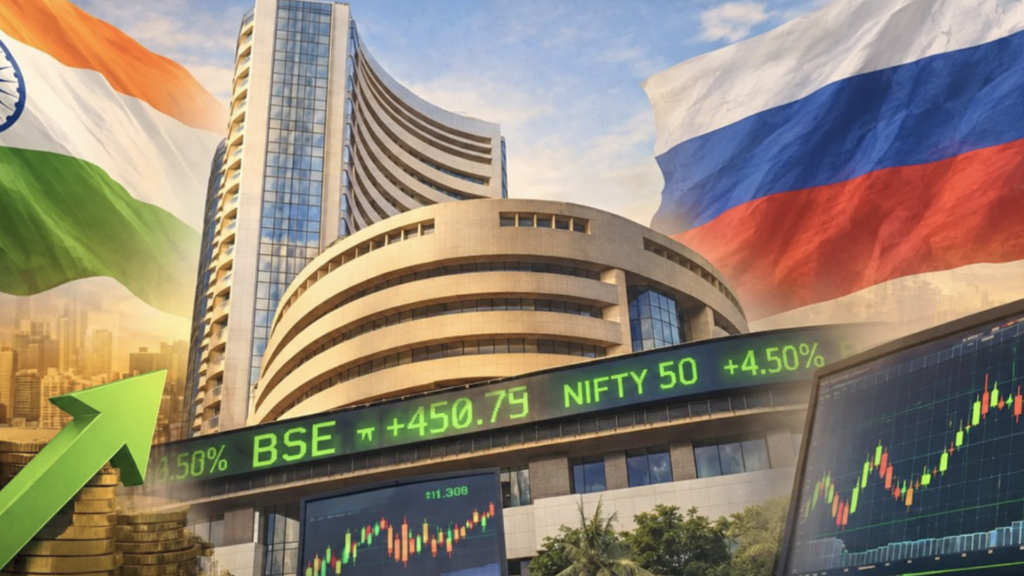

As was underlined at the recent BRICS summit in New Delhi, India-Russia collaboration and trade are reaching new heights. Current bilateral trade is about US$68 billion per annum and looks set to show growth of about 8% during 2026. Both countries have set a bilateral trade target of US$100 billion by 2030, with a pending Free Trade Agreement between them via the Eurasian Economic Union looking as if it is in the final stages of negotiation.
Normally, stock market analysts would be all over these fundamentals, looking at where opportunities are. However, with the Western media adamant that Russia is on the verge of ‘economic collapse’, credit ratings agencies exiting Russia and uproar over even the International Monetary Fund politically unable to examine Russia’s books, the actual realities of the economic situation in Russia are not independently verified—other than regular updates from the Central Bank and other authorities, which the West then claims are biased and unreal. But these statements are emotional and political issues related to support for Ukraine and not actual hard Russian economic fundamentals.
So where can Russian, Indian, and other global investors look when wanting to examine the potential of India’s rapidly advancing engagement in Russia? The answer lies in reviewing Indian listed companies that either have or are pursuing investments with Russian involvement. In this article we identify some of the major players as well as look at upcoming investment trends.
The largest Indian companies operating in or trading heavily with Russia span the energy, finance, pharmaceuticals, and heavy engineering sectors. These are the largest Indian investors in Russia:
The State Bank of India

The State Bank of India operates the Commercial Indo Bank as the key Indian banking conduit in Russia. It was established in Moscow in 2003 and focuses on cash and settlement services, currency exchange, and corporate deposit operations tied to India-Russia bilateral trade. Assets grew dramatically by roughly 680% in 2022, driven by increased settlement and deposit activities for Indo-Russian trade. The CIB maintains a minimal loan portfolio, opting instead to park liquidity and funds—including stranded rupee earnings and oil-and-gas dividends—on deposit with the Central Bank of Russia. Exact revenue and net income tallies remain private or restricted within official regulatory filings. While the CIB is not listed, the State Bank of India is primarily listed on the National Stock Exchange of India (NSE) and the Bombay Stock Exchange (BSE).
Sun Pharma

Sun Pharma operates a major local manufacturing footprint through its Biosintez subsidiary in Penza, servicing dozens of Russian cities. Biosintez produces over 180 types of medicines across six release forms, including tablets, injections, ointments, powders, infusions, and suppositories. It has a heavy focus on the Russian hospital sector, including anti-infectives and general prescription (Rx) medicines, supplying roughly 55% of Russia’s essential drug list products. According to its last explicitly published Russian accounting statements in 2024, Biosintez generated annual revenues of about ₽3.4 billion (US$40.5 million). With Sun Pharma having total global revenues of about US$7 billion in 2025, the Russian element remains a relatively minor part of its total portfolio. Biosintez also supports Sun Pharma in meeting Russian pharmaceutical localization and GMP compliance standards. Sun Pharmaceutical Industries is India’s largest drugmaker and is actively listed on both the National Stock Exchange of India and the Bombay Stock Exchange.
ONGC Videsh
ONGC Videsh Limited (OVL) is the international arm of ONGC, with its primary business to prospect for oil and gas acreages outside India, including exploration, development, and production of oil and gas. In Russia, it manages three major energy assets, including a 20% stake in the Sakhalin-1 project, and successfully re-secured its 20% equity stake in December 2025 by fulfilling abandonment fund payments via rouble contributions from frozen local dividends. Operations across the Chaivo, Odoptu, and Arkutun-Dagi fields are running normally, doubling quarterly revenue contributions.
The company also has minority interests, along with other Indian oil businesses, in the Vankorneft fields, which links into the newly commenced Arctic Vostok Oil Project extraction in Siberia. It also holds a 29.9% stake in the TAAS-Yuryakh field, a major Russian oil and gas extraction subsidiary of Rosneft operating in the Sakha Republic.
However, hundreds of millions in dividend payouts remain parked in Russian accounts due to Western banking restrictions and embargoes on dollar transfers. The company continuously reviews legal frameworks under OFAC guidelines, maintaining that minority holdings below the 50% threshold should not be subject to direct secondary sanctions.
ONGC is listed on the National Stock Exchange of India (NSE) and the Bombay Stock Exchange (BSE).
Indian Oil Corporation

The Indian Oil Corporation holds equity stakes in major Russian upstream oil assets and actively imports Russian crude oil for domestic refining. It is part of a consortium of Indian state-run companies—including Oil India and Bharat Petroresources—that collectively own a 23.9% stake in Vankorneft, which operates the massive Vankor oil and gas field in Siberia’s Krasnoyarsk Krai.
It also owns equity in other Russian Siberian assets such as Taas-Yuryakh Neftegazodobycha and regularly contracts or buys Russian crude oil via spot and term markets from non-sanctioned entities, balancing international Western sanctions compliance.
However, like other Indian oil companies in Russia, it has been unable to access dividends due to Western sanctions and payment restrictions. About US$1.4 billion in unpaid dividends owed to Indian state‑owned companies is currently blocked in accounts in Russia (around US$400 million for OVL and about US$1 billion for the IOC/OIL/BPRL consortium). The prospect of resolving this issue via the BRICS Pay mechanism could boost these companies stock prices as and when these monies can be released.
Indian Oil Corporation Limited is listed on the National Stock Exchange of India (NSE) and the Bombay Stock Exchange (BSE).
Bharat Petroleum
Bharat Petroleum (BPCL) maintains upstream equity investments in Russian oil assets while adjusting its crude import strategies in response to international sanctions and market dynamics. Through its upstream subsidiary, Bharat PetroResources Limited (BPRL), BPCL holds equity stakes in two Russian entities that own licenses for four producing oil and gas blocks.
These include participating interests in major Siberian asset consortiums such as Vankorneft and Taas-Yuryakh Neftegazodobycha. Both are highly productive as the largest oil and gas production projects in Russia. Operated as a subsidiary of Rosneft, both East Siberian fields serve as a cornerstone of Russia’s energy sector. Bharat holds a joint 29.9% stake in these as part of an Indian oil consortium.
BPCL manages its Russian crude intake using strictly non-sanctioned entities, vessels, and ports to navigate Western restrictions. The company’s reliance on Russian imports fluctuates based on price discounts, geopolitical pressures, and alternative spot market availability.
Bharat Petroleum is listed on the National Stock Exchange of India (NSE) and the Bombay Stock Exchange (BSE).
Hindustan Petroleum
Hindustan Petroleum Corporation Limited (HPCL) is an Indian state-owned public sector enterprise engaged in the oil, natural gas, and renewable energy sectors. HPCL manages its Russian oil and energy supplies based on market economics and global sanctions compliance rather than direct government mandates, maintaining that purchasing decisions are driven strictly by commercial viability, due diligence, and logistical constraints rather than official state instructions. Russian crude intake made up roughly 13.2% of HPCL’s crude portfolio during mid-2025 evaluations, processed primarily at its Indian coastal refineries. HPCL issued a rare tender in April 2026 to load liquefied petroleum gas (LPG) from Ust-Luga, Russia, aiming to offset supply disruptions from the Middle East.
Hindustan Petroleum Corporation Limited (HPCL) is listed on the Bombay Stock Exchange (BSE) and the National Stock Exchange of India (NSE).
Nayara Energy
Previously known as Essar Oil, Nayara Energy is a major Indo-Russian downstream petroleum company. It operates India’s second-largest single-site oil refinery and manages a vast fuel retail network across the country. It is partially owned by Russia’s Rosneft and subsequently has deep operational and crude-sourcing linkages to Russian energy systems.
Nayara owns the Vadinar Refinery in Gujarat, India, which processes about 20 million metric tonnes of crude oil per year. It also operates about 7,000 branded petrol pumps and fuel stations across India and produces high-quality fuels like BS-VI petrol and diesel, liquefied petroleum gas (LPG), naphtha, and petrochemicals such as polypropylenes.
For the 2025 fiscal year, Nayara Energy reported a total income of ₹150,324 crore (about US$16 billion).
Nayara Energy’s shares are privately held and are not traded on the National Stock Exchange (NSE) or Bombay Stock Exchange (BSE). However, unlisted shares can occasionally be bought or sold through the UnlistedZone or private off-market platforms.
Bharat Heavy Electricals
Bharat Heavy Electricals Limited (BHEL) does not have active physical manufacturing operations or major ongoing power plant construction projects inside Russia, but it maintains strategic and defense-focused cooperation agreements with Russian state entities. For example, BHEL signed a Memorandum of Understanding (MoU) with Russia’s state intermediary agency Rosoboronexport in 2020. This partnership leverages BHEL’s engineering capacity to collaborate with Russian Original Equipment Manufacturers (OEMs) to support Indian defense forces locally.
BHEL is also engaged in power machinery, engineering, and historical collaborative nuclear and industrial frameworks with Russian entities like Rosatom. For the 2025–2026 fiscal year, BHEL reported an operational revenue of ₹33,782.18 crore (US$3.5 billion), representing a 19% increase year-on-year.
Bharat Heavy Electricals Limited is listed on the National Stock Exchange of India (NSE) and on the Bombay Stock Exchange (BSE).
Developing India-Russia Investment Trends
Apart from the big Indian banking, pharma, and energy plays, other trends as concerns about Indian corporate involvement in Russia are developing. These include involvement in logistics and transportation as well as the defense sector. Here are some additional examples:
Aviation

India requires thousands of new commercial aircraft over the next two decades to support surging domestic travel demand, expand regional connectivity, and modernize its fleet. Russia is becoming significantly involved in this process.
India’s Hindustan Aeronautics have expressed interest in jointly producing the Yakolev SJ-100 passenger jet airliner, according to Vadim Badekha, the head of Russia’s United Aircraft Corporation (UAC), which manufactures these planes. This involves orders for about 300 of the SJ-100 aircraft, with negotiations between Russia and Hindustan Aeronautics Limited (HAL) on localizing their production in India now entering the final stage. These would then be acquired and operated by other Indian airlines. Hindustan Aeronautics is listed on the National Stock Exchange of India (NSE) and the Bombay Stock Exchange (BSE).
Related to this are Russia’s United Engine Corporation (UEC), who are exploring the joint production and manufacturing frameworks for aircraft engines in India through recent DPIIT discussions. UEC holds long-term partnerships with HAL for the licensed production and servicing of military engines like the AL-31FP and RD-33 but is looking to become involved in the engines for the SJ-100 project.
UEC has also signed a non-disclosure agreement with India’s CSIR-National Aerospace Laboratories (CSIR-NAL), serving as an initial foundation for joint aircraft engine research, design, and propulsion technology transfer.
In addition, UEC has been exploring a joint venture framework directly with Indian government officials via the DPIIT, led by Secretary Amardeep Singh Bhatia, to localize aircraft engine production components to support the “Make in India” and Atmanirbhar Bharat initiatives. These are highly likely to lead to India-Russia joint ventures or licensing agreements with Indian companies in India.
Omkam Aviation has just signed a letter of intent to purchase 50 Ilyushin-114-300 turboprop aircraft from Russia’s United Aircraft Corporation. What is interesting about this deal is that while the initial six aircraft will be built in Russia, Indian engineers will be present during the construction to learn how it is carried out. After that, the entire production line and the technology will be transferred to India, and the remaining 44 aircraft will be constructed in the country—part of the government’s ‘Make In India’ campaign. Russia’s Sberbank is assisting with the financing. Omkam is a very new company—and if this deal takes off, it will be worth looking for a future IPO, as they will need funding to service aircraft build among what they anticipate will be multiple orders.
Associated with this deal is another new Indian aviation company, Flamingo Aerospace from Hyderabad, who have also ordered six of the same aircraft, with deliveries expected by 2028. This is also privately held but may also be looking for an IPO in coming years once it becomes fully operational.
Rail

India is modernizing its railway network through a massive multi-billion dollar overhaul focused on high-speed rail, near-total electrification, and corridor expansion. Russia is also involved in this transport sector. For example, the Indian company Kinet, is majority owned by Russia’s TransMashHoldings (TMH), part of Russian Railways. Kinet has a contract with Indian Railways to produce and provide 35-year maintenance of 1,920 Vande Bharat sleeper coaches. TMH previously noted that the total value of the deal is potentially US$6.5 billion.
While Kinet is not listed in India, a future IPO cannot be ruled out. Indian Railways is 100% government owned as a key strategic asset and is also not publicly quoted; however, many of its component parts are. These include:
- The Indian Railway Catering and Tourism Corporation (IRCTC), which handles ticketing, catering, and tourism;
- Indian Railway Finance Corporation (IRFC), which raises financial resources for expansion.
- Rail Vikas Nigam Ltd (RVNL), which undertakes rail infrastructure projects;
- Ircon International, which specializes in transport infrastructure construction;
- The RailTel Corporation of India, providing telecom and broadband services, and
- RITES Ltd., which provides transport consultancy and engineering services.
Indian rail feasibility studies have also been carried out by Russian Railways, who have developed a feasibility study to upgrade the 575-kilometer Nagpur–Secunderabad section of Indian rail for higher speeds. That project is still being evaluated by Indian Railways. Others are also in the pipeline.
Ports
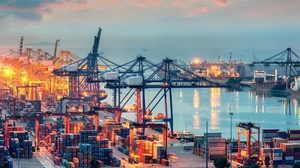
Russia is also exploring port and maritime infrastructure investments in India to deploy its accumulated rupee surplus and strengthen trade connectivity under frameworks like the Sagarmala Programme. This is an Indian flagship national initiative launched by the Ministry of Ports, Shipping, and Waterways to promote port-led development and transform the country’s maritime sector.
It represents a ₹6.06 lakh crore (US$ 63.42 billion) investment with five core pillars:
Port Modernization & New Port Development
Upgrading existing facilities, boosting mechanization, and increasing cargo-handling capacity.
Port Connectivity Enhancement
Strengthening rail, road, and pipeline links between ports and domestic production centers.
Port-Linked Industrialization
Developing Coastal Economic Zones (CEZs) and port-proximate industrial clusters.
Coastal Community Development
Providing skill training, livelihood support, and sustainable infrastructure for local populations.
Coastal Shipping & Inland Waterways
Promoting eco-friendly and cost-effective water transport as an alternative to congested roads and rail.
We can in the future expect announcements between Russian and Indian investors as regards some of these opportunities- especially if the work is carried out in India. Stock market investors should be looking at which companies in India are involved in these specific disciplines.
Maritime
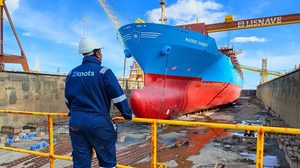
We have already noted the extensive involvement of India’s oil industry in the Russian Arctic. To further insert itself into its own energy supply chains, India also wants to build its own icebreakers specifically for the purpose. These are slated to be built in Gujarat (Prime Minister Modi’s home state) with discussions currently ongoing at the highest levels about a major deal to construct four non-nuclear Arctic icebreakers. The contract value is estimated to be US$750 million.
Alexander Vorotnikov, coordinator of the Expert Council at the Project Office for Arctic Development, has noted in his feasibility research for the project that despite the lack of experience in icebreaker construction, Indian shipyards consistently demonstrate a high level of product quality. He pointed out that Rosatom specialists have already evaluated public and private shipyards in India, commending the excellent training of specialists and technical equipment.
Two shipyards are being considered, the state-owned Indian Cochin Shipyard and Swan Defense and Heavy Industries (formerly Reliance Naval and Engineering Ltd), with both being contracted to build two icebreakers each. This deal is likely to come to fruition. The Cochin Shipyard is listed on the National Stock Exchange of India (NSE) and Bombay Stock Exchange (BSE). Swan Defence and Heavy Industries Limited is listed on the Bombay Stock Exchange and National Stock Exchange (NSE).
Nuclear Energy
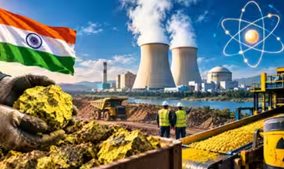
The Indian Government passed laws in late 2025 to allow private investors establish small modular nuclear reactors, a push that will get private capital into India’s rapidly developing energy sector at far quicker timeframes. India’s demand for electricity is set to triple by 2047 and it needs to put provisions in place. To do this, the Indian government has set a goal to increase its installed capacity from the current 12 GW to 100 GW by 2047.
Alexei Likhachev, Rosatom’s CEO said after the meetings that India may become the main customer of Russian nuclear products. He added that “the largest Indian companies are not just showing interest, but are directly entering into certain agreements to enter the nuclear sector.”
This is likely to include Adani Power, Tata Power and Reliance Industries. All these companies are listed on the National Stock Exchange of India and the Bombay Stock Exchange.
Hospitality

With Indian tourism to Russia developing – Moscow alone welcomed 40,800 Indian tourists in 7m 2026, a 40% year-over-year increase last year. Russia has proposed Indian hotels establish operations in Russia. While major Indian hotel chains have not yet established direct management or operations in Russia, there are hospitality gaps left to fill by departing Western brands. Indian brands approached include IHCL (Taj) and Oberoi Hotels (EIH), while mid-scale groups like Lemon Tree Hotels have apparently expressed openness to evaluating opportunities, while Sarovar Hotels are exploring potential discussions.
Taj, Oberoi and Lemon Tree are all listed in India, while Sarovar is ultimately part of China’s Jin Jiang International, who are listed in Shanghai.
Other Russian Investments Into India
The Russian Direct Investment Fund (RDIF)- Russia’s sovereign wealth fund-has a long-standing history of joint investment platforms with India to promote bilateral trade and localize technologies. Originally established as a US$1 billion joint fund in partnership with India’s National Investment and Infrastructure Fund (NIIF) to co-invest in infrastructure, logistics, and tech. RDIF partnered with Invest India under a framework committing up to US$1.2 billion to support Russian companies scaling operations directly into the Indian market.
For example, RDIF signed a major tripartite cooperation agreement with India’s Panorama Electronics and the Indo-Russia “Innopraktika” Technology Hub. This initiative focuses on cross-border growth for high-tech sectors like artificial intelligence, cybersecurity, data analytics, and medical tech. This sector will likely produce future India IPOs so is worth looking at.
Purchasing Indian Stocks
Foreign nationals cannot open a standard stock retail trading account in India. Instead, investments must be made by registering as a Foreign Portfolio Investor (FPI) through the Securities and Exchange Board of India (SEBI) or by buying Indian-focused global mutual funds and ETFs. Or, an alternative is to purchase American Depository Receipts (ADRs) or Global Depository Receipts (GDRs) of Indian companies listed on international stock exchanges, or use participatory notes (P-notes).
Non-Resident Indians (NRIs) and Overseas Citizens of India (OCIs) can trade directly in the Indian stock market (NSE/BSE) by setting up NRE/NRO bank accounts, a Demat account, and registering under the Reserve Bank of India’s Portfolio Investment Scheme (PIS).
Summary
As can be seen, the opportunities for investment into Indian interest in Russia fall into two main categories: India’s massive industrial sector investments in Russian finance, oil, and pharma, and India’s soon to be come to fruition domestic investments that also utilize Russian expertise, and in some cases, investment capital.
The big-ticket industrial businesses we mentioned will all provide longer-term, stable returns, while we also note that the oil sector has dividend repatriation issues due to sanctions. However, the money continues to exist. And when that is freed-which it could shortly be when the BRICS Pay mechanism is up and running-these stocks too will gain a boost.
However, the more exciting development is the trade development sector itself, which goes hand-in-hand with the growth in bilateral trade and the need to match that with the required infrastructure. Here, we can see numerous bilateral projects taking shape, many of which involve Indian listed entities. Others remain works in progress but should be monitored for when they become viable.
Meanwhile, we haven’t yet touched upon the Indian companies that have invested directly into Russia. That number has tripled since 2022 and has now reached 1,030 Russian-registered companies with Indian founders operating in Russia as of September 2025. With the pending India-EAEU free trade agreement apparently just around the corner, that number will also show significant increases. Some of these will be subsidiaries of Indian listed businesses; others will be worth watching for future IPO potential.
Investing in Indian stocks to take advantage of its Russian development may be a new concept-but as can seen, as a rapidly developing sector, there will soon be plenty of available opportunities.