Русский






ASEAN-Russia bilateral trade reached about US$18 billion in 2025, while investment from ASEAN member states into the Russian economy stood at US$3.2 billion and Russian investment in Southeast Asia totalled US$7.1 billion. Bilateral trade has increased by 10% in H1 2026, meaning the commercial agenda is now widening beyond traditional energy and commodity exchanges to include agricultural supplies, food security, fertilisers, digital services, logistics, manufacturing, technology and investment partnerships. The next stage will depend on whether businesses can turn these established trade flows into new supply contracts, distribution networks and long-term investment projects. This article explains these development dynamics and is essential reading for anyone involved in Russian and ASEAN affairs.
The immediate Russian trade and investment opportunities are visible across Southeast Asia. Vietnam recorded US$4.77 billion in bilateral trade with Russia in 2025, while Indonesia’s trade approached US$5 billion. Thailand’s trade reached approximately US$1.7 billion, and Cambodia’s exports to Russia rose from US$2.9 million in 2025 to US$15.6 million in the first eight months of 2026. Russian agricultural exports to ASEAN totalled US$251 million in January-May 2026, an increase of 5% year on year, with Thailand and Vietnam accounting for more than 70% of the total. These figures point to an uneven but expanding commercial relationship, with established markets providing scale and smaller economies offering opportunities for new products and suppliers.
ASEAN’s Moscow Visit Connects Business Priorities with the 2035 Trade Programme
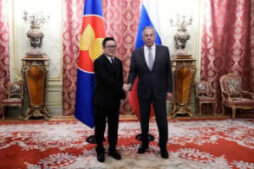
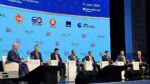
Against this commercial backdrop, ASEAN Secretary-General Dr Kao Kim Hourn visited Moscow from October 12 to 15, 2026, for discussions on expanding economic cooperation. His meetings on October 13 included Russian Foreign Minister Sergey Lavrov, Deputy Minister of Digital Development, Communications and Mass Media Bella Cherkesova, Presidential Adviser Anton Kobyakov, and Russia-ASEAN Business Council Chairman Ivan Polyakov. On October 14, he met Russian Minister of Science and Higher Education Valery Falkov and members of the ASEAN Committee in Moscow. His programme also included engagement with the Eurasian Economic Commission and participation in Russian Energy Week and an international conference at MGIMO University.
These discussions were particularly relevant to companies seeking commercial partners. Kao and Polyakov, together with representatives of the Russian business community, examined opportunities in energy, food security, agriculture, supply-chain connectivity and digital transformation. They also discussed more regular business missions, business-matching activities and investment partnerships intended to generate practical commercial outcomes. The available announcements do not provide a participant count, a list of all participating companies, or the value of contracts signed at this meeting. It is therefore more accurate to treat the engagement as business development and partnership-building rather than as a completed investment transaction.
Kao’s visit followed the 15th ASEAN Economic Ministers-Russia Consultation, held in Manila on September 22, 2026, at the Philippine International Convention Center in Pasay City. Philippine Department of Trade and Industry Secretary Ma. Cristina A. Roque and Russian Deputy Minister of Economic Development Vladimir Ilyichev co-chaired the meeting, which Kao also attended. The ministers endorsed the ASEAN-Russia Strategic Programme on Trade and Investment Cooperation for 2026-2035. Its 11 areas are trade and investment, digital transformation, science and technology, transport, agriculture, energy, mining, climate change, the circular economy, tourism and the creative economy. The programme gives the commercial relationship a longer-term structure, but its significance will be measured through implementation. Businesses need workable customs procedures, reliable payments, clear technical requirements, transport links and commercially viable contracts. The parallel ASEAN-Eurasian Economic Commission programme for 2026-2030 offers a technical channel for addressing these issues. A joint seminar on customs regulation and Single Window mechanisms took place by videoconference on January 28, 2026, with further technical seminars on energy, e-commerce, agriculture and technical regulation planned for late 2026. EAEU-ASEAN Days are planned for Moscow in the first quarter of 2027.
Vietnam: The Clearest Demonstration of Public and Company-Level Trade Expansion
Vietnam is among the strongest examples of how regional cooperation can connect with direct business activity. Bilateral trade reached US$4.77 billion in 2025, up 4% year on year. Vietnamese exports to Russia were nearly US$2.26 billion, while imports from Russia totalled US$2.51 billion. During January-July 2026, trade reached US$3.24 billion, an increase of 12%, comprising US$1.33 billion in Vietnamese exports and US$1.91 billion in imports from Russia. Full-year trade is expected to exceed US$5 billion if the momentum continues.
On September 21, more than 100 Vietnamese companies and 29 Russian companies participated in a business-to-business networking programme in Ho Chi Minh City. The discussions covered agriculture, food, chemicals, fertilisers, mechanical engineering, manufacturing, information technology and logistics. Thirty Vietnamese companies had also showcased agricultural and food products at WorldFood Moscow 2026, seeking to expand their Russian-market presence. The product mix offers scope for two-way expansion. Vietnam supplies textiles and garments, coffee, seafood, electronics and consumer goods, while Russian exports include coal, fertilisers, chemicals, plastics, metals and meat.
The Vietnam-EAEU Free Trade Agreement provides an existing route for tariff reductions and market access. The next commercial opportunity lies in moving from individual shipments towards processing, contract manufacturing, technology transfer, local distribution and longer-term purchasing arrangements.
Russian President Vladimir Putin has introduced a visa-free regime for Vietnamese citizens for one year, taking effect from October 15, 2026. On 15 October 2026, Russia and Vietnam held the 37th meeting of the Intergovernmental Coordinating Committee of the Joint Tropical Research and Technology Centre in Moscow, approving a joint scientific research programme for 2027 covering infectious diseases, marine science and specialist training. In June 2026, researchers conducted their first full-scale joint marine expedition aboard the Professor Gagarinsky, and in September 2026, they opened a Russian-equipped infectious disease research laboratory; more than 400 Russian researchers and specialists participated in the centre’s activities during 2026.
Both countries agreed to continue joint research, organise another marine expedition in 2027, expand internships for Vietnamese specialists at Russian universities and research institutes, and prepare for the centre’s 40th anniversary in 2028. On 14-17 October 2026, the 2nd Russia-Vietnam People’s Diplomacy Forum took place in Saint Petersburg, with nearly 150 delegates attending to strengthen the Comprehensive Strategic Partnership through economic, cultural, educational, scientific and local-level cooperation; on 16 October, a thematic economic session launched a joint report by the Vietnam-Russia Knowledge Network, ANO Coordination Laboratory and Saint Petersburg Committee for External Relations. The report identified opportunities in technology, clean energy, civilian nuclear technology, LNG infrastructure, agriculture, food processing and maritime logistics, while recommending removal of technical trade barriers, harmonisation of standards, investment in warehousing, direct shipping routes and stronger digital-market strategies
Indonesia: Crude Oil, Maritime Links, Satellite and Media Cooperation
On 16 October 2026, Russia’s state nuclear corporation Rosatom signed an agreement with Indonesia’s PT Pembangkit Listrik Nuklir during Russian Energy Week to supply electricity to North Maluku in eastern Indonesia, particularly northern Halmahera Island, using two PEB-100 floating nuclear power units with a combined capacity of 200 MW. Rosatom CEO Alexey Likhachev described the deal as the world’s first export agreement to supply electricity from a floating nuclear power unit, highlighting government support and private-sector participation in developing large-scale nuclear energy infrastructure.
In October 2026, Indonesia’s Deputy Minister of Communication and Digital Affairs Angga Raka Prabowo met a Russian delegation in Jakarta to discuss cooperation in satellite technologies and artificial intelligence (AI), including expanding digital-service access through a proposed network of 98 satellites, with participating companies launching around 16 spacecraft annually. The talks also explored collaboration with Indonesian satellite companies and state-owned enterprises, alongside Russian proposals to establish laboratories and educational programmes in Indonesia to provide students with practical training in satellite systems, AI and scientific research.
Indonesia combines a sizeable consumer market with an immediate energy-security requirement. Its bilateral trade with Russia was estimated at approximately US$4.8 billion-US$5.1 billion in 2025, representing growth of around 20%-22%. Non-oil-and-gas trade alone reached approximately US$1 billion in the first quarter of 2026. Russia supplies wheat, fertilisers, metals, coal and other energy products, while Indonesia exports palm oil, coffee, cocoa, electronics and rubber.
The energy relationship gained a concrete commercial dimension in June 2026, when Indonesia received approximately 770,000 barrels of Russian crude valued at about US$75 million. The cargo was transported by the Sierra, a tanker flying the Cameroon flag. Earlier discussions referred to a potential supply commitment of 150 million barrels at special pricing, including 100 million barrels intended for immediate delivery. These figures must be distinguished: the June cargo was an actual shipment, while the larger volume was a proposed supply arrangement. Indonesian Energy and Mineral Resources Minister Bahlil Lahadalia said on September 17 that the second phase of Russian crude imports remained on track.
Maritime engagement added another dimension. The Russian Pacific Fleet frigate Marshal Shaposhnikov, a Project 1155M multipurpose vessel, arrived at Tanjung Priok Port in Jakarta on October 2 for an Open Ship Day. The task force had departed Vladivostok on September 10 and left Jakarta on October 4 for George Town, Penang, Malaysia. Russian Ambassadors to Indonesia Sergei Tolchenov and Rear Admiral Evgeny Myasoedov, deputy commander of the Pacific Fleet’s Northeastern Forces, participated in the Jakarta engagement. Activities included public access to the vessel, technical displays and friendly football matches involving Russian and Indonesian naval personnel. The visit was accompanied by broader cooperation, including an MoU between Russian news agency MIA Russia Segodnya and Indonesia’s Antara news agency.
The available material also identifies recent deliveries of Russian Mi-series helicopters to the Indonesian Army, although it does not provide quantities or contract values. Energy supply, maritime engagement and media cooperation therefore form distinct tracks rather than one combined commercial agreement. On 14 October 2026, Indonesian Defence Minister Sjafrie Sjamsoeddin met Russian Federal Service for Military-Technical Cooperation Deputy Director Mikhail V. Petukhov in Jakarta to discuss strengthening bilateral defence cooperation, particularly in the defence industry, in line with President Prabowo Subianto’s goal of enhancing Indonesia’s defence capabilities. Both sides emphasised a mutually beneficial military partnership that respects Indonesia’s independent and active foreign policy, national sovereignty, and global peace; the meeting followed 22 September 2026 discussions with Russian Ambassador Sergei Tolchenov on personnel exchanges, joint military exercises, special forces training, and military medicine.
Thailand and Cambodia: Trade Growth and Infrastructure Prospects

Thailand’s bilateral trade with Russia reached approximately US$1.7 billion in 2025. One set of figures put trade during January-May 2026 at around US$1.15 billion, while reported growth rates varied from 23% to 80%, depending on the period and measure used. These figures should not be treated as directly comparable without consistent definitions. Russian exports include fertilisers, aluminium, ferrous products, synthetic rubber, petroleum products, wheat and agricultural goods. Thailand supplies automobile tyres, electronics, aviation products, canned fish, processed fruit, natural rubber and vehicle components. Infrastructure offers an additional area of interest.
Thai Foreign Minister Sihasak Phuangketkeow visited Moscow in mid-August 2026 and expressed Bangkok’s interest in participating in Myanmar’s proposed Dawei infrastructure venture. The project centres on a deep-sea port and road links towards the Thai border, intended to create a commercial gateway connecting Myanmar with Thailand and potentially Vietnam. The project’s estimated cost has previously been put at US$8.6 billion, but it has experienced prolonged delays and should not be treated as a funded or completed investment.
The next major milestone will be the second Russia-Thailand Investment Forum in Bangkok on October 29-31, 2026. The forum is expected to focus on sectors including metallurgy, agriculture, energy, healthcare, pharmaceuticals, the platform economy, real estate and tourism. Russia’s Pivot to Asia covered the 1st Russia-Thailand Investment Forum last year, providing valuable insights for our readers. We will also provide an in-depth and outcome-based analysis of the 2nd Thailand-Russia Investment Forum later on this website.
Cambodia offers a different picture: small absolute trade volumes but a sharp increase in exports. Cambodian shipments to Russia reached US$15.6 million during January-August 2026, compared with US$2.9 million for the whole of 2025. Russian supplies to Cambodia reached US$41 million during the first eight months of 2026, against US$37.4 million in 2025. The combined two-way value for January-August 2026 was approximately US$56.6 million. Cambodia’s exports include garments, rubber and agricultural products, while Russian supplies include fertilisers, machinery and petroleum products. On September 22, Cambodian Commerce Minister Cham Nimul met Russian Deputy Minister of Economic Development Vladimir Ilyichev on the sidelines of the Manila consultation. Their discussion focused on expanding trade, particularly Cambodian agricultural exports, and encouraging two-way business and investment.
Tourism is another developing channel: Russian Ambassador Anatoly Borovik attended the launch of the Cambodia Tourism Roadshow to Russia on September 18 at the invitation of Cambodian Tourism Minister Huot Hak.
Malaysia, Singapore and the Philippines: Established Trade Channels

Malaysia’s bilateral trade with Russia grew by 12.9% in 2025, with historical two-way trade exceeding US$2 billion. Russian exports include refined petroleum, fertilisers, ores and aluminium, while Malaysia supplies computers, electronics and other manufactured products. The October visit of Marshal Shaposhnikov to George Town, Penang, following a Jakarta stop, added a maritime and diplomatic dimension.
On 13 August 2026, Russia and Malaysia agreed to develop cooperation between special economic zones at their fifth Joint Commission meeting in Vladivostok, promoting joint industrial projects in Russia’s Far East, expanded market access, agricultural trade and mutual recognition of product standards.
On September 14, the Russian President, Vladimir Putin met with Anwar Ibrahim, the Malaysian Prime Minister, on the sidelines of the BRICS summit in India. Both sides bought significant delegations.
On 24-26 September 2026, Malaysia and Russia advanced plans for a cultural cooperation MoU following talks between Malaysian Tourism Minister Tiong King Sing and Russian Culture Minister Olga Lyubimova in Saint Petersburg, focusing on arts, cinema, student and professional exchanges, cultural tourism and the creative economy. On 30 September 2026, Malaysia’s Tourism Office in Russia announced that low-cost airline AirAsia was considering launching direct flights between Russia and Malaysia; currently, connecting flights via Dubai, Abu Dhabi, Istanbul, China and Oman take approximately 14-19 hours, while Russian citizens can visit Malaysia visa-free with passports valid for at least six months.
On 15 October 2026, Malaysia’s Deputy Tourism Director in Russia, Crescentia Sadatal, reported that 98,466 Russian tourists visited Malaysia from January to August 2026, a 4.3% increase year-on-year, with Yekaterinburg ranking third among Russian cities for tourist numbers to Malaysia. Malaysia is promoting destinations beyond Kuala Lumpur and Langkawi, including the east coast and Borneo’s Sabah and Sarawak, to attract individual travellers, families and young people; after receiving 42.2 million international visitors in 2025, up 11.2% from 2024, the country aims to welcome 45 million foreign tourists under its Visit Malaysia 2026-2027 campaign.
Singapore remains important to Russia’s regional energy trade. Singapore’s imports from Russia totalled approximately US$3.36 billion in 2025, consisting almost entirely of mineral fuels and petroleum products. This figure concerns Singapore’s imports from Russia, not total bilateral trade, and should not be presented as a complete measure of the two-way relationship.
The Philippines hosted the September 22 economic ministers’ consultation and co-chaired it through Secretary Ma. Cristina A. Roque. Trade between Russia and the Philippines grew by 6% in the first half of 2026, while the Philippines accounted for 12% of Russia’s agricultural exports to ASEAN during January-May. These figures point to an opportunity for agricultural and food-related trade, but a full bilateral trade value for the first half of 2026 was not provided in the available material. On 25 August 2026, Russia gained expanded access to the Philippine market for beef, pork and poultry following the lifting of supply restrictions, alongside opportunities to increase supplies of mineral fertilizers, feed additives and other agricultural products to support Philippine food security.
Myanmar: Dawei’s Potential and the Risks Facing Investment

Myanmar has become a focal point for Russian interest in energy, logistics and infrastructure. In mid-August 2026, Myanmar leader Min Aung Hlaing visited Moscow for talks with Russian President Vladimir Putin. The two sides signed agreements covering trade, logistics and energy and discussed attracting Russian investors. Myanmar highlighted its natural resources and coastline of more than 1,300 miles while presenting the Dawei Special Economic Zone as a possible route into markets in Thailand and Vietnam.
In early September, the Russia-Myanmar Association for Friendship and Cooperation, led by its president Anatoly Bulochnikov, met Tanintharyi regional Chief Minister Zaw Naing Oo in Dawei to discuss investment and financing. These contacts indicate interest in reviving the project, not proof that construction financing has been secured. The proposed infrastructure also faces substantial risks from continuing conflict in Tanintharyi, where security conditions can affect roads, construction, insurance and investor confidence.
On October 5, 2026, Russia and Myanmar held an intergovernmental meeting in Moscow to expand bilateral trade, improve logistics and payments, and promote exports and investment in agriculture, energy, and infrastructure. Sberbank signed an MoU with Myanmar’s Finance Ministry and on October 10, 2026, announced preparations for a direct settlement mechanism using its Indian branch, enabling payments in Indian rupees without relying on SWIFT or the US dollar. The meeting discussed increasing trade in fertilizers, fuel, machinery, medicines, rice, fruits, and other commodities, alongside FESCO shipping services, development of the Dawei Special Economic Zone, organic fertilizer plants, and plans for a low-capacity nuclear power plant.
Military cooperation, including a five-year agreement, remains a major part of the wider bilateral relationship. For commercial investors, however, the immediate questions are the availability of finance, security along the corridor, port and road construction costs, and the extent of private-sector participation. Until these issues are resolved, Dawei remains a prospective infrastructure opportunity rather than an operational trade corridor.
Timor-Leste: A New ASEAN Market with a Small Bilateral Trade Base
Timor-Leste’s entry into ASEAN has expanded the association to 11 members and created a new institutional setting for Russia’s engagement with the country. Yet bilateral merchandise trade remains extremely small. Imports from Russia were approximately US$3,570 in 2023, and one monthly figure for April 2026 put imports at just US$884.52. A potential bilateral trade value of US$50 million by 2030 has been discussed as a working horizon, not an achieved result.
On October 6, Timor-Leste’s Minister of Foreign Affairs and Cooperation, Bendito dos Santos Freitas, held talks in Moscow with Russian Foreign Minister Sergey Lavrov during the first official visit to Russia by a Timorese foreign minister. The sides agreed to explore investment projects in energy, mineral extraction, fisheries and tourism. Russian economic operators expressed readiness to expand energy supplies, while the two sides agreed to prepare material for expert examination and establish direct contacts between specialists and relevant agencies.
Timor-Leste’s economic circumstances explain the interest in diversification. Its nominal GDP is estimated at approximately US$2.0 billion-US$2.2 billion, and its Petroleum Fund stood at US$18.61 billion at the end of 2025. Production at the Bayu-Undan field ceased in 2025, increasing the importance of developing new revenue sources. Merchandise exports were approximately US$99 million in 2025, including around US$35 million in coffee, while tourism-related service exports reached US$109.6 million. The country’s exclusive economic zone covers approximately 72,000 square kilometres.
For Russian companies, the initial opportunities may involve energy supply, geological assessment, fisheries infrastructure, cold-chain logistics and tourism services. None of these prospective sectors should be confused with a completed investment contract. The immediate test will be whether the October discussions lead to feasibility studies, supply agreements, exploration commitments and financing arrangements.
Brunei and Laos: Opportunities Await More Specific Commercial Commitments

In October 2026, Russia and Brunei strengthened bilateral relations ahead of Sultan Hassanal Bolkiah’s planned visit to Moscow in November, focusing on expanding trade and energy cooperation, with Russian crude accounting for 17% of Brunei’s oil imports in 2025 and shipments delivered via the Northern Sea Route.
Both countries are also advancing cooperation in Islamic finance, digital technologies, cybersecurity, education, culture and regional security, while exploring opportunities in agriculture, tourism and economic diversification under Brunei’s Wawasan 2035 strategy. The countries are developing a memorandum of cooperation between their central banks, exploring Islamic and partnership-finance instruments, and expanding opportunities in financial technology, electronic government, smart cities, cybersecurity and digital infrastructure; Russia-developed TARUS interbank transfer system was launched in Brunei in 2025.
A memorandum between Russia’s Higher School of Economics and Universiti Brunei Darussalam was signed in February 2025, followed by an HSE delegation visit in August 2026; Russian scholarships, MGIMO programmes, student exchanges, cultural events and a Russian book corner opened at a Bruneian technology university on 1 October 2026 support closer people-to-people ties. For Laos and Russia, the relevant areas to examine within the wider ASEAN-Russia programme include agricultural trade, fertilisers, energy, logistics, digital cooperation and tourism.
On 29 September 2026, Laos and China announced a jointly operated pilot training centre at Ban Keun Airport, where Chinese instructors will train Lao pilots to operate four Russian-made Yak-130 aircraft and Chinese LE500 planes. The development follows Russia’s acquisition of Lao T-34-85 tanks in exchange for T-72 tanks and Yak-130 aircraft, highlighting China’s growing role in Laos’s military training and, according to Defense Express, Russia’s declining influence in the arms market since 2022.
ASEAN Digital Cooperation and Science Add New Routes for Russian Business

Digital transformation featured prominently in Kao’s Moscow programme. On October 13, he met Deputy Minister Bella Cherkesova and Presidential Adviser Anton Kobyakov to discuss digital development, media, animation production and the creative industries. These sectors could support cooperation in audiovisual production, digital content, skills development and business services, although the meetings did not announce a quantified portfolio of contracts.
On October 14, Kao met Science and Higher Education Minister Valery Falkov to discuss science, technology and higher education, including support for the ASEAN Plan of Action on Science, Technology and Innovation 2026-2035 and the ASEAN Work Plan on Education 2026-2030. The exchanges provide a basis for academic links, training and research cooperation, but the number of new joint research projects or funding commitments was not specified.
The wider institutional network includes the ASEAN Centre at MGIMO University in Moscow, which marked its 15th anniversary in 2025. Its master’s programme in Politics and Economics of the Russia-ASEAN Strategic Partnership had 27 students enrolled in 2026.
The Russia-ASEAN Business Council also supports company engagement through the St Petersburg International Economic Forum, the Eastern Economic Forum and the ASEAN Business and Investment Summit. Human-capital cooperation will continue in Vladivostok, where the Sixth Russia-ASEAN Youth Summit is scheduled for October 21-26, 2026, with 155 delegates aged 18-35 expected to participate. Technology, creative industries and development of the World Ocean are among the planned discussion areas. The summit is a future event as of October 15, rather than a completed outcome.
Summary: Converting Frameworks into Measurable Trade
The numerous September and October engagements between Russia and ASEAN as well as its component members sits within a broader sequence of events. The Russia-ASEAN Commemorative Summit in Kazan on June 17-18 marked 35 years of partnership and adopted four outcome documents: the Kazan Declaration, a joint statement on energy cooperation, a joint statement on cultural cooperation, and the Plan of Action for 2026-2030. The September 22 Manila consultation then endorsed the Strategic Programme on Trade and Investment Cooperation for 2026–2035. Kao’s October visit brought the agenda into direct contact with Russian business representatives, digital-sector officials and higher-education institutions. The commercial foundation is substantial enough to justify further work, but the country figures show that progress is uneven. Vietnam has the clearest company-level expansion, Indonesia has a significant energy-supply dimension, and Cambodia is increasing exports from a low base. Thailand and Malaysia offer established goods-trade channels, while Singapore remains important for energy-related flows. Myanmar presents a major infrastructure possibility with considerable security and financing risks; Timor-Leste offers a new project pipeline but almost no existing bilateral trade. Brunei and Laos require more detailed country-specific figures before their current commercial positions can be assessed confidently.
The next indicators are practical: new contracts and their values, customs processing times, payment arrangements, shipment volumes, company participation in business missions, investment commitments and the number of projects reaching implementation. The October business meeting did not announce a quantified package of signed contracts, so its immediate result is best understood as the development of potential partnerships. For Russia and ASEAN, the strategic economic question is whether a US$17.8 billion trade relationship can become more diversified and commercially integrated. The 2035 programme establishes the policy horizon; the ASEAN–EEC technical track addresses some of the operational barriers; and business councils and bilateral networking programmes provide routes for companies to find partners. Whether those channels deliver higher trade, localised production and sustained investment will determine the economic significance of the current diplomatic momentum.
This article was written by M. Jahan, an expert and reporter on Russia-ASEAN affairs for Russia’s Pivot To Asia. She may be contacted at info@russiaspivottoasia.com