Русский









The Russian AgroProdMash 2026 forum brought together over 770 companies representing more than 2,000 brands at Crocus Expo in Moscow, generating commercial opportunities across Russia’s food-processing machinery, packaging, refrigeration, automation and ingredients markets. The 31st International Exhibition for Equipment, Technologies, Raw Materials and Ingredients for the Food Processing Industry attracted 23,966 business executives from 50 countries.
These included Chinese potato-processing technology, European packaging systems, Turkish confectionery machinery and Russian regional manufacturers. The primary industry goals highlighted at the Agroprodmash 2026 Exhibition (aligned with national targets set by the President of Russia) are to increase agricultural production by a quarter and boost agricultural exports by 1.5 times by 2030.
AgroProdMash Key Strategic Objectives & Industry Focus

The focus of the event is to achieve the 2030 Russian targets by embarking on an aggressive technical re-equipment, modernizing food plants, and scaling up processing capabilities. That means expanding the share of domestic machine-building solutions, localizing raw materials, and ensuring market saturation with Russian-made food ingredients.
This involves the solving of complex engineering tasks through full-scale plant automation, automated packaging lines, and labeling systems (including Russia’s Chestny Znak track-and-trace system), upgrading cooling, storage, logistics, quality control, and laboratory test equipment across the entire farm-to-table supply chains.
Surveys taken at the event suggest that 74.4% of visitors possessed purchasing authority or influenced procurement decisions, 57% intended to make purchases after the exhibition, and 22.3% attended with the objective of signing agreements or making purchases. These figures position AgroProdMash as a globally important procurement and technology-matching platform rather than simply a product showcase.
China Leads The International Supplier Field
China presented 152 companies, making it the largest foreign exhibitor group at the Moscow exhibition. Turkiye contributed 24 companies, Belarus 22 and Italy 18, while Germany, India, Austria, France, Indonesia, Iran, Kazakhstan, the Netherlands, Poland, Serbia, South Korea, Spain, Switzerland and Thailand also participated. Of note is that eight of the attendees were from the Eurozone, whose governments have imposed significant sanctions on Russia. That, it appears, is not wholly supported by the corporate sector.
The exhibition covered 19 countries, with Russian manufacturers, suppliers and integrators accounting for approximately 534 companies.
The distribution reveals a competitive market for processing equipment in which Chinese manufacturers are seeking opportunities across several stages of food production, rather than concentrating exclusively on low-cost machinery. Russian buyers need integrated production lines, packaging, filling, refrigeration, quality-control systems and dependable after-sales service. Chinese companies can compete through modular equipment and complete production systems, while Italian, German and Turkish suppliers bring established specialisations in packaging, confectionery, dairy and processing technologies.
Shandong Sensitar Industrial Equipment Co., Ltd. emerged as a notable example of this China-Russia commercial engagement. Sensitar exhibited potato deep-processing systems for French fries, potato chips and potato flakes, alongside hydro cutters, steam peelers, drum dryers, high-speed vertical packing machines and individual quick-freezing units.
Sensitar’s technical offering covered capacities ranging from 500 kilograms per hour for small and medium-sized factories to 10 tonnes per hour for large industrial plants. This 20-fold capacity range is commercially important: a processor can begin with a smaller installation, establish sales and operating cash flow, and subsequently expand towards a more integrated production line. The company also highlighted food-grade stainless-steel machine frames, modular system design and technical documentation in English and Russian.
During the exhibition, Sensitar held individual technical and commercial consultations with dozens of Russian food manufacturers. Discussions covered production capacity, adaptation to local potato varieties, factory operating conditions, after-sales service and turnkey project delivery. Russian processors showed interest in automated lines for frozen French fries, chips and flakes.
International Participation Spanned The Entire Production Chain

The wider Chinese contingent included Anhui Iapack Machinery, Anhui Really Precision Tools, Beijing Horifood Engineering, Beijing Xutengda Automation Equipment, Brightsail Industries Group, Cangzhou City Yuhui Packing Machinery, Chengdu LST Science and Technology, Chengdu Shengli Machinery Equipment, Dongguan Auchan Automation Equipment, Dongguan Caper Packaging Technology, Eversun Machinery, Foshan Aokai Machinery Technology, Guangdong Toupak Intelligent Equipment, Hangzhou Zhongya Machinery, Jiangsu Longyinuo Machinery Manufacturing, Shandong Kangbeite Food Packaging Machinery, Shandong Xiaokang Machinery, Shandong Arrow Machinery, Shanghai Juxin Automation Technology, Shanghai Cloud Packing Technology, Shanghai Vixdetect Inspection Equipment, Shijiazhuang Helper Food Machinery and Zhucheng Bokang Machinery.
Their presence across packaging, automation, inspection, processing and equipment components illustrates the breadth of Chinese industrial supply available to Russian food producers. Other listed Chinese participants included Shandong Donglong Transmission Equipment, Shandong Gojon Precision Tech, Shandong Li Zhi Machinery Equipment, Shandong Sishui Haiyun Food Processing Machine, Shandong Tiantai Beer Equipment and Shanghai Dingjiang Packaging Machinery Manufacturing.
Turkiye’s exhibitors included Anka Makine, Arcan Makine Sanayi ve Ticaret, Atha Makina, Beta-Pak, Ceselsan Makina, Confectra Makine, Ektam Makine, Forma Makina, Hommak Homogenisers, Kromeka and Ozstar Kuruyemis Makina. Their presence strengthened the exhibition’s packaging, confectionery and food-processing machinery offering.
Italy was represented by Altopack, Boema FPT, Cabrellon, CMI Industries, Comek, Confitech, Corazza, Fava, Fillshape, Landucci, Mazzetti Renato and New Project. German exhibitors included Anton Ohlert, Autotherm, BBVerpackungsmaschinen, Eberhardt and Hassia Verpackungsmaschinen. These companies formed part of a European supply group offering specialised processing, packaging and production technologies.
Belarusian participants included Askanra, Bigan, Brandtrade, Crocusbel, Feleti, IEC Energy, Tehnomeat, Torgmash and UniVac. Other international names included Agrovo of Austria, Kuipers SV Agri India, Delicious Food, R&D Engineers and TMV Natural Oils & Extracts of India, A&S Thai Works of Thailand, Erca and Proform of France, Ilapak International of Switzerland, Stan Tech of Serbia and Maxxtec of Indonesia. Indian company RC Agro Foods was also identified in connection with potato flakes and ingredients.
The strategic distinction is not simply national origin. Buyers must compare equipment throughput, energy consumption, installation requirements, spare-parts availability, service response times, financing and compatibility with existing factory systems. For Russian processors, a lower purchase price can lose its advantage if equipment downtime or the absence of technical support raises the total cost of ownership.
Sectoral Breakdown: 25 Segments Connecting Machinery, Ingredients & Finished Products
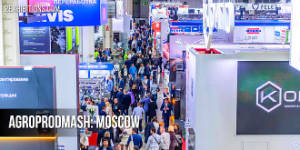
The four exhibition halls were organised around distinct stages of industrial food production. Hall 13 hosted more than 200 companies in bakery and confectionery, dairy and ice cream, beverage bottling, and fruit and vegetable processing. Hall 14 contained 161 companies specialising in packaging, automation, robotics, warehouse systems, weighing and measuring, sanitation, food safety and recycling. Hall 15 brought together more than 130 companies from 10 countries in meat, poultry and fish processing, casings, refrigeration and freezing. Hall 18 showcased more than 250 brands of ingredients, additives, spices and functional mixtures.
The visitor-interest figures demonstrate the strength of demand for integrated production technology. Food production equipment attracted 8,274 interested visitors, packaging equipment and materials 7,583, production automation and integrated engineering solutions 6,039, filling equipment 5,312, ingredients and additives 4,937, and refrigeration and air-conditioning 4,388. Other important categories included portioning equipment, with 3,190 interested visitors; warehouse equipment, 2,930; slaughtering and preliminary meat-processing equipment, 2,815; and food-safety and quality-control systems, 2,564.
These figures indicate that investment opportunities extend beyond processing machines to the systems needed to operate complete factories, preserve product quality and reduce losses.
Ready-To-Eat Food, Automation & The Business Programme

The new Ready-to-Eat Food Factory project assembled 109 companies presenting equipment and ingredients for prepared meals. Its supporting Forum on Strategic Challenges of Agribusiness: Ready-to-Eat Food addressed the segment’s demand, technology requirements and commercial development. The newly introduced Contract Expo programme connected retail-chain and industrial purchasers with suppliers of relevant equipment and technological solutions.
The wider business programme comprised 26 events, 185 speakers, 1,718 attendees and eight master classes. Major sessions included the 10th Forum on Food Processing Machinery, organised by the Rosspetsmash Association; the Conference on Robots in the Food Industry; the Forum on Innovative Technologies in the Dairy Industry; the 16th International Meat Congress; the Ingredients Industry Forum; and conferences and forums covering bakery, confectionery, refrigeration and beverage production.
Two new programme elements were the Conference on Sanitation in Food Production: Practice, Trends, Science, and a panel discussion on technological development and innovation in Russia’s beverage industry. The programme also included the Bread Baking Academy’s master classes, consulting centres operated by the Gorbatov Federal Research Center for Food Systems and the Russian State Research Institute of Baking Industry, and support from Rossoyuzkholodprom, the Russian Union of Refrigeration Enterprises. An Employment Centre addressed workforce-related issues.
The machinery forum highlighted that Russian-made equipment accounted for approximately 52% of the domestic market, according to Rosspetsmash Association president Konstantin Babkin.
Signed Contracts & Regional Export Outcomes

The clearest publicly quantified commercial result came from Krasnodar Krai. On 29 September, Yulia Prikhodko, head of the region’s Business Development and Foreign Economic Activity Department, said contracts for supplies to Commonwealth of Independent States and Eurasian Economic Union markets concluded through the exhibition over the preceding two years exceeded US$475,000. She also reported that companies participating in trade-fair stands organised by the region’s Export Support Centre had secured approximately US$15 million in contracts across exhibitions by the end of 2025. Regional collective stands represented Krasnodar Krai, the Republic of Tatarstan, Chelyabinsk Oblast and Voronezh Oblast. Six regions such as Voronezh, Kaluga, Moscow, Ryazan, Saratov and Chelyabinsk oblasts also supported manufacturers through co-financed participation. Krasnodar’s exhibitors included Levant-Rus, which supplies bakery and confectionery ovens, and Technoindustria, which manufactures equipment for automated filling and packaging lines. Four small and medium-sized businesses participated through the regional stand.
Russia’s Equipment Gap: Opportunities For Foreign Suppliers
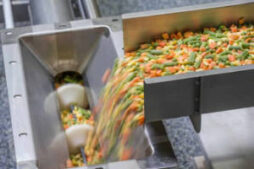
Russia’s food industry involves about 43,263 specific businesses, while import dependence remains high in selected machinery categories. The exhibition’s market assessment puts the imported share at 94% for meat and poultry equipment, 90% for fat-and-oil processing machinery, 81% for sugar-industry equipment, 79% for packaging and weighing machinery, and 70% for dairy equipment.
Ageing machinery reinforces the replacement opportunity. Reported equipment-wear rates reach 92% in animal-fat production, 81.6% in cocoa products, 80.4% in processed rice, 77.9% in chilled poultry, 77.5% in beer, 76.5% in margarine and 72.9% in bread and short-life bakery products. The market therefore offers room for both domestic manufacturers and overseas technology providers capable of delivering higher productivity, automation, energy efficiency and reliable maintenance.
For Chinese suppliers, the strongest opportunity is to combine competitive capital costs with local adaptation, installation, spare parts and technical support. For Russian manufacturers, the priority is to increase domestic capabilities while modernising equipment in segments where imports remain dominant. European and Turkish suppliers continue to compete in specialised processing and packaging technologies, while regional Russian firms can target smaller processors seeking affordable, lower-capacity systems.
Summary
AgroProdMash 2026 connected three measurable commercial forces: 23,966 professional visitors, 772 exhibitors and substantial reported post-show purchasing intentions. Its next edition is scheduled for 28 September-1 October 2027 at Crocus Expo, Moscow. The decisive measure of the 2026 exhibition’s economic impact will be the conversion of technical consultations and procurement leads into confirmed equipment orders, installed production capacity and repeat supply contracts.
This article was provided by M. Jahan, an analytical reporter for Russia’s Pivot To Asia. Contact: info@russiaspivottoasia.com