Русский






The 2026 Russia Energy Week (REW) forum has been taking place in Moscow, combining energy trade discussions with industrial modernisation, nuclear technology exports, engineering cooperation and investment opportunities across Asian and other international markets.
The scale of participation was substantial: approximately 6,600 participants and executives from 85 countries attended, including more than 3,000 business people and investors from over 640 Russian and foreign companies. The programme featured more than 40 events across seven thematic tracks, while an exhibition at Gostiny Dvor presented the equipment and technologies of approximately 100 companies and organisations. The main goal of the REW is to make industry dialogue practical and results-oriented while showcasing the prospects of Russia’s fuel and energy complex.
In this article we discuss what was achieved and the notable agreements, which included deals spanning floating nuclear power, electricity infrastructure, digital grids and international fuel supplies. Two floating nuclear power units with a combined capacity of 200 megawatts, a contract to design the reconstruction of Mongolia’s Ulaanbaatar Thermal Power Plant No. 3, and new agreements on electricity-grid technology formed among the most tangible commercial outcomes.
The main plenary session, titled “Sustainability as a Response to Geopolitical Shocks,” brought together Alexander Valentinovich Novak, Russia’s Deputy Prime Minister, and Sergey Yevgenyevich Tsivilev, Minister of Energy, alongside other senior government officials and energy-industry leaders from Russia, Turkiye, Belarus and Kazakhstan. The attendee also included Turkiye’s Energy and Natural Resources Minister Alparslan Bayraktar, Belarusian Deputy Prime Minister Viktor Karankevich, Kazakh presidential adviser Magzum Mirzagaliyev, Dmitriev, Gazprom Neft CEO Alexander Dyukov, Rosseti CEO Andrey Ryumin and Rosatom CEO Alexey Likhachev. Novak identified simultaneous pressures on the international energy system: insufficient investment in traditional energy with long capital cycles, geopolitical conflicts, restructuring of trade and protectionism among producers and consumers. Belarusian cooperation and Turkiye’s energy-security position formed part of the wider regional discussion, while Kazakhstan’s participation reflected the importance of Central Asian energy coordination.
Nuclear Power Export Opens A Commercial Channel In Indonesia
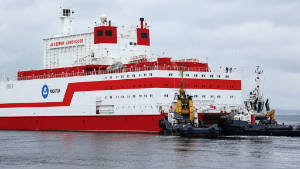
The most prominent international agreement was signed on 16 October between Russia’s Rosatom State Corporation and Indonesia’s PT Pembangkit Listrik Nuklir. The agreement covers electricity supply from two floating nuclear power units, each based on a 100 MW-class design, with a combined capacity of 200 MW. The project will serve consumers in North Maluku, particularly northern Halmahera Island in eastern Indonesia. Rosatom’s announcement identifies the agreement as a milestone in international floating-nuclear-power cooperation.
The units will use reactor technology from Rosatom’s RITM family. Electricity supplies are expected to begin within approximately five years after the contract’s key terms enter into force. The commercial structure is particularly significant: the project is intended to operate on a business-to-business basis, with private investment rather than direct funding from Indonesia’s state budget. Rosatom will retain ownership of the floating units, while the electricity-purchase arrangement is designed around the station’s full operating lifecycle, reported as 60 years.
The commercial importance extends beyond the initial 200 MW. Floating nuclear generation could provide relatively stable electricity to geographically dispersed island communities where conventional grid expansion and fuel logistics are expensive. For Rosatom, the agreement creates an export reference for a floating-power business model; for Indonesia, it offers a potential route to firm low-carbon generation. However, the project’s ultimate economics will depend on financing terms, construction schedules, regulatory approvals, grid integration and the price of electricity over the contract period.
Mongolia: Inter RAO-Export Secures A Thermal-Power Design Contract
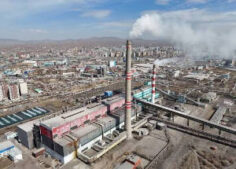
A second international outcome emerged on 15 October, when Russia’s Inter RAO-Export and Mongolia’s state-owned Thermal Power Plant No. 3 signed a contract for the development of a basic reconstruction project for Ulaanbaatar TPP-3. The agreement followed discussions involving Russian Energy Minister Sergey Tsivilev, Mongolia’s Energy Minister Badrakhyn Naidalaa and Minister of Industry and Mineral Resources Gongoryn Damdinnyam. The parties discussed expanded Russian electricity exports, Mongolia’s hydropower potential, nuclear-energy cooperation, personnel training, digital technologies, renewable-energy integration and electricity-storage systems. The design work concerns modernisation of the plant’s medium-pressure section, with a reported capacity expansion from 48 MW to 250 MW. This is a proposed configuration associated with the reconstruction project.
TPP-3 is an important component of Ulaanbaatar’s combined heat-and-power infrastructure. Published project reporting attributes approximately 32% of the capital’s heat supply and 16% of electricity supply in Mongolia’s central region to the plant. The figures underline the potential consequences of modernisation for urban heating reliability and electricity security. The deal also sits within a longer industrial relationship: 2026 marks 50 years since the integration of the Russian and Mongolian power systems. Beyond the design contract, the discussions could support future Russian electricity sales, technical services, engineering exports and workforce development. Nevertheless, the reconstruction’s final investment requirement, implementation timetable and subsequent construction contract remain separate milestones.
Azerbaijan’s Gas Trade & The Russia-Iran Energy Question
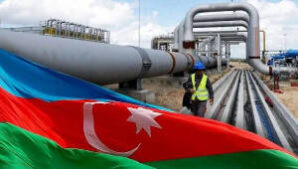
Azerbaijan’s engagement was one of the forum’s most commercially revealing developments because it connected gas purchases, seasonal swaps, transit infrastructure and wider South Caucasus energy security. On 16 October, Elshad Nasirov, Vice President of the State Oil Company of Azerbaijan (SOCAR), said the company was interested in resuming gas purchases from Russia’s Gazprom. He described the relationship as unusual: SOCAR had previously bought Russian gas, later supplied gas to Gazprom, and now wants to buy and exchange gas again. Gazprom CEO Alexey Miller confirmed that he was aware of the Azerbaijani interest.
The statement was an expression of commercial intent, not a signed purchase contract. Although Azerbaijan is itself a major gas exporter, export status does not eliminate the need for imports when domestic demand, seasonal balancing, production schedules and contractual commitments require flexibility.
History illustrates that flexibility. Azerbaijan imported approximately 4.48 billion cubic metres of Russian gas in 2006, before imports stopped in 2007 as domestic production expanded, particularly at the Shah Deniz field. The direction of trade later reversed, with Azerbaijani gas exports to Russia beginning in 2010. SOCAR and Gazprom signed a 1.6 bcm supply contract in November 2017; Azerbaijan imported around 349 million cubic metres in 2017 and 999 million cubic metres in 2018 before purchases stopped again in autumn 2018. In November 2022, the companies signed another agreement for up to 1 bcm of gas over the period from 15 November 2022 to 1 April 2023.
These previous volumes provide context. Azerbaijan’s own export strategy is expanding at the same time. SOCAR announced gas supplies to Germany and Austria in January 2026, while the Southern Gas Corridor continues to connect Azerbaijani production with Türkiye and European markets. The renewed interest in Gazprom therefore points to a pragmatic balancing model in which an exporter can purchase gas when commercially or operationally useful while continuing to serve overseas customers.
The Russia-Iran dimension was addressed at the 16 October session titled “Platform 3+3: Energy Cooperation as a Pillar of Peace and Security in the South Caucasus.” This brought together Azerbaijan, Armenia and Georgia with Russia, Iran and Turkiye. Participants included Russian Deputy Energy Minister Roman Marshavin, Iranian Deputy Oil Minister and National Iranian Gas Company chief Saeed Tavakkoli, SOCAR Vice President Elshad Nasirov and Armenian nuclear-sector representative Eduard Martirosyan.
A central subject was the 2024 Russia-Iran memorandum on Russian gas supplies to Iran, with transit through Azerbaijan forming part of the proposed arrangement. Marshavin indicated that the details were still under discussion. Nasirov supported greater use of existing pipelines and suggested that repairs and upgrades to compression facilities could help make cooperation possible without requiring an entirely new pipeline network. Tavakkoli emphasised Iran’s extensive gas infrastructure, geographic position and potential for seasonal gas and electricity exchanges.
Azerbaijan already has an established gas-swap relationship with Iran: Azerbaijan supplies gas to the country, while Iran supplies gas to Azerbaijan’s Nakhchivan Autonomous Republic. This existing arrangement offers a practical foundation for discussing additional transit or exchange mechanisms, although a Russian gas supply contract for Iran should not be confused with the existing Azerbaijan-Iran swap. The session also addressed energy cooperation between Azerbaijan and Armenia. Nasirov noted that Azerbaijan began supplying gasoline and diesel to Armenia in December 2025, describing energy trade as one example of practical cooperation that could support regional stability.
The wider regional objective is to make existing infrastructure more commercially productive. Russia has gas resources and export capacity; Iran has a large domestic gas network and demand; Azerbaijan offers transit links and established cross-border energy connections; while Turkiye has developed substantial energy infrastructure and transit capacity. Yet political differences, financing, contractual terms, pipeline availability and the coordination of national energy strategies remain obstacles. The forum advanced discussion, not a completed trilateral contract.
US-Russia: Diesel Supplies Open a Channel for Wider Commercial Discussions
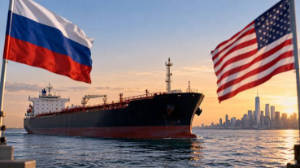
Russian-US energy contacts emerged as a significant commercial issue on the sidelines of Russian Energy Week. On 14 October, Kirill Dmitriev, chief executive of the Russian Direct Investment Fund and a presidential investment envoy, said the emerging diesel-supply arrangement could create opportunities for broader economic and investment cooperation. Deputy Prime Minister Alexander Novak said negotiations on commercial contracts for diesel deliveries were under way, while stressing that supplies required signed contracts, loading arrangements and vessel charters. Dmitriev also said the two sides were discussing other potential economic projects, including data-centre development involving Russian nuclear power capacity. These discussions linked energy trade with possible cooperation in digital infrastructure, but the data-centre initiatives remained under discussion rather than announced, completed investments. Russia and the US are finalizing contracts for diesel fuel supplies, with the first tanker loaded with 40,000 tons of Russian diesel fuel set to leave for the United States on October 22.
Several Other Countries Want Russian Diesel
Russian oil companies are ready to start supplying diesel fuel to global markets at any moment, Dmitry Peskov stressed. A number of countries, not just the US, are interested in purchasing Russian diesel fuel, Deputy Prime Minister Alexander Novak stated, saying “Russian diesel is demanded all over the world. Other consumers are also interested.” Russian oil companies are ready to start supplying diesel fuel to global markets at any moment, with commercial terms being negotiated now, the official said. Novak said that Russia would begin to lift restrictions on diesel exports ahead of schedule immediately, being one of the key suppliers of this fuel to the global market. Moscow is ready to supply additionally 300,000 tons of diesel to the US market and to all partners in October, increasing the volume to 500,000 tons in November, and 1 million tons in December, while monthly supplies could subsequently reach 3 million tons, he added.
Potential for Russian Diesel Deal With Europe, Nord Stream To Return?

Kirill Dmitriev said energy cooperation between Russia and the United States could expand over time, potentially encouraging European companies to participate in further transactions. Speaking at the Verona Eurasian Economic Forum in Istanbul on 22 October, Dmitriev said a diesel-fuel deal with European partners could be possible if demand emerged. He also highlighted the importance of Russian fertiliser supplies to American farmers and proposed technology cooperation, including a potential joint data-centre project, citing Russia’s low electricity costs as a competitive advantage for artificial intelligence infrastructure. Dmitriev argued that European businesses were facing pressure from high energy prices following the reduction of Russian energy supplies and maintained that commercial dialogue between Russia and Europe would continue despite political tensions. He also predicted that the Nord Stream gas pipelines would eventually return to operation. His remarks outlined possible avenues for future energy and technology cooperation, although no new European diesel contract, data-centre agreement or Nord Stream restart timetable were confirmed in the statements.
The EU has long been buying LNG from Russia at spot prices, with volumes hitting record amounts in H1 this year. That politically avoids longer-term contractual ties with Russia, but at a substantial cost. Global LNG prices have nearly tripled this year, with Brussels continuing to insist on using the spot price market, costing EU taxpayers billions of euros. Longer-term contracts are far less expensive and build in fiscal stability.
Domestic Agreements Target Technology And Modernisation
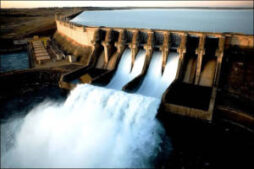
Russian companies used the forum to advance a parallel programme of equipment localisation, grid modernisation and engineering cooperation. On 16 October, RusHydro and Power Machines signed a strategic cooperation agreement covering modernisation and new construction in thermal and hydropower generation. The agreement was signed by RusHydro board member and First Deputy General Director-Chief Engineer Sergey Kondratyev and Power Machines General Director Alexey Podkolzin. The companies intend to coordinate projects with Russia’s long-term electricity-sector development plans, including the general scheme of power facilities extending to 2042. Areas of work include North Caucasus hydropower facilities, Artemovskaya TPP-2 and Khabarovsk TPP-4. The agreement establishes a cooperation framework; it does not, by itself, demonstrate that the entire associated investment pipeline has been financed or contracted.
Another agreement connected RusHydro with KER-Holding on equipment reliability, domestic technology and the potential export of engineering solutions. The prospective markets identified include Kazakhstan, Kyrgyzstan, Uzbekistan and Tajikistan, with longer-term opportunities in Latin America, Southeast Asia and Africa.
Rosseti and the National Research University Moscow Power Engineering Institute agreed on scientific and technical cooperation in energy storage, power electronics, direct-current networks and artificial intelligence. The combination reflects a growing need to manage intermittent renewable generation, improve grid performance and accommodate electricity-intensive digital infrastructure.
Rosseti Lenenergo and Tavrida Electric agreed to pursue domestic software and hardware solutions for power networks in St Petersburg and the Leningrad Region. Their cooperation supports the localisation of grid equipment and control systems, although no contract value or quantified deployment target was publicly specified.
In Tatarstan, Tatenergo concluded a credit agreement with VTB and a construction contract with EKS Group for a combined-cycle gas-turbine unit at Naberezhnye Chelny combined heat-and-power plant. The financing and construction arrangements illustrate how the forum connected industrial equipment demand with bank lending. Other company and institutional engagements included cooperation between Kazan State Power Engineering University and Rosseti North Caucasus, as well as agreements involving universities, energy companies and personnel-training programmes. The common commercial objective is to link domestic engineering capacity with equipment procurement, grid upgrades and future generation projects.
Russia Targets 125 Million Tonnes Of Coal Shipments To Asia
Russia’s coal shipments eastward are projected to reach 123-125 million tonnes in 2026, up from 118.2 million tonnes in 2025, when deliveries increased 6.1% year on year, Deputy Energy Minister Dmitry Islamov stated. Total Russian coal exports are forecast to reach 211 million tonnes this year. Islamov identified the expansion of the Eastern Railway Polygon as a priority for both Russian Railways and the coal industry, underscoring the importance of railway capacity in moving coal towards Asian markets. The projected shipments would represent an increase of approximately 4.8-6.8 million tonnes over 2025, reinforcing the eastward transport corridor’s role in Russia’s coal-export strategy.
Exports of coal (energy and coking) from Russia to China in September 2026 increased by 39% compared to last September and reached 9.4 million tonnes, according to China customs. The volume of deliveries in September was the maximum monthly figure for more than two years. In monetary terms, coal exports doubled to US$1.2 billion in September. The volume of Russian coal exports to China in January-September amounted to 62.6 million tonnes, 6% less than in the same period of 2025. In monetary terms, exports for the nine months increased by 20% to reach US$7.2 billion.
Fuel Markets: A Diesel Shortage Exposes The Cost Of Disrupted Trade

The forum’s discussions took place against severe volatility in internationally traded fuels. On 16 October, Deputy Prime Minister Alexander Novak estimated the global diesel supply shortfall at approximately 25% of international trade. He attributed the imbalance principally to the inability of Persian Gulf producers to supply international markets and to Russian export restrictions introduced to protect domestic availability.
Novak said Russia had traditionally supplied around 10% of international diesel trade, serving markets in Asia, Africa, Latin America and other regions. He also reported that diesel prices had risen to approximately US$200 per barrel while crude oil traded in a range of roughly US$100-120 per barrel. The figures highlight the pressure on refining margins, freight costs and industrial consumers.
Novak indicated that understandings concerning diesel supplies between the Russian and US presidents could help rebalance the market partially. The issue nonetheless illustrates the tension between domestic fuel security and export-market stability. A country with substantial refining capacity can remain an important potential supplier, but export restrictions, refinery maintenance, infrastructure disruption and shipping constraints can sharply alter available volumes. Buyers consequently face higher prices and greater uncertainty over delivery schedules.
Novak also argued that geopolitical shocks, underinvestment in conventional energy, protectionism and restructuring of global trade were affecting the market simultaneously. He noted that oil and petroleum-product costs, including freight and insurance pressures, had nearly doubled since the beginning of the year. These conditions reinforce the importance of diversified suppliers, reliable transport routes and investment in both production and distribution.
ASEAN & India: The Asian Market Takes A Larger Role

India participated as Russian Energy Week’s official partner country for the first time. The Federation of Indian Petroleum Industry brought projects from eight leading companies, covering exploration and production, refining, natural gas, engineering and emerging energy technologies. The participating companies were Oil and Natural Gas Corporation (ONGC), Oil India Limited, Indian Oil Corporation, Bharat Petroleum Corporation, Hindustan Petroleum Corporation, GAIL (India), Engineers India Limited and associated industry representatives. Their combined presence offered a cross-section of India’s petroleum value chain, from upstream production to refining, gas distribution and engineering services. The exhibition also highlighted hydrogen, compressed biogas and sustainable aviation fuel. Indian participation created opportunities to discuss investment in Russian energy assets, technical cooperation and distribution networks.
A major external development affecting Russia-India commercial relations came on October 16, 2026, when US President Donald Trump waived key provisions of legislation threatening additional sanctions and tariffs against countries purchasing Russian energy. The measures under the Lindsey O. Graham Sanctioning Russia and Iran Act of 2026 had raised the prospect of tariffs of up to 100% on imports from countries buying Russian oil and gas. India, one of Russia’s largest energy customers, faced particular exposure to the proposed penalties. The decision offered New Delhi immediate relief from the threatened measures, but it has not amounted to a permanent lifting of US sanctions. Secretary of State Marco Rubio said the administration would use a period of up to 60 days to assess the economic consequences, providing some short-term relief for Indian refiners, energy traders, and companies managing long-term supply contracts. The implications extend beyond oil purchases to the wider commercial relationship between Moscow and New Delhi.
The ASEAN engagement had a broader regional dimension. On 15 October, ASEAN Secretary-General Kao Kim Hourn participated in the session “Russia-ASEAN Energy Bridge: Resources, Technologies, New Markets.” He met Russian Energy Minister Sergey Tsivilev to discuss implementation of the ASEAN-Russia Energy Cooperation Work Plan 2026-2030 and the conversion of existing bilateral commitments into practical activities. Kao reported that Russian oil and gas supplies to ASEAN countries had grown by 50% since 2015. He also highlighted the region’s expanding energy requirements, describing energy demand as having increased fourfold since 2016 in the session’s discussion. The regional agenda included conventional fuels, renewable energy, technology exchange, company-to-company cooperation and potential joint projects.
For Russia, ASEAN offers a diversified market spanning large energy consumers, fast-growing electricity systems and archipelagic economies requiring flexible supply arrangements. For Southeast Asian buyers, cooperation can widen access to fuel, engineering and generation technologies. Actual progress will depend on commercial pricing, financing, transport availability and the ability to implement projects under each country’s energy framework.
Turkiye, Belarus And Kazakhstan: Market Coordination And Regional Resilience

The main plenary session, “Sustainability as a Response to Geopolitical Shocks,” brought together Alexander Novak, Energy Minister Sergey Tsivilev, Turkish Energy and Natural Resources Minister Alparslan Bayraktar, Belarusian Deputy Prime Minister Viktor Karankevich, Kazakh presidential adviser Magzum Mirzagaliyev, Russian Direct Investment Fund chief executive Kirill Dmitriev, Gazprom Neft chief executive Alexander Dyukov, Rosseti chief executive Andrey Ryumin and Rosatom chief executive Alexey Likhachev. Sergey Brilev moderated the discussion.
The meeting’s commercial significance lay in the interaction between producer countries, transit and infrastructure operators, investors and major energy consumers. Turkiye’s participation reflected continuing interest in energy security and Russian-Turkish energy cooperation. Belarusian participation reinforced the Union State’s established fuel-and-energy links. Kazakhstan’s engagement highlighted the role of OPEC+ coordination in balancing the international oil market. Novak emphasised that Russia and Kazakhstan’s cooperation within OPEC+ contributed to market stability. The outcome is better characterised as coordination on market management than as a newly financed bilateral project. The wider programme also addressed energy cooperation in the South Caucasus through the “3+3” platform, energy supply to Arctic and isolated territories, small-scale distributed generation, thermal-power modernisation and regional fuel-and-energy balances. These discussions linked international market stability with the practical challenge of supplying remote communities and modernising ageing infrastructure.
Africa: Russia Targets Gas Supplies, Power Infrastructure And Long-Term Energy Projects

Gas supply contracts, geological exploration, power-plant modernisation and the development of African electricity infrastructure emerged as important priorities in Russia’s energy engagement with the continent at Russian Energy Week 2026. Russian Energy Minister Sergey Tsivilev said Russian companies were prepared to conduct geological exploration, participate in gas extraction and supply gas to African markets. He described African countries as long-term markets for Russian energy technologies, equipment and engineering services. The proposed commercial approach extends beyond exporting fuel: it encompasses power generation, transmission networks, technical services and the development of local industrial capabilities. Tsivilev outlined a broad package of potential projects, including the modernisation of existing hydroelectric power plants, construction of solar and thermal power stations, installation of electricity transmission lines, supply of substations and transformers, and establishment of energy-system management and dispatch-control centres. Russian companies also expressed readiness to undertake geological surveys and exploration, develop gas resources and organise supplies. These opportunities could involve equipment exports, engineering and construction contracts, technical maintenance, training and longer-term operational support.
However, the minister’s statement described Russia’s capabilities and commercial intentions. The initiative was supported by recent bilateral engagement with the Central African Republic, Togo and Niger, where Russian delegations had held the first meetings of intergovernmental commissions. Tsivilev said commissions with Mali and Burkina Faso were also operating. According to the minister, these meetings had produced lists of specific projects, implementation timelines and designated responsible parties, rather than merely formal statements of intent. At Russian Energy Week, he said the Russian Energy Ministry intended to continue discussions on implementation with African partners at the Russia-Africa Economic and Humanitarian Forum scheduled for Moscow on 28-29 October 2026.
The REW forum was therefore identified as the next opportunity to review progress and advance the previously discussed projects, not as evidence that all of them had already reached contract or construction stage. For African partners, the proposed model combines access to Russian equipment and expertise with the development of domestic capacity. Tsivilev said Russia was prepared to train local specialists, employ local workers and transfer knowledge so that partner countries could operate their own energy systems. Such an approach is relevant to markets seeking to expand electricity access, replace ageing generating equipment, improve grid reliability and develop domestic technical workforces. The economic opportunity is not limited to fuel exports: it potentially includes power-station rehabilitation, grid construction, control systems, transformer and substation supply, engineering services and professional training.
Gas is a separate strand of the proposed cooperation. Tsivilev said long-term gas supply contracts were important because developing new fields requires investment over decades. He also highlighted growing demand in Asia and Africa and the need for stable contractual arrangements, fair pricing and cooperation on equipment and standards. These comments connect African market development with Russia’s wider effort to secure predictable outlets for gas and to expand cooperation in exploration, production and energy technology.
Africa consequently represents a significant prospective market in Russia’s international energy strategy, but the commercial assessment must separate the project pipeline from completed transactions. Russian Energy Week established that Moscow was pursuing a package-based approach encompassing exploration, gas supplies, power generation, grids, equipment and workforce development. The next measurable milestones would be the publication of individual project agreements, disclosed financing arrangements, delivery schedules and evidence of construction or supply commencement. For now, the forum’s Africa message was the stated readiness to move from intergovernmental discussions towards implementation, with the upcoming Russia-Africa forum the next venue for detailed follow-up.
Arctic Transport, Low-Carbon Fuels & Digital Energy
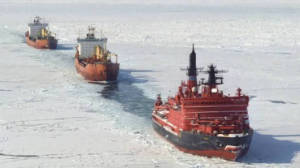
Northern infrastructure featured prominently in discussions about Russia’s future export capacity. Minister for the Development of the Far East and the Arctic Alexey Chekunkov outlined plans for a Northern Sea Route commercial fleet of more than 100 ice-class vessels and four additional nuclear icebreakers alongside the existing eight. These are development plans rather than completed fleet additions. Their economic significance lies in the potential to support Arctic supply chains, resource development and more reliable seasonal navigation.
The programme also examined low-carbon fuels and climate policy ahead of COP31. Energy Minister Sergey Tsivilev argued that Russian low-carbon fuel technologies were competitive on several performance measures, while acknowledging that production costs could exceed those of conventional fuels. His position was that comparisons should account for fuel consumption, emissions and the potential role of support mechanisms. Transport Minister Andrey Nikitin said Russia would seek recognition of Russian carbon units under the international aviation emissions framework, with the mandatory CORSIA phase beginning in 2027. Tatneft chief executive Nail Maganov said the company was already producing aviation fuel meeting International Civil Aviation Organization requirements.
Digitalisation was another cross-cutting theme. Discussions covered data centres, artificial intelligence, storage systems, automation and electricity supply for new industrial loads. Kirill Dmitriev said Russia and the United States were discussing potential joint data-centre projects, including facilities using capacity from Russian nuclear power plants. He indicated that a list of projects involving Russian companies had been compiled.
The exhibition reinforced the technology focus. Transneft displayed domestically produced equipment, including an asynchronous traction motor, a burner device and a local automation system for heat points. Transneft, Rosstandart and Rosaccreditation also announced a machine-readable digital-standard testing method based on the company’s laboratory information system. The initiative connects industrial testing, standards and digital accreditation with the broader drive to strengthen domestic supply chains.
Workforce Development And The Business Programme
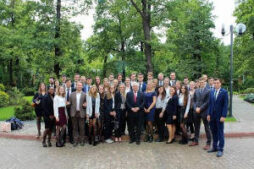
The forum’s opening day, 14 October, was dedicated to Youth Day and attracted more than 2,000 students, schoolchildren and young specialists from Russia, CIS countries and BRICS economies. The CASE-IN International Engineering Championship, held as part of the REN Cup, involved 31 teams from 36 companies. The winning teams were Engineering Legion, from Gazprom Neft’s Omsk refinery, and Carbon Footprint, from Mosenergo.
The Reliable Change Foundation and the Gorchakov Foundation signed an agreement enabling the 15 strongest finalists of the BRICS League of Young Specialists to undertake internships in Russia from 2027. Gazprom received the Grand Prix in the second fuel-and-energy-sector employers’ awards for its contribution to personnel development. Transneft won the “Start in Career” category for youth recruitment and career guidance. The Energy of the Pen international media competition received 257 applications from 40 countries, while the REN Cup KVN festival’s main prize went to the Titans team from St Petersburg State Electrotechnical University “LETI”.
These initiatives addressed an industrial constraint that runs across the forum’s project announcements: new nuclear systems, grid automation, digital standards, thermal-plant modernisation and Arctic logistics require skilled engineers and technicians as well as capital. The personnel programme was therefore connected to the practical delivery of the sector’s technology and infrastructure plans.
Summary
Russian Energy Week 2026 produced a mixture of signed project documents, company agreements, technology cooperation and prospective supply arrangements. The Rosatom-Indonesia agreement and the Mongolia TPP-3 design contract stand out as identifiable international project milestones. The Russian grid and generation agreements add a substantial domestic technology and modernisation component. The ASEAN cooperation plan provides a framework for regional engagement, while Azerbaijan’s interest in renewed Gazprom purchases and the Russia-Iran transit discussions show how established pipelines and swap mechanisms remain central to regional energy flexibility.
The overall direction is clear: Russian energy cooperation is being pursued through several parallel channels, including nuclear technology exports, thermal and hydropower modernisation, gas trade and swaps, electricity interconnection, digital infrastructure, domestic equipment and engineering services. The strongest near-term commercial signals are the projects with named counterparties and defined technical milestones. The largest regional opportunities, Russia-Iran gas transit through Azerbaijan, expanded Russia-ASEAN energy cooperation and additional Asian and African market access, remain dependent on detailed contracts, infrastructure readiness and commercial implementation.
This article was written by Ms. Begum, an international affairs analyst specializing in the energy sector and she may be reached at info@russiaspviottoasia.com