 Русский





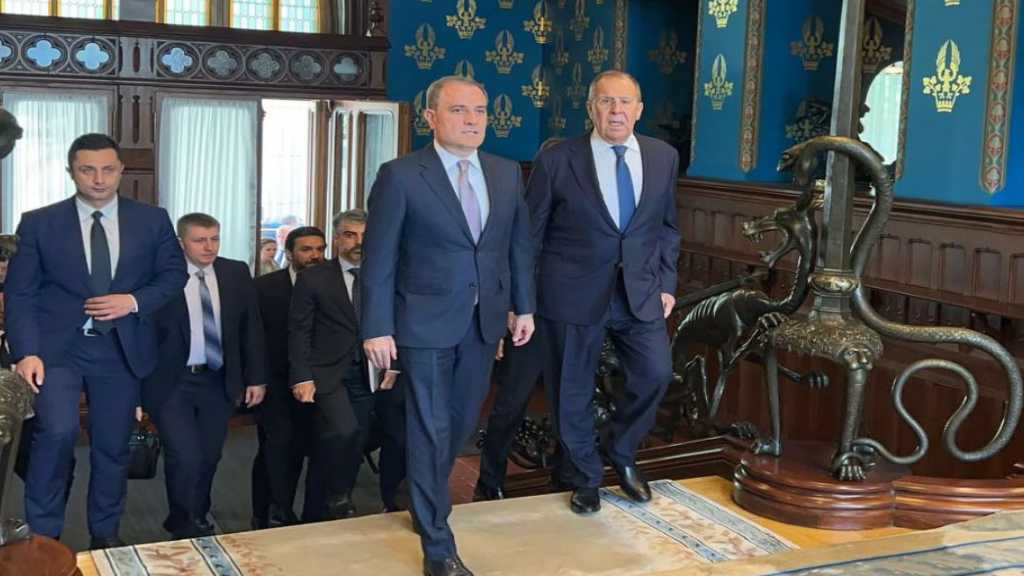

The meeting between Russian Foreign Minister Sergey Lavrov and Azerbaijani Foreign Minister Jeyhun Bayramov in Moscow on July 17 was widely interpreted as the formal political normalization of bilateral relations after several months of diplomatic turbulence. Relations between Azerbaijan and Russia have been fully normalized, according to Azeri President Ilham Aliyev speaking at the Shusha Global Media Forum the day before.
Yet focusing solely on diplomacy overlooks the real economic transformation. Russia and Azerbaijan are quietly building an increasingly integrated production, trade, investment and logistics ecosystem that has become substantially more resilient than political fluctuations.
During their Moscow talks, Lavrov and Bayramov reviewed the full spectrum of bilateral relations, with particular emphasis on expanding trade, investment, transport connectivity and regional cooperation. The two ministers reaffirmed their commitment to the Declaration on Allied Cooperation, signed in 2022, and agreed to strengthen regular political dialogue, intergovernmental coordination and parliamentary exchanges. They discussed the implementation of decisions adopted during the 24th session of the Russia-Azerbaijan Intergovernmental Commission on Economic Cooperation, held in April this year, while highlighting the importance of increasing bilateral trade, which reached nearly US$5 billion in 2025, and encouraging further Russian investment, which now totals US$10.7 billion in Azerbaijan with more than 1,400 active Russian-capital enterprises operating across the country.
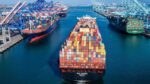
Transport and logistics featured prominently in the discussions, including accelerating work on the western branch of the International North-South Transport Corridor (INSTC), implementing the December 2024 transit freight agreement, and advancing the strategically important Rasht-Astara railway linking Russia, via Azerbaijan to Iran.
The ministers also emphasized closer cooperation in industrial localization, digital technologies, cultural and educational exchanges, including plans to establish a joint Russian-Azerbaijani university in partnership with St. Petersburg State University, while reaffirming support for the 3+3 Regional Cooperation Platform, the South Caucasus framework that brings together three regional countries – Armenia, Azerbaijan, and Georgia and three neighboring powers – Russia, Turkiye, and Iran.
The Russia-Azerbaijan investment figures, industrial production, corporate localization, transport infrastructure and business expansion indicators suggest that Russian-Azerbaijani economic cooperation has entered a fundamentally different phase. Instead of merely exchanging commodities across borders, Russian companies are increasingly producing inside Azerbaijan, investing in long-term industrial assets and using the country as a strategic platform connecting Russia with the South Caucasus, Turkey, Central Asia, Iran and the Middle East.
This represents a structural evolution in bilateral relations. During the previous decade, trade volumes served as the principal measure of economic cooperation. Today, ownership of productive assets, localization of manufacturing, integrated logistics and digital services are becoming the more meaningful indicators of strategic partnership. This normalization therefore that both economies have become increasingly interdependent through investments that cannot easily be reversed.
Russia – Azerbaijan Bilateral Trade And The Eurasian Economic Union

The scale of Russia’s business presence in Azerbaijan illustrates this transformation. According to Azerbaijani Deputy Prime Minister Shahin Mustafayev, as of April 1, 2026, more than 2,100 Russian capitalized businesses were registered in Azerbaijan, while Azerbaijan investors had placed over US$1.2 billion dollars into Russia.
Even more significant is the operational rate: over 1,400 companies including VTB Bank, Lukoil, Geropharm, Sibalux, Penoplex, and Abrau-Dyurso, are all actively operating, demonstrating that Russian investment is not merely registered on paper but functioning across multiple sectors of the Azerbaijani economy. Russian companies such as KAMAZ, GAZ Group, Sollers, and AvtoVAZ operate assembly production facilities in Azerbaijan.
Accumulated Russian investment has now exceeded US$10.7 billion, including approximately US$2.9 billion invested outside the oil sector. This distinction is particularly important because it indicates diversification into manufacturing, pharmaceuticals, construction materials, logistics, finance, information technology and consumer services rather than concentration solely in hydrocarbons.
Mustafayev urged Russian businesses to expand their participation in Azerbaijan’s reconstruction efforts after its territorial dispute with Armenia, highlighting a 10-year package of tax and customs incentives in certain regions. During their discussions in Moscow, Lavrov confirmed these figures, adding that Russia remains one of Azerbaijan’s leading economic partners.
These figures deserve careful interpretation. Around 80 Russian regions maintaining cooperation with Azerbaijan, including 18 regions that have formal agreements covering education, trade, science, technology and culture.
Trade turnover between Azerbaijan and Russia reached US$4.9 billion in 2025, an increase of 2.5% compared with 2024. Russia was Azerbaijan’s third-largest trading partner, accounting for 10.3% of the country’s total trade in January-June 2025.
However, owing to political tensions that emerged in late 2025 and early 2026, bilateral trade declined by 31.4% year-on-year to US$1.73 billion in January-June 2026. Despite these challenges, Russia has expressed its commitment to maintaining and strengthening trade ties with Azerbaijan.
During H1 2026, Azerbaijani exports to Russia increased by 3% to US$608.56 million, or about 3.7% of Azerbaijan’s total. Russia was also the second-largest importer of Azerbaijani non-oil products during the first half of 2026 and ranked first in the first quarter of the year. Azerbaijan exported US$596.14 million worth of non-oil products to Russia during January-June, up 1.7% year-on-year, representing 10.7% of the country’s total non-oil exports. Meanwhile, Azerbaijan imported goods worth US$1.12 billion from Russia during the same period, a 42% decline compared with the previous year, accounting for 13.4% of Azerbaijan’s total imports.
Russia remains Azerbaijan’s third-largest source of imports, after China and Turkiye. Nevertheless, recent political developments suggest that bilateral economic ties may improve as relations continue to normalize. This trend has been reinforced by the visit of the Azerbaijani Foreign Minister and recent comments by President Ilham Aliyev, indicating a willingness to restore and expand cooperation.
At the same time, tensions between Armenia and Russia over EU integration versus Eurasian Economic Union (EAEU) membership have prompted speculation that Russia may support Azerbaijan’s potential future accession to the EAEU. Russia is also prepared to help Baku become a member of the Eurasian Development Bank, with Russian Deputy Foreign Minister Mikhail Galuzin confirming this in remarks at the June St. Petersburg International Economic Forum (SPIEF). If this materializes, it would significantly boost bilateral trade, business cooperation, and investment flows between Azerbaijan and Russia.
Bilateral trade turnover of about US$5 billion is substantial for neighboring economies, however it is worth noting that the mutual investment stock is more than twice as large. Such a ratio is typical of mature economic partnerships where businesses no longer rely exclusively on exports but establish production facilities, subsidiaries and regional headquarters inside the partner country. This shift from commerce to capital formation marks the transition from transactional trade toward integrated economic development.
Localization Is Replacing Export Dependence
The most important trend highlighted by recent developments is the increasing localization of Russian manufacturing. Instead of exporting finished products into Azerbaijan, Russian companies are increasingly manufacturing locally through joint ventures and industrial cooperation. This strategy creates employment, transfers technology and reduces transportation costs while allowing companies to adapt production for regional markets.
The automotive sector provides one of the clearest examples. At the recently formed Azermash Joint Venture, Russian manufacturers including AvtoVAZ and GAZ Group have established large-scale assembly operations producing LADA passenger vehicles and GAZ commercial vehicles for the Azerbaijani market. Rather than shipping completed vehicles from Russian factories, production is carried out inside Azerbaijan itself.
The industrial significance extends beyond simple assembly. Local production develops supplier networks, logistics services, maintenance facilities and technical training. Every assembly line generates demand for components, transport providers, skilled labor and engineering services. Over time, these industrial ecosystems become increasingly difficult to relocate elsewhere, strengthening long-term economic integration.
A similar pattern is visible in heavy industry. KAMAZ, working jointly with the Ganja Automobile Plant, has established an expanding service center within the Araz Valley Economic Zone, supporting trucks, construction equipment and specialized machinery. This is not merely an after-sales operation but part of a broader industrial ecosystem supporting freight transport and infrastructure development across Azerbaijan and neighboring markets. These projects indicate that Russian industrial companies increasingly view Azerbaijan not purely as an export market, but as a manufacturing platform integrated into regional supply chains. The old Soviet-era model has long been replaced by more integrated structures that leave more on the table for Russia’s partners and are structurally and economically more secure.
Pharmaceuticals Demonstrate Long-Term Industrial Confidence
Another example of Russia’s long-term confidence in Azerbaijan is in pharmaceuticals. The R-Pharm production complex located in the Sumgait Chemical and Industrial Park in Baku has become one of the flagship examples of Russian industrial localization. The facility produces pharmaceuticals while also undertaking packaging and distribution of finished medicines, including modern insulin products.
Unlike commodity trading, pharmaceutical production requires significant capital expenditure, highly trained personnel, regulatory compliance and sophisticated quality-control systems. R-Pharm signed an agreement with the Russian biotechnology company Geropham in 2025. The agreement between the parties involves the localization of three types of insulin at the Baku zone: RinGlar (insulin glargine), RinFast (insulin aspart), RinFast Mix (biphasic insulin aspart), as well as the commercial sales of drugs for the treatment of diabetes mellitus.
Such investments are typically planned over decades rather than years. The location itself is equally significant. Sumgait has gradually evolved into Azerbaijan’s principal industrial cluster for chemical and advanced manufacturing activities. Russian participation within this industrial park demonstrates confidence in Azerbaijan’s long-term industrial policy rather than simply its domestic consumer market.
The proposed creation of an industrial site modeled after Tatarstan’s “Khimgrad” Technopolis inside the same industrial park represents the logical continuation of this strategy. The project aims to attract additional Russian manufacturers and localize new industrial production within Azerbaijan, further expanding bilateral production integration. These projects collectively indicate the emergence of an integrated Russian industrial ecosystem inside Azerbaijan.
Beyond Energy: Diversification Defines the New Partnership
Energy remains a cornerstone of bilateral cooperation. LUKOIL continues in the development of the Shah Deniz gas condensate field, while Transneft oversees transportation of Azerbaijani oil through the Baku-Novorossiysk pipeline. These projects remain strategically important for both countries and preserve Russia’s long-standing presence within Azerbaijan’s energy sector.
However, limiting analysis to hydrocarbons increasingly understates the broader picture. Russian investment has spread into construction materials through Penoplex Pirsagat, producing thermal insulation products for Azerbaijan and neighboring export markets.
Agribusiness has become another area of expansion. The Abrau-Durso Group is investing in vineyard modernization and wine production in the Sheki district, producing for both domestic consumption and export markets. This investment demonstrates that Russian capital is entering higher-value agricultural production rather than concentrating exclusively on traditional industrial sectors. Together, these projects illustrate a notable diversification of bilateral economic relations. Manufacturing, pharmaceuticals, agriculture, construction materials and industrial services now complement energy cooperation, making Russian investment considerably more resilient to fluctuations in commodity markets.
Digital Infrastructure Is Becoming the New Economic Layer

This transformation is equally visible in the digital economy. Russian technological companies have become embedded within Azerbaijan’s information infrastructure. Kaspersky Lab provides cybersecurity solutions for government institutions, financial organizations and private enterprises. Positive Technologies supplies corporate cybersecurity solutions through local partners. Business automation continues expanding through 1C, which operates localized software adapted to Azerbaijani legislation and commercial requirements.
Meanwhile, Yandex Go has become part of daily urban economic life, providing taxi and courier services used by households and businesses alike. Digital services deserve greater analytical attention because they represent recurring economic activity rather than one-time investment. Every payment processed, every logistics order delivered and every cybersecurity contract renewed creates continuous economic interaction between the two countries. Unlike physical trade, digital integration often deepens automatically as users become increasingly dependent upon established technological ecosystems. This trend suggests that future Russian-Azerbaijani cooperation will increasingly include artificial intelligence, digital logistics, cloud services, fintech and industrial automation alongside traditional manufacturing and energy sectors.
Financial Infrastructure Supports Expanding Trade
Financial connectivity has evolved alongside industrial cooperation. VTB Bank (Azerbaijan) continues operating despite sanctions affecting its Russian parent institution. Importantly, the bank has adapted its operations by facilitating settlements in Russian rubles and Azerbaijani manats, helping maintain bilateral commercial transactions under changing international financial conditions. The significance extends beyond banking services. National currency settlements reduce exposure to external financial restrictions while lowering exchange-rate risks for businesses engaged in bilateral trade. As manufacturing localization expands, efficient financial infrastructure becomes increasingly important because production networks require continuous payments to suppliers, contractors, transport operators and employees. The continued functioning of Russian financial institutions therefore provides essential institutional support for expanding industrial cooperation.
Economic Logic Has Outpaced Political Volatility
The most striking conclusion emerging from recent developments is that economic integration proved more durable than temporary political tensions. Relations undoubtedly experienced difficulties following the December 2024 AZAL aircraft tragedy. Yet during that period, Russian companies continued operating, investments remained in place, factories continued producing and bilateral trade approached record levels.
Political scientists and analysts summarized this reality succinctly by noting that business interest had not disappeared despite diplomatic tensions.
Statistical indicators confirmed the resilience of bilateral economic ties, with trade reaching close to US$5 billion, an historic record. That resilience provides perhaps the strongest evidence that Russian-Azerbaijani economic relations have entered a fundamentally different stage. The relationship is no longer sustained merely by political goodwill. It is increasingly supported by factories, investments, logistics networks, financial institutions, industrial parks, digital platforms and thousands of operating enterprises that together create powerful economic incentives for continued cooperation.
These structural foundations explain why the July 2026 normalization was not simply the end of a diplomatic episode but the beginning of a new phase in Eurasian economic integration. The deeper strategic implications of this transformation become even clearer when examining transport connectivity, the International North-South Transport Corridor, and Azerbaijan’s emerging role as Russia’s principal logistics gateway amid growing instability across global maritime trade routes. Actually, improved Russian-Azerbaijani relations can pave the way for a fully functioning INSTC.
Azerbaijan Is Becoming Russia’s INSTC Economic Gateway
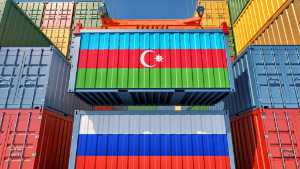
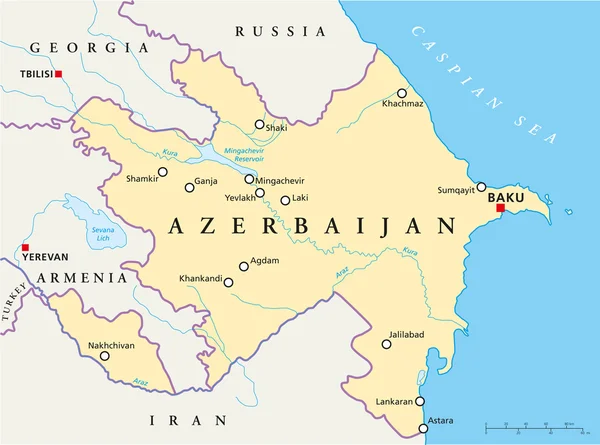
The most consequential dimension of Russia-Azerbaijan economic cooperation extends well beyond bilateral trade. The partnership is increasingly becoming the backbone of a broader Eurasian logistics architecture stretching from Russia through the South Caucasus to Iran, the Persian Gulf, India and the wider Middle East. While factories, investments and industrial localization demonstrate the depth of bilateral integration, transport connectivity is redefining Azerbaijan’s strategic value in Russia’s long-term economic planning.
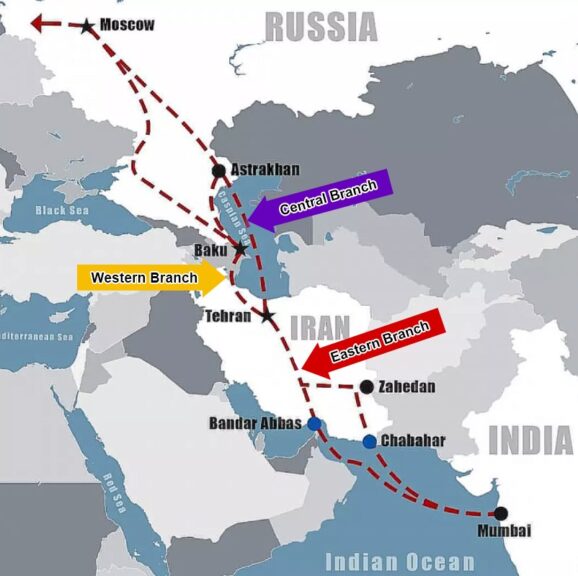
The Moscow discussions included considerable attention to transport and logistics, reflecting how infrastructure has become one of the principal pillars of bilateral cooperation. Both ministers reviewed bilateral progress on implementing mutually beneficial transport projects, while emphasizing the importance of further expanding cooperation in logistics and transit. The implementation of the Russian-Azerbaijani intergovernmental agreement signed in December 2024 on expanding freight traffic along the western branch of the INSTC was highlighted as one of the priority economic initiatives. Unlike conventional transport projects, the INSTC is not another railway or highway. It is becoming Russia’s strategic insurance policy against increasing geopolitical disruptions affecting traditional maritime supply chains.
From the Strait of Hormuz to Eurasian Railways
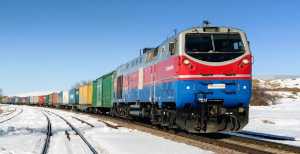
Recent developments in the Middle East have dramatically increased the economic relevance of the INSTC During the two Ministers press conference, Sergey Lavrov directly linked the urgency of completing the corridor to the prolonged crisis surrounding the Strait of Hormuz. He warned that continuing instability in one of the world’s most important maritime chokepoints was already affecting the global economy and international transport routes. More importantly, he confirmed that practical progress had finally been achieved on the long-delayed Rasht-Astara railway section, after Iranian authorities completed the allocation of land required for construction.
According to Lavrov, railway authorities from Russia, Azerbaijan and Iran had recently met on-site to coordinate practical implementation, expressing confidence that tangible progress would now follow “Because all three parties have demonstrated a clear interest.”
This statement deserves attention because the Rasht-Astara section has long represented the missing link of the western branch of the INSTC. Once completed, continuous rail freight movement will become possible from Russia through Azerbaijan into northern Iran, dramatically improving transport efficiency between Eurasia and the Persian Gulf.
The timing is also highly significant. The crisis surrounding the Strait of Hormuz has reminded governments and businesses that maritime transport remains vulnerable to geopolitical shocks. Around 20% of globally traded crude oil previously passed through Hormuz each day, making any disruption a global economic concern. Against this backdrop, overland transport corridors capable of bypassing vulnerable sea lanes acquire far greater strategic value. For Russia, Azerbaijan therefore becomes considerably more than a neighboring trading partner. It becomes an indispensable geographic bridge connecting the Russian economy with alternative markets and alternative transport routes.
Geography Is Becoming an Economic Asset
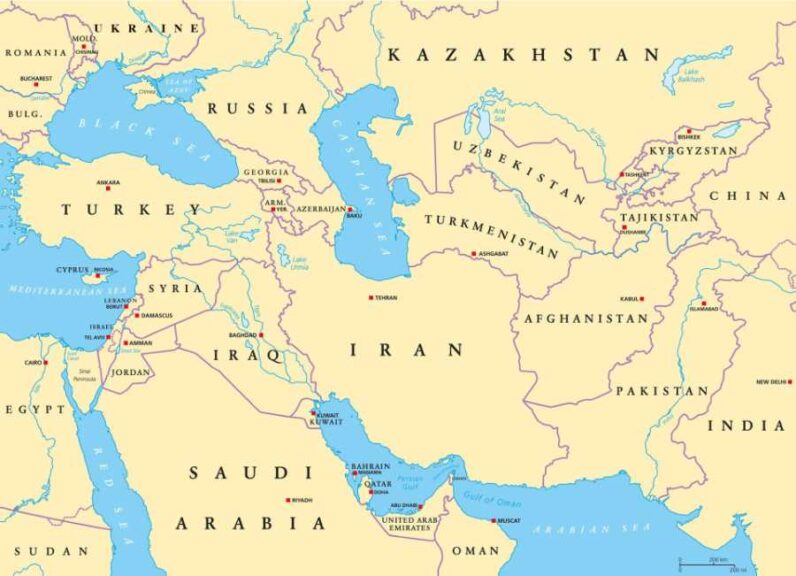
Throughout modern history, Azerbaijan has often been described in geopolitical terms. Today, that geography is increasingly generating measurable economic returns. Being situated between Russia, Iran, Turkiye and the Caspian Sea, Azerbaijan occupies one of the few locations capable of integrating several major transport systems simultaneously.
Russian officials have repeatedly emphasized this. The normalization of bilateral relations was accompanied by renewed commitments to deepen cooperation in transport, logistics and regional connectivity under both the Declaration on Allied Cooperation and broader Eurasian integration initiatives.
The strategic calculation extends beyond bilateral commerce. Russian exporters increasingly require diversified export routes following the restructuring of international trade patterns after 2022. Azerbaijan offers access not only to Iran but also to Central Asia, the South Caucasus, Turkiye and Middle Eastern markets through multimodal transport networks combining rail, highways, ports and maritime shipping across the Caspian Sea. Rather than replacing existing routes, Azerbaijan is becoming one of several complementary corridors that increase resilience within Russia’s external trade system. In an era when supply-chain security has become as important as production capacity, diversified transport corridors themselves constitute valuable economic assets. Crucially, the Caspian Sea, itself landlocked, is off-limits to any Western interference.
Industrial Parks Are Becoming Logistics Hubs
Transport infrastructure and industrial localization increasingly reinforce one another. The proposed establishment of an industrial platform modeled on Tatarstan’s Khimgrad Technopolis inside the Sumgait Chemical and Industrial Park illustrates this interaction. Rather than serving purely domestic production, new manufacturing facilities located in Sumgait could benefit directly from improved access to North-South logistics corridors connecting Russia, Azerbaijan and Iran. Similarly, industrial cooperation involving Azermash, KAMAZ, GAZ, AvtoVAZ and R-Pharm demonstrates how localized manufacturing and expanding transport infrastructure increasingly function as parts of a single economic ecosystem. Factories require efficient freight services. Freight corridors require industrial cargo. The more manufacturing capacity develops inside Azerbaijan, the greater the volume of goods transported along regional logistics corridors. Conversely, improved transport infrastructure strengthens the commercial attractiveness of new industrial investment. This mutually reinforcing relationship creates long-term economic momentum extending well beyond short-term trade statistics.
Business Is Diversifying Faster Than Politics
One notable characteristic of Russian investment in Azerbaijan is its remarkable sectoral diversification. The Russian corporate presence now spans banking, pharmaceuticals, automotive manufacturing, construction materials, agriculture, digital services, logistics, cybersecurity, energy, software development and consumer services. Financial institutions such as VTB Bank (Azerbaijan) continue facilitating settlements in rubles and manats despite changing international financial conditions. Technology companies including Kaspersky, Positive Technologies, 1Cand Yandex Go have become integrated into Azerbaijan’s digital economy. Logistics providers such as SDEK maintain delivery networks linking Azerbaijan with Russia and other CIS markets. Consumer brands including Dodo Pizza, Chaikhona No.1and Novikov Group restaurants have expanded their presence in Baku, reflecting growing confidence in Azerbaijan’s domestic consumer market.
This diversification matters because mature economic partnerships rarely depend upon a single sector. The wider the distribution of investment across industries, the greater the resilience of bilateral economic relations. Temporary difficulties affecting one sector become less capable of disrupting the broader relationship.
Political Normalization Is Reinforcing Economic Confidence
The restoration of political dialogue had also removed an important source of uncertainty for investors, with Lavrov highlighting numerous concrete outcomes. These included implementation of decisions adopted during the April 2026 meeting of the Intergovernmental Commission on Economic Cooperation. These refer to an expansion of cultural and educational cooperation, work towards establishing a joint Russian-Azerbaijani university with the St. Petersburg State University, enhanced media cooperation and closer coordination on transport and Caspian issues. These measures carry measurable economic implications. Universities develop skilled labor. Educational exchanges support technology transfer. Government consultations reduce regulatory uncertainty. Media cooperation improves the investment environment by reducing misinformation that can influence business confidence. Economic integration increasingly depends upon institutional cooperation rather than simply commercial contracts.
Summary: The South Caucasus As An Emerging Economic Region
The broader significance of Russia-Azerbaijan normalization lies in regional economics rather than bilateral diplomacy alone. With both sides emphasizing the importance of the 3+3 Regional Cooperation Platform, (Russia, Azerbaijan, Armenia, Georgia, Iran and Turkiye) Moscow and Baku increasingly present this as capable of facilitating regional transport connectivity, economic cooperation and infrastructure development without external interference.
If transport links across the South Caucasus continue reopening and infrastructure projects advance, the region could evolve from a geopolitical fault line into an integrated logistics and manufacturing zone. Such an outcome would substantially increase the commercial value of Russian investment already established inside Azerbaijan. The normalization of Russia-Azerbaijan relations should therefore be understood as confirmation of a much deeper structural trend. As geopolitical competition reshapes global trade, countries increasingly seek secure production networks, diversified transport corridors and reliable regional partners. Russia’s economic engagement with Azerbaijan reflects precisely this strategic adaptation.
This article was written by I.K. Hasan, a South Asia based independent researcher, columnist, and freelance journalist. He can be reached at info@russiaspivottoasia.com