 Русский






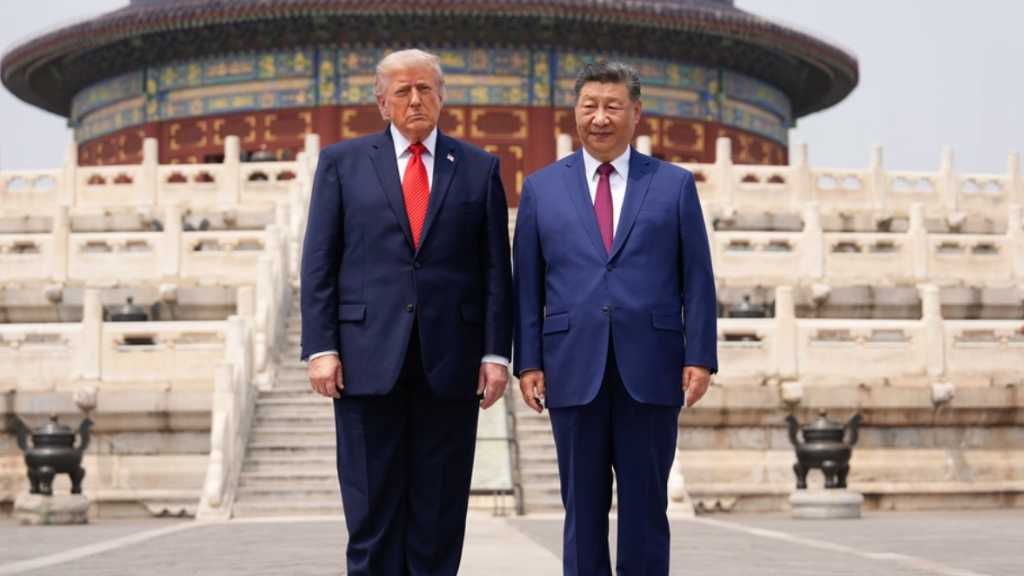

Donald Trumps’s state visit to China has naturally underscored the relations between Washington and Beijing, with large business delegations also attending from both sides. However, although this event has dominated Western media, the Russia angle has been ignored. If this article we explore how the US-China dynamics also impact Russia – and vice-versa.
Energy
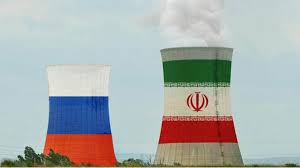
It is no real secret that in the Western half of Eurasia, the United States has successfully managed to exclude Russian energy supplies from much of Europe and replace this with its own, more expensive alternatives. However, in the Eastern half of Eurasia, the story is completely different. Russia is a significant source of China’s need for imported energy, currently supplying 13% of China’s oil needs and 23% of its LNG. These figures are expected to increase, for two main reasons. The Strait of Hormuz closure has impacted Chinese supplies from Iran and the Middle East – 42% of China’s toral oil imports – while in terms of LNG, the Power of Siberia 2 pipeline, which is in the process of being constructed, will boost China’s LNG imports from Russia by a further 10% of its total imports.
The timescales for these however differ. Concerning the Strait of Hormuz issue, supplies to China will resume when the US conflict with Iran can be resolved, and it is assumed that Trump has asked Xi for assistance. Quite how that manifests itself is hard to suggest – China is highly unlikely to become militarily involved and it regards Iran as a vital strategic partner. However, it is also in Beijing’s interests to see a resolution to the conflict. This suggests that Chinese diplomacy and negotiation will be called upon – and will almost certainly revolve around Iran’s need to develop its nuclear energy sector – currently being talked up by both Washington and Tel Aviv as a no-go area. But there is a caveat here: having nuclear power is different from possessing nuclear weapons, and modern nuclear power stations can operate without any material being repurposed for developing weapons. The world leader in this technology? Russia.
Russia’s State Atomic Energy Corporation, Rosatom, has been building eight nuclear power plants in Iran. The construction of the second and third units of the Bushehr Nuclear Power Plant was scheduled to be completed this year, but the deadline was postponed due to the Israeli-American military operation against Iran.
Typically, Rosatom manage and control the entire operations of its overseas NPP, and Iran would presumably be no exception. China’s role would be to mediate between the United States, Iran and Russia to hammer out agreements. The difficulty? Israel, whose President Netanyahu has wound up his own country and much of the West by insisting that Iran cannot under any circumstances possess nuclear material. It is Israel that needs to be bought to heel here, creating panic when there is no need to do so. The beneficiaries to any Iran deal would be wider reaching: the United States can exit an unwinnable conflict, China can resume oil imports, Iran can have a peaceful nuclear power industry, and Russia gets to supply the technology. The question is how far Netanyahu is prepared to go to break this up.
Concerning the Power of Siberia 2, this is not scheduled to be operational until around 2034. This will run from Russia, via Mongolia, to Northeast China. While the agreement to build it has been signed off by the Presidents of China, Russia and Mongolia, there is much work to be done, including the construction – much of which runs through difficult terrain, including permafrost. Some of this involves technology the United States is not necessarily cognisant with, however needs to develop in its own Arctic and Northwestern regions, including Alaska.
This suggests that US energy companies – especially those involved in construction – may want a piece of the Siberia 2 development. Such involvement would help meet the enormous US$25 billion cost, and would, from the financial sense alone, be welcomed by both Moscow and Beijing. The key here would be to thrash out the extent of any US involvement: both Beijing and Moscow are too canny operators to allow US energy companies to have any operational control of the Power of Siberia 2 project. However, if this were to happen, it could later pave the way for more American involvement in Eastern Eurasia – such as previously mooted connectivity between Alaska and Russia.
Trade & Logistics
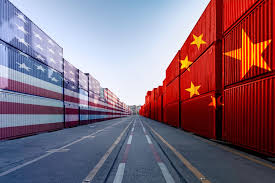
Both the China and US sides have bought with them extensive business delegations, including senior US corporate executives such as Elon Musk (Tesla, Space X), Tim Cook (Apple), David Solomon (Goldman Sachs), Larry Fink (Blackrock), Jane Fraser (Citi), Kelly Ortberg (Boeing), and Jensen Huang (Nvidia), together with senior executives from Meta, Cargill, Visa, Cisco, Qualcomm, Coherent, Micron, GE Aerospace, Illumina and Mastercard.
With Russia relatively close to Beijing, and currently being China’s sixth largest trade partner, discussions will have touched on Chinese trade that involves Russia. This could involve a stealthy re-emergence into the Russian market for example by US companies supplying component parts to Chinese exporters who subsequently sell onto Russia. This can be either directly through Chinese exports to Russia, or by jointly manufacturing in Russia – as is the case in the auto industry – which US car manufacturers exited to their great economic loss in 2023.
With China’s exports to Russia set to more than double to reach over US$250-300 billion by 2030, United States exporters will still want to insert themselves into those supply chains in the absence of any rapprochement with Moscow. China’s top five exports to Russia?
| Product | Value (USD billions) |
| Machinery | 27.2 |
| Automotive | 25.48 |
| Electronics | 15.95 |
| Plastics | 4.42 |
| Medical Equipment | 3.21 |
While some items within this will currently fall under the ‘dual use’ category, any solution to the war in Ukraine would almost immediately mean these items could be back on the menu as regards exports to Russia. A key element for discussion between American and Chinese officials will have been shared opinions about Ukraine, and the potential for a relaxation of secondary sanctions as a result. If this happens, US exporters may be first in the queue to supply Russia – via Chinese manufacturers.
This may also work in reverse. Should the US government deem it necessary to downplay trade links with Russia, the import of Russian products via China may also be a solution. Significant non-energy Russian exports to China include
| Product | Value (USD billions) |
| Minerals | 3.66 |
| Rare Earths | 2.4 |
| Machinery | 1.9 |
| Copper | 1.89 |
| Fertilizer | 1.0 |
Such a scenario would also impact logistics routes. In the event of any sanctions being lifted, trade between Russia and the United States, via China, would also increase. Working out the effectiveness and ensuring that sufficient services and the related vessels and supporting equipment are available would also have been a discussion between trade representatives of China and the United States.
The bottom line is that as China has diversified its trade – a strategic, long-term plan put into place years ago – any increase in China-US trade will impact Russia at some point. The question is assessing where these categories are. Interestingly, with the United States so fixated on secondary sanctions – they also possess exactly the type of product intelligence that would allow them to identify which products Russia is involved in both importing and exporting – and can take advantage of exactly this data should it wish to engage on an indirect basis. A key point here is that the US, should it wish too, can steal a march on European competitors with an eye on doing the same should relations with Russia start to normalise. It is worth pointing out in this context that the United States is closer to Russia and Eastern Eurasia than the Europeans.
North Korea
North Korea has long been a thorn in the side of the United States, although there does appear to be some respect, if not warmth, between the current leaders. However, the regional dynamics as concerns Pyongyang have recently changed. Since the collapse of the USSR, North Korea has essentially been kept afloat by China, with Beijing providing just enough fiscal and trade support to keep the country going. Russia in the interim has largely been a bit player. The conflict in Ukraine has changed this. With Moscow leaning towards Pyongyang’s massive military reserves (it has the largest military strength in numbers of personnel in the world), North Korea’s bilateral relations with Moscow have boomed, and it is almost certain that Moscow has now overtaken Beijing as Pyongyang’s largest supporter.
To a large – but not complete – extent, this suits Beijing, as long as it is kept aware of the regional dynamics. What Beijing does not want is thousands of North Korean refugees coming across its border in the event of a North Korean collapse. It too, is also wary of Pyongyang’s nuclear deterrent.
The United States will want to keep Pyongyang quiet, and Xi can provide some stability here. However, at the current moment, Kim Jong-Un is more aligned with Putin and with the Russian military than with China, meaning that North Korea, despite having a long border with China, is also a Putin play for both Beijing and Washington. Yet Moscow too, will not want to antagonise Pyongyang. An unofficial triumvirate between China, Russia and the United States appears to be the way ahead for handling Pyongyang. This will have been discussed between Xi and Trump.
Summary
While it is true that much of the China-US dialogue will have been focused on bilateral trade, it is also true that China, as the world’s largest trading nation, has also developed considerable trade routes and supply chains on a global basis. That fact that Beijing is not involved in imposing sanctions or unprovoked tariffs on competitors also means that its trade reach is arguably larger and extends further than that of the United States. When it comes to global trade, Xi is the King here, not Trump.
This has specific implications for Russia as it is one of China’s fastest growing global trade partners and will rise to fifth place by 2030. The United States is also more likely to move faster than the Europeans in engaging with Russia should normalisation appear to be a development factor. If not, then the China route to Russia remains a strategic gateway.
As we have seen in Russia’s development plan to 2030, its own GDP growth is expected to reach 3% plus by the end of this decade. That is projected to be more than the European Unions’ growth rate and could be higher if the Ukraine situation is resolved. That is a question of when? However, we can be certain that this eventuality, and the reabsorption of Russia into US supply chains either directly or indirectly, will have been very much a secondary issue of the China-US discussions.