 Русский





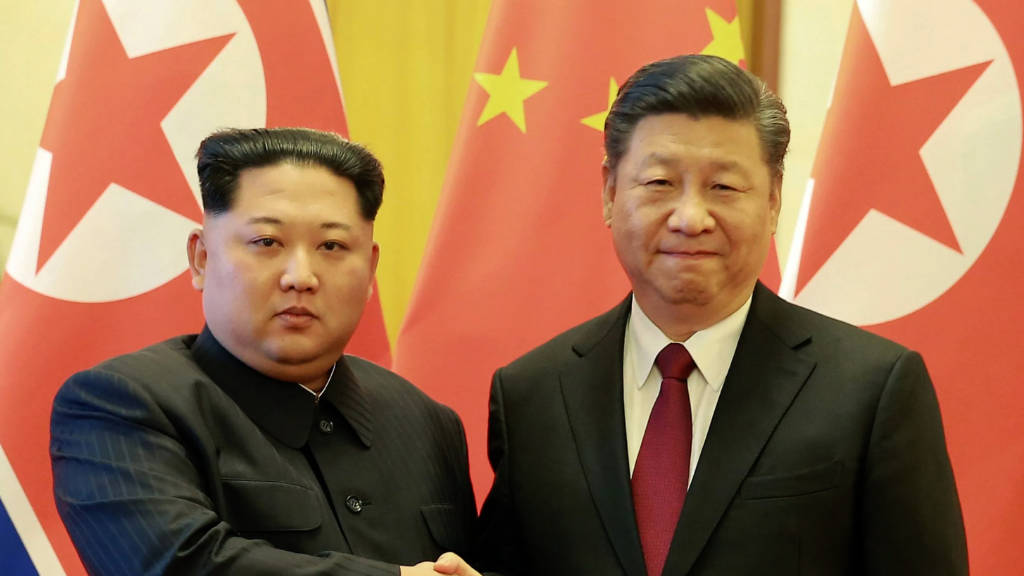

The Chinese President, Xi Jinping, has been visiting the North Korean leader Kim Jong-Un in Pyongyang, in rare official visit. North Korea is the only country that has a mutual defense agreement with China, however, recent developments involving North Korea and Russia have also resulted in a similar agreement. Russian trade and cooperation with North Korea have grown significantly in recent years, arguably overtaking China’s in importance for Kim.
Beijing has long been both supportive of North Korean independence and is reluctant to see unification as this would likely mean a US-dominated unified Korean border right on its doorstep. At the same time, it has long been mindful of North Korea’s economic problems and does not want millions of refugees crossing over into the Chinese mainland. To this end it has helped to maintain the North Korean economy on a ‘life support’ system that maintains relative poverty without the threat of mass starvation nor unification. This has been the de facto policy for the past 40 years.
However, North Korea’s economy has been opening up with Russian interest, with Kim swapping military and construction engineering support in return for sophisticated weapons systems and improving commercial ties, even to the extent of welcoming Russian tourists. Russian exports of consumer goods are also growing.
The main focus for Xi will undoubtedly be military, with commerce a close second. Beijing us already concerned about what it sees as Japan’s militarization – having North Korea, which regularly sends cruise missiles over the Japanese mainland in provocative tests – will be seen as a bonus. Chinese technology could also be passed to, or even manufactured in North Korea to boost its own weapons production – with Russia likely to be a major client state (others include African countries).
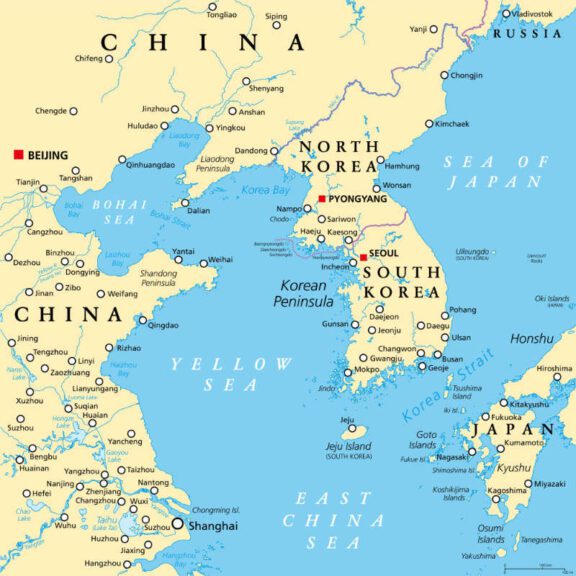
It also serves both Pyongyang’s, Moscow’s and Beijing’s purposes if the North Korea economy can be developed to at least a reasonably sustainable growth level – doing so raises North Korea’s economic base and reduces the need for fiscal support.
It should also be noted that North Korea possesses significant mineral reserves, with total potential values ranging from US$6 trillion to US$10 trillion. The country hosts deposits of over 200 different minerals, including some of the world’s largest reserves of magnesite and significant quantities of zinc, iron ore, coal, gold, graphite, and rare earth elements. China’s economy needs feeding with many of these and Kim will be keen to see Chinese investment resulting from Xi’s visit. Moscow will be looking on with interest, while Beijing and Moscow will undoubtedly be coordinating as to which sectors they will become involved in.