Русский





More than 160 cooperation agreements and memorandums were concluded in Moscow during the 2026 Russia-Africa summit, establishing a broad commercial framework linking Russian industrial producers, financial institutions, energy companies, agricultural exporters, universities and logistics operators with African markets.
The final Roscongress Foundation tally (the organisers) comprises 166 documents, including 104 agreements and 62 memorandums. Their combined scope covers mineral extraction and processing, nuclear energy, agricultural production, transport infrastructure, financial settlements, industrial development, healthcare, scientific research and commercial market access.
In this article we deep dive the agreements reached and provide a critical analysis of the development path ahead in Russia-African trade and investment. This article is of primary interest to anyone involved in the African and Russian trade and development sectors.
Participation: 48 African Countries, 630 Companies, 3,500 Delegates
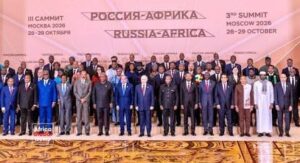
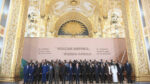
The Russia-Africa Summit brought together more than 3,500 participants from 74 countries, including more than 1,200 business representatives from approximately 630 companies. Delegations from 48 African countries participated, representing nearly nine-tenths of the continent’s 54 states.
The Economic and Humanitarian Forum was held on 28-29 October at Gostiny Dvor in Moscow. Its principal theme was developing mutually beneficial cooperation and unlocking the potential of every African country. The business programme contained more than 40 thematic sessions and panel discussions, with approximately 100 speakers. Four principal areas organised the programme: sovereignty as the foundation of sustainable development; the economy of a sovereign world order; social and humanitarian cooperation and human capital; and technologies and innovation for improving quality of life.
Trade and investment, industrial development, technology transfer, energy and food security, healthcare, education, scientific cooperation, digitalisation and youth exchanges formed the principal sectoral subjects. The programme also provided a platform for discussions involving the Eurasian Economic Union, African regional economic communities and BRICS. These discussions were important for identifying ways to connect Russian companies with markets extending beyond individual bilateral relationships.
Among the participants in the economic programme were Maxim Reshetnikov, Russia’s Minister of Economic Development; Andrey Nikitin, Deputy Prime Minister; Igor Levitin, Presidential Adviser and Special Representative for International Transport Cooperation; Roman Chekushov, State Secretary and Deputy Minister of Industry and Trade; and Sergey Ryabkov, Deputy Foreign Minister.
African business and institutional representatives included Elias Mpedi Magosi, Executive Secretary of SADC; Balibi Serge Auguste Bayala, President of the Confederation Bank for Investment and Development of the Sahel States Alliance; and representatives of African financial and trade organisations. Business sessions examined the practical conditions for expanding investment, including financing availability, settlement mechanisms, industrial partnerships and the role of Russian technological companies in African development. A particularly significant discussion concerned the relationship between BRICS, the Eurasian Economic Union and African economic integration. The question is how Russia can expand its commercial presence in African markets while competing with established suppliers offering extensive financial support, infrastructure investment and competitive manufactured goods.
Major Russia-Africa Deals
RUSAL’s US$1.5 billion-plus Ghana aluminium project, Rosatom’s nuclear agreements, 13 million tonnes of grain shipments, new transport corridors and 166 institutional and commercial instruments form the economic backbone of the Moscow partnership. The strongest immediately quantifiable industrial commitment is the agreement between Russian aluminium producer RUSAL and Ghana Integrated Aluminium Development Corporation (GIADEC), which provides for bauxite production of up to 5 million tonnes annually and an alumina refinery with capacity of 1.2 million tonnes a year. The refinery investment is estimated at more than US$1.5 billion.
The agreements connect projects at different stages of commercial development. They include joint-venture structures with defined production capacities, transport and customs arrangements, financing partnerships, regional market-access frameworks and technical cooperation roadmaps. Russian companies including RUSAL, Rosatom, PhosAgro, Zarubezhneft, FESCO and VEB.RF feature prominently, alongside African investment-promotion agencies, development banks, chambers of commerce, universities and regional economic organisations. The immediate economic significance lies not simply in the number of signatures but in the combination of resource access, processing capacity, commodity distribution, infrastructure development and payment arrangements required to expand trade.
The 166-Document Cooperation Package: Four Institutional & Commercial Components

The Roscongress breakdown provides a useful picture of the scale and composition of the agreements. Of the 166 documents, 64 were concluded at interdepartmental level, 44 involved universities, companies and other organisations, 29 concerned media cooperation, and another 29 were signed through the Roscongress Foundation. The total includes the Third Russia-Africa Summit, the parallel Economic and Humanitarian Forum and the Russia-Africa Media Forum.
The 64 interdepartmental instruments establish the institutional foundations for commercial activity. Five new intergovernmental commissions on trade, economic, scientific and technical cooperation were established with Kenya, the Democratic Republic of the Congo, Niger, Senegal and South Sudan. Their significance lies in creating permanent mechanisms for addressing trade barriers, coordinating investment proposals, identifying industrial partners and following up on commercial projects.
The 44 university, company and organisational agreements add another layer. They connect research institutions, industrial enterprises, educational establishments and business organisations, allowing commercial cooperation to develop alongside technical training and professional exchanges.
The 29 media agreements and 29 Roscongress documents complete the published breakdown. The latter include partnerships with African trade associations, investment-promotion organisations, chambers of commerce and youth organisations.
Together, these four categories account for the entire 166-document total. Three overarching multilateral texts provide the wider cooperation framework: the Declaration of the Third Russia-Africa Summit, the Declaration on Cooperation in Civilian Artificial Intelligence Technologies, and the Russia-Africa Partnership Forum Action Plan for 2027-2029. The action plan is particularly important for commercial implementation. Its three-year timeframe provides a framework for coordinating projects with African regional organisations and national institutions across trade, investment, industrialisation, transport, energy, agriculture, technology, education and healthcare.
Ghana: RUSAL and GIADEC Establish A Bauxite To Alumina Industrial Chain

The most substantial individually quantified industrial project emerging from Russia-Africa summit was the RUSAL-GIADEC agreement signed on 29 October. The partnership covers two connected ventures in Ghana: the development of the Nyinahin bauxite deposit in the Ashanti Region and the construction of an alumina refinery. The mining project is designed for annual production of up to 5 million tonnes of bauxite, with the area containing estimated resources exceeding 100 million tonnes.
The second stage envisages an alumina refinery with annual processing capacity of 1.2 million tonnes, using natural gas. The ventures will operate through Nyinahini Bauxite Ltd and Ghana Alumina Company. RUSAL will provide project financing and hold majority stakes in both companies. Ghana’s participation includes minority equity, with a 10% non-dilutable stake.
The refinery investment is estimated to exceed US$1.5 billion, with construction expected to take approximately 36 months. RUSAL Director General Evgeniy Nikitin described the agreement as an important step in strengthening the company’s raw-material base. GIADEC Chief Executive Officer Reindorf Twumasi Ankrah said the partnership would support Ghana’s ambition to process its bauxite domestically and develop an integrated aluminium industry. The project has particular importance for Ghana because its aluminium industry has historically faced a structural gap between bauxite extraction and alumina production. Domestic refining allows a larger proportion of the value chain to remain inside the country.
The existing Volta Aluminium Company (VALCO) smelter provides a potential downstream industrial connection. The availability of domestic alumina could support future efforts to increase local aluminium production and develop fabrication industries. The project also has infrastructure implications. The mine and refinery will require transport connections, energy supply, industrial services and port capacity. These requirements create opportunities for Ghanaian engineering companies, contractors, equipment suppliers and logistics operators. The expected construction and operating phases will generate employment, while the use of local suppliers can extend the project’s economic contribution beyond the two joint ventures. For RUSAL, the project provides access to a substantial West African bauxite resource and an additional alumina production platform. The company has operated in Africa for more than 20 years, including through its existing operations in Guinea.
The Ghana partnership is consequently significant for both sides: it strengthens RUSAL’s raw-material security while giving Ghana an opportunity to move further into mineral processing. The project is also relevant to the wider African industrialisation agenda. Exporting unprocessed minerals generally leaves producing countries with a smaller share of the final value generated by mining. Refining, processing, engineering and downstream manufacturing create additional opportunities for employment, technology acquisition, taxation and local enterprise development. The RUSAL-GIADEC structure stands out from other agreeements because it identifies two joint-venture companies, a specific mining location, annual production targets, refinery capacity and a financing estimate.
Nuclear Energy: Rosatom Advances Agreements With Togo, Uganda and Rwanda
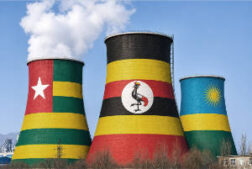
Nuclear energy formed another major commercial and technological component of the summit. Rosatom held discussions with representatives of more than 25 African countries and signed three cooperation agreements during the gathering. Chief Executive Officer Alexey Likhachev said interest had expanded beyond conventional large nuclear power stations to floating nuclear power units, small modular reactors and non-power applications of nuclear technology. The company reported that nine coastal countries had expressed interest in floating nuclear power technology, including Egypt, Ethiopia, Tanzania, and Namibia.
Togo: Floating Nuclear Power Possibilities

On 28 October, Rosatom and Togo’s Ministry of Energy signed a memorandum on cooperation in the peaceful uses of nuclear energy. The agreement was signed by Alexey Likhachev and Robert Koffi Messan Eklo, Togo’s Minister Delegate for Energy. It provides for specialised working groups to evaluate nuclear power projects and non-power applications, develop personnel training and strengthen public understanding of nuclear technology. Potential applications include healthcare, agriculture and scientific research, in addition to electricity generation. Floating nuclear power units were identified as one possible area for further examination. The memorandum creates a technical cooperation framework rather than a final investment decision for a nuclear plant. For Togo, the discussions connect energy planning with industrial development, electricity reliability and the possibility of supplying power to future industrial and logistics facilities. For Rosatom, the agreement creates an institutional entry point for long-term cooperation involving technology assessment, training, engineering and potentially fuel and maintenance services.
Uganda: Infrastructure Assessment And The Nakasongola Site

Uganda’s cooperation roadmap with Rosatom provides for a working group to assess the country’s nuclear infrastructure requirements. Possible engineering surveys at Nakasongola form part of the technical discussions. The roadmap is important because nuclear development requires more than the selection of reactor technology. It involves electricity-grid planning, regulatory capacity, site assessment, workforce training, environmental preparation and long-term financing. Uganda’s cooperation therefore represents an early-stage development pipeline, with the next phase centred on technical evaluation.
Rwanda: Small Modular Reactors & Nuclear Science

Rwanda advanced nuclear cooperation through roadmaps concerning small modular reactors and a nuclear science and technology centre. The programme connects possible future electricity generation with scientific applications, professional training and the development of domestic nuclear expertise. A nuclear science and technology centre could support research, medical applications and technical education even before a commercial power project reaches the construction stage. The small modular reactor track offers Rwanda an additional option for examining future electricity supply requirements.
Ghana and Ethiopia: Larger-Capacity Nuclear Cooperation

Ghana’s nuclear discussions included the possibility of a large-capacity power station of approximately 2,000 MW. The proposal is relevant to the country’s industrialisation plans, particularly energy-intensive industries such as aluminium production, mineral processing and manufacturing. Ethiopia continued work on an earlier large-capacity nuclear power station roadmap, including site-selection activities. The two countries’ nuclear discussions have different development stages and should not be treated as completed construction contracts.
Egypt, Namibia and Tanzania: Floating Nuclear Power

Rosatom’s discussions with Egypt, Namibia and Tanzania included floating nuclear power units. Floating units could potentially provide electricity to coastal industrial areas, remote facilities and locations where conventional power infrastructure requires substantial development. For countries with large coastal economies, the technology also raises possibilities for combining electricity generation with industrial zones, desalination and other energy-intensive activities. The commercial model would extend beyond reactor supply to engineering, personnel training, fuel services, maintenance and technical support over the operating life of a facility. The broader African nuclear market therefore represents a long-term industrial and service opportunity for Rosatom, although individual projects require further technical, regulatory and financial development.
Agriculture: 13 Million Tonnes Of Grain; 2.2 Million Tonnes Of Fertilisers
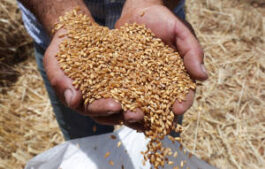
Agricultural trade provides the largest already-operating physical supply relationship in the Russia-Africa economic partnership. Russia exported more than 18 million tonnes of grain to African countries in 2025, and shipped about 13 million tonnes in the first nine months of 2026, an increase of 8%. The principal destinations demonstrate the concentration and growth of the trade. Egypt received 5.9 million tonnes in the first nine months of 2026. Sudan imported approximately 1.5 million tonnes, an increase of almost 50%. Kenya received around 1.2 million tonnes, representing growth of approximately 150%. The grain relationship is also expanding beyond wheat. Russian exports of livestock-related cargo reached 741,800 tonnes in the first nine months, up 17% year on year. Feed and feed additives accounted for 678,900 tonnes, increasing 18%.
Meat-product exports to African countries rose 1.5 times to more than 38,100 tonnes, while dairy-product exports increased 3.5 times to 8,300 tonnes. These figures show that the agricultural relationship is gradually extending from bulk grain supply into animal feed, livestock products and food processing. Russia’s fertiliser deliveries to Africa exceeded 2.2 million tonnes in 2026, compared with approximately 1.5 million tonnes in 2025.
PhosAgro is an important Russian participant in this market. Its African business is supported by fertiliser exports, agricultural expertise and educational partnerships. The broader opportunity extends beyond supplying finished fertilisers. Local blending facilities, agricultural machinery, seed adaptation, storage infrastructure and technical training can create additional business activity in African countries. At the summit, Vladimir Putin emphasised Russia’s readiness to share agricultural technologies and expertise in livestock production, crop cultivation, processing and storage. For African partners, the commercial significance is the possibility of combining imported fertilisers and grain with local agricultural production. For Russian companies, this provides a pathway from commodity sales into longer-term agricultural services and technology cooperation.
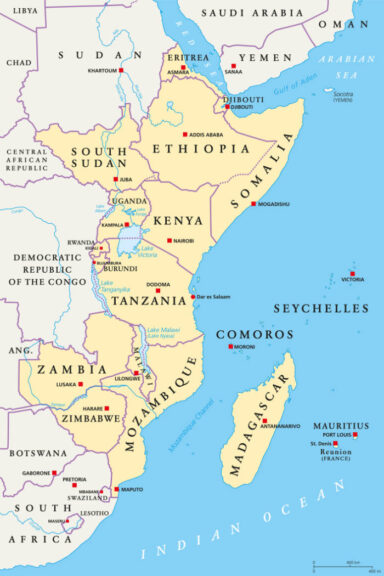
Transport & Logistics: Opening Commercial Routes Between Russia & East Africa
Transport cooperation is essential to the implementation of the other agreements because agricultural commodities, mineral products, industrial equipment and manufactured goods require reliable shipping and inland distribution. At least four specifically identified country-level transport memorandums and agreements were concluded with Mozambique, Sierra Leone, Kenya and the Central African Republic. Mozambique’s transport cooperation covers road infrastructure and the development of its road economy. The agreement creates a framework for technical cooperation in road construction, transport services and infrastructure development.
Kenya’s transport memorandum is important because of its position as an East African commercial and logistics centre. Cooperation covers transport-sector development and the wider potential for connections between Russian suppliers and East African markets. Sierra Leone’s transport and transit memorandum addresses the development of transport connections and freight movement. The Central African Republic’s transport cooperation similarly provides a framework for transport and transit development. Togo also signed an agreement on mutual recognition of diplomas and professional qualifications for maritime vessel crew members. This is a practical measure for facilitating maritime employment and transport cooperation. Russia has already begun to discuss extending the INSTC transport corridor further south to reach these markets, including projects such as developing a grain distribution hub in Oman.
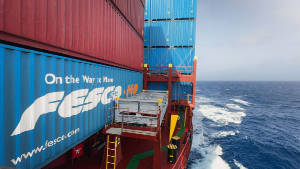
FESCO’s Dar es Salaam Route
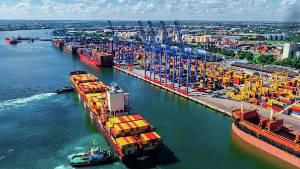
An important development preceding the summit was FESCO’s first container shipment from Russia to Tanzania’s Dar es Salaam port, which arrived on 15 May 2026. The shipment originated in Novorossiysk and travelled through India’s Nhava Sheva port under FESCO’s regular Indian Line West (FIL-W) service. The cargo included plastic products and equipment spare parts. Average transit time on the route was approximately 45 days.
This shipment demonstrated the commercial possibility of connecting Russian Black Sea exports with East African ports through an established maritime service and an Indian transshipment point. For Russian exporters, Dar es Salaam provides access to Tanzania and potentially neighbouring land-linked markets. For African importers, regular container services can improve access to machinery, spare parts, industrial materials and consumer products. The route also creates possibilities for reverse cargo movements. Tanzanian agricultural products, processed foods and other export goods could use expanded maritime connectivity to reach Russian markets. The wider logistics opportunity involves cooperation among shipping companies, port operators, freight forwarders, railway operators and customs agencies. FESCO’s position within the Rosatom corporate structure also connects transport cooperation with the wider Russian industrial and technological presence in Africa.
Financial Cooperation: 85% National-Currency Settlements & New Banking Channels
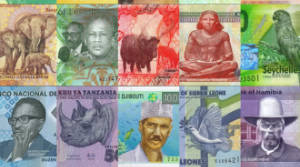
Payment arrangements were one of the central economic issues at the summit. On 29 October, President Putin said that national currencies, including the Russian ruble, accounted for about 85% of settlements in Russia-Africa commercial transactions. The emphasis was on developing stable payment channels, expanding correspondent banking relationships and facilitating the opening of bank branches in partner countries.
At the Economic and Humanitarian Forum on 28 October, Putin also called for expanding alternative financial messaging mechanisms, including the Bank of Russia’s Financial Messaging System and the Pan-African Payment and Settlement System. The proposal is commercially significant because payment arrangements influence the cost, speed and reliability of international transactions.
Companies exporting grain, fertilisers, machinery and industrial equipment need dependable mechanisms for receiving payments, managing currency exposure and financing repeat shipments.
The Pan-African Payment and Settlement System (PAPSS), developed under the African Export-Import Bank’s continental payment initiative, offers a framework for facilitating cross-border payments in African currencies. Greater connectivity between Russian banking institutions and African payment infrastructure could support additional trade corridors, although practical implementation requires agreements between participating banks, compatible messaging arrangements and sufficient currency liquidity. The financial discussions also involved the development of correspondent accounts, investment protection, double-taxation arrangements, customs simplification and the harmonisation of veterinary and phytosanitary requirements.
VEB.RF & The Sahel Financing Connection

One of the most important financial-institutional agreements was signed between Russia’s VEB.RF development corporation and the Confederation Investment and Development Bank. The Confederation bank is associated with the Alliance of Sahel States, comprising Burkina Faso, Mali and Niger. The memorandum creates a framework for financial and development cooperation involving regional projects. Its significance lies in the possibility of connecting Russian industrial suppliers, project developers and exporters with an African regional financial institution. Potential areas of cooperation include infrastructure, industrial development, trade financing and investment projects. The agreement also extends Russia’s financial engagement beyond its largest existing African trading partners and into the Sahel region.
For VEB.RF, the relationship offers an institutional platform for examining projects in markets where development requirements include transport infrastructure, energy, agricultural production and industrial capacity. For the Confederation Bank, cooperation with a Russian development bank creates another potential channel for accessing project expertise and investment partnerships. The agreement should be understood as a financing cooperation framework.
Six Bilateral Platforms For Expanding Market Access

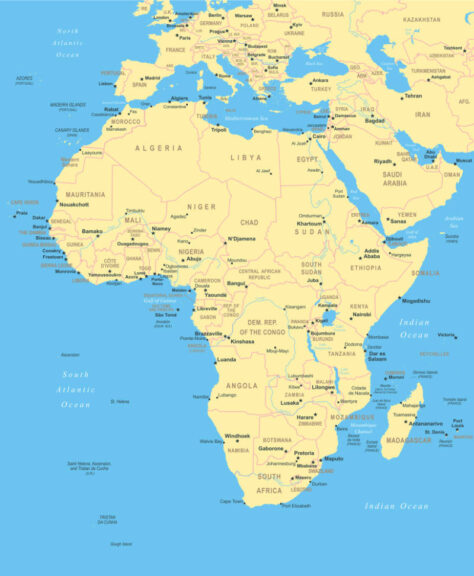
The summit’s regional dimension was particularly important because individual country agreements cannot, on their own, overcome the fragmentation of African markets. Russia concluded or advanced cooperation instruments involving six major regional organisations: the East African Community (EAC), the Common Market for Eastern and Southern Africa (COMESA), the African Continental Free Trade Area (AfCFTA) Secretariat, the African Union Commission, the Economic Community of Central African States (ECCAS), and the Southern African Development Community (SADC).
East African Community

The cooperation memorandum with the East African Community establishes a framework for developing relations and expanding cooperation with the East African regional market. The economic relevance includes trade facilitation, agricultural cooperation, transport, logistics, industrial development and investment. The EAC’s regional market provides an institutional platform for linking Russia with Kenya, Tanzania, Uganda, Rwanda, Burundi, South Sudan and the Democratic Republic of the Congo.
Common Market for Eastern and Southern Africa

The memorandum with the Common Market for Eastern and Southern Africa (COMESA) covers a wider programme of economic cooperation. Priority areas include agriculture and food security, standards and trade facilitation, energy and mining, transport and logistics, digital transformation, financial cooperation, human capital, climate resilience and healthcare. The 2027-2029 action plan provides a timetable for developing these areas. For Russian exporters, COMESA cooperation can facilitate engagement with a larger group of African economies rather than requiring entirely separate institutional arrangements in each market. For African businesses, the relationship offers opportunities to identify Russian suppliers, industrial technologies, agricultural inputs and investment partners.
Economic Community of Central African States
The Economic Community of Central African States (ECCAS) also agreed on a cooperation action plan with Russia. Its economic significance includes opportunities in transport, infrastructure, mining, agricultural production, industrial development and regional connectivity. The framework is relevant to the Central African Republic, the Republic of the Congo and the wider Central African economic area.
Southern African Development Community

On 28 October, the Southern African Development Community (SADC) Executive Secretary Elias Mpedi Magosi and Russian Foreign Minister Sergey Lavrov signed an Action Plan on Cooperation in Moscow. The agreement provides for implementation of the existing memorandum on the basic principles of relations and cooperation. Its sectoral coverage includes agriculture and food security, trade and investment, industrialisation, energy, mining, transport, information and communication technologies, education, healthcare, culture and youth development. The agreement is significant because SADC includes several of Africa’s major mineral-producing and industrial economies. For Russian mining, fertiliser, engineering and transport companies, regional engagement creates opportunities to examine supply chains that connect resource-producing countries with ports, processing facilities and manufacturing markets.
African Continental Free Trade Area
The African Continental Free Trade Area (AfCFTA) Secretariat’s cooperation memorandum with Russia is strategically important because the continental free-trade framework seeks to expand intra-African commerce and reduce trade barriers. For Russian companies, greater regional integration can make it easier to establish production or distribution operations serving several African countries. This is especially relevant for industrial equipment, fertilisers, agricultural processing, mining services and technology products. The commercial opportunity is not limited to exports from Russia. Russian companies could also participate in African manufacturing and processing operations that supply regional markets.
African Union Commission

The African Union Commission and Russia agreed on an Action Plan for 2027-2029. The framework links the partnership with continental priorities involving economic development, industrialisation, agricultural security, science, education, health and technological cooperation. The framework outlines cooperation across 19 sectors, including peace and security, energy, civilian artificial intelligence (AI), agriculture, healthcare, science, technology, and trade. It also provides an institutional basis for coordinating implementation with African regional economic communities.
Linking Africa’s Trade Blocs To Commercial Projects

The combination of EAC, COMESA, AfCFTA, AU Commission, ECCAS and SADC instruments creates a wider market-access framework. The financial memorandum between VEB.RF and the Sahel development bank adds a complementary financing component. Together, these institutional arrangements can support a progression from national commercial agreements to regional investment projects, with standards, customs arrangements and transport networks becoming important elements of implementation.
Country By Country Agreements & Institutional Results
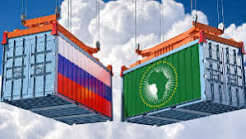
Beyond Ghana’s industrial project and the major nuclear agreements, the summit generated a broad range of country-specific instruments.
Kenya: Trade Commission & Transport Cooperation

Kenya signed five agreements with Russia to boost trade, investment, tourism and agricultural exports, particularly Kenyan tea and coffee, while exploring business opportunities despite challenges caused by international sanctions. The agreements aim to attract Russian investors, strengthen economic partnerships and increase Russian tourist arrivals to Kenya, benefiting local businesses and the tourism sector. Most importantly, one agreement seeks to stop Kenyans from being recruited into Ukraine war and establish a safe pathway home for those already caught up in the conflict. Kenya established an intergovernmental Russian-Kenyan commission on trade, economic, scientific and technical cooperation. A separate transport-sector memorandum was also concluded. The commission creates a platform for coordinating trade, investment and business cooperation. The transport instrument adds practical relevance because Kenya is an important gateway for East African commerce. The country’s grain imports from Russia reached approximately 1.2 million tonnes during the first nine months of 2026, up around 150 percent year on year. The combination of grain trade, transport cooperation and institutional coordination provides a basis for further development of agricultural and industrial commerce.
Democratic Republic of the Congo: Trade, Healthcare & Scientific Cooperation

The Democratic Republic of the Congo established an intergovernmental Russian-Congolese commission on trade, economic, scientific and technical cooperation. Additional instruments included a declaration on cooperation between the two countries’ justice ministries and a memorandum on healthcare cooperation between their health ministries. The DRC is an important mineral-producing economy, particularly in copper and cobalt. The economic opportunities extend to geological exploration, mining technology, mineral processing, electricity infrastructure, engineering services and professional training. The new commission provides an institutional mechanism for developing these areas.
Niger: Trade Commission & Scientific Cooperation

Niger established an intergovernmental commission on trade, economic, scientific and technical cooperation. A separate memorandum between the higher-education authorities covers scientific, scientific-technical and innovative activity. The cooperation framework is relevant to geological exploration, agricultural development, infrastructure, professional training and technical education. Niger’s participation also connects with the VEB.RF memorandum involving the Sahel development bank.
Senegal: A Permanent Trade & Economic Commission
Senegal established an intergovernmental Russian-Senegalese commission covering trade, economic, scientific and technical cooperation. The commission provides a framework for coordinating trade promotion, industrial partnerships and business engagement. Its importance extends to the country’s position as a West African logistics and commercial centre.
South Sudan: Oil-Sector Opportunities & Defence

South Sudan established an intergovernmental commission on trade, economic, scientific and technical cooperation. Zarubezhneft and South Sudan’s Ministry of Petroleum also formalised documents concerning the Russian company’s possible participation in oil-producing consortia. This is a significant resource-sector development because South Sudan’s economy is heavily dependent on petroleum production and export revenues. Russian participation could potentially involve engineering services, production operations, technical support and cooperation with existing petroleum-sector partners.
A separate military cooperation agreement was concluded between Russia’s Ministry of Defence and South Sudan’s Ministry of Defence and Veterans Affairs. The cooperation also included an increase in personnel-training opportunities, reported at up to 40 personnel. The oil-sector documents and the intergovernmental commission are the more directly relevant elements for the economic partnership.
Ethiopia: Red Cross Hospital & Industrial Cooperation
An intergovernmental agreement concerned the Russian Red Cross hospital named after Dejazmach Balcha in Addis Ababa. The hospital project gives healthcare cooperation a practical institutional dimension, involving medical services, professional training and potential supply relationships. Ethiopia also featured in nuclear energy discussions, including the continuation of earlier work on a large-capacity nuclear power station and site-selection issues. Agricultural education and technology cooperation involving PhosAgro and Ethiopian educational institutions adds another dimension to the relationship. The country is also an important destination for Russian agricultural products and a potential market for engineering, infrastructure and energy-related services.
Madagascar: Agricultural Cooperation & Infectious Disease Control
Rospotrebnadzor signed a memorandum with Madagascar’s Ministry of Health concerning cooperation against infectious diseases. The partnership involves sanitary and epidemiological cooperation, technical expertise and public-health preparedness. Additional documents addressed higher education, scientific and innovative activity, agriculture and livestock. These arrangements connect medical and agricultural cooperation with the wider human-capital development programme.
Mozambique: Road Infrastructure & Transport Economy
Mozambique signed a memorandum on road infrastructure and road-economy cooperation. The country’s location along the Indian Ocean makes transport development important for both domestic commerce and regional freight movement. The agreement creates opportunities for Russian engineering and infrastructure companies to explore cooperation in road construction, technical services and transport development.
Namibia: Customs & Energy Discussions
Namibia concluded an agreement on cooperation and mutual assistance in customs matters. A broader intergovernmental cooperation framework was also included in the summit’s country-level package. The country featured in discussions concerning floating nuclear power units. Customs cooperation is relevant to trade facilitation, the exchange of commercial information and improved coordination of cross-border procedures.
Nigeria: Customs Cooperation & University Partnerships

Nigeria concluded a customs cooperation and mutual-assistance arrangement with Russia. Broader cooperation instruments also addressed economic and institutional relations. An important education-sector outcome involved the Patrice Lumumba Peoples’ Friendship University of Russia (RUDN University), which concluded partnerships with three Nigerian universities. The university arrangements provide opportunities for academic exchange, professional training and scientific cooperation. Nigeria’s scale as a major African economy makes it an important market for agricultural commodities, fertilisers, energy technology, engineering services and industrial equipment.
Central African Republic: Institutional, Education & Transport Cooperation

The Central African Republic concluded several cooperation instruments, including an agreement on the foundations of relations and an agreement on mutual recognition of education qualifications, professional qualifications and academic degrees. Broader intergovernmental cooperation and transport-sector arrangements were also included. Rospotrebnadzor’s cooperation in sanitary and epidemiological matters extended to the country. The combination of educational recognition, transport cooperation and public-health arrangements provides several institutional foundations for expanding bilateral engagement.
Uganda: Nuclear Roadmap & Diplomatic Travel

Uganda’s nuclear cooperation roadmap with Rosatom established a working group for infrastructure assessment and potential engineering surveys at Nakasongola. The country also concluded an agreement on visa-free travel for holders of diplomatic and service passports. A broader intergovernmental cooperation agreement was included in the package. The nuclear roadmap is relevant to Uganda’s longer-term electricity planning, while training and technical cooperation can support the development of domestic expertise.
Zambia: Technical Standardisation
Russia’s technical regulation authorities and the Zambia Bureau of Standards signed a memorandum on standardisation. This type of agreement has practical significance for trade because differences in technical standards and certification procedures can increase costs for exporters and importers. Cooperation in standards can support industrial equipment trade, manufactured goods, agricultural products and conformity assessment.
Angola, Togo, Niger and Madagascar: Higher Education & Scientific Innovation

Russia’s Ministry of Science and Higher Education concluded cooperation instruments covering higher education, scientific research, scientific-technical cooperation and innovation with Angola, Niger, Togo and Madagascar. These agreements add a professional-training and research dimension to the commercial relationship. They are relevant to future cooperation in engineering, energy, agriculture, healthcare, information technology and industrial production.
Mali: Geological Mapping & Public Health Cooperation

Mali’s cooperation package included an intergovernmental framework and an agreement on sanitary and epidemiological well-being. Geological mapping and resource-development cooperation were also among the areas discussed. Mali’s mineral resources and agricultural development requirements create potential demand for exploration technologies, mining services, technical training and industrial equipment.
Tanzania: ICT, Agriculture & Floating Nuclear Plant Discussions
Tanzania’s cooperation programme included an information and communications technology memorandum and agricultural training and technology-adaptation initiatives. Floating nuclear power was another area of interest in discussions with Rosatom. The country’s importance as an East African maritime gateway is reinforced by FESCO’s container shipment to Dar es Salaam in May 2026.
Sierra Leone: Transport & Transit Cooperation

Sierra Leone concluded a transport and transit memorandum. The agreement creates a framework for cooperation on transport connections, freight movement and professional exchange. It is relevant to future efforts to improve logistics access to West African markets.
Business, Investment Promotion & Private Sector Agreements
An important part of the 166-document package was concluded through Roscongress Foundation, which signed 29 cooperation documents with African business, investment and organisational partners. These agreements are particularly relevant because they establish channels through which companies can identify commercial partners, obtain market information, coordinate investment proposals and participate in business events.
These partners include the Ghana–Russia Centre for Trade and Relations, the Arab-African Centre for Investment and Development, the Egyptian–African Businessmen Association, the Federation of West African Chambers of Commerce and Industry, and Niger’s Agency for the Promotion of Private Investment and Strategic Projects.
Other agreements involved business organisations and associations in Nigeria, Chad, Mauritania, Algeria and other African countries. The partner network also included the Egyptian Exporters Association, the National Agency for Investment Promotion of the Republic of the Congo, the Nigerian Investment Promotion Agency, the Abuja Chamber of Commerce and Industry, the Eswatini Investment Promotion Authority, the Chamber of Commerce of Burkina Faso, the Tanzania National Chamber of Commerce, the Kenya National Chamber of Commerce, the Chamber of Commerce and Industry of Mali, and the Confederation of Business Associations of Mozambique.
The geographical spread is important. These organisations provide access to national business communities, potential investors, exporters, importers and local industrial partners. For Russian companies seeking African distribution networks, the agreements can facilitate identification of local representatives and potential joint-venture partners. For African companies, they offer an institutional route to Russian suppliers, manufacturers, investors and development institutions. The Egyptian Exporters Association and Nigerian Investment Promotion Agency are particularly relevant to expanding commercial relations with two of Africa’s major economies. The Tanzania Chamber of Commerce, Industry and Agriculture and Kenya National Chamber of Commerce offer additional connections to East African markets. The Federation of West African Chambers of Commerce and Industry provides a wider regional business channel, while the Niger investment-promotion agency connects the cooperation framework with investment opportunities in the Sahel. These agreements are not equivalent to individual investment contracts. Their value lies in building the commercial infrastructure through which subsequent transactions can be developed.
Youth Entrepreneurship & Business Network Development

The youth component involved agreements with the Russian-African Youth Union, South African BRICS Youth Association, Jet Age National Builders, African Youth Congress and the Ministry of Sports and Youth Development of Nigeria’s Abia State. The cooperation covers educational, social and entrepreneurial initiatives, youth exchanges and participation in international business and exhibition events organised by Roscongress.
The economic significance is connected to developing a new generation of entrepreneurs, professionals and business-network participants. For African companies, youth entrepreneurship programmes can support the development of new enterprises in technology, agriculture, services and industrial supply chains. For Russian companies, youth and professional networks offer opportunities to establish longer-term commercial relationships and identify potential partners in African markets.
Media Cooperation: 29 Agreements Involving TASS, RT & Rossiya Segodnya

The 29 media-sector documents represented a substantial component of the summit’s cooperation package. Russian organisations included TASS, RT and Rossiya Segodnya, which concluded arrangements with African media partners in Mali, Burundi, Ghana, Ethiopia, Mauritania, Tanzania, Nigeria and other countries. The agreements concern information exchange, broadcasting cooperation and the development of professional relationships between media organisations. The economic relevance extends to business information, investment promotion, trade reporting and the dissemination of information about industrial and infrastructure projects. Media cooperation can also improve the visibility of Russian and African companies seeking partners in unfamiliar markets. The agreements therefore add an information and communications dimension to the broader economic partnership.
Universities, Research & Professional Training

Education and scientific cooperation were another important part of the summit’s institutional and economic programme. RUDN University, named after Patrice Lumumba, concluded agreements with three Nigerian universities. The University of Ilorin was among the Nigerian institutions involved in expanded academic and research cooperation. The University of Ilorin’s Vice-Chancellor, Professor Wahab Olasupo Egbewole, participated in the university-level engagement with RUDN. St. Petersburg State University also concluded cooperation arrangements with Sudanese partners. Additional university partnerships covered Mali, Zimbabwe, Ethiopia, South Africa and other African countries. PhosAgro’s educational and agricultural-technology partnerships with universities in South Africa and Ethiopia add an industrial dimension to the academic cooperation. These relationships are relevant to several sectors. Mining requires geologists, mining engineers, metallurgists and environmental specialists. Nuclear energy requires nuclear engineers, radiation-protection specialists and regulatory professionals. Agricultural production requires agronomists, soil scientists, machinery specialists and food-processing experts. The summit’s university partnerships can help develop the human capital needed to support the larger industrial and infrastructure projects.
Rwanda’s Nuclear Education Pipeline
One particularly important figure emerged from Rosatom’s engagement with Rwanda. Rosatom Director General Alexey Likhachev stated that 102 Rwandan students were studying at Russian universities through the corporation’s educational programmes. The cooperation links professional training with Rwanda’s nuclear infrastructure development, including the proposed small nuclear power plant and Centre for Nuclear Science and Technology. This illustrates the long-term relationship between industrial projects and education: the development of nuclear capacity requires domestic technical personnel capable of operating, maintaining and regulating the facilities.
The Russia-Africa 2027-2029 Action Plan

The Russia-Africa Partnership Forum Action Plan for 2027-2029 is the principal coordinating framework for the next stage of cooperation. The African Union Commission’s action plan was signed on 28 October by Commission Chairperson Mahmoud Ali Youssouf and Russian Foreign Minister Sergey Lavrov.
The agreement covers 19 areas of cooperation. These include trade, investment, energy, transport infrastructure, agriculture, water management, climate adaptation, healthcare, education, science, technology, artificial intelligence, cybersecurity, space technology and financial cooperation.
The programme also includes capacity-building, academic partnerships, knowledge exchange and technical cooperation. The industrial dimension is especially important. Mineral processing, metallurgy, fertiliser production and the development of value-added manufactured products are identified as areas for expanding industrial cooperation. In agriculture, the priorities include agricultural technologies adapted to African climatic conditions, land reclamation and drought-resistant crop varieties and hybrids.
Healthcare cooperation includes pharmaceutical production, medical personnel training and epidemic preparedness. The digital component includes artificial intelligence, data analysis, machine learning, cybersecurity and technology transfer. Transport cooperation covers the development and modernisation of ports, airports, roads, railways and river transport.
The action plan also envisages annual reviews of implementation through ministerial conferences of the Russia-Africa Partnership Forum. For companies, this is important because the value of regional and bilateral agreements depends on their translation into specific work programmes, investment proposals, technical cooperation and procurement opportunities.
Digital Technology & Civilian AI

The Declaration on Cooperation in Civilian Artificial Intelligence Technologies was one of the three principal multilateral outcomes. The initiative adds a technology component to the economic relationship. Artificial intelligence applications have potential across agriculture, industrial production, healthcare, transport, education and public services. For agriculture, machine-learning applications can support crop monitoring, weather forecasting, irrigation management and yield optimisation.
For mining, digital systems can improve geological analysis, equipment maintenance and production management. In transport, digital technologies can support freight tracking, route optimisation and port operations. The proposed cooperation also includes specialist training, research partnerships and technology transfer. For Russian technology companies, the African market provides opportunities to supply software, industrial automation, digital infrastructure and specialised technology services. For African partners, cooperation can support the development of domestic technical capabilities rather than relying exclusively on imported finished products. The civilian AI declaration therefore complements the summit’s industrial and educational arrangements.
Defence Cooperation And Its Wider Industrial Context

Military and military-technical cooperation also formed part of the wider bilateral discussions. Putin stated that Russia already had military and military-technical cooperation agreements with 45 African countries. This is an existing relationship, not 45 new agreements signed at the October summit. A new military cooperation agreement with South Sudan was among the identified outcomes. Ghana also featured in wider discussions on defence cooperation. These relationships should be distinguished from the economic and industrial agreements involving RUSAL, Rosatom, PhosAgro, FESCO and VEB.RF. Nevertheless, defence-related cooperation has an economic dimension through equipment supply, technical maintenance, personnel training and industrial services. The principal commercial emphasis of the 166-document package, however, remained on energy, mining, agriculture, transport, education, finance and institutional business cooperation.
Russia-Africa Trade: The US$50 Billion Target
The summit’s commercial outcomes must be assessed against the existing trade relationship. Russia-Africa merchandise trade exceeded US$27 billion in 2025. Customs-based reporting put the figure at approximately US$27.1 billion. This represents growth of more than 60% compared with the approximately US$16.8 billion level around the first Russia-Africa Summit in 2019.
However, Russia’s share of Africa’s total external trade remains relatively small, at approximately 1.45 percent in 2025, according to trade analysis published around the summit. The comparison with China illustrates the difference in scale. China-Africa trade reached approximately US$348 billion in 2025. Russia’s commercial opportunity therefore lies in expanding its presence in specific industrial and commodity sectors while developing new regional distribution networks. Putin set an objective of at least doubling Russia-Africa trade to more than US$50 billion by 2030. Achieving this would require growth beyond the existing agricultural relationship.
The summit’s agreements address several areas in which this expansion could take place: mineral processing, industrial equipment, energy infrastructure, agricultural technology, fertilisers, shipping, construction services and digital solutions. The geographical distribution of existing trade is also important. North African countries account for a substantial share of Russia’s commercial relationship with the continent. Egypt is particularly significant, with Russia-Egypt trade exceeding US$10 billion, according to Putin’s summit remarks. Nigeria is another major commercial market. The new agreements with East African, West African, Central African and Southern African organisations and countries are intended to broaden the geographical distribution of trade.
The Agricultural Trade Foundation

Russia shipped more than 18 million tonnes of grain to Africa during 2025 and approximately 13 million tonnes in the first nine months of 2026, an 8% increase. Egypt received 5.9 million tonnes, Sudan approximately 1.5 million tonnes and Kenya around 1.2 million tonnes during this period. Russian agricultural exports to Africa generated approximately US$2.9 billion in revenue in the first half of 2026, increasing 35%. The main exported products included wheat, barley, soybean oil, sunflower cake and meal, and beet pulp. These figures demonstrate that the agricultural relationship is already supported by physical trade volumes rather than depending entirely on new cooperation frameworks.
Fertiliser Trade
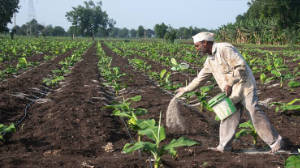
Russian mineral fertiliser shipments to Africa have already exceeded 2.2 million tonnes in 9M 2026, against approximately 1.5 million tonnes for all of 2025. Russia supplies approximately 18% of African fertiliser imports, according to the figures discussed around the summit. PhosAgro’s growing African business is particularly relevant to the relationship between commodity supply and agricultural technology. Future cooperation could include blending, distribution, agronomic support, agricultural education and the adaptation of fertiliser products to local soil conditions.
Russia’s Six Strategic Interconnections With Africa
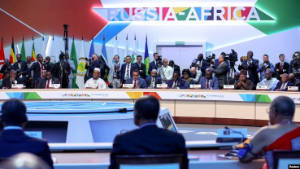
The principal economic outcome of the 2026 Russia-Africa Summit was the establishment of an interconnected system of cooperation rather than a collection of unrelated bilateral arrangements. The first concerns mineral resources and processing. The RUSAL-GIADEC project in Ghana is the clearest example, with 5 million tonnes of potential annual bauxite production and 1.2 million tonnes of alumina refining capacity.
The second concerns energy. Rosatom’s agreements with Togo, Rwanda and Uganda, alongside discussions with Ghana, Ethiopia, Egypt, Namibia and Tanzania, create a portfolio of nuclear infrastructure and technology opportunities.
The third involves agricultural supply chains. Grain shipments of 13 million tonnes and fertiliser deliveries exceeding 2.2 million tonnes in the first nine months of 2026 demonstrate the existing scale of the relationship.
The fourth concerns logistics. FESCO’s Dar es Salaam shipment and the transport memorandums with Kenya, Mozambique, Sierra Leone and the Central African Republic provide a foundation for expanded physical connectivity.
The fifth concerns payments and project finance. The 85% national-currency settlement figure, proposed expansion of correspondent banking and the VEB.RF–Sahel bank memorandum address financial infrastructure.
The sixth relates to institutional and human-capital development. The 2027–2029 action plans, university agreements, scientific cooperation and private-sector partnerships create mechanisms for supporting industrial projects over longer periods.
These pipelines are mutually reinforcing. A bauxite mine requires electricity, transport, industrial equipment and financing. An alumina refinery requires a reliable supply of natural gas, water, engineering services and export infrastructure. Agricultural exports require shipping, port capacity, storage and financial settlements. Nuclear energy requires trained personnel, engineering services and long-term maintenance. The significance of the 166 documents is therefore best understood through their combined economic functions.
The next Russia-Africa development phase will be determined by the transition from institutional commitments to operational projects. For RUSAL, the important milestones are the development of the Nyinahin deposit, the establishment of the two joint ventures, refinery engineering, financing deployment and the start of construction.
For Rosatom, the priorities are completing technical assessments, developing nuclear infrastructure plans, training specialists and advancing feasibility studies in interested countries.
For FESCO, the expansion of maritime services and the development of additional African logistics connections will determine how effectively transport cooperation translates into greater trade volumes.
For PhosAgro and other agricultural exporters, the opportunities include higher shipment volumes, distribution partnerships and technology cooperation. For VEB.RF and African financial institutions, the next stage concerns the identification and financing of viable regional development projects.
The new intergovernmental commissions with Kenya, the DRC, Niger, Senegal and South Sudan will also be important for coordinating private-sector proposals and addressing operational barriers. The regional action plans for 2027-2029 provide a framework for measuring progress in trade, investment, transport, industrialisation, agriculture, energy and technological cooperation.
Several indicators will be particularly important: capital committed and disbursed to the Ghana projects; progress towards the 1.2-million-tonne alumina refinery; completion of nuclear infrastructure assessments; growth in agricultural and fertiliser shipments; expansion of shipping routes; new correspondent banking relationships; and the development of industrial partnerships involving African companies. Employment, local procurement, technology transfer and the share of processed products in African exports will also be important indicators of the economic results.
Summary: A Wider Commercial Architecture For Russia-Africa Economic Relations

The 166 agreements and memorandums signed in Moscow on 28-29 October 2026 establish a broad framework for expanding Russia-Africa economic cooperation. The RUSAL-GIADEC project gives the package a major industrial component. Rosatom’s agreements create long-term energy and technological cooperation opportunities. Grain and fertiliser shipments provide an existing commodity foundation. FESCO’s transport activity demonstrates the importance of new maritime routes, while VEB.RF’s Sahel partnership introduces a regional development-finance dimension. The 64 interdepartmental documents, 44 university, company and organisational agreements, 29 media instruments and 29 Roscongress partnerships connect these commercial initiatives with regional institutions, research organisations and business communities.
The participation of 48 African countries, more than 3,500 delegates, approximately 630 companies and over 1,200 business representatives gives the gathering a broad geographical and commercial reach. The US$50 billion trade objective by 2030 provides a measurable benchmark for the next stage. The economic significance of the Moscow agreements ultimately rests on their ability to connect Russian industrial production and technological expertise with African resource development, manufacturing, food security, infrastructure and regional market integration.
The combination of mineral processing, nuclear energy, agricultural trade, transport connectivity, payment diversification and professional training represents a wider commercial structure than traditional commodity exchange. Ghana’s bauxite-to-alumina project, the Rosatom nuclear cooperation programme, agricultural supply chains and regional market-access arrangements are the principal pillars of that structure. The 2027-2029 implementation period will be decisive in determining how rapidly these commitments develop into operational production facilities, sustained investment, expanded trade and additional industrial capacity across African markets.
This analysis was written by MD. Rana, an Russian-Global South affairs, economics and geopolitical analyst for Russia’s Pivot To Asia. She can be reached at info@russiaspivottoasia.com