
 Русский






The XI International Industrial and Energy Forum TNF was held in Tyumen from September 14 to 17, 2026, at the Tyumen Technopark. It is a key federal event in the Russian oil and gas industry. 2026 marked the first year in which the event operated with full international status.
The forum brought together Russian oil and gas companies, equipment manufacturers, oilfield-service providers, technology developers, universities, government institutions, and foreign energy partners under the theme “Oil and Gas Industry of the Future: Energy of Leadership.” More than 18,000 participants attended, representing more than 60 Russian regions, while 80% of the audience consisted of senior executives from the fuel and energy complex and related industries.
The forum brought together the country’s core oil-and-gas production regions, including Tyumen Oblast, Khanty-Mansi Autonomous Okrug-Yugra, and Yamalo-Nenets Autonomous Okrug, alongside major energy companies such as Gazprom, Gazprom Neft, LUKOIL, NOVATEK, Surgutneftegaz, and other oil, gas, petrochemical, and oilfield-service companies. International participation added Kazakhstan’s KazMunayGas and QazaqGaz, as well as ADNOC from the UAE, strengthening the forum’s role as a direct business platform between Russian technology developers, major energy producers, and foreign industry customers. More than 50 cooperation agreements were signed. The official TNF platform reported over 200 new technologies being launched and more than 200 business meetings associated with the forum.
The scale represents a substantial expansion from TNF 2025. Last year’s forum attracted 15,000 participants, 1,500 companies, representatives of 67 Russian regions, three foreign delegations from Belarus, Kazakhstan, and the UAE, more than 100 business events, and more than 200 B2B meetings. More than 50 agreements were also signed in 2025. TNF EXPO had 120 exhibitors, including companies from China, Belarus, and Iran. The 2025 Technology Territory competition received 97 applications, with 11 projects reaching the final. Against that baseline, TNF 2026 shifted the event from a predominantly Russian industry gathering toward a recurring international platform for energy technologies, supplier relationships, and industrial cooperation.
From A Regional Oil Forum To An International Industrial Platform
The change in status was institutional rather than merely symbolic. Russia’s Ministry of Industry and Trade became responsible for coordination, while the Oil and Gas Cluster The association acts as the organizer. The forum’s international status was explicitly linked to the objective of consolidating Russian oilfield-service and technology companies for joint access to overseas markets. The international expansion was visible geographically. Belarus participated at the senior government and corporate level, led by First Deputy Prime Minister Viktor Karankevich, with Energy Minister Denis Moroz and companies including Belneftekhim and Belorusneft. Kazakhstan was represented by national companies KazMunayGas and QazaqGaz, which participated in Technology Days. Vietnam, China, Iran, Azerbaijan, and Uzbekistan were also represented through delegations, exhibition activity, and business contacts. UAE participation was linked to ADNOC and a dedicated Demo Day, while Saudi Arabia, Algeria, and Türkiye appeared in the wider international program and partner outreach.
This means that TNF has moved beyond the three-country international footprint of 2025 toward a wider Eurasian, Asian, and Middle Eastern network in 2026.
Four Days, Three Industrial Priorities
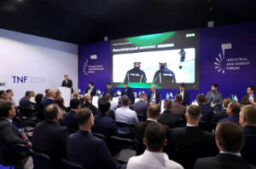
The event was divided into three principal tracks. “Technologies and Digital Solutions in the Fuel and Energy Sector,” “Strategic Development,” and human capital and professional development. The official program contained approximately 100 events, including industry sessions, round tables, discussions, a plenary session, and the fifth HR Summit. The first technology block covered drilling, field infrastructure, new materials, domestic IT systems, artificial intelligence, cybersecurity, digital twins, automation, hard-to-recover reserves, chemical enhanced oil recovery, and autonomous operations. The program therefore connected upstream production with the technology chain supporting it.
Amongst this were discussions of modern well construction, digital systems in the fuel and energy sector, AI applications, digital solutions for complex drilling, oil-recovery technologies, and energy data centers.
Gazprom Neft presented digital approaches for complex wells and production systems, while other participants examined domestic polymers, industrial software, and energy infrastructure. The event then expanded the technology agenda toward artificial intelligence for hard-to-recover reserves, robotics, chemical reagents, offshore equipment, data center power supply, and workforce development. Gazprom Neft and Tyumen State University worked on technologies for robotic field infrastructure, while ZALA demonstrated unmanned monitoring based on artificial intelligence. Its systems process industrial-site data in real time, provide preliminary results during flight, and complete the full analytical cycle in less than 12 hours.
The program then moved from individual technologies to industrial policy. The main plenary session brought together Industry and Trade Minister Anton Alikhanov, executives of major oil and gas, petrochemical, and service companies, and regional governors. Alikhanov emphasized technological independence and the expansion of Russian equipment and technology into foreign markets. Gazprom Neft Chairman Alexander Dyukov highlighted big data, digital twins, specialized software, artificial intelligence, and multi-agent systems as tools for managing the production chain from wells to fuel stations.
Finally, there was concentration on human capital, the HR Summit, and Young Specialist Day. This also addressed labor productivity, organizational efficiency, future competencies, and the role of human capital in technological sovereignty. The HR Project of the Year award was also presented.
The Central Economic Issue: Russia’s Hard-To-Recover Reserves
Under the baseline scenario, the Ministry of Economic Development of Russia. expects production to rise to 516 million tons in 2027 and to a total of 525 million tons in 2028 and 2029. The technological agenda is directly connected to Russia’s production structure.
More than half of Russia’s oil reserves are classified as hard to recover, while oil production with condensate in 2026 is projected at approximately 511 million tonnes. Roughly 30% of this production is associated with hard-to-recover resources. The structural change is substantial. The share of conventional base production fell from around 65% in 2008 to approximately 30% by 2023-2024. Enhanced oil recovery technologies and incentives introduced over the past decade have therefore become an important production factor.
The implication for the equipment market is direct: Russia needs domestic drilling technologies, chemicals, automation, reservoir modelling, robotics, and digital production systems not only to replace imported equipment but also to maintain production in increasingly complex fields. This explains the emphasis on scaling rather than simply inventing technologies.
Gazprom Neft’s Alexey Vashkevich reported that a roadmap covering 220 critical technological positions had been established, with solutions already identified for 170. According to Industry and Trade Minister Anton Alikhanov, 55 of the 220 critical positions were already in serial production, prototype testing was under way for 56, and more than 80 additional R&D projects were active.
Russian oil and gas equipment independence had reached almost 80% by the end of 2025, with a target of 90% by 2030. The share of Russian equipment could reach approximately 82% in 2026. The economic scale behind this technological program is also significant. Russia’s domestic oil and gas machinery market amounted to ₽294 billion (US$3.48 billion) in H1 2026. The Ministry of Industry and Trade expects the market to expand to about ₽800 billion rubles, or US$9.47 billion, by the end of the year.
Agreements Turn Technology Policy Into Industrial Cooperation
More than 50 cooperation agreements were signed at TNF 2026, but these should not be treated as equivalent to the multibillion-ruble investment declarations typical of the St. Petersburg International Economic Forum or the Eastern Economic Forum. TNF’s agreements are predominantly operational: technology partnerships, regional industrial cooperation, R&D, education, supplier relationships, digitalization, and market access.
No single aggregate monetary value for the 50-plus agreements has been publicly announced. The most important regional agreement expanded the Interregional Oil and Gas Cluster. Tyumen Governor Alexander Moor, Yugra Governor Ruslan Kukharuk, and Yamalo-Nenets Governor Dmitry Artyukhov signed the agreement with Alexander Sakevich of the Oil and Gas Cluster Association in the presence of Anton Alikhanov. The arrangement fully incorporated Yugra into the cluster, bringing Tyumen, Khanty-Mansi Autonomous Okrug-Yugra, and Yamalo-Nenets Autonomous Okrug into a single industrial cooperation framework. These three territories form the core of Russia’s hydrocarbon-producing system. The objective is joint work on technology, science, infrastructure, resource efficiency, and social development.
A separate agreement between Tyumen Oblast and UEC Engineering, part of Rostec’s United Engine Corporation, concerns autonomous industrial-energy units for regional infrastructure projects. The agreement connects Russia’s energy equipment manufacturing capabilities with infrastructure requirements in the region. Irkutsk Oil Company and the Oil and Gas Cluster Association formalized cooperation around business missions, specialized conferences, expert exchange, and identification of qualified contractors, including suppliers of specialized chemicals for drilling and enhanced oil recovery. Gazprom Neft and Tyumen State University established a five-year cooperation strategy covering production in permafrost conditions, robotics, enhanced oil recovery, automation, intelligent monitoring, autonomous field complexes, new materials, thermal modelling, and well reliability.
BurService and Tyumen Industrial University agreed to cooperate on engineering training, applied research, and digital technologies. The partnership builds on job fairs, internships, professional-skills programs, and university-industry cooperation, adding joint pilot projects and scientific work. Another three-way agreement between TOFS Group, Nedra Digital, and Tyumen Industrial University are particularly significant for technological localization. Nedra Digital’s software and TOFS technologies will be integrated into university education and research from the 2026/27 academic year. Students will work with geological modelling, field-development design, hydrodynamic modelling, and upstream technologies, while the companies and university will exchange technical data and develop domestic software. TOFS employs more than 4,000 people across facilities in 11 Russian regions, while Nedra Digital has more than 550 specialists working on digitalization of exploration and production in Russia and the CIS.
Belarus: Industrial Integration Beyond Energy Trade

Belarus was one of the most substantive foreign partners. Belarusian-Russian trade involving Tyumen reached US$1.84 billion in January-June 2026. Energy resources formed a major component of Belarusian imports from the region, while Belarus supplied electrical and engineering products, cables and wires, tractors, tires, engines, and industrial equipment.
Belarusian Energy Minister Denis Moroz participated in discussions on the industry’s development map to 2035 and technological cooperation, including exporter support. Russia and Belarus advanced a 2026-2028 scientific and technological cooperation roadmap covering energy, petrochemicals, industrial production, research, common technical requirements, mutual recognition of testing results, service infrastructure, and localization. One proposed project is a natural-gas liquefaction complex in Belarus. The Belarusian and Russian experience of constructing the country’s nuclear power plant was also discussed as a model: around 40 Belarusian and Russian organizations and more than 9,000 specialists were involved at the peak of construction activity.
This gives the Belarus component of TNF a broader industrial meaning. It is not simply an energy-supply relationship; it connects equipment, engineering standards, scientific cooperation, localization, and industrial services. Belarus and Russia’s Tyumen Oblast are expanding industrial, energy, and cooperation power engineering cooperation. Belarus’ industrial potential is also presented at the EXPO TNF exhibition venue. The joint display features products and competencies of OAO Belshina, OAO Mozyr Oil Refinery, OAO Polotsk-Steklovolokno, OAO SvetlogorskKhimvolokno, OAO Naftan, and OAO Lakokraska, as well as the industrial group Belorusneft, including BelNIPIneft and the enterprise’s research and technology center in Tyumen.
Kazakhstan: The Clearest Energy-Trade Outcome
Kazakhstan produced one of the most concrete energy-trade outcomes at TNF. KazMunayGas and QazaqGaz participated in Technology Days, presenting their requirements to Russian suppliers and assessing potential technological solutions. Kazakhstan and Gazprom signed an amendment to their gas-supply contract during the forum. Discussions on a longer-term agreement are expected by the end of 2026.
Kazakhstan plans to purchase approximately 11 billion cubic meters of Gazprom gas in 2026, compared with 4 bcm in 2025, while approximately 9 bcm is being discussed for 2027. Kazakhstan also indicated readiness to facilitate additional transit of Russian gas to Uzbekistan once the parties agree on the commercial and technical arrangements. Infrastructure required for such transit has already been completed with Gazprom and Uztransgaz. The Kazakh side also expressed interest in the Power of Baikal gas pipeline crossing Kazakhstan to supply northeastern regions, although route negotiations remain a Russia-China matter.
Lukoil was described by Kazakhstan as a historic partner, with Astana indicating that it would welcome the company’s decisions concerning its projects in the country. These developments show how TNF can connect technology procurement with physical energy trade: Russian companies gain access to equipment and service demand while Russian gas gains additional regional markets and transit options.
Kazakhstan and Russia are developing the Ishim-Astana main gas pipeline, with completion targeted for late 2029. The project is intended to connect Kazakhstan’s northern regions with Russia’s gas transportation system, supplying natural gas to areas including Petropavl and Kokshetau before linking with the Saryarka pipeline near Astana. Preliminary plans envisage Russian gas supplies gradually reaching up to 6.3 billion cubic meters annually, although pricing, economic conditions, the final route, project cost and connected settlements remain under discussion. Kazakhstan’s AstanaGaz KMG is currently revising feasibility studies and developing technical plans, while construction will depend on further design work, state approvals, agreements with Russia, and a final investment decision.
China & Trump’s Sanctions Threats
China’s importance is visible both through TNF participation and the wider Russian energy trade surrounding the forum. Chinese companies participated in exhibition and business activities, while Chinese imports of Russian energy continued to expand. In January-August 2026, China imported 5.15 million tonnes of Russian LNG, up 28.2% year on year, while oil imports reached 77.65 million tonnes, an 18.1% increase. The value of LNG imports rose 13.2% to US$2.66 billion, while oil import value increased 33.3% to US$44.84 billion. Russia remained China’s largest oil supplier and one of its three largest LNG suppliers.
When Trump signed the Russia sanctions bill imposing 100% tariffs on China for purchasing Russian energy, China’s response, China’s participation at the TNF forum, and this scale of China-Russia energy trade demonstrated that the sanctions are unlikely to hinder bilateral energy cooperation. Chinese officials have also clearly stated that the measures will not impede Russia-China trade. Moreover, China and Russia have maintained high-level engagement on bilateral energy cooperation through the 8th Energy Business Summit and intergovernmental meetings focused on energy cooperation.
For China, the strongest Russian proposition is the combination of oilfield expertise and industrial digitalization with Chinese manufacturing capacity. Companies such as CNPC, PetroChina, Sinopec, and CNOOC can combine Chinese manufacturing and electronics capacity with Russian engineering and field technologies. Russian companies such as Gazprom Neft have developed practical capabilities in digital twins, big-data analysis, AI models, and multi-agent systems across the production chain, while TNF demonstrated Russian solutions in automated drilling, robotics, unmanned monitoring, domestic industrial software, and technologies for hard-to-recover reserves. Gazprom Neft and Tyumen State University, for example, are developing technologies for field robotics, while TNF discussions focused on moving from individual digital applications toward integrated digital twins combining geological, well, equipment, and infrastructure data.
Chinese companies can therefore participate not only as equipment suppliers but also as manufacturing and localization partners, adapting Russian software and engineering solutions to Chinese equipment platforms and jointly producing systems for Asian, Middle Eastern, and Central Asian markets. The existing scale of Russia-China energy trade gives this cooperation a substantial industrial base: Russian LNG deliveries to China reached 5.15 million tonnes in January-August 2026, up 28.2% year on year, while Russian oil supplies reached 77.65 million tonnes, up 18.1%; the corresponding values were US$2.66 billion for LNG and US$44.84 billion for oil. The next development stage will likely move from commodity trade toward technology-intensive cooperation around production efficiency, LNG infrastructure, digital field management, autonomous power systems, and oilfield services.
United Arab Emirates
The UAE represents a higher-standard qualification environment. The UAE engagement at TNF was organized around an ADNOC Demo Day, giving Russian technology companies an opportunity to present solutions directly to an international energy major and receive technical feedback. This is different from a government-to-government declaration: it creates a supplier qualification channel and receives technical feedback. This matters because international energy companies generally require more than a government-level endorsement before allowing a supplier into a procurement chain. The qualification process can include technical standards, testing, cybersecurity, reliability, maintenance, documentation, and previous operating experience.
Russia has already moved part of this process forward: according to Alikhanov, ADNOC had issued positive technical conclusions for 60 INTI standards covering oil-and-gas equipment and pipe products; eight Russian manufacturers had been pre-qualified, while another seven were undergoing pre-qualification. That creates a concrete pathway from Russian technological development to international procurement.
Saudi Arabia
The Saudi market could be approached through the same mechanism, but Russian companies would need to demonstrate international certification, local servicing, and long-term reliability. Saudi energy companies operate large integrated production systems, so Russian suppliers with expertise in hard-to-recover reserves, drilling automation, industrial AI, gas turbines, digital twins, and autonomous power systems could seek cooperation through pilot installations before moving toward localization. The potential model is therefore “technology plus local partner plus certification plus pilot project plus local production/service,” rather than simply shipping equipment from Russia.
Iran
Iran can provide an even broader industrial cooperation model. Russian companies have expertise in mature-field development, difficult reserves, drilling, oilfield chemicals, gas-processing equipment, power generation, and industrial digitalization, while Iranian companies possess a large domestic industrial base and experience operating under restricted access to Western technologies. Cooperation can therefore concentrate on joint manufacturing and technology adaptation rather than simple equipment sales. Iran offers a broader manufacturing model involving NIOC, MAPNA, and Petropars. Russian engineering and difficult-field technologies could be combined with Iranian industrial production, local servicing, and third-country exports.
Russian firms can supply engineering designs and key technological components, while Iranian partners could undertake local production, servicing, and adaptation for Middle Eastern conditions. The same structure could subsequently be extended into Central and South Asian markets. TNF’s emphasis on technology sovereignty is particularly relevant here: Russian industry is increasingly moving from replacing individual imported components toward creating complete domestic technological chains, while international partners can provide additional manufacturing depth and export channels.
Vietnam
Vietnam offers a different entry point because Russian companies can combine technology transfer with localization and workforce development. Russian engineering and service firms can provide geological modelling, drilling technologies, well construction, enhanced oil recovery, industrial automation, cybersecurity and digital monitoring, while Vietnamese partners can localize assembly, maintenance and selected manufacturing for the domestic market. This model is particularly relevant for technologies that do not need to be exported as complete Russian-made systems.
A Russian digital platform, for example, could be integrated with locally manufactured sensors, control equipment, and telecommunications infrastructure, creating a Vietnam-based product with Russian engineering content. TNF’s program already treats digitalization, automation, domestic software, and field development as interconnected rather than separate sectors.
Vietnam provides another localization route through Petrovietnam, PVEP, PTSC, and Vietsovpetro. Russia’s Zarubezhneft already has decades of cooperation with Petrovietnam, while current discussions cover digitalization, well treatment, enhanced recovery, equipment maintenance, LNG, gas-to-power, and offshore wind. The Thien Nga-Hai Au gas project is expected to supply about 7.43 bcm between 2026 and 2037. Russian technologies could be integrated with Vietnamese manufacturing and services and subsequently exported into ASEAN markets.
Azerbaijan & Uzbekistan
For Azerbaijan and Uzbekistan, the most immediate opportunity is equipment localization and service cooperation. Russian manufacturers do not necessarily need to establish large greenfield factories at the outset. A more practical sequence would be certification and standards recognition, pilot projects with national oil and gas companies, and local assembly and maintenance, followed by deeper manufacturing.
This is already reflected in Russia’s standards strategy. Industry and Trade Minister Anton Alikhanov said at TNF that Russian fuel-and-energy equipment standards are being harmonized with customers in nine countries, including Uzbekistan, Kazakhstan, Azerbaijan, the UAE, and others, specifically to facilitate market entry. For Uzbekistan, Russian companies could also combine equipment exports with gas infrastructure, compressor technology, automation, metering, pipeline monitoring, and digital control systems. Azerbaijan provides opportunities in offshore engineering, drilling services, subsea technologies, and industrial digitalization, where Russian suppliers can use regional proximity to create service centers rather than relying entirely on exports from Russia.
Azerbaijan’s SOCAR and Uzbekistan’s Uzbekneftegaz offer opportunities in drilling, compressors, pipeline monitoring, metering, automation, and regional service centers. Azerbaijan produced 13.3 million tonnes of oil and 25.4 bcm of gas in January-June 2026, demonstrating the scale of the regional market.
Algeria & Türkiye
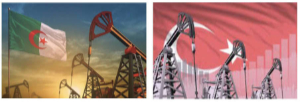
Algeria should also be included through Sonatrach and Sonelgaz. Russia and Algeria discussed strengthening cooperation in hydrocarbons, gas, and related value chains in June 2026, creating scope for Gazprom and other Russian companies in field development, equipment, gas processing, and industrial services.
Türkiye can provide another important regional platform through TPAO, BOTAŞ, and Turkish Petroleum International. TPAO is expanding offshore and international operations, while BOTAŞ operates the infrastructure linking Russian gas through TurkStream, whose two lines have a combined capacity of 31.5 bcm. Russian companies could therefore target drilling, subsea engineering, gas infrastructure, automation, and equipment servicing. The Gulf offers higher-standard procurement markets. UAE-based ADNOC and Saudi Aramco can serve as demanding reference customers, while Masdar and ACWA Power provide additional energy-system opportunities.
Bangladesh

Bangladesh can also be drawn into this context. Nuclear energy remains the cornerstone of bilateral cooperation, led by the Rooppur Nuclear Power Plant project. The most underappreciated dimension of Russia-Bangladesh bilateral cooperation lies beneath Bangladesh’s soil. Geological assessments indicate significant coal and iron ore deposits alongside promising offshore gas prospects, many of which remain underdeveloped because of technological and financial constraints.
Russia possesses globally competitive expertise in mining engineering, mineral processing, and massive natural gas production infrastructure. Deeper Russian diplomatic engagement and cooperation in these sectors could not only help Bangladesh strengthen its domestic supply chains but also create opportunities for Russian energy companies.
Bangladesh launched an international tender in the latter part of May for oil and gas exploration in 26 offshore blocks in the Bay of Bengal, offering more attractive terms to foreign companies to address worsening domestic gas shortages and reduce reliance on costly LNG imports. Russian companies have significant potential to participate in the bids, and Russian policymakers may need to strengthen their energy diplomacy with Bangladesh to secure at least some of the projects. State-run Petrobangla published the tender documents on its website under the revised Bangladesh Offshore Model Production Sharing Contract (PSC) 2026, setting November 30 as the deadline for bid submissions.
How Russia Can Build Joint Technology Chains Across Asian Energy Markets
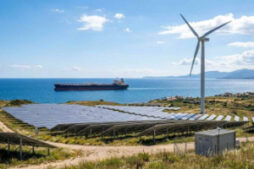
The main opportunity for Russian energy companies after TNF 2026 is not simply to sell finished equipment abroad but to build joint technology chains with Chinese, Vietnamese, Iranian, Azerbaijani, Uzbek, Turkish, Saudi, Algerian, and UAE companies: Russian firms can contribute upstream engineering, difficult-field expertise, drilling and oilfield services, gas turbines and power generation, digital twins, AI, industrial automation, unmanned monitoring, domestic software, and technologies for hard-to-recover reserves, while foreign partners can provide manufacturing scale, localization capacity, financing, established supply chains, and access to their domestic energy markets. The TNF Technology Days session was specifically designed to put technology developers directly in front of major energy customers; the organizers say more than 600 companies have brought new products to market through this mechanism.
Russian companies also need to recognize where they still lack sufficient international competitiveness. TNF itself shows that Russia has strong engineering capabilities, but international expansion requires more than technical competence. Companies need internationally recognized certification, English- and Arabic-language technical documentation, cybersecurity compliance, predictable after-sales service, spare-parts logistics, financing mechanisms, local maintenance teams, and the ability to integrate Russian technologies with non-Russian industrial platforms.
The fact that Russia’s domestic oil-and-gas equipment share reached about 80% in 2025 and is expected to reach 90% by 2030 shows substantial progress in replacing imports, but domestic localization does not automatically equal international market readiness. This is where Chinese and other Asian partners can fill an important gap.
Chinese manufacturers can provide production scale, electronics, sensors, machine tools, power electronics, and components; Vietnamese companies can provide lower-cost manufacturing and ASEAN market access; Iranian companies can contribute industrial production and regional distribution; Azerbaijani and Uzbek partners can provide Central Asian and Caspian market platforms, while UAE and Saudi companies can provide access to high-value energy procurement systems.
Russian companies, in turn, can contribute the engineering layer: reservoir modelling, drilling, production optimization, oilfield services, gas transportation, industrial power generation, AI-based monitoring, digital twins, and technologies developed for technically difficult fields.
The industrial-upgrading effect could be significant if cooperation moves beyond finished-product exports. Russian firms can license selected technologies, establish joint ventures, create local assembly lines, train foreign engineers, transfer maintenance know-how, and retain control over high-value intellectual property while allowing local partners to manufacture non-critical components.
Chinese partners can help scale production; Central Asian partners can become regional service centers; Middle Eastern companies can become reference customers; and Russian universities and industrial companies can provide continuous R&D and personnel training. TNF’s own university-industry agreements, including cooperation between TOFS, Nedra Digital, and Tyumen Industrial University and between BurServis and the university, demonstrate how technology development, education, and industrial application can be connected inside Russia.
The most important shift, therefore, is from “Russian equipment export” to “Russian technology ecosystem export.” A Russian company may initially sell a drilling-control system, digital twin, or gas-turbine unit, but the larger commercial opportunity is to establish a local service base, train personnel, manufacture components locally, integrate the technology with Chinese or regional equipment, collect operating data, and then develop the next generation of the product jointly. TNF’s international status and its Technology Days provide the first layer of this process: direct access to energy companies and technical decision-makers.
The next layer must be commercial qualification, investment, localization, and long-term operation. TNF brought 18 vertically integrated oil companies into the same platform, including LUKOIL, Surgutneftegaz, NOVATEK, KazMunayGas, QazaqGaz, and ADNOC, creating a much more direct channel between technology developers and potential industrial customers.
For Russia, this also changes the meaning of technology transfer. The objective is not necessarily to transfer the entire Russian production system abroad. It is to separate technologies into components that can be licensed, jointly manufactured, locally serviced, or exported as intellectual-property-based solutions, while retaining strategically important engineering and core technologies in Russia. The result could be a network in which Tyumen remains the R&D and engineering center, China provides manufacturing scale, Vietnam provides ASEAN localization, Iran provides industrial cooperation, Uzbekistan and Azerbaijan provide regional deployment, and the UAE and Saudi Arabia provide demanding international customers and investment channels. That would turn TNF’s internationalization from a larger foreign-participant list into a practical mechanism for converting Russian technological expertise into joint production, investment, digitalization, localization, and export growth across several energy markets.
Digitalization Becomes An Exportable Russian Energy Product

The forum’s digital agenda was not limited to replacing foreign software. It increasingly treated digital systems as industrial products that can be exported. Gazprom Neft’s digital ecosystem already connects more than 800 contracting organizations and over 5,000 users. More than 50,000 transactions have been conducted through the platform, covering dispatching, orders, work acceptance, payments, and resource sharing. This demonstrates how digitalization can change the economics of oilfield services by reducing transaction costs and creating common operating standards.
The Call Showcase platform developed by Gazprom Neft exposes real technological requirements of extraction companies to potential developers. Current demand includes enhanced oil recovery technologies and reagents, re-stimulation of horizontal wells, lower-cost well construction, intelligent systems, and robotics. The objective is to widen the supplier base and shorten the route from technological demand to industrial implementation.
Digital twins were another central theme. Gazprom Neft is moving from isolated digital models toward integrated oil and gas asset systems combining reservoir, well, equipment, and infrastructure data. The next stage requires common data standards and rapid information exchange. Drilling automation follows the same logic. Gazprom Neft’s approach begins with sensor and equipment data collection, moves through analytics and recommendations, and ultimately transfers selected equipment-control functions to automated systems. The expected production effects are reduced unproductive time, more stable drilling regimes, and faster reaction to deviations.
People, Cities And Industrial Ecosystems

TNF also connected energy production with the wider regional economy. Tyumen’s business travel volume has increased 72% over the past five years and 18% in January-August 2026 compared with the same period of 2025. Oil and gas representatives accounted for 73% of business trips, with an average stay of three days. Moscow accounted for 25% of origin traffic, St. Petersburg 43%, Novosibirsk 6%, Ufa 5%, and Nizhnevartovsk 2%.
The forum’s public-facing program extended into education, creative industries, and youth technology. The TNF urban program included a Cyberdrome competition involving 16 teams and 80 Tyumen schoolchildren aged 10-14 working with unmanned aerial and underwater systems based on real fuel-and-energy scenarios. The Creative Hub attracted more than 50 representatives of NGOs, social entrepreneurs, and active citizens to a session on Gazprom Neft’s “Native Cities” social-investment program. These programs matter economically because Russia’s northern oil and gas regions compete not only for equipment but also for engineers, programmers, operators, and researchers. The university agreements, HR Summit, professional training, cultural programs, and technology competitions therefore form part of the same industrial system. Russia is also embarking on the training of students throughout Asia, Africa, and the Middle East in numerous energy sectors and has been increasing the number of scholarships it awards to young people from these countries who want to seek a career in the energy sector.
Summary: How TNF 2026 Impacts Russia’s Energy Trade
The most important result of TNF 2026 is the creation of a specialized mechanism connecting four layers of Russia’s energy economy: domestic technological production, major energy companies, regional industrial clusters, and foreign markets. The more than 50 agreements are therefore important less for their headline financial value than for the commercial infrastructure they create.
Russian equipment manufacturers obtain direct access to Gazprom Neft, INK, KazMunayGas, QazaqGaz, and other major customers. Universities receive access to real industrial technologies. Service companies gain new supplier and contractor relationships. Foreign partners obtain direct exposure to Russian equipment, software, engineering, and oilfield-service capabilities.
The internationalization of TNF also creates a route from domestic import substitution toward export substitution: technologies initially developed to replace imported equipment can become products for Kazakhstan, Belarus, China, Vietnam, the UAE, and other markets.
The economic base is already visible. Russia’s oil and gas machinery market reached ₽294 billion in H1 2026 and could reach ₽800 billion for the full year. At the same time, Russia’s energy trade with China continues at very large physical volumes, while Russian gas sales to Kazakhstan are increasing sharply. TNF therefore occupies a different position from Russia’s largest general economic forums. Its function is narrower but more operational. The forum links an identified production problem, hard-to-recover reserves, Arctic and Eastern Siberian fields, aging equipment, digitalization, or labor shortages, to a supplier, research institution, university, government mechanism, or foreign customer. Its 2026 international status institutionalizes that process.
The forum now has a recurring framework for turning foreign energy contacts into supplier relationships, technology demonstrations, joint research, equipment localization, and eventually export contracts. The immediate outcome is the cooperation agreements; the longer-term economic test will be whether those agreements become serial production, technology exports, additional energy trade, and sustained international market access for Russian companies.
This article was written by Ms. Khatun, an international affairs analyst specializing in the energy sector. She may be reached at info@russiaspivottoasia.com