
 Русский










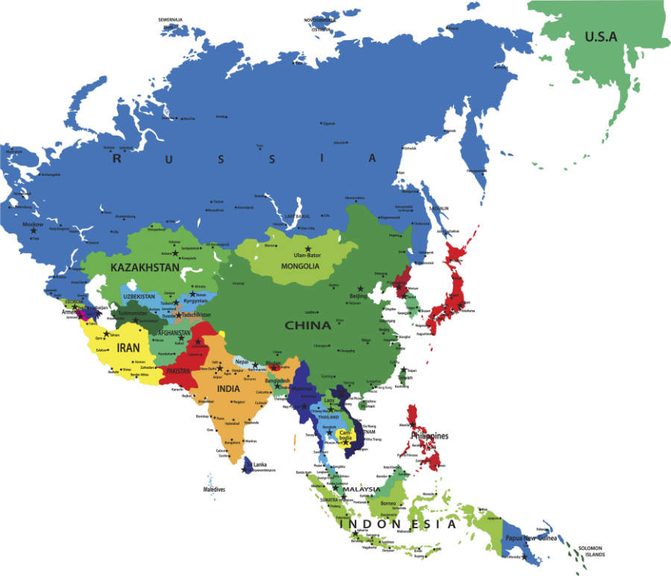
A flurry of activity has been taking place as regards Chinese investment into Russia. These include the 11th Eastern Economic Forum 2026, the 13th Meeting of the Intergovernmental Russia-China Commission on Investment Cooperation, the 23rd Russia-China Energy Cooperation Committee, the 8th Russia-China Energy Business Forum in Vladivostok and the 2nd Russian-Chinese Forum in Khabarovsk. The very real result is the further institutionalization of a Russia-China economic system centered on the Russian Far East, Northeast China, energy corridors, industrial localization, logistics, finance and tourism.
The distinction matters. The headline figure for the Eastern Economic Forum was 328 agreements, contracts, memorandums, plans and roadmaps worth almost ₽6.8 trillion (US$79 billion), but these agreements cannot be attributed wholesale to Russia-China negotiations or to the intergovernmental commissions. The Russia-China mechanisms produced a different kind of result: protocols, project portfolios, sectoral commitments and company-level agreements designed to move an already large economic relationship into a more integrated regional production system.
The 2026 Bilateral Data

The scale is already visible in the numbers. Russia-China trade exceeded US$135 billion in the first six months of 2026, up 22% year on year, putting the two countries on a trajectory towards their US$300 billion trade objective. China’s exports to Russia surged 30.7% year-over-year while imports from Russia rose 26.5% in the first eight months of 2026, according to China customs data.
In August alone, China posted a US$1.9 billion trade deficit with Russia, the widest since April, bringing the cumulative deficit for the first eight months to approximately US$15.7 billion. At the same time, the bilateral investment portfolio supervised by the intergovernmental investment commission reached 65 current and 26 prospective projects worth approximately US$240 billion, with more than half already in implementation. Six new projects were added in 2026, covering refractory materials, food additives and components, chemical complexes, and iron-ore extraction and processing. The message emerging from the Vladivostok and Khabarovsk Forums is clear: Russia-China economic cooperation is moving from a commodity-and-trade model toward a geography-based model in which energy, industrial production, transport, investment, tourism, digital infrastructure and regional development reinforce one another. The Far East is becoming the physical interface connecting these elements.
Putin-Ding Xuexiang: The Political Instruction Behind The Economic Machinery
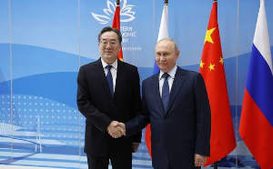
The political foundation was laid in Vladivostok on September 2, when Chinese Vice Premier Ding Xuexiang met Russian President Vladimir Putin. Ding stated that China was prepared to implement the consensus reached by the Chinese and Russian Presidents, deepen the integration of interests through concrete measures and strengthen cooperation in investment and energy.
He specifically called for closer alignment between China’s Northeast revitalisation strategy and Russia’s Far East development strategy. This was not simply diplomatic language. Ding’s portfolio made the meeting economically consequential because he was simultaneously the Chinese co-chair of the Russia-China investment and energy cooperation mechanisms. The meeting therefore connected the political leadership level with the institutional mechanisms that met the following day.
Putin told Ding that bilateral trade had remained above US$200 billion for three consecutive years and that 2026 could produce another record. He also highlighted growing mutual investment, energy cooperation and Russia’s role as a major supplier of commodities to China. The sequence of their bilateral events was important. September 2 established political direction; September 3 converted that direction into investment and energy coordination; September 4 transferred it to business and company-level cooperation; September 4-6 then extended the same logic into Khabarovsk’s regional economy. This is why the Vladivostok and Khabarovsk events should not be viewed as separate conferences. Together they functioned as different layers of one economic architecture. For Chinese investors meanwhile, following the governments initiatives has always been sound investment policy.
Resources On One Side, Industrial Capacity And Markets On The Other

The deeper economic significance of the Khabarovsk forum is therefore not simply that Russian regions met Chinese provinces. It is that their economic structures are increasingly complementary. Khabarovsk, Primorye, Sakhalin, Amur and other Far Eastern territories possess proximity to China, natural resources, agricultural land, fisheries, timber, metals, energy and large areas available for industrial development. Heilongjiang, Jilin and Liaoning bring proximity, manufacturing, processing, logistics and established China-Russia trade networks. Shaanxi adds inland industrial and technological capacity, while Guangdong, Zhejiang and Jiangsu provide access to China’s enormous coastal manufacturing and consumer economy. Moscow, Irkutsk and Krasnoyarsk broaden the Russian side into finance, Siberian resources and national industrial supply chains. This creates the basis for a division of labour in which Russia does not simply export commodities to China and China does not simply export manufactured goods to Russia; instead, the two sides can increasingly combine Russian resources and industrial sites with Chinese capital, machinery, processing, logistics and market access.
The evidence already points in that direction. The forum generated more than 25 agreements and memorandums, more than 270 B2B meetings and investment pitches covering Khabarovsk-City, the Vostochny Most industrial park and the Khekhtsir ski complex. A separate agreement placed 65 Khabarovsk companies from agriculture, industry, creative industries, timber, metallurgy and fishing under an export-acceleration programme involving certification, financing, partner search and international promotion. The forum therefore produced something more valuable than a single headline investment number: it built a pipeline linking regional exporters, Chinese buyers, investors, logistics operators, industrial parks and financial institutions. That is the real bilateral economic story for 2026.
China-Russia New Rail Connectivity And Trade

According to the reports by China’s State run Global Times, China and Russia are discussing new railway routes while expanding capacity at their four existing rail crossings, as rising bilateral trade increases demand for cross-border transport. Russian Railways CEO Oleg Belozerov said railway freight between the two countries is expected to reach a record high in 2026, driven by growing shipments of raw materials and goods. Bilateral freight on Russia’s railway network reached 114 million tons in the first seven months of 2026, up 6% year-on-year, while container traffic rose 12.5% to 2.1 million TEUs. China-Russia trade also reached US$159.24 billion in the seven month January-July period, up 26.3%, prompting further investment in border infrastructure, including a second 1,435-mm-gauge track on the Manzhouli-Zabaikalsk section, expected to add 11 million tons of capacity by 2030.
China-Russia Arctic Scientific Cooperation
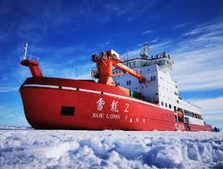
On August 9, 2026, Chinese and Russian researchers conducted their first joint on-site Arctic sea-ice observation during China’s 16th Arctic scientific expedition aboard Xuelong 2, involving two Russian researchers from the Russian Arctic and Antarctic Research Institute. The teams jointly measured sea-ice concentration, type, size, thickness and snow depth, while also recording atmospheric conditions, vessel movement and marine wildlife. Chinese expert Zhang Hong said the research is increasingly important as climate change and melting sea ice expand the navigable period and could support future Arctic shipping and economic cooperation. The work forms part of the fourth China-Russia joint Arctic expedition, launched in Vladivostok on August 20, 2026, which is scheduled to last 62 days and cover areas including the Chukchi Sea, East Siberian Sea, Lomonosov Ridge, Makarov Basin and Amundsen Basin.
Amur-Jalinda-Mohe And The Northern Sea Route: Building A New Northward Corridor

Transport infrastructure was repeatedly identified as one of the remaining constraints. Amur Region Governor Vasily Orlov said Russia and China were working on a combined bridge between Jalinda and Mohe, with a feasibility study and cargo base already prepared. The Amur–Jalinda–Mohe route is a high-profile international transport project across the Amur River, connecting Jalinda (Skovorodinsky District, Amur Oblast, Russia) with Mohe (Heilongjiang Province, China). The centerpiece of this initiative is the proposed Jalinda–Mohe Cross-Border Bridge, designed as a combined railway and highway crossing. It is poised to establish a critical new trade corridor, cutting transportation routes between South Yakutia and China by nearly 2,000 kilometers.
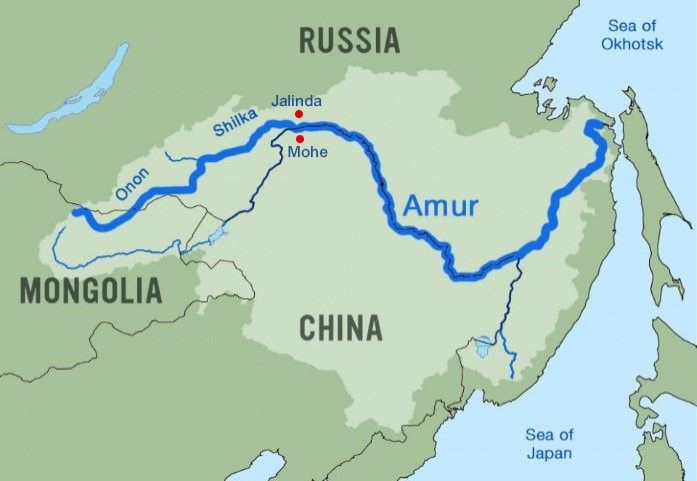
The proposed corridor could eventually move 20 million tonnes of cargo toward the Northern Sea Route, reducing dependence on existing Baikal-Amur Mainline and Trans-Siberian infrastructure. Construction is scheduled to begin from 2030 after financial, legal and economic work is completed.
The strategic implication is considerable. The Far East is no longer simply an east-west corridor from Russia into China. It is becoming a north-south system connecting Siberian and Far Eastern resources with Chinese markets and, increasingly, with the Arctic. That is why the Northern Sea Route featured prominently in the energy discussions. Novak said Chinese companies are participating in major Russian Arctic projects and that the Northern Sea Route is critical to expanding energy shipments to China. Russia and China therefore have an interest in developing not only pipelines but ports, ice-capable shipping, storage and associated infrastructure.
Arctic Cooperation Is Moving Beyond LNG Into Science And Navigation

The Arctic dimension was strengthened by the first joint Russia-China field observation of Arctic sea ice. During China’s 16th Arctic expedition aboard the Xuelong 2, Chinese researchers worked with two Russian researchers from the Arctic and Antarctic Research Institute to conduct joint observations. The researchers recorded sea-ice concentration, type, size, thickness and snow depth, while also collecting atmospheric, vessel-related and ecological information. Ship-based observations complement satellite data because they provide higher spatial resolution and more detailed measurements of ice thickness. The cooperation therefore has direct relevance for navigation assessments, ship design and Arctic logistics.
The economic connection is obvious. A commercially viable Northern Sea Route requires accurate ice information, appropriate vessel design, reliable ports, insurance, navigation systems and predictable cargo volumes. The scientific cooperation therefore contributes indirectly to the same infrastructure that Russia and China are trying to build for Arctic energy trade.
The SME Layer: The Missing Link Between US$200 Billion Trade And Local Economies

A central issue discussed in the Russia-China Business Dialogue was the need to move from quantitative trade growth toward investment, production cooperation and localisation. Russian and Chinese representatives stressed that SMEs, logistics and e-commerce are becoming increasingly important to the bilateral relationship. Over 15,000 Chinese companies have registered in Russia in the past four years, while differences in tax systems, banking regulations, customs procedures and legal interpretation remain obstacles.
This creates a paradox. The macroeconomic relationship is highly developed, but the microeconomic relationship still faces friction. The strategic task is therefore not simply to increase trade. It is to reduce the transaction costs that prevent smaller companies from participating in that trade. The Russian side has responded with proposals for a special legal regime for investors from friendly countries, including stable conditions for up to 15 years, greater opportunities for foreign-bank branches and reduced administrative burdens.
Digitalisation, Robotics And The Next Industrial Layer

Technology was another important bridge. At the EEF, Russian company GLONASS signed an agreement with the Shenzhen Urban Transport Planning Center, a Chinese state-owned organisation associated with monitoring and drone-control systems. The objective is to exchange experience and adapt already operating solutions to Russia rather than developing every system from scratch. The broader Russia-China Business Dialogue identified digital cross-border trade, smart logistics corridors, gas-chemistry clusters and biotechnology as emerging priorities.
China Communications Construction Company also highlighted investment in digital infrastructure and the implementation of major projects in Russia. The company said it had participated in around 36 major projects in Russia over eight years, including factories, logistics corridors, urban projects and equipment. This is potentially more consequential than another increase in commodity exports. If Chinese digital systems, industrial equipment and robotics become integrated into Russian production in the Far East, the relationship begins to generate productivity gains rather than merely shifting trade volumes.
Tourism Is Becoming An Economic Corridor

Tourism has strengthened its position on the bilateral agenda. According to Economic Development Minister Maxim Reshetnikov, mutual tourist flows in Q1 2026 grew by 50% year-on-year, supported by the visa-free regime. The mutual tourist flow is projected to exceed 4.2 million trips in 2026 — up from 1.2 million in 2023, an increase of 250% over three years.
Russian regions are increasingly adapting tourism products to Chinese demand. Khabarovsk’s aviation agreement, the Greater Ussuriysky Island development and the modernisation of border infrastructure therefore have a direct commercial purpose.
Kamchatka, meanwhile, reported growing demand for Chinese-speaking tourism specialists. Its new international terminal in Petropavlovsk-Kamchatsky is intended to create capacity for more international flights and improve the quality of services for foreign visitors. Tourism also generates a demand for banking, payments, aviation, hotels, restaurants, digital services and local consumer goods. In that sense, it is one of the mechanisms through which China-Russia cooperation reaches households and small businesses rather than remaining concentrated in state corporations.
The Trump Factor

There may be another factor at play. During the August 2025 Russia-United States Alaska summit, it became clear that the two sides had discussed the possibility of economic and investment cooperation. At its closest point, the United States is just 3.8km distant from Russia across the Bering Strait. It was also revealed that during the most recent meetings between Russian President Putin and Trump’s team of Jared Kushner and Steve Witkoff, the possibility of bilateral Russia-US trade and economic development was again discussed in some detail. While it will be necessary for the Russia-Ukraine conflict to be wound down for US investment to be made into Russia, the Chinese will also be watching these developments. Russian President Putin has almost certainly discussed US interest with China’s President Xi Jinping. A strategic reaction by Beijing would be to ensure that it gets its hands in on Russian assets and infrastructure developments either before the Americans do, as well as being prepared to invest in the infrastructure requirements that US investors would need access too in Russia. US involvement in the Russian Far East would very much be a motivating factor for China.
Summary
Far from collapsing, the Russian economy is rapidly becoming a growth engine and especially so for East Asia. That is vitally important for China, whose own economy is under pressure. While 2026 growth is expected at 4.5%, it is not especially well structured, and this concerns Beijing. The onus has been on the manufacturing sector developing, which it has been doing, however China’s own internal consumerism remains lower than ideal. Chinese household savings have reached record highs, totaling about ¥160 trillion (US$22 trillion), driven by high saving rates and conservative investment habits, especially during times of geopolitical upheaval. Beijing needs get that capital released and put to good use. This is why the Russian Far East in particular is attractive – Russia needs the capital and China – if it can unlock those massive private reserves – can provide it.
China has already invested close to US$1 trillion in its entire Belt & Road Initiative, which has been largely designed to secure sustainable supply chains both to and from China. Having the infrastructure in place to do that protects the Chinese economy from any shocks. Investing in that infrastructure, owning part of it, and seeing it put to good use is also highly profitable, and a solid long term return on that investment. This is why we are now seeing considerable Chinese interest in Russia, and Siberia and the Russian Far East in particular as these regions share significant borders with China. At present, the two sides recognise the complementarity. Now the target is to more closely analyse the potential, discuss the investment terms, and in China’s case – market that to its banks, other financial institutions and through them, to its private citizens – sitting on US$22 trillion of capital assets. To put that into context, the annual GDP of the Russian Far East is about US$159.81 billion. In other words, if just 0.7% of Chinese private savings are freed up and invested in the Russian Far East, the amount is equivalent to the regions entire annual productivity. It would completely change the infrastructure and efficiency dynamics of Russia and is why the Russian Far East is such a significant opportunity for China.