Русский








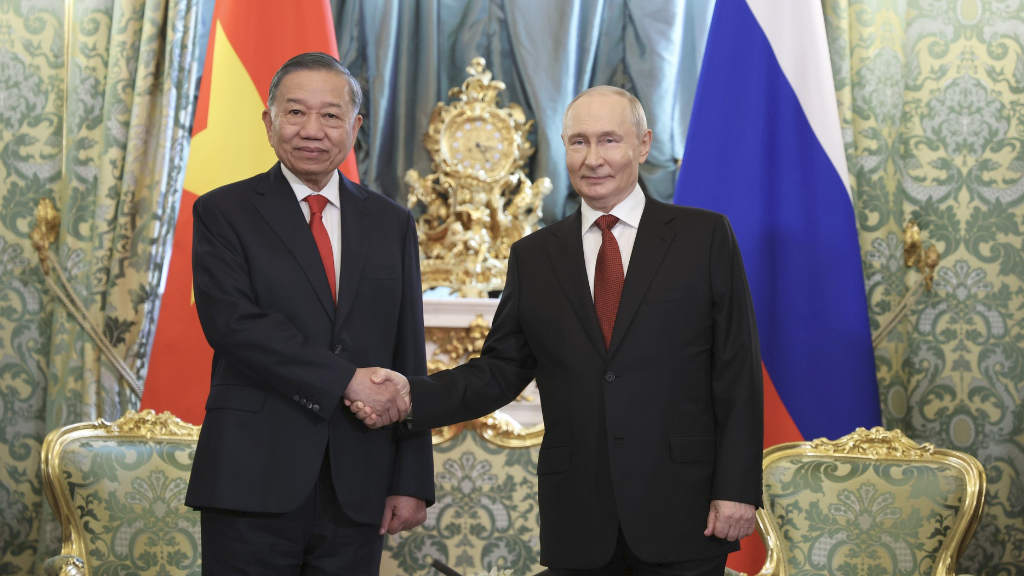

The Russian President, Vladimir Putin, has met with To Lam, the President of Vietnam, in the Kremlin, along with a sizeable Vietnamese governmental and business delegation.
On the Russian side, the meeting was attended by Foreign Minister Sergei Lavrov, Deputy Prime Minister, Co-Chair of the Russian-Vietnamese Intergovernmental Commission on Trade, Economic and Scientific-Technical Cooperation Dmitry Chernyshenko, Deputy Chief of Staff of the Presidential Executive Office Maxim Oreshkin, presidential aides Nikolai Patrushev and Yury Ushakov, Economic Development Minister Maxim Reshetnikov, Finance Minister Anton Siluanov, Director of the Federal Service for Military Technical Cooperation Dmitry Shugayev, and Deputy Defence Minister Vasily Osmakov.
Putin stated that “We are delighted to welcome you and your large delegation to Moscow. The people of Vietnam celebrated Independence Day a few days ago, on September 2. I would like to note that special relations of friendship, mutual understanding and cooperation developed between our nations at the time when Vietnam was fighting for its sovereignty.
In this connection, I would like to say that Vietnam has achieved impressive results over its history of independence and full sovereignty, under the guidance of your party, under the guidance of Vietnam’s leadership teams. This demonstrates that those who fought for Vietnam, for its independence and sovereignty, did not do so in vain, and that their sacrifices were not in vain.
I would like to emphasise once again that the Vietnamese people are achieving impressive results on the basis of sovereignty.
We are developing our bilateral ties. Our trade is growing — last year, it increased by almost 6 percent, and in the first six months of this year, the pace of trade growth has virtually doubled.
We continue to work across all other areas, including culture, education and security. We already have projects that have stood the test of time, as well as new and interesting initiatives. I am confident our work today and the documents we sign will provide a solid foundation for the further development of our special strategic relations.”
Lam replied: “It is truly a pleasure to meet with you once again. You are a great friend of our country, a close brother to the Vietnamese people, and a comrade with whom I share a particularly warm personal bond.
Let me begin by expressing my sincere gratitude to you and to the Russian people for your continued attention, support, and assistance in advancing bilateral cooperation between our two nations. I am also most grateful for the warm, cordial, and generous hospitality extended to our high-level delegation, to my wife, and to myself personally.
I would also like to thank you, Comrade President, for your sincere and friendly words addressed to me on the occasion of the 81st anniversary of the Independence Day of the Socialist Republic of Vietnam.
In our restricted format talks today, I would like to discuss a number of issues that we regard as both strategic and urgent for our bilateral partnership.
Vietnam consistently places great emphasis on its relationship with Russia. We regard it as a priority, a consistent pillar of our foreign policy, and a strategic choice of enduring significance. We are aware that some countries have expressed views on our continued close ties with Russia. Yet Vietnam has neither wavered nor shifted its stance. We have made our position clear, because we fully understand the essence of this matter.
We highly value and deeply appreciate Russia’s influence and standing in the world, as well as President Putin’s personal role and authority, in shaping a new multipolar world order and in safeguarding global energy and food security.
I am confident that under your wise, resolute, and far-sighted leadership, Russia will conduct the forthcoming elections to the ninth State Duma and the local self-governments safely and successfully. These elections will, I believe, lend fresh momentum to Russia’s stability and prosperity, and in turn open up new opportunities for cooperation between Russia and its friendly partners – including Vietnam – in the near future. I would very much welcome your views.”
Russia-Vietnam Trade Relations
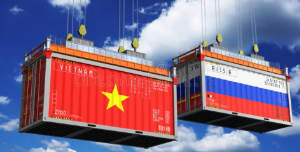
Vietnam has a Free Trade Agreement with Russia via the Eurasian Economic Union, which has been in effect since October 2015. It is also a BRICS Partner state and has indicated it wishes to obtain a similar status within the Shanghai Cooperation Organisation. Bilateral trade reached about US$5.9 billion in 2025, having grown by 6% over the previous year, while 2026 trade has been growing at rates of 12%. If that is maintained, 2026 Russia-Vietnam bilateral trade will reach US$6.6 billion.
In terms of goods, Russia exports mainly mineral fuels, fertilizers, wheat and meat, while Vietnam exports mainly clothing, coffee, and seafood. Vietnamese frozen prawns for example are now commonly found in Russian supermarkets.
During their meetings, Lam and Putin set a new trade target of US$15 billion to be accomplished by 2030. That implies annual growth rates of 31% from now until 2030. Achieving this was a significant part of the bilateral discussions and why Vietnam bought such a large trade and development delegation.
Russia-Vietnam Investments
As of August 31 this year, Russia had 244 investments in Vietnam with a total registered capital of US$996.81 million. Meanwhile, Vietnam had 19 investments in Russia with total capital of US$1.64 billion, notably the Rusvietpetro joint venture and TH Group’s agricultural and dairy farming project in the Russian Far East.
Russia-Vietnam Trade Development
Moscow is moving beyond commodity exports toward deeper supply-chain integration with Hanoi. For Vietnam, diversified partnerships can strengthen economic resilience while preserving strategic autonomy amid U.S.-China competition. For Russia, Vietnam offers a valuable gateway into Southeast Asian markets and maritime networks. The emerging partnership could gradually expand Moscow’s economic footprint in ASEAN and improve the region’s strategic balance.
Achieving this is another issue. Vietnam and Russia said strong measures were needed to ensure economic cooperation played a pioneering role and make bilateral ties more substantive.
Strengthening Institutional & Existing Business Ties

Putin and Lam agreed to strengthen the role of the Intergovernmental Commission on Economic, Trade and Scientific-Technical Cooperation. They also encouraged businesses from both countries to strengthen connectivity, expand investment, and develop new production and supply chains. Areas with significant room for cooperation include food processing, large-scale livestock farming, seafood processing, the marine economy, manufacturing and processing industries, local production of consumer goods, wood processing, shipbuilding, skilled labour, education and services.
In the auto manufacturing sector, Putin said “I would like to highlight the production of Gazelle cargo vans and passenger minibuses in Da Nang. KAMAZ is expanding its presence in the Vietnamese market, with a network of dealerships and service centres across the country.”
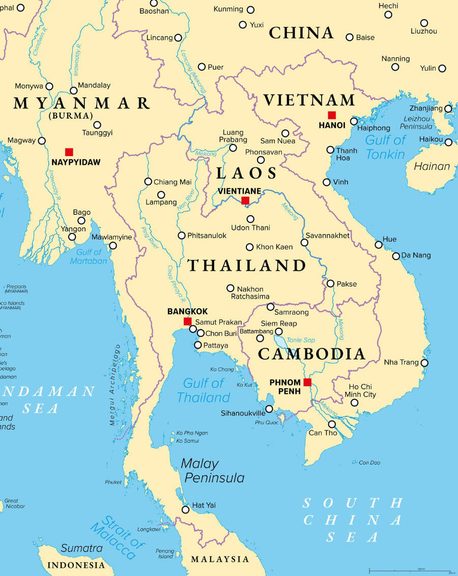
Energy: Nuclear Power and Vietnam As A Transit Hub For ASEAN
Energy and oil and gas remain key pillars of the comprehensive strategic partnership between Vietnam and Russia, with Putin showcasing the examples of the Vietsovpetro Vietnam-Russia joint venture, which has produced more than 250 million tonnes of oil. PetroVietnam, in turn, has been implementing projects in Russia’s Nenets Autonomous Area since 2008 and has already produced over 40 million tonnes of oil.
Gazprom meanwhile is developing gas fields on the Vietnamese continental shelf. Last year, the company began supplying liquefied natural gas to Vietnam.
Putin also highlighted Hydropower, saying “There is considerable potential for expanding cooperation in the hydropower sector. More than a third of Vietnam’s hydropower generating capacity was designed and built with the participation of Russian specialists. The RusHydro Group is developing joint projects on engineering assessment and upgrading of the existing hydroelectric power plants.”
The two sides agreed to expand cooperation into new energy areas, including nuclear power, wind power and gas-fired power.
Concerning nuclear energy, the two leaders said the sector was of strategic importance and could create a new landmark in bilateral ties. President Putin said Russia was ready to share its experience and technology, help train human resources, and implement cooperation activities in line with Vietnam’s needs. He said that “In March, an intergovernmental agreement was signed to build a Russian-designed nuclear power plant in Vietnam. This is a truly flagship bilateral project. The future nuclear power plant will be able to provide Vietnamese businesses and households with large volumes of affordable and environmentally friendly energy. Plans also include the construction of a nuclear science and technology centre in Vietnam. All of this will give a significant boost for economic growth, create thousands of new hi-tech and well-paid jobs, as well as increase demand for highly skilled Vietnamese personnel.”
Russia is also discussing with Vietnam the organising of energy transit supplies to neighboring countries in ASEAN. Putin said that “Our companies are interested in establishing transit supplies of energy resources through Vietnamese territory to neighboring states. These countries are also turning to us with a request to organize this work together with Vietnam.” That was a reference to recent discussions with the Thai Foreign Minister last month where this issue was discussed. .
Russia also suggested that Vietnam considers the idea of jointly forming strategic fuel reserves in the country, Putin said. A framework agreement on this issue was concluded during the Vietnamese president’s visit between Zarubezhneft and Petrovietnam. Another document signed between the companies concerns the distribution of investments in blocks on Vietnam’s continental shelf.
Putin also noted the work of Gazprom in Vietnam, recalling that last year the company launched LNG supplies to the country. Those Vietnamese shipments originated from Russia’s Sakhalin-2 project in the Russian Far East as well as from Gazprom’s Vietnamese gas fields.
Transport, Logistics and Direct Rail Connectivity
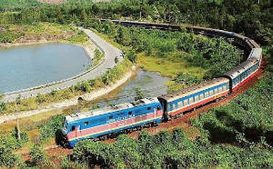
Russian Transport Minister Andrei Nikitin said he had held discussions with the related Vietnamese transport officials about establishing regular, direct train services from Vietnam to Russia via China. He said that such trains have already been launched by a Vietnam Railways subsidiary and Russia’s FESCO, adding “We now want to speed them up and establish more regular connections.”
FESCO is in a partnership with the Ratraco logistics operator, a subsidiary of Vietnam Railways, and launched the FESCO Vietnam Shuttle, a direct rail service from Vietnam to Moscow via China and Mongolia in mid 2025.
Aviation & Tourism

The Russian Transport Ministry has suggested that Vietnamese authorities consider the possibility of transferring Vietnamese airlines aircraft under wet leasing arrangements to Russian airlines. This is to assist Russia with the sanctions problems over operating its fleet of Boeing and Airbus aircraft, with a ban on providing Russia with the necessary spare parts and maintenance equipment. There is a timeframe gap between the retirement of Russia’s Airbus and Boeing fleets and Russia’s domestic production of its own aircraft. If not dealt with, this hinders the seasonal air traffic flow – Vietnam is an increasingly popular destination for Russian tourists with arrivals up 85% in 2025.
Nikitin said that “We sent relevant proposals to our Vietnamese colleagues and they are considering them.” A law allowing Russian airlines to take aircraft from foreign carriers under wet leasing terms was signed by President Vladimir Putin in April last year. Shortly before that, wet leasing was allowed in Russia only between domestic airlines and only for domestic flights. Wet leasing includes the aircraft as well as the crew.
This mechanism helps lessees increase capacity (for example, during periods of high demand or when new routes appear), and lessors reduce costs for commercial fleet management and the wage fund.
Nikitin also commented on bilateral aviation growth, adding that “There are very good dynamics for all types of transport connecting the two countries. For air travel, there is an almost threefold increase compared to last year. And of course, we want to continue increasing air traffic, opening new access points for our airlines, and expanding cooperation.”
The first wet leasing deal was made by Aeroflot at the end of 2024. The company leased four wide-body Airbus A330s together with the crew from Russia’s iFly. However, such agreements have not yet been carried out with the participation of foreign airlines.
Science, Technology & Medicine
The two sides also agreed to make science and technology, innovation and digital transformation new drivers of bilateral ties, and to strengthen links among research institutes, universities, innovation centers and technology companies.
Both Presidents took part, via videoconference, in the opening of a laboratory for the study and prevention of infectious diseases, based at the Joint Russia-Vietnam Tropical Research and Technological Centre in Hanoi.
Lam asked Russia to continue facilitating opportunities for Vietnamese officials, students and postgraduate researchers to study and conduct research in basic sciences and high-tech fields where Russia has strengths. The two sides also agreed to expand links among universities and research institutions and strengthen high-quality human-resource training. Currently, around 5,000 Vietnamese students are enrolled in nearly 200 Russian universities, predominantly on government scholarships.
Finance
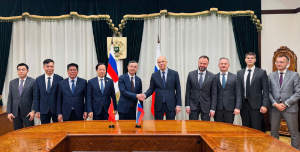
The Vietnamese Finance Minister Ngo Van Tuan met with the Russian Finance Minister Anton Silvanov as part of the bilateral delegations and proposed that the two ministries continue to strengthen traditional areas of cooperation, including taxation, customs and investment, while expanding coordination and experience-sharing in emerging areas such as financial market development, green finance, digital finance, innovation and private-sector development.
This suggests that there are likely to be amendments made as concerns the Vietnam-EAEU trade agreement, which may further reduce tariffs on certain key items within this to motivate additional trade. Such tweaks are not unusual – the FTA is eleven years old now and the bilateral trade environment and the product categories have all evolved since the original agreement.
Additional updates may also be made to the Russia-Vietnam Bilateral Investment Treaty, which dates back to 1996, and which outlines investment protections on both sides as well as dealing with tax issues in the services sector. That may also find itself being reviewed and updated to better encourage mutual trade and investment.
Siluanov said the Russian Ministry of Finance stands ready to work closely with its Vietnamese counterpart to address complexities arising in bilateral cooperation. He said that strengthening experience-sharing in new areas of finance and developing appropriate payment mechanisms were top priorities for boosting investment flows and trade between the two countries.
APEC Vietnam 2027

Lam invited Putin to make a state visit to Vietnam and attend the APEC 2027 Economic Leaders’ Meeting on Phu Quoc Island in November 2027.
Summary
The Russia-Vietnam bilateral talks were substantial and the new trade target of US$15 billion by 2030 ambitious. Key to achieving this will be four main pillars:
Further Russia-Vietnam Market Liberalisation
This was hinted at during the Finance Ministers meetings and by President Lam. The removal of trade barriers by reducing tariffs and taxes on strategic commodities will have a positive impact on bilateral trade and is likely to be formalised by changes to the existing Bilateral Investment Treaty and the Eurasian Economic Union Free Trade Agreement.
Logistics & Connectivity
Vietnam is a long way from Russia, meaning getting efficiencies into transport corridors is a primary target area. Vietnam is already part of the Eastern Sea Route with its major ports connected to Vladivostok, and onwards to Russian national distribution via the Trans-Siberian railway. There is also connectivity to Russia via China, with the prospect of direct rail being considered. While Russian railways are close to capacity, this bottleneck is being addressed. Rail capacity on the Trans-Mongolian section of the China-Russia route will increase 50% by 2030, while capacity increases of the INSTC network via India and Iran to Russia should also manifest once the issues concerning Iran are resolved.
Energy
Bilateral trade and investment will receive a significant boost via their strong bilateral energy collaboration, with Russia poised to deliver NPP as well as Hydropower and other energy deliverables to Vietnam. The development of Vietnam as an ASEAN energy distribution hub is an interesting concept, with Russia having also proposed the same for Myanmar.
Southeast Asia’s energy demand is expected to increase by 60% by 2040. To support that, Russia will need distribution assistance, and Vietnam, with its long east coast and direct access to energy growth markets in Thailand, Cambodia and Laos can play a key role. This means investment and construction.
Finance
The Russian Finance Minister noted that payment systems need to be improved. This is especially the case as bilateral trade will nearly triple in the coming four years, while the Vietnamese economy itself is also currently growing at over 8% per annum. Vietnam is also a significant consumer market of 102 million, meaning there is plenty of room for improving Russian exports. Vietnam is also a growth market for Russian tourists – 1 million Russians visited Vietnam during the first eight months of 2026. That requires improved payment systems. Thailand for example has rolled out a QR code payment system that links to Russian visitors bank accounts, as have Indonesia and the Philippines.
On the corporate side, Russia liberalised its laws on the use of cryptocurrencies in foreign trade from September 1, while Vietnam permitted the use of crypto exchanges in December last year. Both sides will be discussing how these can be effectively managed and operating solutions found.
As can be seen, there is a great deal of mutual development activity taking place in the Russia-Vietnam space, with wider implications also for Russia’s development into the ASEAN markets. This is a key component of Russia’s Foreign Policy. Investors should take note.