Русский








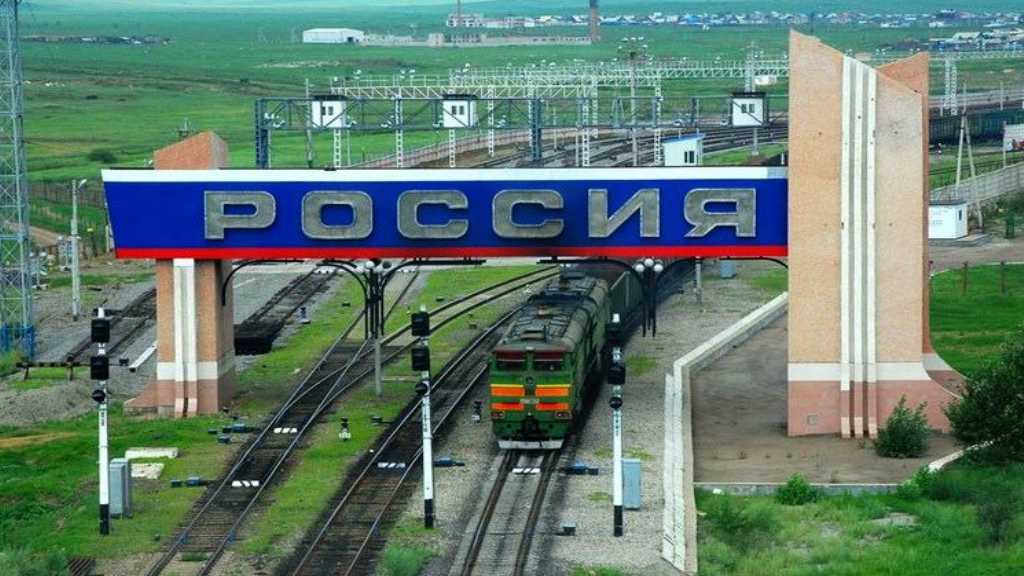

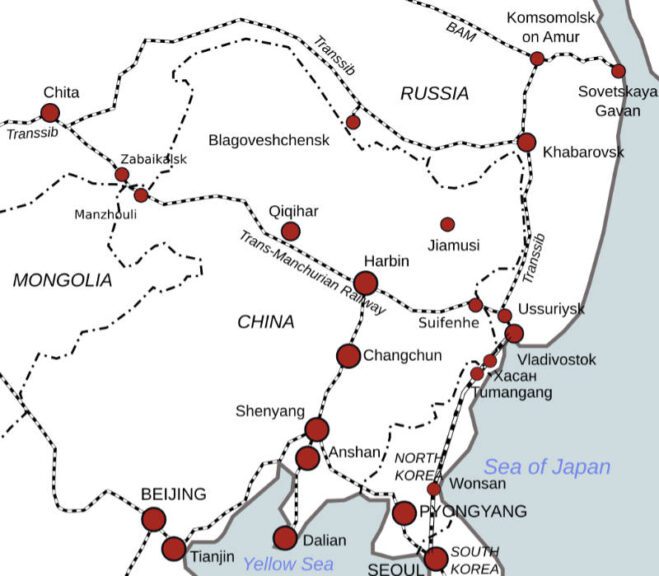
During Russian President Putin’s visit to Beijing last week, Russia and China signed an agreement to build a new rail track between Zabaikalsk and Manzhouli, located on the Russia-China border. The Manzhouli route is the largest railway artery between Russia and China.
The Zabaikalsk checkpoint now becomes the largest checkpoint on the Russian border and overtakes Russia’s previous borders with Europe in both freight capacity volumes.
The agreement will have the effect of increasing the current track capacity by an additional 11 million tonnes. The current railway crossing, a major route for both Russia-China and China-Europe trade, operates on a single line with three tracks, but the new 1,435 mm gauge track is expected to significantly improve freight movement.
The section in question is part of the main Beijing-Moscow route via Harbin, which was originally used extensively by Soviet era officials travelling between the two capitals. Today, it is used more for freight and is especially known for its transporting of coal and timber between the two countries, although these freight dynamics are also changing and becoming more product sophisticated.
According to Russia’ Transport Minister Andrey Nikitin, the project will support nearly 50 pairs of trains per day. The expansion reflects Russia’s growing economic shift toward China after Western sanctions redirected trade flows eastward, while also addressing railway bottlenecks that have limited long-distance freight transport between the two countries.
Russian Railways are also building another railway container terminal at the Zabaikalsk border checkpoint, according to the Russian Far East and Arctic Development Corporation. It will be able to process up to 250,000 digital containers (DFE) per year and will also contribute to the increase in cargo flows on this transport corridor. Other logistics projects underway in Zabaikalsk include road transport connectivity, adding 28 additional lanes for transport, while the throughput capacity will increase to 2,400 thousand vehicles per day, up from the current 600. Up to 1,600 passenger cars per day will also be catered for. There are special visit permits available for citizens of both sides of the border to use as long, as they are local residents and do not travel beyond either city limits. Russian and Chinese traders and tourists are common sights in their respective cities.