
 Русский





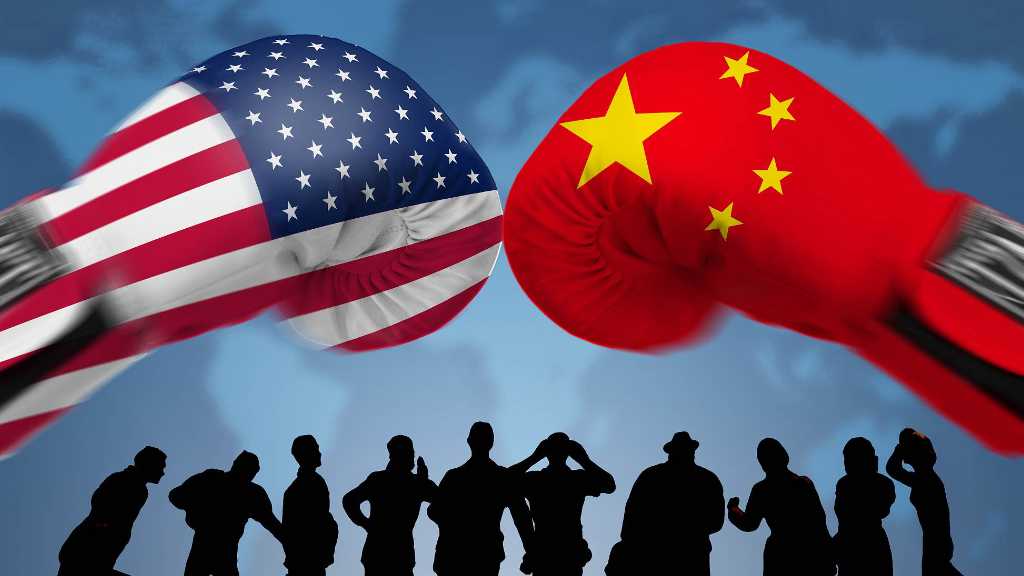

China has said it will protect its domestic companies from proposed US tariffs targeting buyers of Russian energy, warning Washington that economic coercion and unilateral sanctions would ultimately backfire.
Chinese Foreign Ministry spokesman Lin Jian responded to legislation introduced in the US Senate that would authorize tariffs of up to 100% on imports from the largest purchasers of Russian oil and natural gas, including China. Lin stated that “China firmly opposes unilateral sanctions that have no basis in international law or authorization of the UN Security Council and will take necessary measures to firmly defend the legitimate rights and interests of Chinese businesses and citizens. Practicing double standards and resorting to coercion and pressuring will eventually prove to be self-defeating.”
The revised sanctions bill was introduced on Tuesday (July 14) by the US Senate. It is an update to legislation originally proposed by the late Russia hawk Senator Lindsey Graham, who died of heart complications on Saturday. If enacted, the measure would authorize US President Donald Trump to impose tariffs of up to 100% on goods imported from the five largest buyers of Russian oil and gas. China and India would be among the countries most heavily affected.
The proposal comes less than two months after Washington and Beijing signed a trade framework designed to ease months of tariff tensions following a trade war in which the US imposed duties of up to 145% on Chinese imports, while China responded with tariffs of up to 125% on American goods.
During that dispute, Beijing restricted exports of rare earth minerals critical to US high-tech and defense industries, disrupting supply chains and forcing some American manufacturers to suspend production. A similar scenario is likely to emerge should the US impose tariffs on Chinese exports as punishment for purchasing Russian oil.
About 20% of China’s total crude oil imports come from Russia. If China lost Russian oil supplies, energy prices would spike, while global inflation would rise as China would look to replace that 20% of its crude imports. Price spikes, of course, would be beneficial to Russia. Beijing would tap its massive national stockpiles, shift purchases to Middle Eastern and African nations, and enforce strict fuel rationing for businesses. Longer term, this would impose significant strains on its economy and add to the possibility of a global recession. China is the world’s largest trading nation.
China’s exports to the US have amounted to about US$294 billion for the first half of this year and have been increasing due to fears that tariffs could be imposed. US demand for Chinese products is currently driven by AI-related technologies, semiconductors, and electric vehicles. Further down the supply chain are mass-market items such as electronic products, smartphones, computers, electric batteries, solar components, toys, furniture, and clothing.
China, however, as noted in earlier disputes, would likely respond by restricting exports to the US of key-critical items such as rare earths. The US relies heavily on China for finished electronics (such as smartphones and computers), EV batteries, active pharmaceutical ingredients, and rare earth elements. These materials are vital for U.S. defense systems, energy grids, and medical devices.
China also dominates the global processing of many elements. This creates a major bottleneck for American industries because these materials are impossible to build modern technologies without supplies of them. For example, China supplies over 50% of US demand for 21 nonfuel minerals and controls roughly 91% of the world’s supply of magnet rare earths; it controls over 95% of global processing for battery-grade graphite, while specialty metals such as gallium, germanium, and antimony are needed by the US for its aerospace and microchip manufacturing
United States buying for the upcoming Christmas market is also now underway, with any tariffs imposed by Washington additionally likely to result in shortages of toys and related items for the festive season.
There are other implications. While the aim of the US Senate bill is to cut off revenues earned by Russia from the sale of its crude oil, the Russian export market has also shifted. Russian exports have diversified and are no longer limited to crude exports. Russian exports increasingly include refined petroleum products, emergency logistics, technology cooperation, and integrated Eurasian energy security. That is a rather more complex system to simply threaten with third-party tariffs. It should also be noted that Russia’s crude oil exports to China amount to just 3% of its total GDP.