 Русский






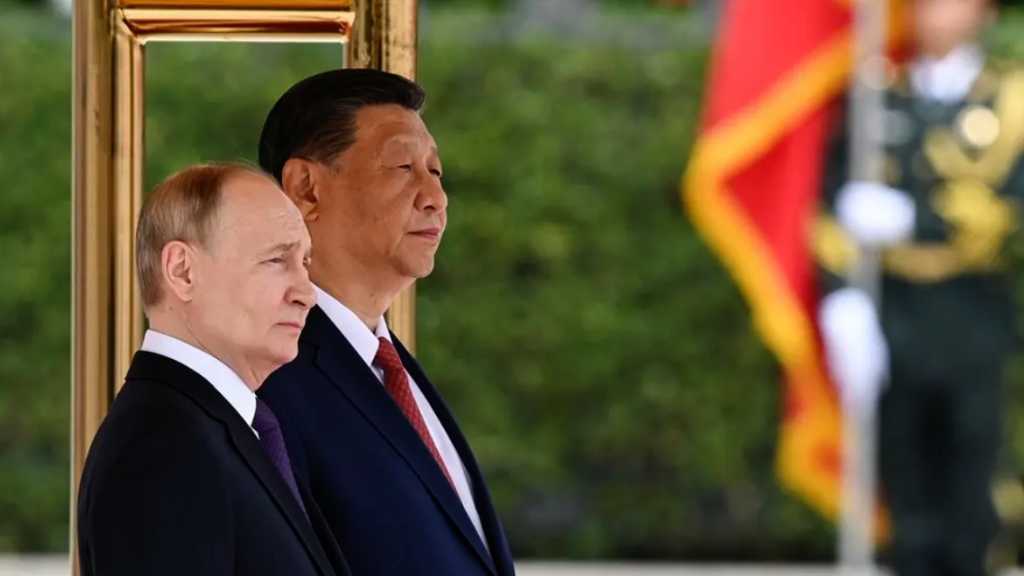

The Russian president, Vladimir Putin, kicks off a state visit to Beijing today (Tuesday, May 19) in an unprecedented flurry of tier-one diplomatic activity in China following US President Trump’s visit last week. The tightly sequenced visits have sparked widespread attention, with analysts noting that it is extremely rare in the post-Cold War era for any country to host the leaders of the US and Russia back-to-back within a week.
In our previous analysis, it is evident that Russia is a key pillar in the evolving architecture of China-US energy cooperation, international trade, and global geopolitics. Last week’s meeting between Trump and Xi Jinping should not be viewed merely as a bilateral dialogue but as part of a broader strategic equation in which Russia plays an indispensable role – an issue we also pointed out last week here.
We are justified in our assessment. On May 17, EU foreign policy chief Kaja Kallas alleged that the US, China, and Russia all prefer a fragmented Europe, as a united EU represents a geopolitical force capable of challenging major powers. This remark, suggesting the emergence of a China-Russia-US triumvirate, further underscores shifting geopolitical realities. Such statements reflect ongoing concerns within the European establishment regarding this perceived trilateral dynamic and Europe’s diminishing role in a rapidly transforming multipolar world.
Against this backdrop, particular attention must be paid to the state visit of President Putin on May 19-20, as well as the ongoing 10th Russia-China Expo from May 17 to May 21 in Harbin, the capital of Heilongjiang Province in northeast China. Xi and Putin both sent congratulatory letters to the Expo participants.
Putin said that this year’s exhibition has a rich and diverse programme and insightful expositions which present the bilateral cooperation in its key aspects, including energy and high technologies, transport and logistics, manufacturing and agricultural sectors, trade, economic and cultural exchanges”. The US-China summit in contrast did not include any related US-China Expo or bilateral business showcase. In fact all it really managed to achieve was create a whole host of uniformed online rhetoric about Taiwan, and some rather distasteful footage of the US delegation placing gifts presented to them by the Chinese in waste disposal baskets before they returned.
The China-Russia engagement however is designed to illustrate the depth and resilience of Russia-China economic cooperation, highlighting their growing importance for bilateral trade expansion in 2026 and beyond. In this context, Russia-China relations are not only strengthening but are also increasingly shaping the contours of Eurasian economic integration and redefining the asymmetric nature of their trade momentum.
The Strategic Timing of Putin’s Beijing Visit
When Vladimir Putin arrives in Beijing, the event will not merely symbolize another high-level diplomatic exchange between two neighboring powers. The timing itself reveals the strategic magnitude of the visit. Putin’s visit to China only four days after Trump was there carries significant symbolic meaning. Trump held private meetings with Xi Jinping, and Putin is also expected to hold closed-door talks with Xi. The outcomes of these meetings are normally not fully disclosed to the media. However, based on strategic analysis, it appears that these major powers are aligning their broader global strategies, ranging from global trade and energy cooperation to geopolitical and security issues.
As China has just adopted its 15th Five-Year Plan for 2026-2030, the alignment of Russian and Chinese strategies will also be on the agenda. According to the Kremlin, a joint statement along with a number of bilateral intergovernmental, interdepartmental, and other agreements will be signed following the talks, which after all come hot on the heels of China’s assessment of the United States position on numerous global issues. Whatever China and Russia discuss will be in part the logical extension to well-planned bilateral development, with the caveat of some reaction to last week’s US-China strategic proposals.
(We will provide an outcome-based analysis of how the China-Russia agreements will impact the next phase of their bilateral trade, investment, and strategy in the coming days. To make sure you see this, a complimentary subscription to our weekly update can be found here – use that if you want to remain abreast of this intelligence).
Behind closed doors, China and Russia will discuss a wide range of global issues, ranging from a possible solution to the Ukraine conflict to potential participation by American companies in Russian-Chinese energy infrastructure projects. Moscow and Beijing are shifting their trade focus to a broader framework that includes hydrocarbons as well as non-resource and value-added trade. The decades-long perception of an asymmetric relationship is gradually fading as both China and Russia diversify their trade baskets and expand cooperation across multiple sectors.
Trade Expansion and Structural Economic Resilience
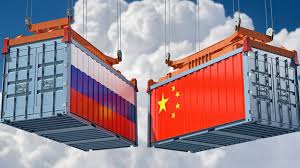
Moscow has explicitly framed the trip around the 25th anniversary of the Treaty of Good-Neighbourliness and Friendly Cooperation, the foundational document that transformed Russia-China relations from pragmatic coexistence into a long-term geopolitical and economic architecture. This 2026 State-level visit matters because China and Russia are no longer developing at the level of conventional bilateral cooperation. Instead, it is evolving into the central economic stabilizing axis of Eurasia. What once depended primarily on hydrocarbons and basic border trade is now expanding into industrial supply chains, digital finance, artificial intelligence, logistics corridors, aerospace cooperation, food security, Arctic infrastructure, and technological sovereignty. The numbers alone explain why the world is watching Beijing this week.
According to China’s General Administration of Customs, China-Russia trade reached US$85.24 billion in the first four months of 2026 alone, representing a 19.7% year-on-year increase. From January to April, Chinese exports to Russia rose 23.1% to US$37.83 billion while Russian exports to China increased 17% to US$47.41 billion, leaving Russia’s trade surplus broadly stable at US$9.58 billion.
In April alone, bilateral trade totaled US$23.7 billion, up 7% from March, including US$10.16 billion in Chinese exports to Russia (+8.4%) and US$13.54 billion in Russian exports to China (+6.1%). Russia mainly exported oil, natural gas, coal, copper, timber, seafood, and agricultural goods to China, while China supplied cars, tractors, computers, smartphones, industrial equipment, and consumer goods. In April 2026, China remained the largest global buyer of Russian fossil fuels, accounting for 41% or US$8.5 billion of Russia’s export revenues from the top five importers.
Crude oil made up 75% (US$6.4 billion) of China’s purchases, followed by pipeline gas (US$658 million) and oil products (US$615 million). Coal (US$405 million) and LNG (US$277 million) constituted the remainder of their energy imports. China’s total seaborne crude import volumes saw a marginal 25% month-on-month decrease in April. This was mirrored by Russian imports, which decreased by 24%. China’s imports of Russian Sokol-grade crude, exported from Russia’s eastern port of De Kastri, saw a 36% month-on-month rise—the highest volume in over two years.
At this trajectory, bilateral trade could exceed US$260 billion this year, significantly above the already record-breaking US$240 billion achieved in 2024. After the trade volume declined to US$228.105 billion in 2025, there appears to have been a significant rebound in growth. Putin noted that China is Russia’s largest trade and economic partner, adding that bilateral trade diversification continues through high-tech industries, which is very important. Putin also said that Russia and China have reached a high level of agreement to “take a serious step forward” in oil and gas cooperation.
These figures matter not simply because they are historically unprecedented, but because they demonstrate structural resilience under conditions of unprecedented Western sanctions pressure. China has now remained Russia’s largest trading partner for sixteen consecutive years. The most important aspect of this transformation is not the size of trade but its composition. For nearly two decades, Western analysts argued that Russia’s economic relationship with China was asymmetrical and overly dependent on raw materials. That assumption is increasingly outdated. Energy remains central, but the structure of bilateral trade is rapidly diversifying toward higher value-added sectors.
President Putin himself acknowledged this shift when he stated that trade diversification through high-technology industries is “very important.” This was not diplomatic rhetoric. It reflected a strategic reality now visible across multiple sectors. Russian and Chinese enterprises are building parallel industrial ecosystems capable of functioning outside Western-controlled financial and technological systems.
Energy Integration and the Eastward Shift of Eurasia
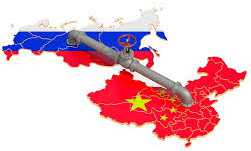
The centerpiece of this transformation remains energy integration. China and Russia are deepening long-term energy cooperation through oil, gas, LNG, hydrogen, and nuclear projects, with bilateral crude oil trade structurally reaching 30 million tonnes annually and the Power of Siberia 1 pipeline achieved full operational capacity in 2025 at 38 billion cubic meters (bcm) per year, enough to supply approximately 130 million households. In September 2025, Gazprom and China National Petroleum Corporation agreed to expand Power of Siberia 1 capacity from 38 bcm to 44 bcm annually, while the Far East gas route increased from 10 bcm to 12 bcm.
In February this year, Russia ratified additional agreements linked to the Yamal LNG project, strengthening Arctic LNG cooperation and diversification of China’s energy supply routes. In April, Chinese and Russian companies signed memorandums for the first cross-border hydrogen freight corridor, combining Russia’s natural gas resources and freight demand with China’s fuel-cell technology, electrolyzer manufacturing, and hydrogen infrastructure capabilities.
By the end of 2025, China had built a complete hydrogen industrial chain with 574 hydrogen refueling stations, daily refueling capacity exceeding 360 tonnes and cumulative fuel-cell vehicle sales approaching 40,000 units, while bilateral cooperation also expanded into Tianwan and Xudabao nuclear projects, fast-neutron reactors, closed fuel-cycle technologies, and fusion-related research.
The long-discussed Gazprom and China National Petroleum Corporation negotiations surrounding the Power of Siberia-2 pipeline appear closer than ever to finalization. The proposed 2,600-kilometer pipeline stretching from the Yamal Peninsula through Mongolia into northern China would transport up to 50 billion cubic meters of natural gas annually. Combined with the existing Power of Siberia route, Russian gas exports to China could eventually exceed 100 bcm per year after 2030.
This fundamentally alters Eurasia’s energy geography. Before 2022, Europe represented the primary destination for Russian pipeline gas. By the early 2030s, Asia, and especially China, will become the dominant anchor market for Russian hydrocarbons. The implications extend far beyond energy sales. Massive pipeline infrastructure creates decades-long industrial interdependence involving metallurgy, engineering, petrochemicals, rail infrastructure, and financial integration.
Oil cooperation is moving in the same direction. Rosneft continues expanding long-term supply agreements with Chinese refiners, while Sinopec and CNPC deepen upstream partnerships involving Arctic and Eastern Siberian projects. Putin’s statement that Moscow and Beijing are preparing “a serious, very significant step forward” in oil and gas cooperation strongly suggests the emergence of a broader hydrocarbon integration framework linking Arctic extraction, eastern transport corridors, and Asian industrial demand.
Technology, AI, and Industrial Sovereignty

Yet the real significance of the 2026 partnership lies beyond hydrocarbons. The West’s sanctions architecture assumed Russia would face technological isolation. Instead, Moscow and Beijing accelerated technological integration. Chinese automakers now enter into the Russian automobile market. Brands connected to Geely, Chery, and Great Wall Motor increasingly manufacture or assemble vehicles inside Russia itself, embedding Chinese industrial capacity into the Russian domestic economy.
At the same time, Chinese electronics, telecommunications equipment, and industrial machinery have filled supply gaps left by departing Western firms. China Mobile is emerging as a key player in digital infrastructure cooperation, while Russian technology firms increasingly rely on Chinese semiconductor supply chains and industrial electronics.
The importance of semiconductor and AI cooperation cannot be overstated. Moscow understands that long-term strategic autonomy requires technological sovereignty. China faces similar Western containment strategies in advanced chips, AI and quantum computing. This creates powerful incentives for parallel innovation ecosystems. Joint work involving aerospace, satellite navigation, advanced materials and industrial AI is therefore becoming central to bilateral strategy.
The aerospace dimension is especially revealing. Cooperation between Roscosmos and the China National Space Administration on the International Lunar Research Station demonstrates how the relationship has expanded into frontier scientific domains. Russian instruments are already integrated into China’s Chang’e-7 and Chang’e-8 lunar missions. The joint lunar energy station planned for completion by 2036 symbolizes something larger than scientific cooperation: it reflects a Eurasian technological bloc capable of competing in sectors once monopolized by the United States.
Satellite integration between China’s BeiDou and Russia’s GLONASS systems follows the same logic. These projects are not symbolic. They directly support logistics, agriculture, border management and military-adjacent infrastructure across Eurasia. Together they reduce dependency on Western-controlled navigation ecosystems.
The logistics revolution unfolding across Eurasia may ultimately become even more consequential than energy cooperation. More than 70 percent of China-Europe rail freight now passes through Russian territory. The Alataw Pass corridor in Xinjiang recorded more than 3,000 train crossings before May 2026, nearly three weeks ahead of last year’s pace. Over 40% of these trains were either destined for or originating from Russia.
These matters because logistics corridors determine future industrial geography. Russia is no longer functioning merely as a transit space between Europe and Asia. It is becoming a central node in a continental trade system increasingly oriented eastward. Western sanctions accelerated this transformation by forcing Moscow to prioritize Eurasian connectivity.
The 2026 China-Russia Harbin Expo: The Diversification of Trade Cooperation
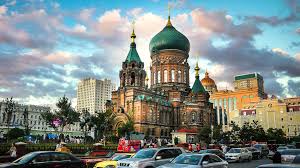
The 10th China-Russia Expo in Harbin perfectly illustrates the broader transformation underway in bilateral economic relations. Chinese Vice Premier Zhang Guoqing and Russian Deputy Prime Minister Yury Trutnev attended the opening ceremony on Sunday (May 17). Since the original Expo in 2014, more than 7,200 Chinese and Russian enterprises and over 1 million business visitors have participated, generating cumulative transaction volumes exceeding ¥300 billion (approximately US$43.9 billion).
What initially began as a regional trade fair has now evolved into the largest institutional commercial platform connecting Russian and Chinese enterprises, with more than 1,500 companies from 46 countries and regions participating at this year’s event, and nearly 300 Russian companies exhibiting their wares. The scale and diversity of participation demonstrate that Russia-China trade is no longer confined to oil, gas and raw materials, but is increasingly expanding into finance, industrial manufacturing, aerospace, logistics, agriculture, food processing, digital technologies, infrastructure and consumer industries. The Harbin Expo not only connects Russian businesses with Chinese companies, but also links Russian firms with businesses and investors from the 46 participating countries and regions.
Nearly 100 supporting events covering industrial matchmaking, investment promotion, international cooperation, tourism and consumption have been organized, alongside more than 100 Chinese and Russian product launch and debut events.
High-tech and specialized enterprises account for more than 20% of exhibitors, collectively presenting over 500 new products and equipment and more than 800 projects, technologies and cooperation initiatives. China-Russia economic cooperation is being presented as increasingly shifting beyond traditional sectors such as energy and minerals toward digital economy, green development, cross-border e-commerce, advanced manufacturing, smart agriculture and medical technology cooperation.
The Russian section of the expo occupies 12,000 square metres, with 250 organizations exhibiting across 4,500 square metres. Major Russian corporations participating included VTB, Rostec, and Alfa Bank. Sixteen Russian regions were represented, including Moscow, Primorye, Khabarovsk, Kamchatka, Yakutia, Tatarstan, Buryatia, the Amur, Arkhangelsk, Murmansk, Ryazan, Sverdlovsk, and Tver regions; the Trans-Baikal Territory; the Khanty-Mansi Autonomous Area-Yugra; and the Jewish Autonomous Region.
Russian exhibits include helicopters, technological equipment, agricultural products, cosmetics, jewelry, folk crafts, and educational programmes. Industrial presentations featured the Sukhoi Su-57 and Su-35 fighter aircraft, the Yakovlev SSJ-100 passenger aircraft, and Steregushchiy-class corvettes. The Khabarovsk Territory highlighted the development of Bolshoi Ussuriysky Island, including a cargo and passenger border crossing point, a branch of the Russia National Centre, the Park of Peoples’ Friendship, and a Russian-Chinese Technopark. Yakutia promoted railway infrastructure projects, LNG plants, AI data center initiatives, hotels, and ski tourism facilities, while the Amur Region showcased cross-border infrastructure projects including an international road bridge, cable car, dry port, and gas-chemical industrial cluster.
The Expo also includes the 6th Russia-China Forum on Interregional Cooperation, Moscow Days in Harbin on May 19-20, and the Made in Russia festival and fair from May 17-21, where over 100 Russian agricultural producers and manufacturers displayed food products, consumer goods, and cultural products aimed at expanding bilateral trade and humanitarian cooperation.
| Sector | Russian Participants | Potential Chinese Stakeholders and Partners | Key Areas of Cooperation | Growth Potential & Strategic Importance |
| Banking and Finance | VTB Bank, Alfa-Bank | China Construction Bank, Industrial and Commercial Bank of China, Bank of China | Yuan-ruble settlements, cross-border finance, investment banking, trade financing | Supports de-dollarization, alternative payment systems and long-term Eurasian financial integration |
| Government and Regional Cooperation | Moscow Government, Arkhangelsk Region, Republic of Sakha (Yakutia), Primorsky Krai Government, Sverdlovsk Region Government, Tver Region, Ministry of Industry & Trade (Tatarstan), National Centre Russia, Russian Export Center | Heilongjiang, Jilin, Liaoning and Inner Mongolia Autonomous Region provincial authorities, Chinese regional governments, Belt and Road agencies | Interregional trade, industrial parks, infrastructure coordination, export promotion | Expands regional Eurasian integration and institutional economic connectivity |
| Heavy Industry and Aerospace | Rostec, Russian Helicopters, United Engine Corporation, Kaliningrad Amber Combine | China First Heavy Industries, Aero Engine Corporation of China, Aviation Industry Corporation of China | Aerospace engineering, engines, industrial machinery, mining, advanced manufacturing | Critical for technological sovereignty and industrial diversification amid sanctions |
| Energy and Hydrocarbons | AlfaTEK | China National Petroleum Corporation, China Energy Investment Corporation, China Chengtong Holdings Group, Sinopec | Oil, gas, LNG, Arctic projects, pipeline infrastructure, energy settlements | Power of Siberia-2 and Arctic routes could reshape Eurasian energy flows |
| Agriculture, Food and Fisheries | Belokamenka-Fish, Yelizovsky Meat Plant, Kazan Fat Plant, Russian Crab, Slavda, Taiga Honey Farm, Bohai Honey Company, Holkam Agro, Chitinskie Klyuchi, Ratimir | COFCO Group, Beidahuang Group, Chinese food-import distributors | Grain trade, seafood exports, food processing, agro-industrial investment | One of the fastest-growing non-energy sectors driven by Chinese consumer demand |
| Manufacturing and Industrial Production | Imperial Porcelain Factory, Ussuriysk Cardboard Factory, Evernit, Organic Synthesis Laboratory, Geopager | China National Salt Industry Group, Chinese industrial manufacturers | Chemicals, packaging, ceramics, geodata technologies, industrial materials | Expands value-added industrial cooperation beyond raw materials |
| Logistics, Trade and Infrastructure | Transport Port Terminal, Primorsky Trade Center, RusExpoTrade, Omega DV, Novotorg, TLC Ural | China State Railway Group, Chinese port operators and logistics firms | Rail corridors, ports, supply chains, Eurasian freight routes | Russia increasingly becoming the logistics backbone of Eurasian trade |
| Digital Technologies and Telecom | Geopager | China Mobile, Huawei, ZTE | AI, smart logistics, telecom infrastructure, industrial digitalization | Strategic for technological independence and digital Eurasian integration |
| Tourism, Culture and Services | Panda Tour, Visit Ural-Siberia, Far East Tourism Center Amur, Culture & Traditions: Treasures of Russia, Bon Voyage | China Southern Airlines, Chinese tourism agencies and travel platforms | Tourism exchanges, cultural diplomacy, aviation connectivity | Supports people-to-people ties and post-visa liberalization tourism boom |
| Consumer Goods and SMEs | Sladial, Kosmavera, Sota, Synergia, Ringo, Unik-DV, Essen-Amur, GK Eurasia, Yamarovka Plus, Exp-DV | Kweichow Moutai, Chinese retail and e-commerce companies | Consumer products, confectionery, beverages, retail trade | Reflects growing consumer-market integration between both countries |
| Mining and Natural Resources | Kaliningrad Amber Combine | China Gold, Chinese mineral-processing firms | Minerals, precious resources, industrial raw materials | Supports resource security and industrial supply chains across Eurasia |
In the banking and financial sector, major Russian institutions such as VTB Bank and Alfa-Bank are deepening yuan-ruble settlement mechanisms, cross-border financing and investment cooperation, reflecting the accelerating de-dollarization of bilateral trade. Their participation signals the growing role of alternative Eurasian financial architecture outside Western-controlled systems. China’s digital yuan experiments and Russia’s exploration of digital commodity settlements suggest that both countries aim to reduce vulnerability to Western-controlled financial systems.
In heavy industry, defense-industrial production and advanced manufacturing, Russian conglomerates such as Rostec, Russian Helicopters and United Engine Corporation are seeking long-term cooperation with Chinese industrial giants including China First Heavy Industries and Aero Engine Corporation of China. These sectors possess major growth potential in aerospace engineering, aircraft engines, industrial machinery and high-end manufacturing as both countries attempt to build independent technological ecosystems amid intensifying Western restrictions.
Energy remains the strategic backbone of bilateral relations, but its structure is evolving rapidly. Chinese companies such as China National Petroleum Corporation, China Energy Investment Corporation and China Chengtong Holdings Group are expanding cooperation with Russian energy and infrastructure sectors in oil, gas, LNG, Arctic logistics and pipeline connectivity. The long-term growth potential centers around the Power of Siberia-2 pipeline, Arctic shipping routes and joint energy settlement systems using national currencies. Increasingly, bilateral energy cooperation is moving beyond simple commodity exports toward integrated industrial and infrastructure partnerships.
The transport and logistics sector are emerging as one of the fastest-growing pillars of Eurasian integration. Russian firms such as Transport Port Terminal, TLC Ural and RusExpoTrade are working alongside China State Railway Group to expand rail freight connectivity, border logistics hubs and China-Europe transit corridors through Russian territory. The sector’s growth potential is enormous as more than 70 percent of China-Europe rail freight already passes through Russia, transforming the country into the logistical backbone of Eurasian trade.
Agriculture and food processing are also becoming central drivers of bilateral trade diversification. Russian grain, seafood, meat and food products increasingly target Chinese consumers, while China’s vast food-processing and distribution networks provide scale unavailable elsewhere. Russian companies including Russian Crab, Belokamenka-Fish, Yelizovsky Meat Plant, Taiga Honey Farm, Ratimir and Slavda are targeting China’s massive consumer market, while Chinese agricultural giants such as COFCO Group and Beidahuang Group are strengthening cooperation in grain processing, food supply chains and agro-industrial investment. The growth potential is especially strong because rising Chinese demand for seafood, meat, grain and organic food products aligns naturally with Russia’s expanding agricultural export capacity.
Digital technologies and telecommunications are another strategically important area. China Mobile and Russian technology firms participating in the expo are increasingly exploring cooperation in AI, digital infrastructure, smart logistics systems and industrial digitalization. This reflects the broader Russia-China push to reduce dependence on Western technological platforms while developing parallel digital ecosystems across Eurasia.
The Expo also demonstrates growing diversification into light industry, consumer goods and cultural exports. Russian companies such as Imperial Porcelain Factory, Red October, Sladial and regional cultural brands are increasingly adapting products for Chinese consumers, showing that bilateral trade is now moving beyond state-driven strategic sectors into broader consumer-market integration.
Overall, the Harbin Expo reveals a profound structural shift in Russia-China economic relations. The decades-long perception of an asymmetric relationship based mainly on Russian hydrocarbons and Chinese manufactured goods is gradually fading. Both sides are now actively diversifying their trade baskets, building value-added industrial chains and institutionalizing long-term Eurasian economic integration across multiple strategic sectors.
It is a totally different strategy to the United States delegation, which was made up of senior executives only with limited support staff. While the likes of Elon Musk, (Tesla, Space X), Tim Cook (Apple), David Solomon (Goldman Sachs), Larry Fink (Blackrock), Jane Fraser (Citi), Kelly Ortberg (Boeing), and Jensen Huang (Nvidia), together with senior executives from Meta, Cargill, Visa, Cisco, Qualcomm, Coherent, Micron, GE Aerospace, Illumina and Mastercard all flew in, there was little room for deeper conversations or research. One suspects that many of these CEOs were only there to shore up their importance to their own boards and shareholders. Certainly, their presence was not in-depth, nor involved travelling to other cities.
In contrast, the Harbin Expo lasts for five days and includes thousands of Chinese and Russian executives ranging from engineers to scientists, sourcing agents and sales & marketing directors. Experience suggests it will be more inclusive rather than exclusive.
Toward a Parallel Eurasian Economic Order

The Kremlin’s announcement regarding the launch of the China-Russia Years of Education 2026-2027 is also strategically significant. Student exchanges, research cooperation and language programs create human infrastructure for future integration. Education partnerships produce effects lasting decades. Moscow and Beijing clearly understand that geopolitical resilience ultimately depends on societal foundations.
The Russia-China partnership is increasingly constructing alternative financial, technological and logistical systems outside traditional Western-led Atlantic institutions, creating a parallel Eurasian framework capable of reducing vulnerability to geopolitical pressure without directly replacing the Western order overnight.
Summary
The political symbolism of Beijing hosting both Donald Trump and Vladimir Putin within one-week highlighted China’s emergence as a central hub of global diplomacy and reinforced Moscow’s view of China as the key stabilizing pole in an evolving multipolar order. Putin’s choice of China as his first foreign destination of the year reflects Moscow’s belief that Eurasian strategic stability increasingly depends on Sino-Russian coordination. Even after the normalization of ties with the United States, Russia is unlikely to step back from its Pivot to the East strategy, with China continuing to play a central role in this process. It also offers a rare insight into how Beijing and Moscow interact in contrast to how the Americans prefer to interact.
Putin’s May 19-20 state visit and the 10th China-Russia Expo therefore symbolize more than diplomatic engagement or trade promotion; they represent the institutionalization of a new Eurasian economic architecture integrating energy pipelines, logistics corridors, AI cooperation, financial integration, industrial supply chains, agricultural exports, educational exchanges and Arctic development into a coherent strategic system. For Russia, this partnership provides economic resilience, technological adaptation and strategic depth under prolonged Western pressure, while for China it secures energy supplies, stabilizes continental trade routes and strengthens Beijing’s role as the primary hub of Eurasian connectivity.
This article was written by Ms. Khatun, an expert in Russia-China affairs. She may be reached at info@russiaspivottoasia.com