Русский





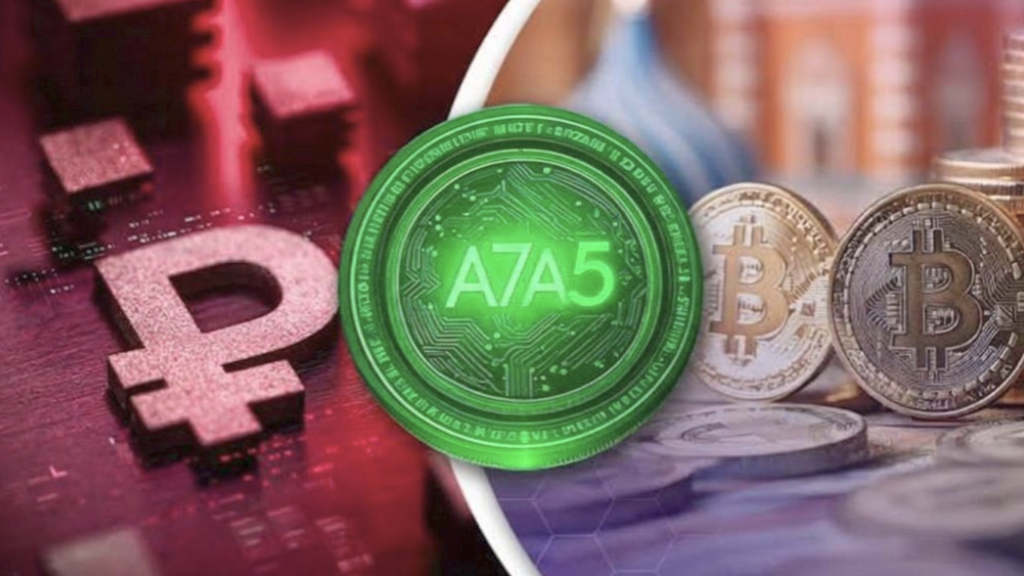

At the recent Russia-Africa Summit held in Moscow, Russian officials showcased a range of advanced financial technologies to representatives of political and business elites from more than 50 African countries. The presentations focused on innovative solutions for facilitating cross-border transactions through both conventional and digital currencies. Among the key technologies highlighted was the payment platform developed by Russian fintech company A7, which is advancing efforts to establish a new international payment infrastructure, with a growing focus on expanding its presence and operations across African markets. Russia’s current fintech platform expands from Nigeria and Zimbabwe towards wider African markets, combining stablecoin transfers, conventional bank settlements and multi-currency payments as trade between Russia and African countries accelerates.
A payment fee of 0.3%, settlement processing starting from one business day, access to four major international currencies and a network of approximately 15,000 corporate customers are central elements of A7’s expanding international payments business. The Russian financial technology company is positioning its A7 International platform as an alternative channel for companies facing expensive transfers, foreign-exchange constraints and delays in conventional international banking. Its expansion into Africa is particularly significant as trade between Russia and African countries exceeded US$27 billion in 2025, 50% higher than around the time of the previous Russia-Africa summit in 2023.
The commercial proposition extends beyond payments between Russia and African importers and exporters. A7 is developing infrastructure for transactions involving China, India, the United Arab Emirates and other international production and trading centres. Its business model combines digital-asset transfers with conventional bank payments, allowing an overseas customer to initiate an invoice payment using USDT while the recipient receives funds in an ordinary bank account. The service initially supports US dollars, euros, Chinese yuan and UAE dirhams, creating a multi-currency settlement channel for companies operating across several trading jurisdictions. The company’s African expansion has developed through two principal geographical entry points: Lagos in Nigeria and Harare in Zimbabwe. These locations provide access to two different commercial environments, one characterised by a large population and extensive import-export activity, the other by persistent currency and international banking challenges. The subsequent attention to Togo and Madagascar indicates that A7’s African strategy is extending beyond its initial representative-office network.
A7’s Financial Infrastructure: From Russian Trade Settlements To International Payments

Established in 2024 with the participation of state-owned Promsvyazbank (PSB) , A7 developed its business around international payments, foreign-trade settlements and digital financial instruments. Its expansion has been supported by a combination of banking infrastructure, technology development and international corporate partnerships. The company is co-owned by PSB and Moldovan businessman Ilan Shor, who also serves as its chief executive. A7’s reported operating figures illustrate the scale it has reached. The company says its network serves approximately 15,000 corporate customers in more than 100 countries and processes around 2,000 transactions daily. Its 2025 payment volume exceeded 10 trillion roubles, equivalent to approximately US$110-120 billion in different company and media estimates. A7 has also claimed to account for approximately 19% of Russian companies‘ international trade settlements. At the Russia-Africa summit in Moscow, PSB Deputy Chairman and A7 board chairman Mikhail Dorofeev stated that the company’s worldwide monthly turnover exceeded US$20 billion.
These figures need to be understood as different measures of the company’s business. The 2025 annual payment volume, the reported monthly turnover in October 2026 and the number of daily transactions describe different periods and operating indicators. Nevertheless, taken together, they demonstrate the commercial scale A7 is seeking to bring into its African expansion. The geographical composition of its existing business is also relevant. According to A7 chief executive Ilan Shor, China accounted for more than 60% of the platform’s transactions by mid-2026. The Middle East and Hong Kong were identified as other important growth markets. This places Africa within an existing commercial network connecting Russian exporters and importers with Asian and Middle Eastern counterparties, rather than treating the continent as an isolated market.
The platform’s central technological proposition is the connection between digital assets and conventional banking. A7 International went live on October 13, 2026. Customers can use USDT, a stablecoin pegged to the US dollar, to settle an international invoice, while the overseas supplier receives a conventional bank transfer in the agreed currency. The service uses the TRON blockchain for USDT transfers and arranges the payout through banking channels, including SWIFT. The initial payout currencies are the US dollar, euro, Chinese RMB yuan and the UAE dirham, with other currencies available by arrangement. The advertised service charge is a flat 0.3%, and processing begins from one business day. For a company paying a US$1 million invoice, a 0.3% fee would amount to US$3,000, before any other applicable banking, foreign-exchange or intermediary costs. This provides an easily understood commercial benchmark for exporters, importers and logistics companies comparing international payment routes.
The operational process includes customer registration, identity verification, corporate due diligence and submission of invoices and supporting documentation. A7 says its artificial-intelligence systems assess transaction risks and compare payment routes according to cost, speed, reliability and compliance requirements. The receiving supplier does not need a cryptocurrency wallet: payment arrives in the conventional bank account specified on the invoice. This structure is particularly relevant to African companies importing machinery, industrial components, vehicles, fertilizers, energy equipment and consumer goods. It also creates a possible settlement channel for agricultural exporters, mineral producers and businesses receiving payments from customers in several countries. The commercial attraction is not simply the use of cryptocurrency, but the separation of the payer’s digital transfer method from the recipient’s conventional banking experience.
Africa’s Digital Payments Market Provides The Commercial Foundation

A7’s expansion coincides with rapid growth in African digital-asset activity. According to Chainalysis, Sub-Saharan Africa received more than US$205 billion in on-chain cryptocurrency value between July 2024 and June 2025, representing approximately 52% growth year-on-year.
The African region remains smaller than other global cryptocurrency markets, but its rate of expansion places it among the fastest-growing. More recent Chainalysis figures, published on October 29, 2026, show that Sub-Saharan Africa’s cryptocurrency economy reached approximately US$101 billion between July 2025 and June 2026, an annual increase of 13.4%. South Africa and Nigeria accounted for more than three-quarters of regional activity. South Africa registered US$39.3 billion, up 52%, while Nigeria recorded US$38.1 billion, down 3%. Ghana’s activity increased 80% to US$5.1 billion, while Senegal’s rose 215% to US$2.3 billion. Ethiopia recorded US$3.7 billion, an 8% decline. The country-level figures demonstrate why A7 is concentrating on multiple African markets rather than relying on a single national entry point. Nigeria offers considerable transaction volumes, established fintech activity and extensive commercial connections. South Africa provides a large financial-services market and a regional business hub. Ghana and Senegal represent growing digital-asset markets, while Zimbabwe presents a different demand profile shaped by currency and foreign-exchange pressures.
The OECD’s Africa Capital Markets Report 2026, published in November, identifies Nigeria as the African leader in cryptocurrency penetration, followed by Morocco, Kenya, Egypt and South Africa. It highlights inflation protection, currency volatility, limited access to conventional financial services and expensive correspondent banking as important factors behind adoption. The OECD also cautions that much of the activity remains retail-driven, although institutional participation is increasing. This distinction matters for A7: a large cryptocurrency market does not automatically translate into a large market for regulated corporate invoice settlements.
Nigeria illustrates the scale of the opportunity. The International Monetary Fund’s May 7, 2026 country report estimated approximately 25.9 million digital-asset users in Nigeria in 2025, equivalent to around 12% of the population. Stablecoins accounted for more than 65% of Nigerian cross-border cryptocurrency inflows in 2024, with USDT and USD Coin among the dominant instruments. Nigeria’s stablecoin inflows represented approximately 60% of Sub-Saharan Africa’s inflows between late 2019 and early 2025. For A7, these trends create an established market for dollar-denominated digital settlement. However, the company’s business opportunity is distinct from consumer cryptocurrency trading. Its principal commercial target is the business invoice, where an importer needs to pay an overseas manufacturer and the supplier needs to receive conventional currency in a bank account. This is a more specialised market involving trade finance, foreign exchange, corporate verification and banking partnerships.
Kyrgyzstan, Corporate Registration, & The Wider Settlement Network
A7’s African corporate structure also involves Kyrgyzstan, which has played an important role in its international operations. Two companies were registered there in September 2025. A7 Africa was registered on September 12, with A7 LLC listed as its owner. A7 Nigeria followed on September 16, one day before the public announcement of the African office openings. The Kyrgyzstan-registered A7 Nigeria entity lists four ownership interests: A7 Africa, Nigerian businessman Chidiebere Emmanuel Ajaere, Mustapha Olayinka Ajenifuja and Phalendra Balampaki. Ajaere is chief executive of Greatman Legend, a Nigerian conglomerate with interests in digital banking, logistics, aviation, media, energy and automobile assembly. He was announced as a member of President Bola Tinubu’s Presidential Economic Coordination Council in March 2024.
This structure links Russian financial infrastructure, Nigerian commercial participation and a Central Asian corporate jurisdiction. It also reflects A7’s broader international operating model, in which payment services, digital assets and cross-border corporate entities are interconnected. The use of Kyrgyzstan is particularly relevant because the jurisdiction has featured in earlier investigations into A7’s A7A5 stablecoin and its international settlement arrangements. The international network is not limited to Africa. A7’s commercial relationships extend to Russia, China, India, the UAE and Hong Kong. The five city clocks displayed in the Nigerian office include Moscow, Lagos, Dubai, Shanghai and Bishkek and provide a visual illustration of the geographical connections around which the company is developing its international business.
Nigeria And Zimbabwe: The First African Operating Network

The first major step in A7’s African expansion took place in September 2025, when the company and PSB announced representative offices in Lagos, Nigeria, and Harare, Zimbabwe. The two offices were intended to develop local relationships and provide international settlement services adapted to the requirements of the two markets. The opening activities involved Russian Deputy Finance Minister Ivan Chebeskov, PSB Deputy Chairman Mikhail Dorofeev and Osman Kabaloev, deputy head of the Financial Policy Department at Russia’s Finance Ministry. Nikolai Krasilnikov, Russia’s ambassador to Zimbabwe, attended the Harare event. Zimbabwean Finance Minister Mthuli Ncube was also visible in photographs from the Zimbabwean opening.
The Nigerian opening also brought together a number of business figures connected with agricultural machinery, fintech and international commerce. Belarusian businessman Alexander Zingman was identified in the event footage alongside Dorofeev, Chebeskov and Kabaloev. Zingman is associated with Aftrade DMCC, its Zimbabwean subsidiary Bison Agro Machinery and Nigerian subsidiary Aftrade DMCC Limited. These businesses have been involved in agricultural machinery transactions in African markets.
Jad Michel Ibrahim, identified as a business associate of Zingman, also attended. He has been associated with Aftrade’s Nigerian operations and is listed as holding a 90% stake in Aftrade DMCC Limited. Leonid Naumovich Marder appeared in the footage guiding the Russian delegation around the premises. Former Moldovan parliamentarian Igor Khimich, an associate of A7 co-owner Ilan Shor, was another identified attendee. Ghanaian businessman Divine Dzegbla Dzidodo also appeared at the Nigerian event. His earlier commercial contacts included agricultural modernisation discussions involving Nigerian Agriculture and Food Security Minister Abubakar Shaib Kyari during a December 2024 visit to Zimbabwe. In 2023, Dzidodo and Ghanaian businessman Frank Nuhu Alormasor visited Belarus’s Kommunarka confectionery factory with Ibrahim, in connection with discussions about Ghanaian cocoa-bean trade. These business connections illustrate how A7’s African expansion intersects with existing agricultural, commodity and commercial networks.
A particularly important development was the involvement of local Nigerian financial-services company Pilot Finance Limited. A7 Nigeria identifies Pilot Finance as its local business partner. Cornelius Babatope (Tope) Adewoye, listed as responsible for treasury and operations at Pilot Finance, was filmed counter-signing a contract during the Lagos office opening, with Dorofeev and Chebeskov present. Pilot Finance describes its business as providing cross-border payments, treasury and settlement services connecting Africa, Europe and the Americas. Its website claimed that it had processed US$125.4 million in payments by January 20, 2026. The company had displayed ten staff members on its website in December 2025, at least eight of whom were identified at the A7 opening. Etimbuk Usoroh, Pilot Finance’s head of sales, had previously worked at Conglex, a peer-to-peer cryptocurrency payments platform, while Adewoye had held a senior operating position there. The corporate links also include Continental Global Incentives Limited and Almond Business Links Limited. The Nigerian registration number displayed on A7 Nigeria’s website for Pilot Finance corresponds to Continental Global Incentives Limited, registered on February 14, 2022, with Ravi Narain and Sreenivasan Raviprasad Kuttamkulangara listed as equal shareholders. Adewoye was associated with a UK company of the same name, registered in May 2023 and dissolved in October 2024, and with Almond Business Links. These relationships are important for understanding the corporate structure through which A7’s Nigerian activities have been organised. The Lagos opening also produced a visible contractual milestone. Adewoye was photographed signing a document with another individual while the Russian banking delegation watched. The event establishes that a contract was signed during the opening programme, although its commercial scope and financial value were not publicly identified. The involvement of a local treasury and payments partner nevertheless indicates that the African strategy was being developed through local operating relationships rather than solely through a representative office.
Togo: A West African Settlement & Logistics Hub
Togo represents a different stage of A7’s African expansion. Unlike Nigeria and Zimbabwe, where representative offices were publicly announced in September 2025, the initial engagement with Togo emerged through reported business visits and subsequent recruitment activity. On January 20, 2026, a private aircraft identified in the investigative reporting as a Dassault Falcon operated by Turkish charter company Zafer Air crossed West Africa towards Togo. The aircraft subsequently departed Lomé at 23:22 on January 22 and arrived in Antananarivo, Madagascar, on January 23. PSB Deputy Chairman Mikhail Dorofeev and Igor Khimich were reported to have travelled in the delegation. The investigation associated the visit with A7, although the precise commercial discussions were not publicly established. The timing coincided with expanding Russia-Togo relations. In October 2025, the two countries signed a military cooperation agreement covering joint exercises, officer training, capacity-building, intelligence and counterterrorism support, and mutual port access. In November 2025, Togolese leader Faure Gnassingbé visited Russia and met President Vladimir Putin. PSB Chairman Petr Fradkov was included in the meeting.
The November discussions also covered the reopening of Russian and Togolese embassies, which had been closed for approximately three decades. The development was significant for commercial relations because Togo’s position on the Gulf of Guinea provides access to regional maritime trade and connections with inland West African markets. A7 subsequently moved towards establishing a more formal presence. On March 11, 2026, it advertised for a French-speaking country manager for Togo. On March 20, it advertised for a project manager responsible for foreign-partner relations in Africa and Togo. The company also advertised on March 16 for country managers covering Nigeria and Zimbabwe. The recruitment activity indicates that the African network was being developed beyond the original Lagos and Harare offices. For Russian exporters, a Togo-based operation could potentially facilitate commercial transactions involving West African importers, logistics companies, agricultural suppliers and businesses serving the Sahel. Lomé’s port infrastructure provides a relevant geographical advantage, although a financial or logistics hub role for A7 remains a prospective commercial direction rather than an established outcome.
Madagascar: Payment Expansion Alongside Energy & Security
Madagascar became another important geographical point in the developing network. The January 2026 visit to Antananarivo was followed by several high-level Russian-Malagasy engagements. On December 20, 2025, approximately 40 Russian military personnel and 43 crates of weapons reportedly arrived in Antananarivo. Madagascar’s National Assembly Speaker Siteny Randrianasoloniaiko confirmed the arrival in comments to Bloomberg. On January 20, 2026, Malagasy national broadcaster TVM reported that Russian Africa Corps instructors had begun training Malagasy armed forces. On January 24, the reported A7-linked delegation’s activities in Madagascar attracted attention because of the timing and the involvement of PSB’s senior management. Two days later, L’Express Madagascar published a photograph it said showed Russian instructors training Malagasy personnel on January 25, including instruction involving rifles and drones.
On February 5, Russian Deputy Prime Minister Alexander Novak met Madagascar’s Minister for the Armed Forces Ely Maminirina Razafitombo to discuss current and future cooperation. On February 19, interim leader Colonel Michaël Randrianirina travelled to Moscow for talks with Putin. Razafitombo also met Russian Defence Minister Andrey Belousov during the visit. On March 7, Russia’s Africa Corps announced the completion of training for the first group of Malagasy soldiers. These engagements illustrate the wider bilateral environment in which A7’s prospective financial activities were developing. From a commercial perspective, Madagascar offers opportunities in agricultural production, mining, infrastructure, transport and energy. A cross-border payment network could potentially serve companies importing industrial machinery and equipment or exporting agricultural and mineral commodities. However, the January delegation’s visit should not be treated as evidence of a concluded A7 payment agreement with Madagascar. The distinction between diplomatic engagement, exploratory business contacts and an operational commercial contract is important when assessing the actual progress of the company’s African expansion.
The 2026 Russia-Africa Summit Put Payment Infrastructure On The Agenda

The most prominent public presentation of A7’s African ambitions took place during the Third Russia-Africa Summit and Economic and Humanitarian Forum in Moscow on October 28-29, 2026. The gathering brought together delegations from 48 of Africa’s 54 countries, with 22 represented by heads of state or government. Russian President Vladimir Putin and Burundi’s President and African Union Chairperson Évariste Ndayishimiye co-chaired the summit. The participation was higher in terms of heads of state than the 2023 St Petersburg summit, which had 17 African countries represented at that level. The programme covered trade, investment, energy, agriculture, transport, technology, healthcare, education, food security and financial cooperation. More than 40 sessions and approximately 100 speakers were reported for the wider programme. The financial and payment infrastructure discussions were particularly relevant because the expansion of physical trade requires settlement channels that can connect African importers and exporters with Russian and other international counterparties.
A7 participated as a General Partner of the Russia-Africa Economic and Humanitarian Forum. Its payment solutions were included in the exhibition of Russian technological developments visited by Putin and African delegations. The presentation placed cross-border financial services alongside other Russian exportable technologies. During the exhibition tour, Putin discussed digital payment mechanisms with African leaders and explained the ability to convert conventional currencies into digital assets and back into conventional currencies. He presented A7 as a high-technology payment solution capable of operating through digital and traditional financial instruments. Finance Minister Anton Siluanov emphasised the speed and cost of the system, highlighting the advertised 0.3% transaction charge. First Deputy Prime Minister Denis Manturov and Siluanov also joined A7’s supervisory board in October 2026, alongside Energy Minister Sergei Tsivilev, PSB Chairman Petr Fradkov and A7 chief executive Ilan Shor. This supervisory structure placed senior financial and industrial policy figures within the company’s strategic oversight.
At the October 29 session, Economic Cooperation between Russia and Africa: The Way to Equal Partnership, PSB Deputy Chairman and A7 board chairman Mikhail Dorofeev presented the company’s proposal to African businesses and representatives. He said A7 was prepared to share its payment mechanisms and infrastructure with African partners for transactions involving Russia, China, India and other international production centres. Dorofeev also emphasised that the platform’s business had expanded beyond settlements between Russian companies and foreign counterparties. Its monthly global turnover, he said, exceeded US$20 billion. His presentation therefore placed A7 within a broader international payments strategy, with Africa positioned as both a destination market and a potential participant in transactions between other major trading economies. The Russian economic policy presentation also highlighted the growing use of national currencies in bilateral trade. At the forum, the reported share of national-currency settlements in Russia-Africa trade reached 93%, according to the economic development minister’s remarks carried by Russian media. Separately, Putin referred to an 85% share of national currencies in financial settlements. These figures relate to different reported statements and should not be treated as identical statistical measurements. Both underline the increasing importance attached to reducing dependence on third-country currencies in bilateral commerce.
The summit also produced three principal multilateral outcome documents: the Declaration of the Third Russia-Africa Summit, the Russia-Africa Partnership Forum Action Plan for 2027–2029 and the Declaration on Cooperation in the Civilian Use of Artificial Intelligence Technologies. These documents establish a framework for future economic, technological and institutional cooperation. They are not A7-specific commercial contracts, but their emphasis on technology, trade and economic connectivity creates a wider institutional setting for financial infrastructure projects.
A7A5, Stablecoins And The Changing International Settlement Model

A7’s African expansion is connected with its earlier development of digital financial instruments, particularly A7A5, a stablecoin linked to the Russian rouble. This initiative forms part of a broader effort to combine digital assets, conventional currencies and international payment services. The April 2026 investigation by the Centre for Information Resilience (CIR), A7 in Africa, examined the company’s international corporate network, its African offices and its relationships with local business partners. It described A7A5 as one of the instruments used within A7’s wider settlement network and examined the company’s use of international corporate entities and trade-based financial arrangements. The CIR investigation reported that A7 claimed to have processed more than 7.5 trillion roubles by January 26, 2026, and approximately 2,000 transactions daily. It calculated that the reported volume was equivalent to approximately US$91.5 billion using the March 24 exchange rate. Separately, A7’s own 2025 business figures exceeded 10 trillion roubles. These figures refer to different reporting periods and should not be added together. The distinction between A7A5 and A7 International is important. A7A5 is a digital financial instrument associated with the rouble, whereas A7 International’s October 2026 service uses USDT to initiate payments that are subsequently delivered through conventional banking channels. The latter is specifically designed to connect international invoice settlement with ordinary bank-account receipts. This development broadens A7’s potential customer base. A company importing Russian industrial equipment, for example, could use the platform to initiate payment without requiring its overseas supplier to operate a cryptocurrency wallet. The arrangement also creates opportunities to connect businesses using different national currencies and banking systems.
US Sanctions And International Banking Compliance

A7’s expansion has taken place alongside substantial international regulatory scrutiny. On October 1, 2026, the US Department of the Treasury announced sanctions against the A7 Network under Operation Economic Outcast. The Treasury described the network as a shadow-banking structure with connections to Russia and alleged that it had been used by Iranian actors to evade sanctions. The measures included an Office of Foreign Assets Control designation of the A7 Network as a significant transnational criminal organisation. The Financial Crimes Enforcement Network also issued an alert to financial institutions and proposed restrictions concerning transactions involving A7 sub-agents. The proposed restrictions and the sanctions designation are separate regulatory actions. The development is particularly significant for A7’s African business model. Nigeria, Zimbabwe, Togo and Madagascar have financial sectors with international banking connections. Commercial banks, foreign-exchange providers, payment processors and correspondent institutions must consider the consequences of dealing with designated entities or their associated counterparties.
A7 has rejected the restrictions and maintains that it provides payment services for legitimate Russian imports and exports. The company has described the measures as unlawful and said its services continue operating. For African companies, this creates an important commercial distinction. A payment platform may offer attractive transfer fees and processing times, but companies must also assess the status of counterparties, the ownership of financial intermediaries, the jurisdictions involved and the requirements of their own banking partners. The October 2026 US measures make compliance arrangements a central consideration in evaluating A7’s international expansion. The wider significance is that alternative payment infrastructure is becoming an increasingly important component of Russia’s international trade strategy, but the ability to execute a digital transfer does not automatically guarantee that the resulting bank payment will be accepted by every institution or jurisdiction.
Sectoral Business Opportunities: Agriculture, Mining, Energy And Industrial Trade
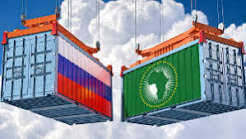
A7’s African expansion is closely connected with sectors that already feature prominently in Russia-Africa economic relations. Agriculture provides one of the clearest commercial connections. Russia supplies grain, fertilizers and agricultural products to African markets, while African countries export cocoa, coffee, fruit, seafood and other agricultural commodities. Putin reported that Russia supplied more than 18 million tonnes of grain to Africa in 2025 and another 13 million tonnes during the first nine months of 2026. For businesses participating in these supply chains, international settlement infrastructure can support payments between agricultural exporters, commodity traders, shipping companies and importers. The previous activities of Aftrade DMCC and Bison Agro Machinery in Zimbabwe and Nigeria also demonstrate the existing commercial links between Belarusian agricultural machinery suppliers and African markets.
The industrial equipment sector offers another potential area of activity. African importers purchase tractors, vehicles, machinery, mining equipment, industrial components and manufacturing technologies from international suppliers. Russian exporters, including manufacturers of machinery and industrial equipment, require payment channels connecting their overseas distributors and customers with Russian counterparties. Energy is another important area. Russian-Africa cooperation includes oil and gas supplies, nuclear power, electricity infrastructure, mining and related engineering services. Companies operating in these sectors frequently undertake large international transactions involving multiple suppliers, contractors and financial institutions. A multi-currency payment platform could provide an additional settlement option for eligible transactions.
Mining and mineral processing offer opportunities in countries including Zimbabwe, the Democratic Republic of the Congo, Madagascar, Ghana and South Africa. Russian commercial interests in these markets encompass mineral extraction, geological services, equipment and industrial processing. Payment infrastructure could potentially support purchases of machinery, spare parts and services, as well as payments associated with commodity exports. The logistics sector is equally important. Lomé in Togo, Lagos in Nigeria and Harare in Zimbabwe represent different commercial access points. Lagos is a major West African commercial centre, while Lomé offers maritime connections to the Sahel and surrounding landlocked markets. Harare provides access to Zimbabwe’s agricultural, mining and manufacturing sectors. A7’s network could potentially connect these locations with international suppliers in China, India, Russia and the UAE. Its ability to operate across multiple currencies is particularly relevant to companies whose purchasing, transport and sales arrangements involve different national markets.
The Wider African Financial Landscape And A7’s Competitive Position

A7 is entering a market in which digital payment infrastructure is already developing through several different models. Mobile-money services, domestic instant-payment networks, stablecoins, conventional international bank transfers and regional settlement initiatives are competing and sometimes complementary elements of Africa’s financial transformation. The growth of cryptocurrency activity does not mean that African businesses are moving away from traditional banking. Instead, the market is developing around the combination of digital payment applications, conventional financial institutions and local-currency settlement systems. The contrast between Nigeria and South Africa is instructive. Nigeria’s digital-asset market is strongly influenced by demand for foreign-currency access and direct transfers. South Africa has a more developed financial-services environment and is emerging as an important institutional and cross-border cryptocurrency market. Ghana’s US$5.1 billion and Senegal’s US$2.3 billion cryptocurrency economies demonstrate that growth is also extending into smaller markets.
For A7, the challenge is to convert the growth of digital-asset adoption into a sustainable business-to-business payment network. Its advertised 0.3% fee, support for four major currencies and invoice-based payment structure provide a clearly defined commercial proposition. However, its long-term African performance will depend on banking relationships, local operating arrangements, regulatory acceptance, corporate customer acquisition and reliable settlement routes. The initial presence in Nigeria and Zimbabwe, subsequent recruitment activity for Togo and the wider international expansion of A7 International demonstrate the geographical scope of its ambitions. The company’s reported 15,000 corporate customers and more than 100-country network provide an existing international customer base from which it can pursue new trade corridors.
Summary: From Bilateral Payment Channels To A Wider Russia-Africa Economic Network
The most important development surrounding A7 is the increasing connection between international payments and the broader expansion of Russia-Africa trade. The US$27 billion trade figure for 2025 provides the economic context. The reported 50% growth since 2023 demonstrates that the commercial relationship has expanded beyond individual commodity transactions and is creating demand for more extensive financial infrastructure. The October 2026 Russia-Africa Summit added a multilateral dimension to this development. With 48 African countries participating, 22 represented by heads of state or government, and three principal outcome documents adopted, the gathering established a framework for future cooperation in trade, technology and investment. A7’s presentation at the forum, Dorofeev’s October 29 business session, the involvement of local Nigerian financial-services partners and the company’s international launch of A7 International together represent a series of developments connecting Russian financial technology with African commercial requirements.
The next stage will be determined by the extent to which the platform can establish sustainable business relationships with African importers, exporters, banks and payment-service providers. Nigeria and Zimbabwe provide its initial African operating base, while Togo and Madagascar represent potential additional markets. China, India, Hong Kong and the UAE remain important geographical connections within the wider international network. The central economic development is therefore not simply the introduction of another cryptocurrency payment service. It is the attempt to build an international settlement network linking commodity trade, industrial imports, agricultural exports, logistics and corporate financial services through a combination of digital and conventional payment infrastructure. For Russia, this connects financial technology with the expansion of trade across the Global South. For African companies, it introduces another potential channel for settling international commercial invoices. Whether A7 can turn its growing international network into a widely adopted African business-payment system will depend on its ability to combine competitive transaction costs, reliable banking execution and accepted compliance standards.
This article was written by MD Masud Rana, a geopolitical analyst focusing in Asia-Africa affairs. She may be reached at info@russiaspivottoasia.com