Русский




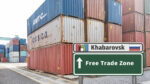
In echoes of the early-mid 2000’s spectacular manufacturing development in China, Russia’s Special Economic Zones (SEZs) have also entered a new phase of international industrial cooperation after the 4th International Forum of Special Economic Zones in Moscow concluded.
To avoid confusion, readers should note that the term ‘Special Economic Zone’ and ‘SEZ’ in this article refers to any manufacturing and technical development zone – there are multiple variants – and not the seven initial ‘national level’ zones that China originally developed in the late 1970’s.
The role of SEZ’s and their associated manufacturing and development zones cannot be understated. When China first unveiled its tentative experiments in the SEZ concept back in 1978, its entire economy was valued at just US$150 billion. Yet the concept proved a masterstroke – offering a variety of tax incentives, reduced operating costs and exemptions on import duties. After a slow start, foreign investors began pouring resources into China to take advantage of the lower manufacturing costs and supply chains. By 2010, China had 168 of these types of zones, while at the beginning of 2026 this has reached an astonishing 2,543 including a variety of specialist hubs where specific companies operating in the same industry – such as footwear and apparel – are all congregated together. This model is now being duplicated across Russia – and is expanding.
Illustrating this, the Moscow SEZ forum presented two types of national rankings covering investment attractiveness and sustainable development, while discussions focused on connecting industrial sites, identifying foreign suppliers and developing joint manufacturing projects. By the end of 2025, cumulative investment by businesses into Russian SEZs had exceeded ₽3.8 trillion (US$45.8 billion), with more than 120,000 jobs created.
The forum took place at Technopolis Moscow as part of the second Moscow Investment and Industrial Forum. Organised by the Association of Clusters, Technology Parks and SEZs of Russia (AKIT RF) and Technopolis Moscow, with support from Russia’s Ministry of Economic Development and the Moscow Government, the event combined factory visits, plenary discussions, an international congress, business networking and an exhibition of products developed by SEZ residents.
It attracted over 800 attendees, a further 1,000 online participants, and resulted in 13 signed cooperation agreements. The immediate commercial opportunity is to connect that established industrial base with prospective partners in Asia, the Eurasian Economic Union and Africa. Industrial cooperation with eight foreign countries was discussed at the forum. Moscow’s Technopolis SEZ has reported investments from over 250 high-technology enterprises across 10 sites covering 430 hectares, specialising in microelectronics, instrument engineering, biomedicine, information technology and robotics. Its residents’ cumulative exports has exceeded ₽10.5 billion (US$127 million), while the zone conducted more than 3,500 meetings at international business events during the first nine months of 2026 and received eight foreign delegations. The challenge is now to convert these contacts and cooperation agreements into investment commitments, component supply contracts and production lines serving multiple markets.
Interregional Agreements Expand Russia’s Electromobility and Transport Production Chains
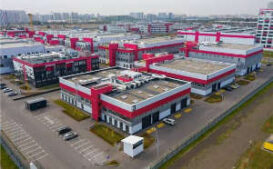
The Moscow Technopolis Special Economic Zone signed eight partnership agreements with Russia’s Lipetsk, Rostov, Ryazan, Samara and Ulyanovsk Oblasts, as well as the Russian Republics of Chuvashia, Bashkortostan and Udmurtia, to strengthen industrial cooperation in electromobility and transport technologies. The agreements provide for joint support for scientific and production projects, investment attraction, assessment of technologies for industrial applications and the development of domestic production chains covering electric drives, microelectronics, lithium-ion batteries, vehicle body and cabin components, and laser equipment.
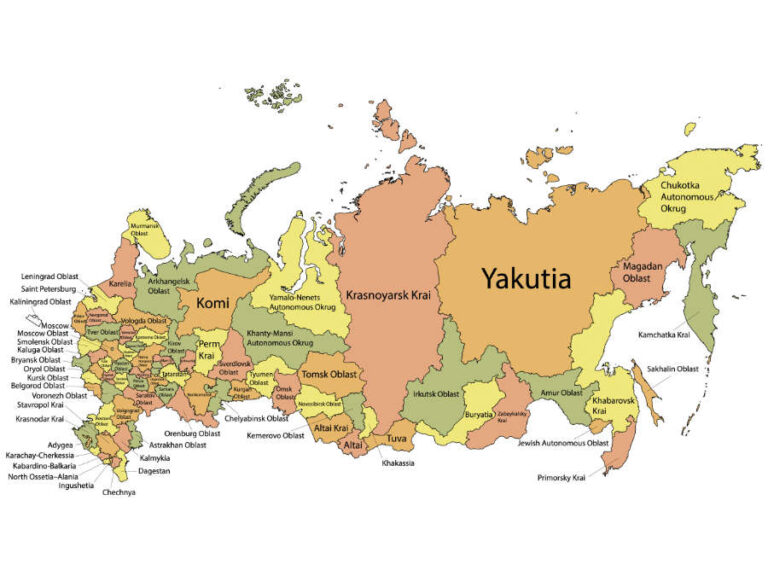
This initiative illustrates a substantial re-organisation and uniting of compatible manufacturing sectors across Russia, and builds on Moscow’s own inter-industry electromobility cluster, which comprises more than 60 enterprises, approximately half of them based at Technopolis Moscow. The cooperation is intended to expand links between regional manufacturers and research capabilities, reduce reliance on imported components and strengthen Russia’s technological sovereignty. Separately, Technopolis Moscow signed a cooperation agreement with the SME Corporation of Russia to improve investment support for existing and prospective SEZ residents, including through information, consulting and organisational assistance, access to federal support measures, preferential financing and opportunities to secure orders from large companies. These initiatives broaden the SEZ’s role from providing industrial sites to coordinating investment, technology development and supplier networks across Russian regions.
BRICS: Digital Mapping & Supplier Matchmaking
A central issue at the International Congress of Special Economic Zones event last month was the development of the International Association of BRICS Special Economic Zones. The initiative was established by AKIT RF and Russia’s Ministry of Economic Development following the 14th meeting of BRICS economy and foreign trade ministers in July 2024.
The association’s first practical instrument is a digital map of BRICS SEZs, developed by AKIT RF with the Nizhny Novgorod Region Development Corporation and support from the Russian Ministry of Economic Development. The platform consolidates information about investment locations and preferential operating regimes. Further development is intended to improve partner searches and communication between investors and zone management companies.
Nikita Kondratyev, director of the Ministry of Economic Development’s Department for Multilateral Economic Cooperation and Special Projects, identified accessible information about site specialisation, production conditions and potential partners as necessary for expanding cross-border industrial cooperation. The commercial logic is straightforward: a company seeking to localise production needs to compare land and facilities, utility availability, suppliers, market access and investment conditions before committing capital.
A functioning network would connect Russian manufacturers seeking imported equipment and components with suppliers based in other BRICS economies. It would also help foreign producers assess Russian industrial sites for localisation and distribution as an information and matchmaking tool.
ASEAN: Cambodia & Myanmar Pursue Industrial Links
The forum’s ASEAN discussions concentrated on practical conditions for locating production, logistics capabilities and the preferential regimes available in participating countries. Russia, China, Myanmar, Cambodia, Kyrgyzstan and Madagascar were identified among the countries represented in the international congress, although the wider event drew participants from a larger number of countries.
Myanmar’s Deputy Minister for Commerce U Win Myint Khaing attended on October 22 and presented business opportunities in Myanmar’s special economic zones. On 29 October 2026, Myanmar President U Min Aung Hlaing received a delegation led by Vladislav V. Sviblov, head of Russia-based Areal Group of Companies, at the Presidential Palace Reception Hall. Union Ministers U Khin Maung Yi, U Tin Maung Swe and U Aung Kyaw Hoe attended, accompanied by Russian Ambassador Iskander K. Azizov. Discussions covered Myanmar-Russia relations, education, science and technology, mineral exploration and mining, with both sides emphasizing the need to balance mining activities with environmental conservation.
Dawei is the strongest example of why Russia-Myanmar relations should be analysed as a connectivity strategy rather than merely bilateral commerce. The Dawei Special Economic Zone covers about 196 square kilometres on Myanmar’s Andaman Sea coast. The project envisages industrial zones, transport infrastructure, information technology facilities and export-processing activities. Russia PM Mishustin explicitly said during his recent meeting with Myanmar’s President Min Aung Hlaing that Russian companies intend to participate in the zone. The associated deep-water port has been discussed with a projected handling capacity of 15 million tonnes.
In February 2025, Russia and Myanmar agreed on parameters involving the port, a power plant of up to 660 MW and an oil refinery. The geographical argument is even more compelling. Tanintharyi Chief Minister U Zaw Naing Oo told the August 19 Russia-Myanmar business forum that Dawei could allow vessels to bypass the Strait of Malacca and reduce transit times by four to six days. He also highlighted its connection to Thailand and Vietnam through the Southern Economic Corridor and its proximity, about 45 kilometres, to major offshore natural-gas fields. That gives Dawei a potential three-layer function. First, it can become an industrial platform for Myanmar. Second, it can become a maritime gateway linking the Andaman Sea with Thailand, Vietnam and the broader Mekong region. We also discuss here how cooperation among Thailand, Myanmar, and Russia on the Dawei Port could boost regional integration and connectivity by strengthening trade, transport networks, and economic links across the region. Third, it can become a future energy logistics point for Russian supplies entering Southeast Asia. For Russia, this is strategically attractive because the country’s Far Eastern ports can serve Asian markets while Myanmar offers an Indian Ocean-facing platform. For Myanmar, it means Russian capital and technology can complement Chinese infrastructure and Indian connectivity rather than necessarily replacing them.
Cambodia’s Ministry of Commerce Secretary of State Bun Chanthy also addressed the forum. Their participation brought national investment-promotion priorities into a discussion centred on how zone operators and resident businesses could work together. For Russian companies, the proposed ASEAN SEZ business navigator could provide a comparative guide to investment sites and operating conditions across Southeast Asia. Such a resource could reduce the time required to identify possible manufacturing locations, assess logistics and approach local partners. It could also help ASEAN businesses evaluate Russian production facilities and identify opportunities to distribute or manufacture goods for the Russian and wider Eurasian markets.
The discussions identified practical areas for further cooperation: exchanging information on incentives and business opportunities, matching companies with potential partners, and improving access to zone management teams. Cambodia’s subsequent account of the forum highlighted business networking, operational practices, emerging technologies and environmental, social and governance (ESG) standards. It also described factory visits and exchanges intended to improve cooperation between investors operating in participating countries.
India: Medical Equipment And Localisation
India provided a particularly tangible example of industrial cooperation through an agreement involving residents of Technopolis Moscow and India’s Trivitron Artificial Intelligence. The agreement was signed during the fourth International Forum of SEZs.
This partnership concerns the joint development, localisation, promotion and distribution of medical equipment, including hospital sterilisation equipment. It connects Russian industrial capacity with an Indian medical-technology company and offers a potential route for product adaptation and commercial distribution.
The arrangement is significant because medical equipment combines manufacturing, engineering, regulatory compliance, servicing and distribution. A partnership that progresses beyond promotion into localisation could create demand for components, technical services and production capabilities in both markets. It could also help participating companies broaden their customer base.
Belarus: Microelectronics & Instrumentation
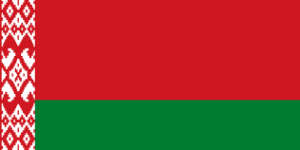
A separate agreement linked Technopolis Moscow with Belarus’s Brest Free Economic Zone. According to Technopolis Moscow director general Gennady Degtev, the partnership is intended to develop end-to-end technology chains and joint production in microelectronics and instrument engineering. The planned cooperation includes exchanges of management experience, joint exhibitions, business missions and seminars. The partners also intend to exchange information on foreign-trade rules and market opportunities and to support small and medium-sized enterprises in finding commercial partners.
Existing industrial cooperation provides a concrete starting point. Technopolis Moscow reports that its resident companies and Belarusian company Planar jointly developed Russia’s first photolithography system with a 350-nanometre topology for manufacturing microelectronic products. Moscow-based SEZ residents also supply Belarus with composite and medical products, medicines, high-technology equipment and electronic components. This makes the Brest agreement more than a general statement of interest: it builds on existing technical cooperation and established product flows. Its future performance will depend on whether the partners expand component sourcing, production volumes, equipment sales and joint development.
Also of note are relationships with the Great Stone Industrial Park in Minsk, which has been involved with Chinese auto manufacturers assembling vehicles for export to the Russia and other EAEU markets for years – and has specifically repositioned for this once Belarus and European relations cooled – the plant had originally been designed to target Eastern European markets.
Kyrgyzstan And Madagascar: Eurasian & African Opportunities
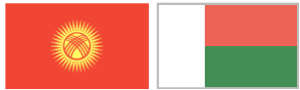
Umbriel Temiraliev, general director of the Bishkek SEZ, discussed industrial cooperation through the Eurasian Economic Union framework. The proposed mechanisms included joint production ventures, business missions and exchanges of information about the needs of resident enterprises.
The objective is to make cooperation more specific than general regional promotion. If zone operators can identify which companies need components, equipment, technical partners or alternative production locations, they can organise targeted business missions and connect prospective suppliers with buyers. The EAEU framework provides a Eurasian regional context.
Madagascar’s participation brought African industrialisation into the discussions. Razafindrazaka Nainanirina, director general for industrialisation at Madagascar’s Ministry of Industrialisation and Private Sector Development, took part in discussions on local processing, workforce training and potential cooperation with Russian enterprises. These themes point to possible links between industrial investment and local value addition. Processing closer to raw-material sources, developing technical skills and building supplier relationships can increase the domestic economic contribution of industrial projects.
Egypt: Russia’s Suez Canal Industrial Zone
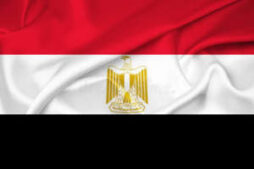
The discussions also featured Russia’s Industrial Zone in Egypt. In September 2026, Russia’s Ministry of Industry and Trade and the Crystal of Growth Foundation signed a cooperation agreement intended to advance the development of Russian manufacturing facilities within Egypt’s Suez Canal Economic Zone.
Priority sectors include chemicals, pharmaceuticals, metalworking and construction materials. Alexander Shatunov, managing partner of the Crystal of Growth Foundation, participated in discussions on the project’s current stage, attracting prospective residents and applying the experience of Russian zone-management companies.
The project is commercially important because an industrial location in Egypt provides Russian manufacturers with a base for production closer to markets in North Africa and the Middle East and take advantage of Egypt’s regional AfCFTA and GCC trade agreements. It would also support local employment, supplier development and the processing of products for regional distribution. The zone is expected to be operational by 2030.
Technology: From Microelectronics To Medical Manufacturing

The forum’s industrial priorities extended beyond international zone management. Moscow identified medical manufacturing, microelectronics, electromobility, robotics and machine-tool building as areas for cooperation with foreign partners. The resident exhibition also showcased developments in mechanical engineering, medicine, energy and electronics.
Technopolis Moscow’s 250-plus high-technology enterprises provide a base for potential supplier and technology partnerships. Its cumulative exports, already running into the hundreds of millions of dollars, demonstrate that its resident companies already sell their products abroad.
The commercial opportunity differs by sector. In microelectronics, cooperation can involve equipment, electronic components and specialised manufacturing systems. In medical technology, the Trivitron partnership illustrates the potential for joint development, localisation and distribution. In electromobility and robotics, zone operators can facilitate links between equipment manufacturers, component suppliers and industrial users. Machine-tool cooperation could support the modernisation of production facilities and expand the market for engineering products.
Investment Attractiveness: The National Rankings

On October 22, organisers announced the tenth National Ranking of Investment Attractiveness of Russian SEZs, covering 51 zones. The assessment used 44 indicators across seven sub-indices: regional investment attractiveness, business conditions, infrastructure availability, land resources, information openness, responses to global economic challenges and management-company competence.
The evaluation goes beyond tax benefits. It considers the speed of construction permits, the recruitment of new residents, available infrastructure, transport access, innovation and social facilities, strategic planning and financial transparency.
The results identified Lipetsk, Technopolis Moscow and Arkhyz as leaders in their respective categories. Technopolis Moscow’s position reflects its role as a technology-focused industrial platform, while Lipetsk and Arkhyz demonstrate the diversity of Russia’s SEZ system across industrial and other specialisations.
Sustainability: Technopolis Moscow Retains 1st Place
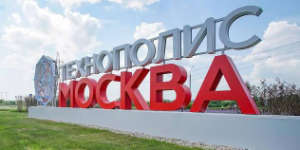
The 4th National Ranking of Sustainable Development placed Technopolis Moscow first for the second consecutive year. The St. Petersburg SEZ ranked second and Kulibin SEZ third. Special awards went to Dubna SEZ for its people-focused approach, Alga SEZ in Bashkortostan for systematic sustainable development and the Dobrograd-1 SEZ in Vladimir Oblast for energy-efficient and low-carbon solutions.
The 2026 assessment used 86 indicators across four equally weighted categories: environmental performance, social development, management and residents’ sustainable-development practices. Each category accounted for 25% of the final score. The methodology therefore examined not only the management company but also the enterprises operating inside each zone.
For industrial investors, these measures increasingly intersect with resource costs, waste management, working conditions, employee training and access to sustainable finance. A well-managed zone can improve efficiency by coordinating infrastructure and services, while residents’ own practices determine a substantial part of the environmental and social impact.
A related international development followed in Doha, where the Global Alliance of Special Economic Zones launched its Green Zone Working Group on October 27 at the World Investment Forum 2026. The alliance connects more than 2,000 SEZs across over 120 jurisdictions through its founding member organisations. The Green Partnership of Industrial Parks in China and the World Free Zones Organization will co-lead the working group, while the Suzhou Industrial Park, a China-Singapore joint SEZ, will host and sponsor an implementation support unit. The initiative focuses on knowledge-sharing, capacity-building, green investment and pilot projects.
Summary: The Next Phase Of Russia’s SEZ Growth
The Moscow programme examined how Russia’s SEZ management companies can increase revenues from property, utility networks and additional services without transferring excessive costs to resident enterprises. The objective is to strengthen operational self-sufficiency while preserving competitive conditions for investment.
This issue is directly connected to the quality of industrial infrastructure. Reliable utilities, transparent tariffs, available land, transport access and responsive project support affect the time and cost required to bring a factory into operation. A zone that generates more revenue but raises costs for its residents could undermine the very investment it seeks to attract.
Russia’s broader SEZ figures underline the scale of the existing platform: cumulative resident investment exceeded ₽3.8 trillion (US$46 billion) by the end of 2025, with employment within them surpassed 120,000 workers. More than 100 foreign investors from 34 countries are now reported to be operating within Russian SEZs.
The immediate outcome of the October meeting was therefore a combination of 13 agreements, two national rankings, international business contacts and proposals for stronger digital coordination. The next test is implementation: whether agreements lead to new facilities, localised technologies, recurring component orders, higher exports and additional employment.
The BRICS digital map, the proposed ASEAN business navigator, an Indian medical-equipment partnership, Belarus microelectronics cooperation and the Egyptian industrial-zone project represent different stages of that process. Together, they illustrate how SEZ cooperation can connect investment promotion with production and market access. Their ultimate economic significance will be determined not only by the number of meetings or memoranda alone, but also by the capital deployed, production launched, suppliers engaged and goods sold across borders.
This article was written by I.K. Hasan, a South Asia-based independent researcher, columnist, and freelance journalist. He can be reached at info@russiaspivottoasia.com