
 Русский







For years, a dominant assumption in Western tourism circles was that Russia’s tourism industry would suffer a prolonged structural collapse if European and North American tourists stopped coming to the country while Russian citizens were simultaneously restricted from travelling to Western destinations. That assumption increasingly looks outdated. The more consequential story is not the disappearance of the old tourism geography, but the construction of a new one. Russia’s tourism market is being reorganised around three mutually reinforcing forces: a much larger domestic market, rapidly expanding tourism links with China and other Asian economies, and a Russian state-backed investment cycle that is rebuilding hotels, resorts, airports, transport corridors and hospitality services across the country.
Recent figures show the scale of the transition. Tourism and hospitality contributed more than 3% of Russian GDP in 2025, according to Prime Minister Mikhail Mishustin, with the government targeting at least 5% by 2030. In the first six months of 2026 alone, more than 43 million tourist trips were recorded, including more than 3 million by Russians travelling overseas. That is important because Russia is no longer treating tourism simply as a consumer sector. Moscow increasingly sees it as an instrument of regional development, infrastructure modernisation, services-sector expansion, foreign-exchange earnings and international economic connectivity.
On August 4, Mishustin visited the Altai Republic to chair a strategic meeting on domestic tourism and hospitality, accompanied by Sberbank CEO Herman Gref and federal ministers. These meetings made this transformation particularly clear. The government discussed tourism alongside airports, roads, hotels, digitalisation, environmental infrastructure, education, investment and regional development. The message was unmistakable: tourism is becoming an economic infrastructure project. Russia is not only expanding direct travel opportunities to Asian destinations; it is simultaneously making inbound tourism from Asia a strategic priority, seeking to attract more Chinese, Indian, Southeast Asian and other Asian visitors to Russia.
Russia’s Domestic Tourism Market
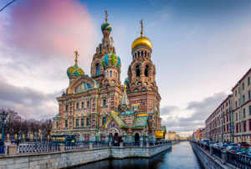
The strongest evidence against the Western ‘collapse’ narrative comes from domestic demand. In the first 11 months of 2025, Russian citizens made approximately 163 million domestic tourist trips, up 3% from 158 million during the same period of 2024. The full-year 2024 figure had already reached 170.9 million trips. At collective accommodation facilities, Russian citizens generated 78.5 million stays between January and November 2025, compared with 75.4 million in the same period of 2024. The scale of overnight demand is even more revealing. Total overnight stays by Russian and foreign guests exceeded 330 million during the first 11 months of 2025, compared with 317 million in 2024. The full-year 2024 figure was 383 million, suggesting that the Russian accommodation market is moving toward the 400-million-overnight threshold.
The financial numbers reinforce the same conclusion. Collective accommodation facilities, including hotels, motels, hostels, sanatoriums, holiday homes, boarding houses, campsites and recreation centres, generated ₽1.094 trillion (US$12.4 billion) in revenue (excluding VAT) during the first 11 months of 2025, up 12% from ₽975 billion a year earlier. The industry had already crossed the 1 trillion ruble annual threshold in 2024. With Russian VAT at the time levied at 20%, that alone generated the equivalent of US$2.4 billion for the Russian treasury.
Tour operators and travel agencies are also expanding. Paid tourist services reached ₽398 billion during the first 11 months of 2025, an 18% increase from ₽337 billion (US$4 billion) in the same period of 2024. The number of travel agencies rose by 16%, increasing by 2,252 establishments from the 14,102 recorded in 2023 to 16,354 in 2024. Food-service spending connected with travel also increased, with per-capita public catering turnover rising 23%, from ₽19,606 in 2023 to ₽24,170 (US$290) in 2024. This is not a tourism market surviving on emergency substitution. It is a market acquiring its own demand base.
Russia Is Now Competing With Foreign Tourist Destinations
The first half of 2026 provides an even more striking snapshot. According to various media reports, the number of domestic trips increased by 56% year-on-year in the first half of 2026. Russia’s share of total tour bookings increased from 9% to 10%. The average Russian domestic trip check actually declined slightly, from ₽60,800 to ₽59,600 (US$710), indicating that domestic tourism is not simply being driven by inflation.
The ranking of destinations is significant. Türkiye remains in first place with 31% of bookings, down from 35% a year earlier. Egypt rose to 29% from 24%. Russia entered third place with 10%, ahead of Thailand at 9% and Vietnam at 7%. The UAE was sixth. China’s share fell sharply from 18% to 3%, while Abkhazia accounted for 2%, the Maldives 1.5% and Sri Lanka around 0.6%. The implication is more important than the ranking itself. Russian consumers have not abandoned international travel. They are reallocating spending between domestic and foreign destinations according to price, connectivity, visa access, seasonality and perceived convenience.
That creates a much more resilient tourism economy. Russia does not need every European tourist to return in order for tourism to grow. It needs its domestic market to remain large enough to support investment while Asian, Middle Eastern, CIS and other non-Western markets gradually expand.
Russian Inbound Tourism Has Relocated From Europe To China & The Middle East

The most important change in Russia’s tourism geography is visible in inbound tourism. Foreign tourist arrivals reached 4.3 million in the first 11 months of 2025, exceeding the full-year 2024 figure of 4.2 million and representing a 13% increase year-on-year. The figure remained below pre-pandemic levels, but the composition of demand had changed significantly: Asia and the Middle East were compensating for much of the decline from traditional European markets. By the first half of 2026, the shift had become even clearer. Russia received 676,500 foreign tourist entries during January-June 2026, up 7.6% year-on-year.
China alone accounted for 380,600 trips, or 56.3% of the total. Chinese tourist entries increased 19.8% from 317,800 in the first half of 2025. The gap between China and the second-largest markets is extraordinary. Turkmenistan accounted for 46,000 visits; Turkiye, 36,900; Saudi Arabia, 20,600; Germany, 19,200; and India, 16,900. Vietnam recorded 7,300 visits, South Korea 6,400, Uzbekistan 6,100 and Thailand 4,400. Eight countries in the top 20 recorded growth: Turkmenistan at 72.9%; Vietnam, 69.7%; South Korea, 25.5%; China, 19.8%; Türkiye, 19.8%; India, 15%; Belarus, 8.6%; and Italy, 4.7%.
The composition of the top ten also changed. Vietnam, South Korea and Belarus entered, while the UAE, Iran and Cuba fell out. Political and geopolitical factors explain much of the decline: UAE arrivals fell 67.5%, Iran 54%, Cuba 49.4%, Germany 27.3%, Israel 16.7% and Oman 14.5%. This makes the Chinese market strategically irreplaceable. Without China, the first-half 2026 increase in tourism-purpose entries would have been minus 4.9%. In other words, China is not only one of Russia’s new tourism markets. It is currently the central pillar of Russia’s inbound tourism recovery.
Visa Policy Has Become Economic Infrastructure
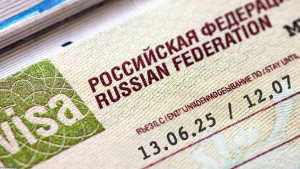
Russia’s tourism pivot is being driven not only by demand but also by policy. Visitors from 64 countries can now enter Russia using an electronic visa, with the permitted stay extended from 16 to 30 days. The government has also introduced visa-free arrangements with China, Oman, Saudi Arabia, Jordan and Myanmar. The China visa-free agreement has been extended through the end of 2027. The effect is measurable.
According to Economic Development Minister Maxim Reshetnikov, visa decisions alone generated an estimated additional 730,000 foreign tourists by the end of 2025 and during the first half of 2026. Following the abolition of visas with China, bookings reportedly increased sixfold during the initial period. This is a critical lesson for tourism economics. Visa policy is not merely consular policy; it is demand-generation infrastructure. A hotel cannot fill rooms that international travellers cannot easily reach. An airline cannot profitably maintain routes if visas suppress demand. A destination cannot build investment confidence if the regulatory cost of entering the market is excessive. Russia is therefore attempting to synchronise visas, aviation, hotels, payment systems and destination marketing.
Aviation As The Physical Backbone Of Russia’s Tourist Pivot To Asia

The most visible manifestation of the new geography is aviation. Russia has expanded direct air links with Saudi Arabia, Qatar, Bahrain, Oman, Vietnam and Indonesia. Direct flights to the Philippines have resumed, while direct Russia-Tanzania air traffic opened in July 2026.
The Russian Tour Operators Association (ATOR) announced that the number of countries reachable by direct flight from Russia in the 2026 summer season will be 35. Turkey, Egypt, China, Vietnam, Thailand, and the UAE were listed among the most popular mass tourist destinations. This is more important than simply adding routes to an aviation timetable. Direct flights determine whether a destination becomes commercially viable.
Vietnam is a textbook example. More than 500,000 Russian visitors travelled to Vietnam during the first four months of 2026. Vietnam had received more than 600,000 Russian tourists in 2025, while another estimate put the 2025 total at approximately 690,000, nearly triple the previous year and above the previous 2019 record. Vietnam is now on course to receive more than 1 million Russian tourists in 2026, 50% above its pre-pandemic record. The aviation network explains much of this acceleration. Twenty-five Russian localities now have direct flights to major Vietnamese tourist destinations. During the October-April peak season, approximately 40-50 weekly flights operate from Russian regions to Vietnam, with 15-20 weekly flights during the low season. Between March 2025 and April 2026, weekly flights increased by six to seven operations. This is what a functioning tourism corridor looks like: visa access creates demand, aviation converts demand into passenger flow, hotels absorb the passengers, tour operators package the experience, restaurants capture spending, and destination infrastructure creates repeat demand.
Russia is seeking to expand direct air connectivity with Asia, with China, Vietnam, Thailand, Indonesia, Malaysia, Myanmar, the Philippines and potentially Japan among the destinations under consideration; Kuala Lumpur, Jakarta and Bangkok are viewed as the most realistic near-term additions. More than 40 direct flights already connect Russia with Southeast Asia, while Vietnam is expanding services from Moscow, St Petersburg, Novosibirsk, Vladivostok and Irkutsk.
The main constraint is not simply aircraft availability but insufficiently predictable demand and limited long-haul fleet capacity. Russian carriers tend to allocate wide-body aircraft to the most profitable routes, while foreign airlines remain cautious because of the risk of secondary sanctions. Fuel shortages are adding further pressure, although there have been no mass cancellations so far.
China is emerging as the most important growth market following the mutual visa cancellation, which has increased tourist flows but also pushed up airfares. Expanding flights from Siberian and Far Eastern cities including Vladivostok, Khabarovsk, Blagoveshchensk, Chita, Yuzhno-Sakhalinsk and Petropavlovsk-Kamchatsky, could distribute demand, reduce peak prices and strengthen both tourism and business links. The strategic opportunity is therefore to transform Russia’s Far East into an Asia-Pacific aviation gateway. New or expanded services to Kuala Lumpur, Jakarta, Bangkok, Singapore, Tokyo, Sapporo and Osaka could connect Russia more directly with Asia, while Chinese airports, Baku and Istanbul increasingly serve as transit alternatives. However, the pace of expansion will depend on aircraft availability, fuel conditions, demand, airline economics and bilateral agreements.
Vietnam As A Model For Russia’s Asian Tourism Economy
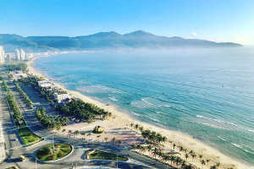
Vietnam deserves particular attention because it demonstrates the commercial logic of Russia’s Asian pivot better than any diplomatic declaration. Russian tourists increasingly travel to Phu Quoc, Nha Trang, Da Nang, Cam Ranh and other coastal destinations. Previously, Russian charter programmes were concentrated around winter holidays in Phu Quoc. They are now becoming year-round products, with summer programmes to Nha Trang and Da Nang.
Approximately one-third of Russian visitors still reach Vietnam through connecting flights, which indicates that the market has not yet reached its aviation ceiling. Vietnamese tourism officials are therefore calling for more scheduled and charter flights connecting Russian regional airports with Vietnam’s tourism hubs. The commercial profile of Russian tourists also matters. Russian visitors tend to stay one to three weeks and spend heavily on dining, spa services and premium experiences. At The Anam Group’s luxury resorts, Russian-speaking guests account for around 15% of bookings. This makes Russian tourism particularly attractive to Asian hospitality companies because the value of a visitor is not determined only by arrival numbers. Length of stay and expenditure per traveller are equally important. Russian tourists now spend more overseas and leave more money on the table at overseas resorts than Europeans do.
Thailand, India and the Philippines are joining the same tourism architecture

Thailand is another emerging pillar. Russian bookings for Thailand accounted for 9% of the Russian outbound market in the first half of 2026. On August 9, Thailand and Russia discussed expanding flights with an explicit target of attracting 2 million Russian tourists to Thailand by the end of 2026. The proposed cooperation includes cultural and gastronomy promotion, tourism safety, sports exchanges and a joint tourism action plan for 2026-2030.

India is approaching the Russian tourism market from a different angle. On July 27, 2026, Maharashtra Tourism and the Russian Consulate General in Mumbai discussed expanding bilateral tourism, improving aviation connectivity and creating government-to-government destination promotion. A St Petersburg tourism showcase is planned for Mumbai in September 2026, while the two sides are considering a direct Mumbai-St Petersburg service. In another boost, their sister-city relationship reaches 60 years in 2027, with numerous cultural events planned in both cities.

The Philippines is another example of Russia’s Far Eastern aviation geography becoming economically relevant. IrAero has operated charter flights directly from Irkutsk and Khabarovsk to Kalibo in Aklan. S7 has applied to resume flights from Irkutsk, Vladivostok and Khabarovsk to Manila and Cebu. The geography is revealing: Russia’s tourism pivot to Asia is not being built exclusively around Moscow. The Russian Far East is becoming a departure platform for Southeast Asian tourism.
China Is Becoming A Market & Tourism Infrastructure Partner

The China relationship is even deeper. During Vladimir Putin’s May visit to China this year, tourism and education were included in broader people-to-people cooperation. China-Russia tourism exchanges are being supported through cultural events, destination promotion, direct flights and the visa-free regime.
In July, Hubei Province organised cultural and tourism promotion events in Moscow and St Petersburg. Nearly 100 representatives from Chinese and Russian cultural and tourism enterprises participated. A China-Russia B2B tourism zone was established, while 12 Hubei enterprises, including Hubei Tea Group, developed practical cooperation intentions with Russian partners. Hubei offers a rich mix of grand river landscapes, Taoist holy mountains, and deep Three Kingdoms history. Highlights include the iconic Yellow Crane Tower in Wuhan, the engineering marvel of the Three Gorges Dam in Yichang, and the pristine peaks of Shennongjia Natural Reserve.
This represents a shift from tourism as simple passenger movement toward tourism as a business-to-business ecosystem. Hotels, restaurants, cultural institutions, travel agencies, airlines, payment companies and regional tourism authorities increasingly have an interest in the same corridor. The China market is also becoming more independent in travel behaviour. By the end of 2025, 84% of Chinese tourists were reportedly choosing independent travel rather than organised tours. During the visa-free programme, approximately 2 million Chinese citizens travelled to Russia, while around 1 million Russians travelled to China. That trend creates demand for digital booking, multilingual guides, local transportation, restaurants, independent hotels and city-level tourism products.
Russia Is Building Its Hotel Supply

Demand cannot grow indefinitely without accommodation. This is where Russia’s tourism policy becomes an investment story. The preferential lending programme is supporting construction of approximately 300 hotels and multifunctional complexes containing more than 63,000 rooms. Another 40 year-round sites, including water parks, ski resorts and amusement parks, are planned.
This total investment is worth approximately ₽1.6 trillion (US$19 billion), of which 1 trillion (US$12 billion) is subsidised bank lending. More than 50 facilities are already receiving guests. By August 2026, 46 properties containing 10,000 rooms had been completed under the large-hotel preferential lending programme, with another 6,000 rooms expected to enter the market by the end of the year. There were 109 projects under construction and another 140 hotels and sanatoriums at the design stage. The zero-VAT mechanism for hotels has also been extended through 2030, spurring investment.
The national tourism project has already added around 70,000 hotel rooms. Accommodation investment reached ₽260 billion (US$3 billion) by the end of 2025, nearly triple the previous level. Forty-six properties with around 10,000 rooms had opened under the preferential programme, while a further 6,000 rooms were expected by the end of 2026. The accommodation register now contains approximately 31,000 categorised facilities, including more than 15,000 properties that had previously operated outside the formal registered sector. Russia has more than 1 million hotel rooms in total, while 9,300 guesthouse properties from 17 regions have entered a classification pilot. The message for investors is clear: Russia is attempting to turn tourism accommodation from a fragmented constraint into a scalable asset class.
Cosmos Hotels Show Where The Private Hospitality Sector Is Heading

The most revealing corporate example is the Cosmos Hotel Group, part of AFK Sistema. Cosmos operates 55 hotels with more than 12,000 rooms across 32 Russian cities. Its development portfolio contains more than 100 additional properties and approximately 46,000 rooms expected to open under its brands over the next five years. Employment in the network currently stands at around 10,000 people, with the company targeting approximately 30,000 employees by 2030. This demonstrates the scale of consolidation taking place in Russian hospitality. The challenge, however, is labour. Cosmos estimates a 20-30% staffing deficit during high season, particularly among maids, waiters, chefs and administrators. The group has, therefore, established its own Hospitality Academy and partnerships with the Higher School of Economics, Peoples’ Friendship University and Sochi State University.
Around 2,000 students undertake internships in Cosmos hotels annually, with approximately one-third subsequently joining the company. The same human-capital strategy is emerging elsewhere. The Siberian Federal University’s Institute of Gastronomy has 776 students from almost all Russian regions and eight foreign countries. In 2026, 208 students completed internships across 12 countries, 35 cities, 79 Russian restaurants and 16 foreign restaurants. The implication is straightforward: Russia’s tourism investment cycle is creating a secondary investment market in hospitality education.
Altai As A Testing Ground Of Russia’s Tourism Future

The choice of the Republic of Altai for Mushustin’s August 4 meeting was symbolic but also economically rational. Manzherok has become a showcase for the new model. The resort attracted around 1 million guests last year. Its ski slopes are planned to reach 110 kilometres by the next winter season. The Gorno-Altaisk airport runway is being extended, with a larger terminal planned within two years. Employment at the resort and associated projects could rise from around 4,000 to 16,000 people.
This is tourism-led regional development in its clearest form. Airport investment raises accessibility. Accessibility raises visitor numbers. Visitor numbers justify hotels. Hotels generate demand for restaurants, retail, entertainment and transport. That creates jobs and expands local tax and service revenues. Russia is simultaneously developing other year-round destinations through the Five Seas and Lake Baikal project, which envisages 12 year-round resorts across 10 regions. The regional government has earmarked ₽9 billion (US$107 million) for unified tourism subsidies in 2026 and 2027, supporting festivals, beaches, piers, historic centres, tourist routes and infrastructure.
Russian Ecotourism As A New Economic Frontier

Russia’s enormous geographical advantage is its natural capital. More than 22.5 million people visited protected natural areas in 2025, a 25% increase year-on-year. Since the beginning of 2026, approximately 11 million visitors had already entered Russia’s protected areas. The five-year comparison is striking: annual visitors increased from around 7 million in 2020 to almost 23 million in 2025. Popular destinations include Sochi National Park, Kislovodsky, Krasnoyarsk Stolby and the Curonian Spit. Russia also has more than 400 ski complexes, 1,613 kilometres of equipped ski routes and approximately 1,000 lifts. During the 2025-26 winter season, these resorts attracted around 9 million people. The economic opportunity is enormous. but so is the policy risk. If Russia converts protected ecosystems into mass tourism without carrying-capacity controls, the natural assets that generate demand could be degraded. That is why the new regulatory framework for specially protected natural areas is significant. The government is establishing clearer rules over what can be built and where tourist facilities can operate. The challenge is to turn ecological tourism into a high-value, low-impact industry rather than simply a high-volume one.
The African Market

Russia’s tourism pivot is overwhelmingly Eurasian at present, but Africa represents one of the largest underdeveloped opportunities.
The African middle class is estimated in the source material at approximately 380 million people, more than twice Russia’s population. Yet African tourism to Russia remains limited. Russia currently has visa-free agreements with only six African countries, and many existing arrangements apply mainly to diplomatic passport holders. Russian officials have been discussing short-term visa-free entry of up to 90 days with nine friendly countries in Africa and the Middle East. The problem is not simply visas. West Africa illustrates the structural barriers: weak tourism infrastructure, insufficient marketing in Russia, limited direct flights, cumbersome visa procedures and persistent negative perceptions related to security and health. Cape Verde and The Gambia were identified as comparatively promising, but even Cape Verde faces a major connectivity problem: there is no direct Moscow flight, and travel can take almost a full day with expensive tickets. Russian tourism specialists also noted the limited participation of West African tourism agencies in Moscow tourism exhibitions. For Russia, this means Africa is a market where tourism diplomacy could still produce large marginal gains. The missing ingredients are the same ones Russia is deploying domestically: flights, hotels, payment systems, marketing, visa facilitation and reliable local partners.
Iran’s Payment Connectivity Lessons

The Iran-Russia tourism roadmap for 2026-2028 offers another important lesson. The agreement focuses on facilitating tourist movement, visas, flights and financial payments. Moscow and Tehran specifically discussed enabling tourists to use Iran’s Shaparak banking network and Russia’s Mir payment network. This is a critical element of the post-Western tourism economy. A tourism corridor is incomplete if travellers can physically arrive but cannot easily pay for hotels, restaurants, transport and excursions. The future of Russia’s tourism pivot therefore depends not only on airlines and visas but also on financial interoperability.
Tourism As Part Of Russia’s Eurasian Connectivity Strategy

The most important conclusion is that Russia’s tourism pivot cannot be separated from its transport and economic pivot to Asia. When Russia opens a flight to Vietnam, it is not only creating tourism traffic. It is creating business contacts, hospitality investment, payment demand and cultural exchanges. When Moscow discusses direct Mumbai-St Petersburg flights, it is simultaneously strengthening a business corridor between India and Russia. When Russia and Thailand discuss 2 million Russian tourists, they are also discussing aviation, gastronomy, sports, culture and a 2026-2030 tourism action plan. When China and Russia expand tourism links, the resulting traffic reinforces the wider China-Russia connectivity architecture. When IrAero flies from Irkutsk and Khabarovsk to the Philippines, Russia’s Far East becomes part of a broader Asia-Pacific tourism system. This is why tourism should now be viewed as a component of Russia’s Pivot to Asia rather than a separate service-sector story.
The New Russian Tourism Model: Regional, Asian, and Investment-Driven

The old model depended heavily on Moscow, St Petersburg, European visitors and outbound travel to Western destinations. The emerging model is different. It is more regional because foreign visitors increasingly travel to Murmansk, Vladivostok and Kazan rather than only Moscow and St Petersburg. It is more Asian because China, Vietnam, India, Thailand and other Asian markets are becoming central to tourist flows. It is more investment-driven because 1.6 trillion rubles are being mobilised for hotels and multifunctional tourism facilities. And it is more integrated because airports, roads, hotels, education, digital services, payments and destination marketing are being developed as parts of one ecosystem. Russia’s tourism industry therefore does not need to return to its pre-2022 geographical structure to become economically successful. The objective is increasingly different: build a tourism economy that can operate across Eurasia.
Can Russia Turn Visitor Growth Into Productivity Growth
There is nevertheless a major challenge. Inbound tourism grew 20% year-on-year in the first half of 2026, after increasing 12% in 2025. Domestic tourist trips rose 4.3% in the first half of 2026. Yet Economic Development Minister Maxim Reshetnikov warned that declining summer bookings could leave full-year domestic tourism broadly unchanged from 2025. This is the point where the Russian tourism story becomes more complicated. More visitors do not automatically mean a more productive tourism industry. Russia must increase spending per visitor, lengthen stays, raise hotel occupancy, improve service quality and attract private investment without allowing costs to rise faster than demand.
The government’s target of increasing tourism’s GDP contribution from above 3% in 2025 to at least 5% by 2030 is therefore ambitious. Achieving it requires more than adding hotel rooms. It requires a higher-value tourism product. That means four- and five-star hospitality, wellness tourism, medical tourism, MICE tourism, gastronomic tourism, ecotourism, ski tourism, cultural tourism, long-stay products and regional tourism corridors. Vietnam’s experience shows the opportunity. Russian travellers who stay one to three weeks and spend heavily on restaurants, spas and premium services are economically more valuable than short-stay mass tourists. Russia can pursue the same strategy at home.
Summary: Reshaping Russia’s Tourism Market
The central mistake in analysing Russian tourism after the rupture with the West is to measure success against the old map. That map is disappearing. The new map stretches from Moscow and St Petersburg through Kazan, Murmansk, the Caucasus, Altai, Lake Baikal, Siberia and Vladivostok, and then outward toward China, Vietnam, Thailand, India, the Philippines, the Middle East, Iran and now Africa and Latin America. The numbers already show the transition. More than 43 million trips were recorded in Russia in the first half of 2026. More than 3 million were foreign tourists. Tourism contributed more than 3% of GDP in 2025, with a 5% target for 2030. Domestic trips reached approximately 163 million in the first 11 months of 2025. Accommodation revenue reached ₽1.094 trillion (US$12.4 billion). Travel services generated ₽398 billion (US$4.7 billion). More than 70,000 new hotel rooms have been added under the national tourism project. Around 300 hotels and multifunctional complexes containing more than 63,000 rooms are under construction with preferential financing. Investment has reached approximately ₽1.6 trillion (US$19 billion). At the international level, China supplied 380,600 tourism entries in the first half of 2026, accounting for 56.3% of inbound tourism-purpose entries. Vietnam is moving toward more than 1 million Russian visitors in 2026. Thailand is targeting 2 million Russian tourists. India is discussing direct Mumbai-St Petersburg connectivity. The Philippines is seeking more direct Russian routes. Iran is building a 2026-2028 tourism roadmap. Myanmar is discussing cooperation with ITE Russia. Hubei is building B2B tourism links with Russian companies.
These are not isolated tourism stories. They are pieces of a new economic geography. Russia’s tourism pivot to Asia is therefore best understood not as a defensive response to Western restrictions, but as a long-term restructuring of the country’s tourism economy. The West once supplied an important share of Russia’s international tourism demand. Asia, the Middle East, the CIS and other non-Western markets are now becoming the foundation for the next phase.
The decisive question for the next four years is no longer whether Western tourists will return. Although Russia would welcome this, it has already moved on from European expectations. The main issue now is whether Russia can convert its enormous domestic demand, growing Asian connectivity, expanding hotel stock, upgraded airports and new visa and payment infrastructure into a competitive Eurasian tourism platform.
If the current investment cycle succeeds, tourism could become one of the clearest examples of Russia’s broader economic reorientation: a sector once geographically concentrated around Europe instead becoming increasingly integrated with Asia, a consumer market becoming an infrastructure industry, and a service sector becoming a regional growth engine. That is the deeper meaning of Russia’s tourism pivot. The country is not simply finding new tourists. It is building an entirely new tourism economy around them.
This article was written by KP Majumdar, a geostrategic and geo-economics analyst based in South Asia whose work has been widely published by prestigious international news organisations and publications. He may be reached at info@russiaspivottoasia.com