 Русский





India is exploring ways to buy more coking coal and import more nickel from Russia, with an Indian delegation visiting Russia last month for preliminary talks with government and industry executives.
The materials are needed by New Delhi as it needs to secure supplies to boost steel production and speed up its energy transition. In January, the Centre designated coking coal a critical and strategic mineral because of import dependence. India is the world’s second-largest producer of crude steel after China.
Both the Steel Authority of India Limited (SAIL) and NMDC (India’s largest state-backed iron ore producer) are exploring sourcing of raw materials and are in talks with Russia. India sources more than half of its coking coal from Australia, while much of the rest is procured from Russia and the United States.
Coking coal and nickel are used in the production of steel, which is essential in India’s renewable energy and EV push. Nickel is also a critical element used in the clean energy transition, and especially in battery production.
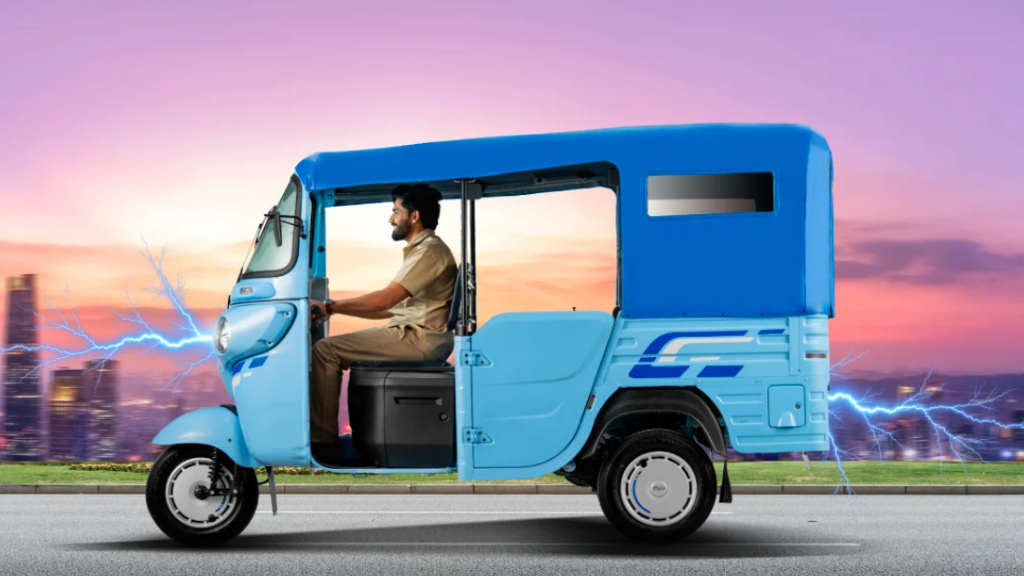
New Delhi has set a target of achieving a 30% penetration of electric vehicles in all new cars purchases, and 80% of its two and three-wheeled vehicles (tuktuks) by 2030, up from 6% and 9% to date.
NMDC has also been exploring coking coal asset purchases abroad. It said last year that it was looking for coking coal opportunities in Australia and Indonesia.
India procures nickel mainly from China, Japan, Norway and the US, and only a small amount from Russia. That is now changing.
Russia is the world’s third-largest producer of coking coal, holding massive reserves. However, following Western sanctions, the sector is experiencing a systemic economic crisis and major domestic producers have reported steep revenue declines. As a result, Russia’s coking coal export markets have shifted significantly. These new dynamics include India, which imports about 95% of its coking coal and has increasingly turned to Russia as a cost-effective alternative to Australian supplies. For example, Russia sharply increased coking coal exports to India in January 2026 to 1.22 million tons — up 58% month-on-month and 63% year-on-year.
In addition to coking coal, Russia is one of the world’s leading producers and exporters of mined and refined high-grade nickel. The industry is dominated by the metals giant Norilsk Nickel, which is responsible for the vast majority of the country’s output. Global nickel prices are highly sensitive to Russian geopolitical announcements; the country commands a massive share of class-1 refined nickel, making it a critical player in the electric vehicle (EV) battery and stainless steel markets.
India and Russia are reportedly also intensifying trade and investment cooperation in the Far East and the Arctic zone, with a program covering energy and mining. India has also signed substantial rare earth mining agreements with Russia as part of its push to secure critical minerals.
It is also apparent that Russian supplies are critical for India meeting its own national green energy development goals – a key move in the restructuring and development of Russian exports away from the oil and gas sectors and towards other critical materials. India has committed to reaching 500 GW of non-fossil electricity capacity by 2030. It achieved the 220 GW milestone last year, putting it on track to meet this goal and can probably meet its ambitions if it can secure the Russian supplies.