
 Русский







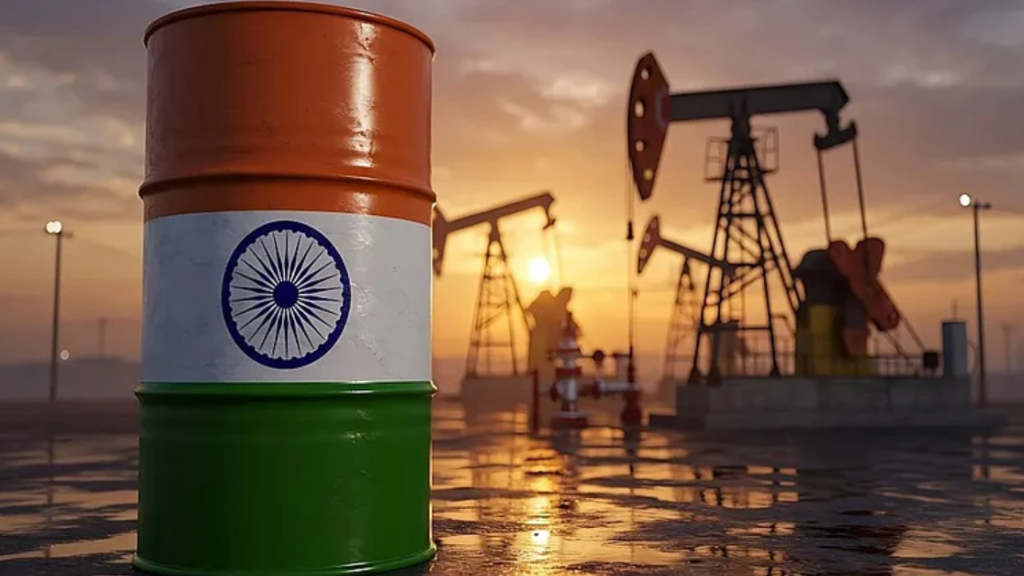

India’s crude oil imports from Russia surged to a record high in July, accounting for 55% of its total crude oil purchases, according to Sumit Ritolia, lead analyst for modelling and refining at Kpler, the global research and analytical agency. Shipments rose to around 2.6 million barrels per day (mbd), a new high.
The rise in purchases came despite US sanctions on Russian oil remaining in force. After the Middle East conflict sparked a surge in oil prices, the US waived the sanctions – as a price dampener – on Russian oil already loaded on vessels at least three times. The last waiver was issued in May, but Washington let it lapse on June 19, as global oil supplies remain restricted and stocks have mostly been drawn down across the world.
Russian crude imports increased 1.8% from 2.73 mbd in June, though New Delhi’s total imports were only slightly higher, up 0.1% from 5.02 mbd. Moscow’s share has also risen from 54.4%, further consolidating its position as New Delhi’s top supplier. Russian crude imports to India have more than doubled from 23.4% in January.
Supplies of Russian Urals crude helped Indian refiners after disruptions caused by the Middle East conflict continued. Moscow has also provided discounts of between US$2 -US$3 per barrel.
A June ceasefire brokered to halt the Middle East conflict has collapsed, leading to airstrikes by the US and Iranian retaliation. While the US announced a temporary pause on a planned major military offensive last week, the situation remains volatile. Shipping traffic through the Hormuz Strait, through which a fifth of global energy supplies passed before the conflict, has been severely impacted.
India’s increasing of crude oil purchases from Russia comes as the United States is pushing a bill that would permit the US Trade Representative to impose 100% tariffs on the top five importers of Russian oil and gas. China and India have been the two largest importers of Russian oil recently. If these tariffs were imposed, the result would be a huge trade war between the United States on one hand, and China and India on the other. These two countries would immediately look to impose their own high tariffs on exports critical for US industry. Items that the US is reliant on India and China for include electrical machinery and phones, electric batteries, packaged pharmaceuticals, precious gems and industrial diamonds, as well as raw materials such as rare earth elements, gallium, neodymium, dysprosium, germanium, graphite, cobalt, and manganese and tungsten (which are all used in the US electronics sector), in addition to heterocyclic compounds, carboxylic acids, and basic chemical building blocks (used in the US pharmaceutical industry).
It should also be noted that China and India’s combined GDP when measured on a parity basis with the United States amounts to US$63.19 trillion against the United States US$32.38 trillion.
The US had imposed 25% tariffs on Indian imports as a penalty for its oil purchases from Russia in August 2025. The tariffs were lifted after a broad trade deal was announced in February. India has maintained that its oil purchases are dictated by its own national interests. The Indian economy is growing at about 6.5% this year, and it needs energy to sustain this and fulfil its own national development plans.