 Русский






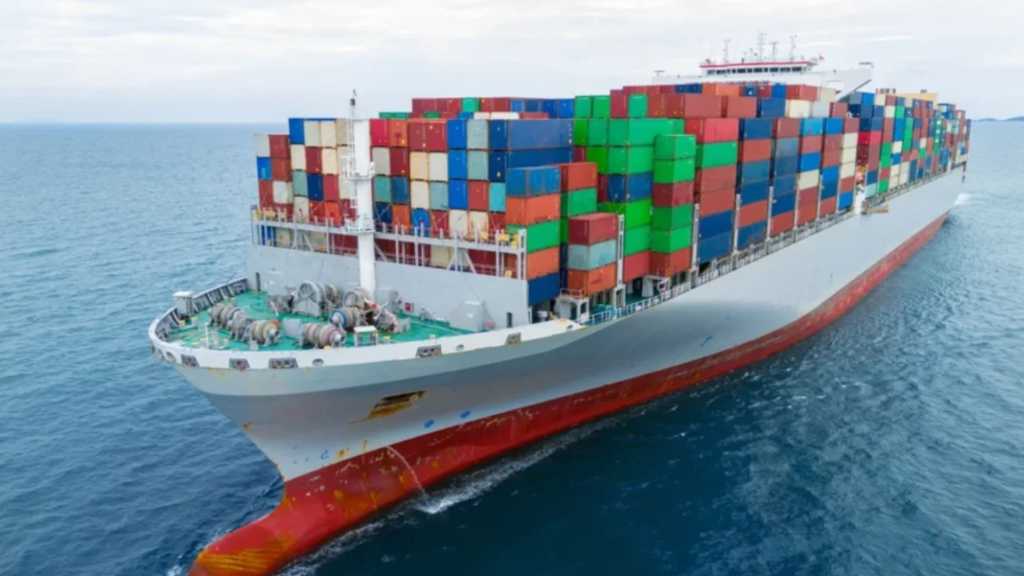

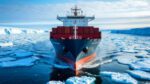
The Chinese shipping company Sea Legend Shipping is launching the first regular weekly container service, China-Europe Arctic Express (CAX), between China and Europe via the Northern Sea Route this summer. A fleet of seven vessels with a capacity of 1,528 to 4,890 twenty-foot equivalents (TEU) will provide weekly departures from the Ningbo-Zhoushan port complex on China’s east coast, near Shanghai. Cargo collection will begin in Ningbo-Zhoushan on August 12: feeder shipments will arrive from other ports on the eastern coast, including Dalian, Qingdao, Shanghai, Taicang, Fuzhou, and Nansha.
Sea Legend plans to operate eight weekly shipments from August 15 to October 3, 2026. The decision to launch the service was based on the results of the first trial shipment conducted by the Istanbul Bridge in 2025, which travelled from Ningbo to Felixstowe and completed the journey in 20 days. On that voyage, due to a storm in the Norwegian Sea, the ship slowed down and arrived two days late—this experience helped the company adjust planning and navigation support for regular scheduled services. Nevertheless, the company called it a record time for completing this route.
Aleksey Chekunkov, the Russian minister for development of the Russian Far East and Arctic, has stated that Russia will not create obstacles for western states utilizing the Northern Sea Route and that Russia is ready to accept vessels flying the flags of any country. He emphasized that regardless of who chooses the transit route, Russian vessels will provide ice cover support, rescue centre infrastructure and data from Russian space satellites.
On August 15, the Dubai Tower container ship with a capacity of 1,740 TEU, will also depart. The estimated date of its arrival in the British port of Felixstowe is September 5.
Subsequent voyages will be carried out by the 2,872 forty foot equivalent unit container ship Riyadh Mukaab, the 1,829 forty-foot equivalent units Athens Odeon, the 4,890 forty-foot equivalent units Istanbul Bridge, and three Tiger-class vessels: Tiger Maanshan, Tiger Bintulu, and Tiger Lianyungang (each with a capacity of 1,528 TEU). The final leg of the program will be completed by the Dubai Tower: the ship will depart from Ningbo on October 3 and arrive in Felixstowe on October 24, with further unloading in European destinations scheduled for October 27.
The European ports of destination for the service will be Felixstowe (UK), Rotterdam (Netherlands), Wilhelmshaven (Germany), and Gdynia (Poland). After arriving in Felixstowe, some of the cargo will be distributed to other European destinations.
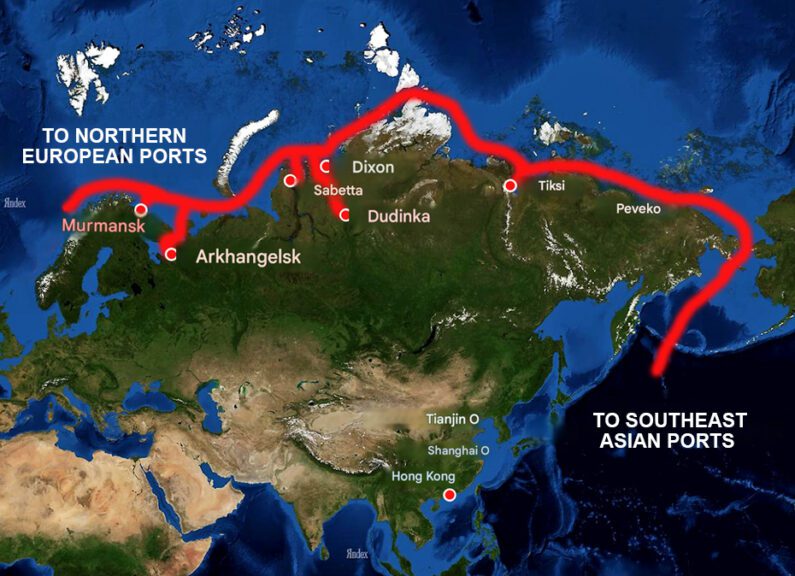
SeaLegend has positioned its Arctic service as a faster seasonal alternative to the traditional Suez Canal route and rail transport between China and Europe. It has laid a special emphasis on targeting the third quarter of the year, which traditionally marks peak season for maritime shipments.
According to Sealegend’s calculations, cargo can reach Hamburg in twenty to twenty-two days, matching rail speeds while offering significantly larger vessel capacities. The company has also said that carbon dioxide emissions on the Arctic route are approximately 50% lower than on the Suez route, mainly due to the shorter transport distance between Asia and Northern Europe. The declared cargo mix includes standard containers, refrigerated cargo, oversized equipment, and dangerous goods, including batteries.
The service aligns with the consistent expansion of commercial and strategic interests of China in the Russian Arctic. Beijing has been promoting these interests under its Polar Silk Road initiative, while Chinese research vessels and icebreakers have significantly increased their activity in Arctic waters. However, regular container shipping on the Northern Sea Route has previously remained sporadic due to seasonal ice restrictions, high insurance costs, uncertain icebreaker escort availability, and the narrow navigation window.
The scale of operation is reflected in the fleet size. The largest container ship to be deployed, the 4,890 forty-foot equivalent units Istanbul Bridge, appears modest alongside giant vessels of twenty to 24,000 forty-foot equivalent units capacity that dominate the Asia-Europe routes via the Suez Canal. Nevertheless, introducing a regular schedule on the Northern Sea Route represents a significant milestone for Arctic container shipping. This segment has long been considered one of the most challenging, as shipping lines depend on predictable schedules, high reliability, and frequent departures.
Previous Arctic container voyages by companies such as Maersk and NewNew Shipping were primarily experimental or isolated events. SeaLegend, though, has taken the next step by offering weekly departures throughout the summer navigation season. Executing this programme will provide practical answers as to whether seasonal regular container shipping on the NSR is commercially viable at a time when carriers are also seeking alternatives to the southern trade routes, where vulnerability has risen due to geopolitical conflicts.
Interest is growing from other Asian countries, with India also interested in developing the route, mainly to secure energy supplies from Russia’s Yamal fields. It is also building icebreakers.
The Northern Sea Route is expected to be ice-free, year-round, from 2060.