Русский








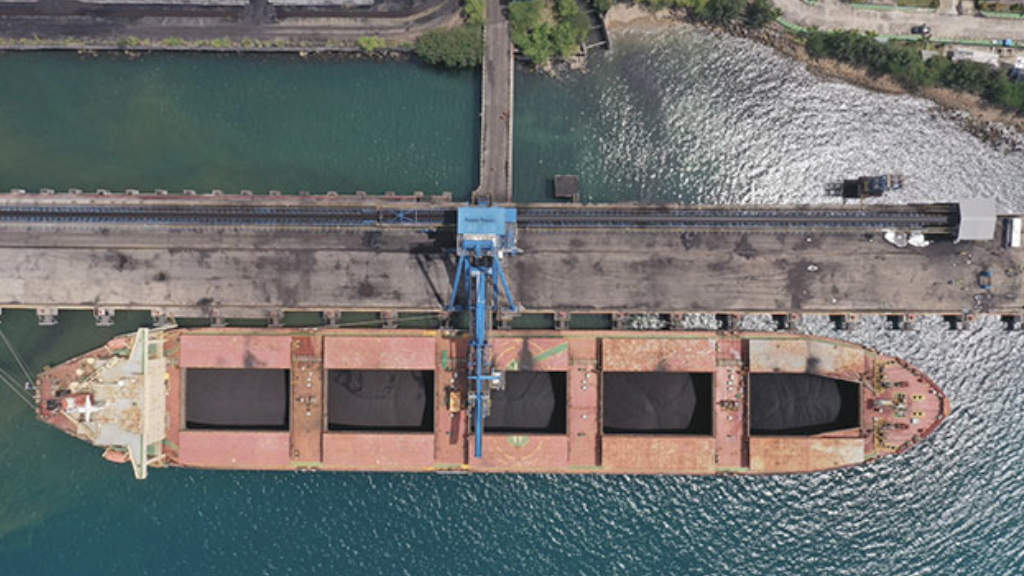

Charter rates for bulk carriers transporting Russian coal from Vostochny Port to China have reached an all-time peak. By 18 September, the freight rate for coal shipments from the port of Vostochny to Northern China expanded by 6% over the week, reaching US$13.3 to US$14.3 per tonne depending on vessel deadweight. This represents the peak value throughout the entire observation history, according to the Centre for Price Indices.
Analysts anticipate elevated tariffs until October, while coal producers report preserved operational margins. Transport to India from Vostochny appreciated by 5 to 7%, up to US$40 per tonne, with the spread determined by discharge port location and bulker deadweight.
Vostochny Port is Russia’s largest deep‑water port and a key hub for coal logistics in the Far East. It is located at the eastern end of the Trans‑Siberian Railway, which ensures a direct rail link to the country’s main coal‑producing regions. The port handles large‑tonnage vessels year‑round and is designed to accommodate a fleet with high deadweight capacity, maintaining stable throughput even in challenging weather conditions.
Analysts at the Centre for Price Indices link the tariff peak to intensive coal exports from the Russian Far East and elevated marine fuel costs. Over the month leading to 18 September, the price quotation for VLSFO 380 bunker fuel across the region rose by 5%, reaching US$829 per tonne. This marks the highest level since late June. The demand side features record shipment volumes.
Russian Railways noted that in August coal carriage toward eastern ports established a fresh record of 10.6 million tonnes, expanding 6.1% year on year. Russian coal exports to China in August 2026 grew by 1.6% against July and 13.4% year-on-year, reaching 9.2 million tonnes according to Sxcoal calculations. Concurrently, analysts noted that costly logistics reduces the competitiveness of Russian coal across the Chinese market.
Vladimir Korotin, the General Director of Russian Coal, confirms that rising bunker fuel prices for dry bulk vessels represent the primary driver of escalating freight rates. Seasonal factors exert additional pressure, the executive states. Toward winter, transport becomes more expensive because only an ice-class fleet can navigate under freezing conditions. According to the executive, the structuring of winter operational markets for such tonnage is likely underway already. At the same time, the senior manager emphasizes that prevailing rate increases do not render business unprofitable. Current price benchmarks in the Russian Far East and the rouble exchange rate against the dollar permit exporting coal profitably. In mid-September, thermal coal prices at the port of Vostochny reached their highest point since late 2023.
Mariya Nikitina, a logistics specialist at the P. A. Stolypin Institute for the Economy of Growth, highlights a combination of factors. The market simultaneously experienced high bulk carrier capacity utilization in the Asia Pacific region, growing Russian exports via the Russian Far East, coal mining curtailments in China, and supply route restructuring following capacity losses across the Azov Black Sea basin.
Until late September and October, Nikitina anticipates the preservation of elevated rates. A noticeable correction requires expanding available tonnage or a weakening cargo base, the specialist explains. Sofya Privalova, an energy specialist at the Institute for Energy and Finance Foundation, also suggests that elevated coal freight rates will persist at least until late September. According to her, the onset of the shoulder season in Asian states and associated contractions in coal demand, alongside expanding vessel availability following fleet reorientations from the Azov Black Sea basin to the Northwest, could help determine a rate ceiling.
According to Centre for Price Indices data, during the week ending 18 September, not a single coal carriage transaction was registered in the Azov Black Sea basin. The daily count of Panamax bulk carriers in ballast dropped to three vessels. Between 1 and 10 September, railway coal shipments toward southern ports plummeted by 82% to 2,300 tonnes daily, according to analysts. The Baltic demonstrates opposite dynamics. In Ust Luga, freight rates for coal transit to Northern China and Western India rose by 4% and 6%, reaching US$60.5 and US$51.2 per tonne, respectively.
Analysts at the Centre for Price Indices observe that market participants record expanding coal delivery requests on the Baltic, rail shipments to northwestern ports grow, and available tonnage contracts. Freight rates for Russian crude oil carriage from Black Sea ports established fresh historical peaks in September 2026. Maritime freight costs for Aframax tankers sailing from Novorossiysk to Western India and Northern China between 31 August and 6 September rose by 2.7% and 3.1%, reaching US$23.2 and US$25.7 per barrel, respectively.