
 Русский






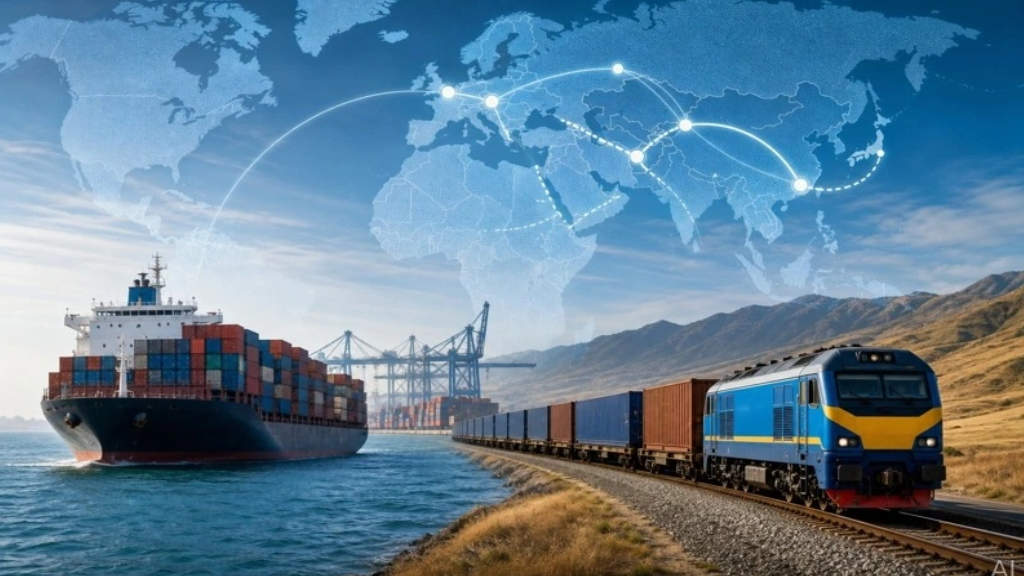

The Transcaspian route of the North-South international transport corridor becomes a key link in the redistribution of global logistics flows, securing the link of Russia with the markets of Iran, the Middle East, and South Asia. In 2026 attainment of record transshipment indicators along this vector is expected, requiring adaptation to new export and import supply chains from carriers.
Following results of 2024, cargo turnover of ports in the Astrakhan region stood at 6.2 million tonnes, of which 95 percent fell upon the Iranian direction. According to forecasts, in 2026 this indicator will expand to 8 million tonnes, and aggregate cargo turnover across the entire Transcaspian branch of the North-South international transport corridor will reach 10 million tonnes. Stable growth is secured by transport operations of river-sea-type vessels running between river ports of the Volga and ports of Iran.
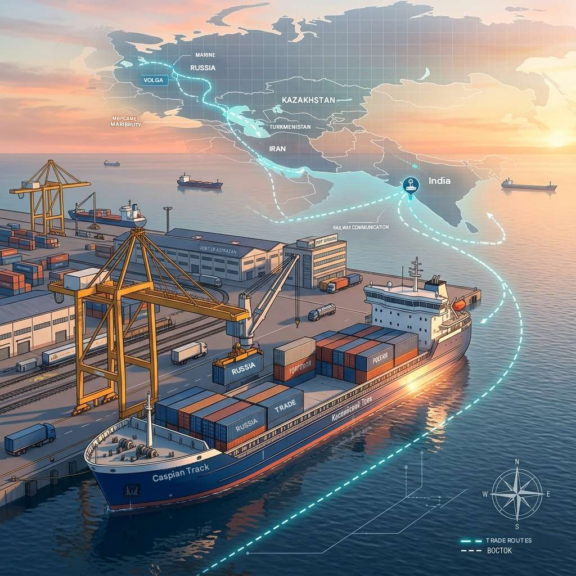
Strategic development plans for the corridor provide for significant expansion of handling capacities by 2030. Overall freight traffic along the North-South international transport corridor is expected to grow to 35 million tonnes, with the maritime component of the Transcaspian route expanding to 15 million tonnes annually. Currently, the aggregate capacity of transshipment complexes at ports of Astrakhan and Olya is evaluated at 16 million tonnes per year, while construction of new port capacities proceeds to cover rising demand.
The agenda incorporates discussions of financial payment mechanisms, cargo insurance, and the introduction of new instruments for operations across markets of Iran, Iraq, Afghanistan, Pakistan, and India. Dedicated focus will address launching railway ferries along the Russia-Iran-Turkmenistan route, optimizing multimodal carriage.
For the professional community, the forum will present modernization projects for terminals transhipping grain, vegetable oil, containers, coal, and petroleum products. The presentation of the capabilities of the Lotos Port Special Economic Zone, oriented toward the creation of a transport and logistics hub to service export and import flows, will take place as well. Participants will enter procurement sessions with business representatives from partner countries, permitting direct negotiations regarding terms of supply and logistics management.