Русский








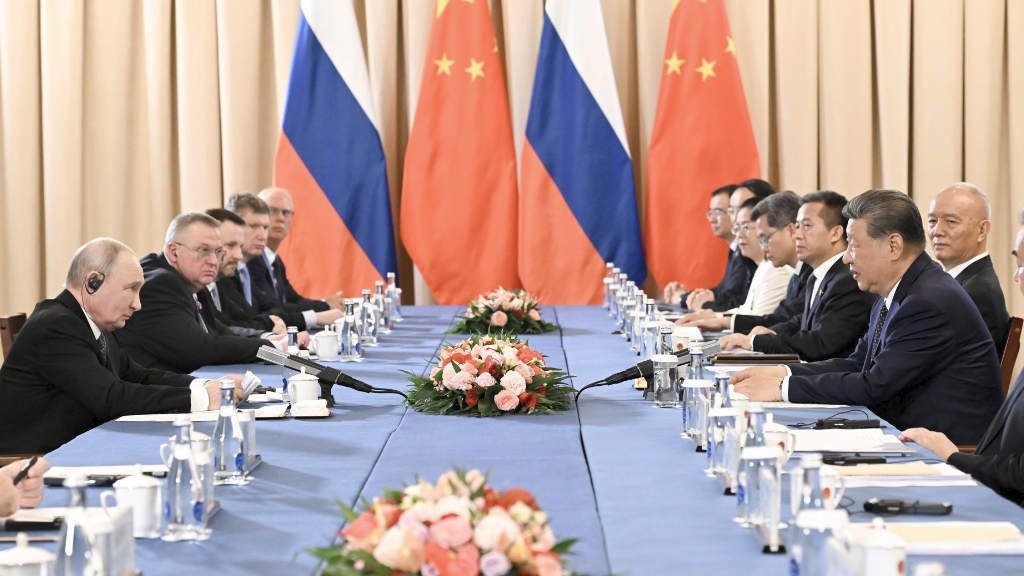

The Russian Presdient, Vladimir Putin has met with Chinese President Xi Jinping and his delegation on the sidelines of the Shanghai Cooperation Organisation annual Heads of State meetings in Bishkek on Monday (August 31).
Taking part in the talks on the Russian side were Foreign Minister Sergei Lavrov, Deputy Prime Minister Alexei Overchuk, Deputy Chief of Staff of the Presidential Executive Office Maxim Oreshkin, Deputy Chief of Staff of the Presidential Executive Office – Presidential Press Secretary Dmitry Peskov, Presidential Aide Yury Ushakov, Economic Development Minister Maxim Reshetnikov, Energy Minister Sergei Tsivilev, CEO of the Russian Direct Investment Fund (RDIF) Kirill Dmitriev, and CEO of the Rosatom State Corporation Alexei Likhachev.
This is what the Chinese President had to say:
Xi: “The foundation of our bilateral relations will only grow stronger, and we will confidently move forward to a better future. The factors of uncertainty and unpredictability are growing amid the rapid changes unseen for centuries, but the striving of nations on our planet for peace, development, cooperation and mutual benefit remains unchanged. The vital mission of the Shanghai Cooperation Organisation is to maintain stability and promote the development of our region.
I look forward to having a joint discussion with Mr President and the leaders of all other countries on the further development of our organisation aimed at strengthening solidarity and facilitating a stable and lasting growth of the SCO and enhancing its role as a stabilising factor in the international community.”
This was Putin’s response
Putin: “Mr Xi, my dear friend, I am happy that we have met again, this time in Kyrgyzstan. However, I would like to begin with the recent tragedy that has taken place in the Tibet Autonomous Region of China near the border with Nepal. It has been struck by a powerful landslide, which has claimed lives. Please, convey our deepest condolences to the victims’ families and friends and wishes for a speedy recovery to all those injured.
We are meeting just hours before the summit of the Shanghai Cooperation Organisation, which was established 25 years ago at the initiative of China and Russia. I am pleased to note that our initiative is being successfully carried forward and has clearly acquired a truly international character in the broadest sense of the word. The SCO has become a fully-fledged international organisation.
This year, we marked the 25th anniversary of the foundational bilateral Treaty of Good-Neighbourliness and Friendly Cooperation. It was Comrade Jiang Zemin who signed it back in the day. He would have turned 100 years old on August 17, and we remember him for the way he contributed to promoting Russia-China relations.
In today’s challenging geopolitical environment, Russia and China have been exemplary in promoting a comprehensive partnership and strategic cooperation in their interstate relations which are based on a solid track record of friendship, respecting sovereignty, equality, and mutual benefit.
There has been positive momentum in promoting cooperation across the board, including in the economy. We have major projects underway in energy, manufacturing, space exploration, transport and logistics. In mid-August, a Chinese container ship carried out the first regular voyage along the Northern Sea Route. Mutual deliveries of agricultural products have been rapidly expanding with a 34% increase.
Digital innovation, including artificial intelligence, offer new economic development opportunities for our countries. Together with China, we have established the World Artificial Intelligence Cooperation Organisation. This was your initiative, and we are delighted to support it and are committed to working together in this sector.
It is clear that the 30-day visa-free arrangement has been facilitating business-to-business and people-to-people contacts. You announced this initiative a year ago, on September 2, during our meeting in Beijing. And we supported it. As of today, this modality is set to remain in force until the end of 2027. It had an immediate effect since tourist flows surged by 43% in the first six months. We stand ready to work together on transforming the visa-free framework into a permanent arrangement, should China deem this feasible and advisable.
As for the latest foreign policy developments, we share close or fully convergent approaches when it comes to matters of principle. In addition to the SCO, we maintain active engagement across such international frameworks as the United Nations, BRICS, G20, ASEAN-centric formats, and of course we will continue assisting China as chair of the Asia-Pacific Economic Cooperation forum.”
Nuclear Power
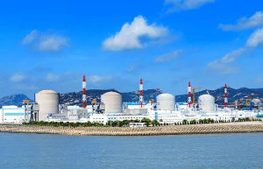
With representatives from Rosatom, and the Russian Energy Minister attending, discussion also involved the Russian building of several nuclear power units in China through major contracts between Rosatom and the China National Nuclear Corporation (CNNC). These include the Tianwan NPP in eastern China, where Units 7 and 8 are currently under active construction, following earlier units built by Russia. In addition, two Russian-designed VVER-1200 third-generation reactor units are also under construction at the Xudapu site in northeast China. These are multi-billion dollar cooperation agreements and include third-generation VVER-1200 reactors and fast neutron reactor equipment frameworks.
Finance
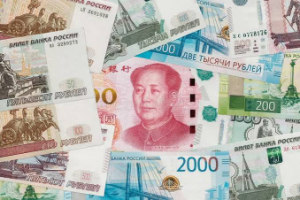
With the Russian Economic Minister and Head of the Russian Direct Investment Fund (RDIF) also participating, discussions will also have revolved around development funds and other bilateral projects. The Russia–China Investment Fund (RCIF) is a US$2 billion bilateral private equity fund established by the RDIF and the China Investment Corporation (CIC) to finance economic cooperation projects. The fund targets 70% of its deployment in Russia and the CIS, and up to 30% in China, focusing on infrastructure, transport, logistics, agriculture, mining, advanced manufacturing, and high-tech consumer segments. To date it has funded over 45 projects, including the construction of the first railway bridge over the Amur River connecting Russia and China, and investments in technology platforms such as Didi. There are other complementary financing vehicles, including the US$10 billion, RMB-denominated Russia-China RMB Investment Cooperation Fund (with China Development Bank) and the Russia-China Investment Fund for Regional Development. These target broader cross-border and regional integration.
A Trilateral Summit With Trump?
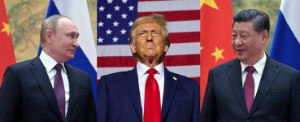
Also discussed was the possibility of arranging a Trilateral summit between President’s Xi and Putin, together with President Trump of the United States. This is because all three leaders are expected to be attending the annual APEC summit from November 18-19, which is due to be held in Shenzhen, China. Kremlin aide Yuri Ushakov said that “This issue was discussed.” A response to this suggestion will come later from the White House.
Summary
Russia and China maintain regular close contact via multiple channels, although this was the first face to face meeting between Putin and Xi since May. While the diplomatic greetings may appear bland, the actual content and what was discussed means that pending decisions on issues such as financing and energy can be fast-tracked and dealt with under the respective Presidential authority. No doubt further details of joint development progress will be announced in due course.
In trade terms, Russia-China bilateral trade reached US$240 billion in 2025 and grew by 25.6% year-on-year in the first half of 2026, reaching a total of US$134.2 billion. If that continues, bilateral trade will hit a new record high of US$168.4 billion for this year.