Русский








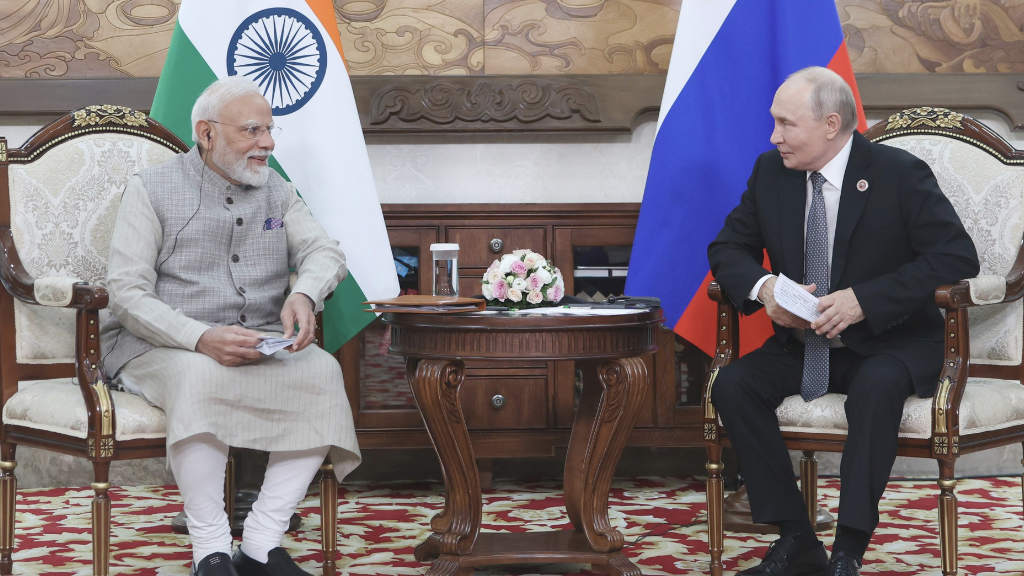

The Russian President, Vladimir Putin has met with Narendra Modi, the Prime Minister of India in Bishkek on the sidelines of the Shanghai Cooperation Organisation summit on Monday (August 31).
On the Russian side, the meeting was attended by Foreign Minister Sergei Lavrov, Deputy Prime Minister Alexei Overchuk, Deputy Chief of Staff of the Presidential Executive Office Maxim Oreshkin, Deputy Chief of Staff of the Presidential Executive Office – Presidential Press Secretary Dmitry Peskov, Presidential Aide Yury Ushakov, Minister of Transport Andrei Nikitin, Minister of Economic Development Maxim Reshetnikov, Minister of Energy Sergei Tsivilev, CEO of the Russian Direct Investment Fund Kirill Dmitriev, Director of the Federal Service for Military Technical Cooperation Dmitry Shugayev, and Rosatom CEO Alexei Likhachev.
This is what Putin had to say:
“Mr Prime Minister, friends, I am very pleased to meet with you again. This time, our meeting takes place ahead of the SCO summit, an organisation committed to deepening contacts between the countries of the Global South and East, promoting socioeconomic and cultural development in the region, and fostering a multipolar world.
I would also like to note with satisfaction that Russian-Indian relations continue to develop as a specially privileged strategic partnership. This, esteemed Prime Minister, is due in no small measure to the attention you personally devote to strengthening our bilateral ties, as well as to our business relations and the warm and friendly personal relationship between us, which is something I greatly appreciate.
Your Foreign Minister, Mr Jaishankar, recently conveyed your message during a meeting in Moscow, and I fully endorse everything contained therein. Next year, we will celebrate the 80th anniversary of diplomatic relations and, of course, we are actively preparing for the upcoming BRICS summit in New Delhi in September.
Trade and economic cooperation is showing generally positive trends: last year saw a slight decline, but in the first six months of this year, bilateral trade has already grown by 2.6%.
A week ago, the Intergovernmental Commission met in Moscow and also delivered good results.
I would also like to say a few words about humanitarian cooperation. I want to highlight that India ranks among the leaders in the number of students enrolled in Russian universities: over the past ten years, this figure has grown sevenfold – a remarkable achievement – and now it stands at almost 40,000. Cultural festivals featuring Indian and Russian culture are held regularly, with the next one planned for 2027 in India.
Tourism between our countries is also on the rise, with growth in 2025 estimated at 16%. We coordinate our efforts closely within the UN, BRICS, the G20, and, of course, the SCO. Today we have an excellent opportunity to compare notes and chart the way forward for the further expansion of Russian-Indian relations.”
This was Modi’s response:
“Your Excellency, my dear friend, I am very pleased to meet with you again today. Your visit to India last year was highly successful and remains fresh in our memory. We spent many hours together during that visit. We also organised a business forum, which was attended by major Russian companies, and thanks to that forum, our business cooperation has gained new momentum.
I am very pleased that both our teams and both our countries are working diligently to implement the summit decisions. It is gratifying to note that our cooperation continues to reach new heights, serving the interests of both nations. In doing so, we have always prioritised our national interests, the interests of our countries and our citizens, and we will continue to be guided by this same principle in the future.
We have regularly discussed the issue of Ukraine. During our last meeting, you shared detailed information with me and covered all aspects of the current situation. As you know, India supports all peace efforts in this area, and we will continue to do so. Every day that the war continues, humanity takes a step backwards; yet every step towards peace gives humanity real hope. We must move from endless war to the end of war, to the cessation of hostilities. And we must move in precisely this direction. This is crucial for all of humanity. We must resolve all problems through peaceful means; the entire world demands this. And this is India’s message, among others: India is the country of Gandhi, the country of Buddha – that is our message.
Today we will have the opportunity to discuss all of these issues. And a few days after this summit, India will host the BRICS summit. Naturally, all the citizens of our country are very much looking forward to your visit and the visit of your delegation. Your visit will strengthen our bilateral relations and further deepen dialogue and interaction within BRICS.”
Nuclear Power
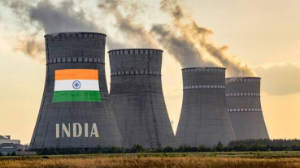
With the Russian Minister of Energy and Rosatom’s CEO in attendance, discussions will have touched on nuclear power. India and Russia maintain a deep civil nuclear partnership centered on the construction of the Kudankulam Nuclear Power Plant in Tamil Nadu and ongoing discussions for new reactor projects. Rosatom has built units 1 and 2 (VVER-1000 reactors), while units 3 through 6 are under construction with completion targeted around 2027. Proposals for a fourth phase (units 7 and 8) are also underway. Russia also provides a steady supply of low-enriched uranium for Kudankulam and cooperates on localized manufacturing of nuclear equipment and fuel assemblies. Both countries have discussed building additional Russian-designed reactors at a second site in India, along with exploring small modular reactors and floating power plants.
Transport
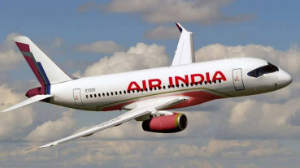
Russia’s Transport Minister was also in attendance, with Russia and India actively expanding their transport cooperation through three major trade routes: the International North-South Transport Corridor, the Northern Sea Route, and the Chennai-Vladivostok Eastern Maritime Corridor. They are additionally exploring new overland rail links through Central Asia and Iran to make cargo movement faster and more reliable, with Russian Railways also involved in developing India’s rail network. During the 12th meeting of the India–Russia Working Group on Modernization and Industrial Cooperation in New Delhi, both nations discussed direct partnerships in the railway sector. Discussions included railway infrastructure development, signaling equipment supply, and potential Russian participation in India’s high-speed and Vande Bharat train projects.
India and Russia are also expanding their aviation cooperation into civil manufacturing, focusing on co-producing the regional passenger aircraft SJ-100 and Il-114-300. Hindustan Aeronautics signed a memorandum of understanding with Russia’s United Aircraft Corporation to produce the SJ-100 civil commuter aircraft in India, as New Delhi aims to localize manufacturing and build supplier networks and maintenance expertise rather than just importing aircraft. Both regional aircraft were showcased publicly in Hyderabad, where local firm Flamingo Aerospace signed a preliminary agreement for six Il-114-300 turboprops with deliveries planned around 2028.
Military
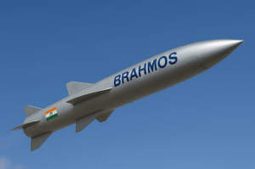
Russia’s Director for Military Technical Cooperation attended the meetings, suggesting that bilateral military cooperation was discussed. India and Russia maintain a deep, long-standing military and technical partnership centered on joint defense production, advanced weapon acquisitions, and logistical agreements, with Russia a primary supplier of military equipment for India, historically providing over half of its defense hardware. Key systems include Su-30 aircraft, T-90 tanks, and the S-400 air defense system. The flagship BrahMos supersonic cruise missile system is a major success of joint research, development, and production between the two countries, while ongoing discussions include potential local production of Russia’s Su-57 stealth fighter and a proposal for joint manufacturing of the S-500 defense system. India is also processing a proposal for five additional S-400 squadrons.
Economic Development
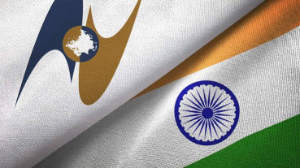
The Russian Minister for Economic Development also took part in these discussions. India is currently in negotiations with the Eurasian Economic Union (EAEU) concerning a Free Trade Agreement. A ‘Terms of Reference’ (ToR) was signed in August 2025, setting an 18-month roadmap for negotiations. Bilateral talks have advanced into core chapters covering goods, small-and-medium enterprises (SMEs), and intellectual property rights (IPR) following high-level meetings in Moscow and New Delhi. Given the timeline (although this could be pushed bank) this would imply a deal could be close sometime in early spring next year.
Finance
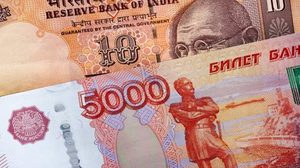
Russia’s Economic Minister and the Head of the Russian Direct Investment Fund also participated. India and Russia have set a target of US$50 billion (₹4.42 lakh crore) in mutual investments by 2030, focusing on priority projects through joint working groups and financial cooperation mechanisms. The key focus is on advanced manufacturing, critical minerals, green technology, mining, and emerging technologies. These are to be managed via platforms such as the India-Russia Joint Working Group on Priority Investment Projects, alongside past initiatives involving the Russian Direct Investment Fund (RDIF) and India’s National Investment and Infrastructure Fund (NIIF).
Summary
Russia and India maintain regular close contact via multiple channels, although this was the first face to face meeting between Putin and Xi since last December. However, they are due to meet again at the BRICS Heads of State summit on September 12/13.
While the diplomatic greetings may appear bland, the actual content and what was discussed means that pending decisions on issues such as financing and energy can be fast-tracked and dealt with under the respective Presidential authority. No doubt further details of joint development progress will be announced in due course.
In trade terms, Russia-India bilateral trade reached US$68.7 billion in the fiscal year 2024/2025 and has been growing. Should the pending EAEU FTA be agreed for next year, bilateral trade from 2027 onwards would receive a significant boost.