Русский




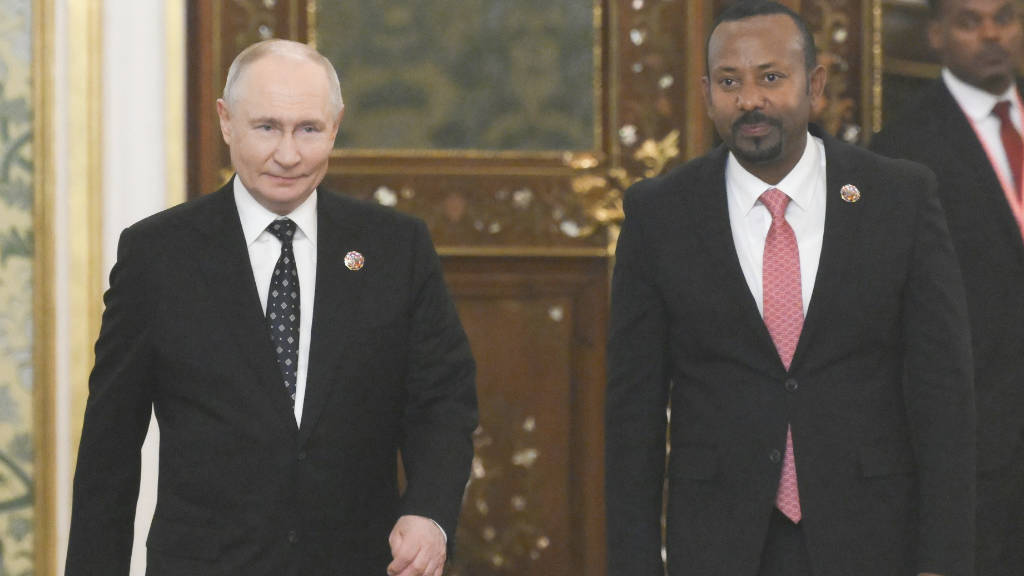
The Russian President, Vladimir Putin held discussions with Abiy Ahmed, the Prime Minister of Ethiopia on the sidelines of the 2026 Russia-Africa Summit.
On the Russian side, the meeting was attended by Foreign Minister Sergei Lavrov; Deputy Prime Minister Alexander Novak; Deputy Prime Minister – Minister of Finance Anton Siluanov; Deputy Chief of Staff of the Presidential Executive Office Maxim Oreshkin; Deputy Chief of Staff of the Presidential Executive Office – Presidential Press Secretary Dmitry Peskov; Presidential Aide Yury Ushakov; Ambassador Extraordinary and Plenipotentiary of the Russian Federation to Ethiopia and Plenipotentiary Representative of the Russian Federation to the African Union Yevgeny Terekhin; Minister of Health Mikhail Murashko; Minister of Economic Development and Russian Co-Chair of the Joint Russian-Ethiopian Commission on Trade, Economic, Scientific and Technical Cooperation Maxim Reshetnikov; Director of the Federal Service for Military Technical Cooperation Dmitry Shugayev; Adviser to the President Igor Levitin; Deputy Defence Minister Vasily Osmakov; Chief of the Main Directorate of the General Staff of the Armed Forces and Deputy Chief of Staff of the Armed Forces Igor Kostyukov; Deputy Chief of the Main Directorate of the General Staff of the Armed Forces Andrei Averyanov; Chairman of the Russian Fertiliser Producers Association Andrei Guryev; Director General of Rosatom State Corporation Alexei Likhachev; Director General of the RWB (Wildberries & Russ) international technology company and Chairman of the Russian-Ethiopian Business Council Robert Mirzoyan; and CEO of Rosoboronexport Alexander Mikheyev.
This is what they had to say:
Vladimir Putin: “I would like to once again congratulate you on your election as Prime Minister. Your country took an active part in the Russia-Africa summits in Sochi in 2019 and in St Petersburg in 2023. Our talks are taking place within the framework of your visit to the Third Russian-African Summit. I would like to thank you for finding the time to come to Moscow on this occasion too.
I appreciate the friendly nature of relations between Russia and Ethiopia and our personal contacts. They have always been substantive and constructive.
I have fond memories of our recent talks held during the BRICS Summit in New Delhi in September, during which we reviewed our positions on the key aspects of our bilateral cooperation.
I would like to note a substantial growth in mutual trade, which exceeded US$1.3 billion from January to September this year. This is more than double the figure for the whole of 2025. We have many large-scale and ambitious projects across various spheres, from energy, agriculture and industrial cooperation to space exploration, science, healthcare and education.
Russia and Ethiopia take a united stand in international affairs. We have developed our dialogue at the UN, BRICS and on other multilateral platforms. We know that in 2027 Addis Ababa will host a UN Climate Change Conference. We wish success to the organisers of this major international forum.
Russia provides all-round support to the rise of Africa as a key centre of the new multipolar world order. We will highlight the further development of trade and economic collaboration with African countries, ensuring food and energy security and developing healthcare. Following these meetings, we have approved a summit declaration and a new action plan for the Russia-Africa Partnership Forum for 2027−2029.
We have a good opportunity to continue our discussions on the main aspects of the further strengthening of multifaceted Russian-Ethiopian ties, as well as current international and regional issues.”
Ahmed Ali: “Mr President, thank you for receiving us. I have brought you a copy of Medemer in Russian. Medemer is our philosophy of synergy. It guides how we govern, build our economy, and work as partners. I would like to pass it to you.”
RPA: Medemer is a socio-political philosophy and book series introduced by Ethiopian Prime Minister Abiy Ahmed that translates to “synergy” or “coming together” in Amharic. It serves as the core foundational ideology of Ethiopia’s ruling Prosperity Party. It emphasizes that national unity does not mean erasing ethnic, religious, or cultural differences, but harmonizing them into a collaborative framework.
Ahmed Ali: “More than 20,000 Ethiopians were educated in the Soviet Union and Russia. Now, Russian leaders can read Ethiopian ideas and Ethiopian beliefs in their own language, and this is a great opportunity to strengthen our bilateral relationship.
In Delhi, we discussed our partnership and today I would like us to agree on a few key areas.
The first one is nuclear cooperation. Let us set dates for feasibility work and examine financing options. Training Ethiopian engineers and regulators should proceed alongside that work. I would also like cancer diagnosis and treatment to become a practical priority in our nuclear operation.
I would really like to begin with specialist training and enabling access to medical isotopes because nuclear science – not only for energy but also for health – might provide great potential and capabilities for Ethiopia to reduce poverty and increase our energy generation which might help so many developmental sectors.
As you have said, we have discussed many bilateral and multilateral issues. We will continue discussing and sharing our perspectives. We will work together for the benefit of our citizens.
We are happy to be working with Russia, and I believe through this process, our bilateral trade will increase significantly. It has gone up this year, but we can go further to increase our bilateral trade because there are lots of opportunities from the Ethiopian side as well.
We would like to export Ethiopian goods to Russia. If there are no difficulties on your end, we really want to expand our export ties and through this, our historical, cultural, and religious relationship as well.”
Ethiopia’s Economic Development
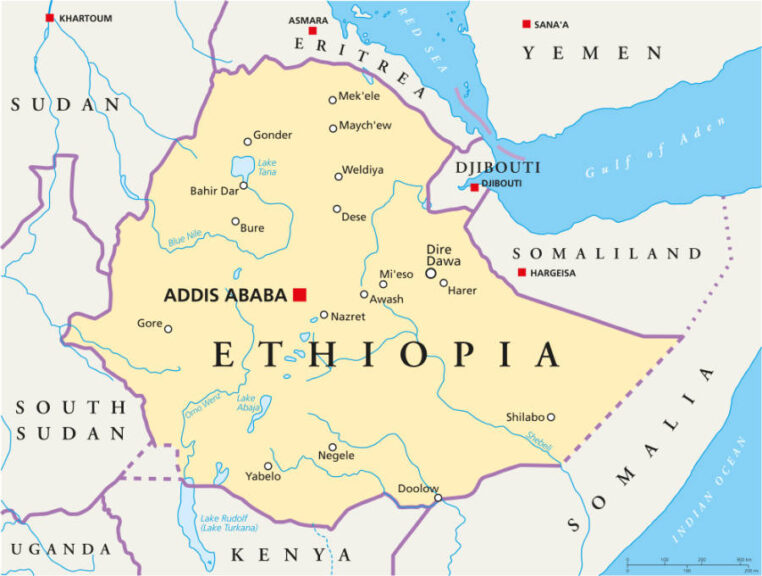
Ethiopia is in the Horn of Africa, strategically located in the heart of the African continent. With a population of about 139 million, Ethiopia has a GDP (PPP) of US$561 billion, a GDP per capita (PPP) of US$4,996 and has a low ranked Human Development Index. Ethiopia’s 2026 GDP growth forecast rate is 9.2%.
Ethiopia’s economy is diverse, with agriculture as its backbone, employing 70% of the workforce and contributing 40% to GDP. Key exports include coffee, cereals, pulses, oilseeds, khat, and livestock. The textile and apparel industry is growing rapidly, supported by government initiatives and foreign investment in industrial parks like Hawassa. Manufacturing is expanding, focusing on food processing, leather, footwear, and cement. Ethiopia is a leader in renewable energy, particularly hydroelectric power, with the Grand Ethiopian Renaissance Dam (GERD) as a key project. The mining sector, focused on gold, gemstones, tantalum, and potash, has untapped potential. Services like banking, telecommunications, and tourism are growing, and heavy investments in infrastructure, including roads and railways, are driving construction. Additionally, Ethiopia is focusing on digital transformation in sectors like education, healthcare, and banking through its growing IT industry.
Ethiopia is a member of several free trade areas and organizations. As a signatory to the African Continental Free Trade Area (AfCFTA), the country aims to create a single continental market for goods, services, and investments, boosting intra-African trade. Ethiopia is also part of the Common Market for Eastern and Southern Africa (COMESA) and the Greater Arab Free Trade Area (GAFTA), which promote trade and economic integration. Ethiopia became a member of the World Trade Organization (WTO) in 2020, and it participates in the Tripartite Free Trade Area (TFTA), which brings together several regional economic communities. Ethiopia has signed numerous Bilateral Investment Treaties (BITs) to encourage foreign investment. The country benefits from China-Africa Cooperation (FOCAC), which supports trade partnerships and infrastructure projects. In 2024, Ethiopia joined BRICS as a full member.
Russia, Ethiopia Bilateral Trade & Investment
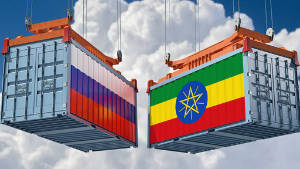
Bilateral trade between Russia and Ethiopia reached US$435 million in 2025, tripling over the past three years. Ethiopia exports mainly coffee and dried vegetable products to Russia, while Russia exports mainly wheat, and grains. However, this relatively simple historic trade is about to become rather more dynamic.
Nuclear Energy
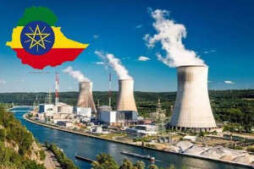
In September 2025, Ethiopia took a historic step by signing a nuclear power plant development action plan with Russia. The agreement between the Russian State Atomic Energy Corporation (Rosatom) and Ethiopian Electric Power (EEP) was formalized in Moscow. Rosatom, Russia’s nuclear power agency, is conducting a feasibility study to develop a NPP in Ethiopia. This will assess Ethiopia’s non-energy sector to identify how nuclear technology can address the country’s economic needs. This analysis will help compile a list of potential users of these technologies, laying the groundwork for a market for commercial products and services based on potential NPP capabilities.
Ethiopia’s nuclear ambitions align closely with its broader US$30 billion infrastructure plan spearheaded by Prime Minister Abiy Ahmed. Under this initiative, Ethiopia plans to operate two nuclear reactor units between 2032 and 2034, each with a capacity of around 1,200 MW. Small Modular Reactors (SMRs) are also under consideration for decentralized applications and remote areas.
The Center for Nuclear Science and Technology (CNST)
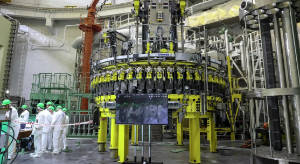
The Center for Nuclear Science and Technology (CNST) is a project separate from the NPP. In November 2024, a Rosatom subsidiary and Ethiopia’s Ministry of Innovation and Technology signed a contract for the development of a feasibility study for the centre. Rosatom is analysing Ethiopia’s non-energy economic sectors to determine how nuclear and radiation technologies can meet the country’s needs beyond power generation – in industry, medicine, and agriculture. Based on this analysis, a list of potential consumers of these technologies will be compiled, laying the foundation for a market of commercial products and services based at the centre. In addition, a site selection process is underway: possible locations are being identified and preliminary engineering surveys are being conducted. The centre is expected to include a research reactor, a laboratory complex, and a nuclear medicine centre.
Agriculture
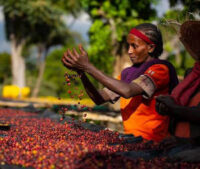
Ethiopia and Russia are stepping up efforts to deepen cooperation in agriculture, with a focus on boosting trade in coffee and improving access to key agricultural inputs. Possessing Africa’s second largest population, Ethiopia is also having to deal with global warming stresses. Collaboration with Russia includes bioengineering of crops to more drought-resistant varieties. Discussions centred on increasing productivity through the introduction of modern mechanisation and advanced farming solutions.
Ethiopia is also increasing its imports of Russian fertilisers: in 2025, Russia supplied approximately 500,000 tons, meaning Russia’s share in Ethiopia’s fertiliser imports rose from 22% to 28% in H1 2026.
Digital Trade
The Digital trade sector is also starting to take off. The Wildberries & Russ joint venture (RWB LLC) signing a cooperation agreement with Ethiopia’s sovereign wealth fund, Ethiopian Investment Holdings (EIH) in late 2025. The agreement provides for joint efforts to localize RWB products for the Ethiopian market, as well as partnership and support through investment and technology initiatives that promote e-commerce and infrastructure development in Ethiopia.
RWB CEO Robert Mirzoyan has previously said “We plan to tap the Ethiopian and other African markets in the near future. The Russian and Ethiopian markets are very appealing and offer very good export potential for manufacturers in both countries. RWB’s entry will bring the expertise of an international digital platform to the country’s logistics infrastructure, boosting the development of entrepreneurship and the advertising market.”
Manufacturing
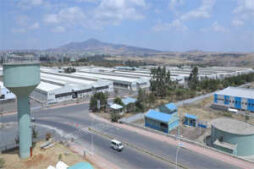
That attitude is reflected in the fact that given Ethiopia’s membership of AfCFTA and COMESA, it can become an attractive base from which Russian businesses and potential Russia-Ethiopian JV’s can collaborate to reach the wider African market. To this end, Russia is interested in the Bole Lemi Special Economic Zone, which has previously been visited by Russian Ministers. Both sides discussed expanding cooperation across a wide range of sectors, including agricultural and energy machinery, pharmaceuticals and unmanned technologies. The parties agreed to further examine conditions for localising Russian manufacturing facilities at the site, signalling a move towards deeper industrial integration and technology transfer.
Another landmark manufacturing project is the planned construction of an aluminum smelter with an annual capacity of 500,000 tons. In November 2025, at a meeting of the Russian‑Ethiopian intergovernmental commission, UC Rusal and Ethiopia’s sovereign fund Ethiopian Investment Holdings signed a memorandum of understanding. The cost of the first phase is estimated at approximately USD 1 billion, with a construction period of 3-4 years. The plant could use alumina from Rusal’s Guinean assets as raw material and rely on the hydropower generated by the Grand Ethiopian Renaissance Dam (GERD) as its energy base, enabling the production of ‘green’ aluminum with a low carbon footprint. Preliminary surveys and a feasibility study are already underway.
Defence
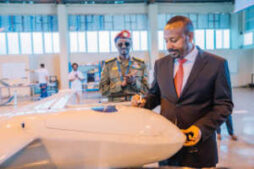
Russia and Ethiopia have a historic relationship in the military and defence sectors, going back to the days of the USSR. Dmitry Shugaev, Russia’s Director of Military-Technical Cooperation (FSMTC) was present at the meeting and stated that “This is an air defense and aviation issue, especially since our Mi-24 and Mi-17 helicopters are in service. Unmanned aircraft are a whole new segment of weapons now coming to the fore.”
He described Ethiopia as one of the leading African countries seeking to develop military-technical cooperation with Russia. According to him, a significant portion of Ethiopia’s Russian- and Soviet-made military equipment is in need of modernisation and repair – primarily T-72 tanks. A request has also been recorded for the construction and modernisation of a plant in Bishoftu that can manufacture and repair armoured vehicles.
While in terms of the actual figures – less than US$500 million in trade – the Russia-Ethiopia relationship is relatively small, it is showing considerable promise. While at present bilateral agriculture trade dominates – Ethiopia exports mainly coffee and dried vegetable products to Russia, while Russia exports mainly wheat, and grains – this is set to change in coming years.
This will take time to develop, however the successful planned operations of NPP by 2032 – just six years from now – will provide significant electricity capacity and sustainability to Ethiopia’s manufacturing sector. At that point we are likely to see a trade boom and more Russian investment – with an eye on the larger African market.
In the meantime we can expect to see a continuation of trade development, notably agricultural driven involving both Ethiopian crops and Russian fertilizers. Smaller manufacturers may also be attracted to enter the Ethiopian market as the Wildberries & Russ venture starts to make inroads into the domestic market with the natural development of this being the eventual establishment of local businesses and joint ventures – with a special economic zone already available.