Русский






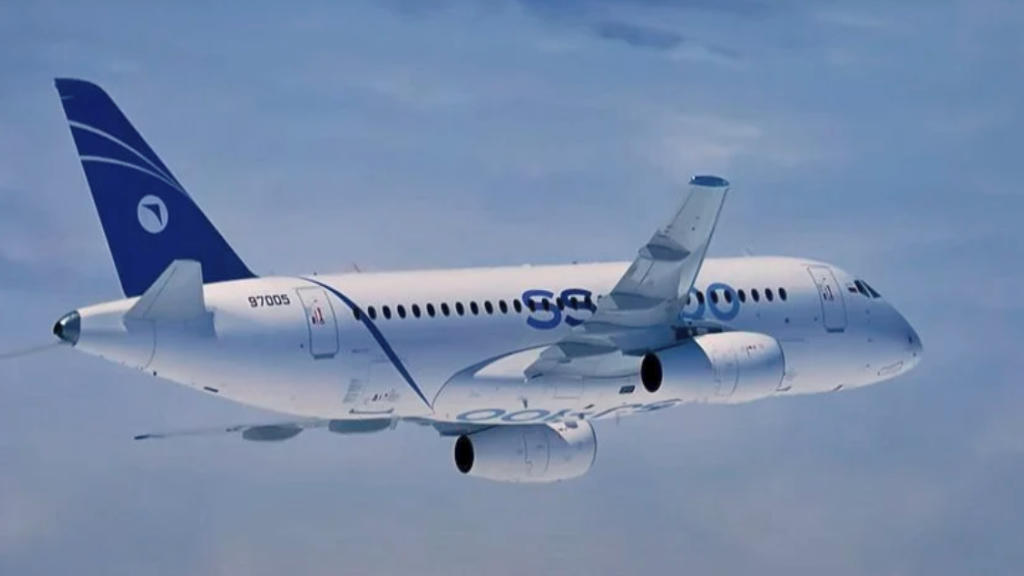

Russia in recent years has made a major breakthrough in aircraft manufacturing, developing systems and expertise that could be exported to foreign markets, including China and Brazil, Industry and Trade Minister Anton Alikhanov has stated.
Speaking at the International Russian Engineer Congress, Alikhanov said that “Our country is the only one now producing equivalents to the systems that global monopolies supply to all aircraft manufacturers worldwide. The same applies to our engines, which we are bringing up to a performance level comparable to those from Pratt & Whitney and GE. I am not suggesting we could displace them as suppliers to Boeing or Airbus. However, why not collaborate with China’s COMAC or Brazil’s Embraer?”
Alikhanov also mentioned cooperation with the United Arab Emirates in the areas of aviation and shipbuilding. “We are also attracting foreign investors to our projects, such as Aurus. As a result, an aviation and shipbuilding division is currently being developed under this umbrella brand, with the involvement of investors from the UAE.”
Aurus is a luxury car brand, partially invested in by Abu Dhabi’s Tawazun Holdings. There is some cross-over in component parts manufacturing between the auto and aviation industries, Rolls-Royce being a classic example.
Vadim Badekha, CEO of United Aircraft Corporation (UAC), part of Russia’s Rostec SOE, has also previously said that Chinese aircraft manufacturers going forward could take an interest in the systems developed for the SJ-100 and MC-21 aircraft as part of the import-substitution initiative. Badekha noted that all aircraft currently manufactured in China comprise 90% Western equipment, describing the approach as problematic.
China is also scaling up its domestic aviation component manufacturing and localization strategy to reduce reliance on Western suppliers amid geopolitical and supply chain pressures. Driven by a fast-growing domestic travel market-projected by Boeing and Airbus to require over 8,000 new passenger aircraft in the coming decades-Beijing views localizing production as vital to capturing market share and insulating its airlines from foreign trade restriction. Partnering with Russian technology and UAE financing could be a way forward.