Русский




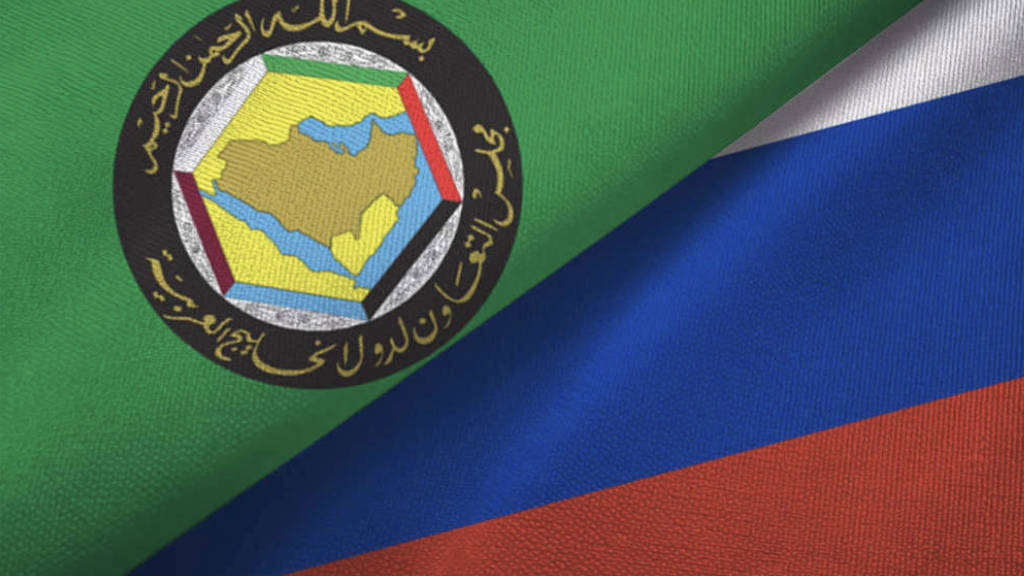
The Russian Foreign Minister, Sergey Lavrov; has been attending the 9th Joint Ministerial Meeting of the Russia- Gulf Cooperation Council Strategic Dialogue, which is being held for the first time in Bahrain.
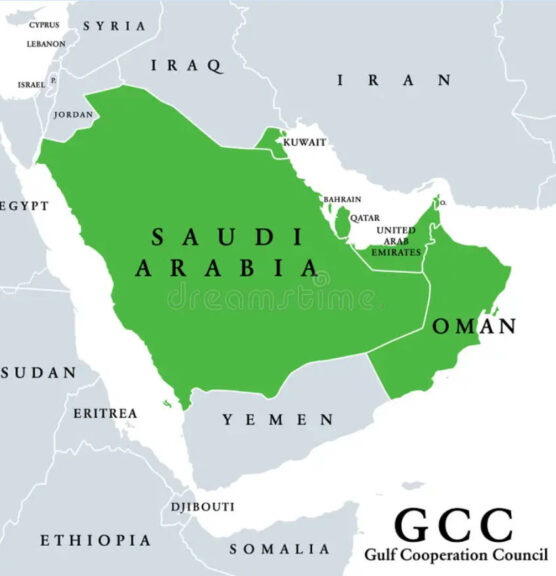
The Gulf Cooperation Council (GCC) is a political, economic, and military alliance of six Arab nations in the Persian Gulf, including Bahrain, Kuwait, Oman, Qatar, Saudi Arabia and the United Arab Emirates (UAE). Formed in 1981 and headquartered in Riyadh, its roles are to coordinate economic, financial, trade, and custom policies, develop scientific, technical, and industrial cooperation, and to strengthen regional security and defense integration.
Speaking after the discussions, Lavrov made the following comments, in which he touched upon Russia-GCC trade, Visa free travel, the Gas Exporting Countries Forum, and the security issues in Iran, Yemen, Jordan, Syria, Libya, Lebanon, Sudan, Palestine, and the United Nations. This is essential reading for anyone involved in Middle East affairs.
Lavrov: “During our discussions, we paid special attention to reviewing our relations and their prospects. We discussed our trade and economic ties and expressed support for realising the considerable potential for cooperation in areas such as the manufacturing industry, agriculture, transport, education, and tourism. Tourism contacts got a boost from four of the six GCC member states signing visa-free travel agreements with the Russian Federation covering holders of all types of passports. We hope that the two remaining members of the council will join these arrangements as well.
We noted a steady growth in our trade with the GCC countries. Last year, our trade was up by 45% to nearly US$19 billion. We share the view that we can do much better. Bilateral intergovernmental commissions on trade and economic cooperation, which Russia has established with each of the six member states, play a particularly important role.
In addition to bilateral mechanisms, there is also a multilateral Joint Action Plan on Trade, Economic, and Investment Cooperation, which was signed in 2023 for a five-year period through 2028. In addition to these formats, we closely interact on other platforms within the Strategic Dialogue, including OPEC+ and the Gas Exporting Countries Forum. The next Gas Exporting Countries Forum will take place in Moscow next week. We hope that the leaders of the Gulf countries who received our invitations will be able to attend.
Our cooperation extends to universal international organisations, such as the United Nations. Bahrain currently holds a position of a non-permanent member of the UN Security Council. We work closely together on what are, frankly, challenging issues arising from the developments unfolding in various regions of the world, particularly the Gulf region, the Arabian Peninsula, and the Red Sea. We approach these discussions from a common standpoint that includes respect for international law and for the principles of the UN Charter, not selectively, as some do, but understood as an indivisible and interdependent whole. We advocate approaches that give priority to addressing underlying causes of every conflict.”
Iran
“We used this perspective to review the situation in the region. We advocate unconditional respect for existing agreements. Unfortunately, I can’t say our Western colleagues do. Nevertheless, it is essential to remove the underlying causes of the developments in and around the Strait of Hormuz, including by implementing the agreements between the United States and Iran under what is known as the Islamabad Memorandum, which we all welcomed. We believe this memorandum contains everything that is necessary to take the situation away from where it is now and is teetering on the brink of a renewed full-scale war and return it to a political and diplomatic track.
We welcome the efforts of international and regional mediators from the Gulf countries, among others, who are seeking to help make this process sustainable and prevent a slide into yet another open confrontation.”
Yemen
“We also discussed the deteriorating situation in the southern Arabian Peninsula. We mentioned the situation in the Republic of Yemen earlier. Alongside our GCC partners, we advocate a political and diplomatic solution to this crisis. We believe that all the necessary conditions are in place, including the 2023 roadmap developed at the initiative of Saudi Arabia.
We spoke in favour of taking a broader approach to addressing security issues in the region. We believe it is important to work towards establishing inclusive security architecture that would encompass all the Gulf countries – the Arab states and the Islamic Republic of Iran – as well as their immediate neighbours, particularly Iraq and Jordan. External actors that are guided not by their own unilateral geopolitical designs, but above all by the interests of the countries of the region should support this process.
Russia has been promoting this kind of regional peace and security architecture for decades. I am referring to our Concept of Collective Security in the Persian Gulf Region. We are ready to harmonise it with other existing initiatives, including those put forward by the GCC in 2023, the People’s Republic of China, and the Islamic Republic of Iran. At some point, it would make sense, following preliminary expert-level consultations, to consider convening a forum to launch the development of what we firmly believe is much-needed security architecture for all the countries concerned.
Palestine
We discussed the Palestinian issue at length. Everyone is deeply concerned by the attempts to pull the plug on the creation of a Palestinian state. Both we and our GCC partners adamantly reject this approach. A colleague of mine just reaffirmed our commitment to UN decisions on the establishment of a Palestinian state within the internationally agreed parameters. Unfortunately, at this point, we are far from achieving this goal.
There have been attempts to move incrementally. This was one of the reasons why we agreed to the adoption, by the UN Security Council in 2025, of a resolution supporting President Donald Trump’s plan for the Gaza Strip. Our Chinese friends and we had doubts as to whether this was a plausible approach, since it was entirely detached from the goal of establishing a Palestinian state. However, taking into account the request of the Palestinians themselves, we did not oppose the resolution. A year has passed, and, unfortunately, President Trump’s plan remains on paper. The provisions set out in that resolution and in President Trump’s plan regarding how the Gaza Strip is to be administered are not being respected. In fact, the exact opposite is happening. So, we agreed today to continue working together at the UN to secure justice for the Palestinian people.
United Nations
We discussed various aspects of the situation in Syria, Libya, Lebanon, and Sudan as well. All these countries face difficulties that, in one way or another, affect the interests of our GCC friends. We advocate the implementation of the UN Security Council resolutions concerning these conflicts, of which there is more than one in each case. There is much criticism of the UN these days claiming that the permanent members of the Security Council are failing to fulfil their duties and do not feel responsible for ensuring that the Council operates smoothly and effectively and delivers results. Here are some examples to back it up: resolutions exist on every issue I just mentioned, yet the overwhelming majority of them remain on paper.
This is the main cause of the UN Security Council’s ineffectiveness. Many believe they can agree to a compromise now and simply disregard it later. That is precisely what happens. In the overwhelming majority of cases, this is how the West behaves.
In accordance with the rotation principle, the next meeting of the Strategic Dialogue will be held in Russia. Next year, Saudi Arabia will assume chairmanship to replace Bahrain in this position.
In conjunction with our friends, we will get busy with preparations for the next ministerial meeting and do our best to extend hospitality no less warm than the kind we received here.”
Russia-GCC Multilateral Trade
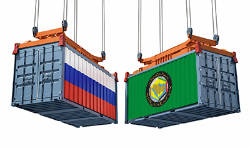
Much of the Russia-GCC discussions appear to have revolved around the various Middle East conflicts that remain persistently active. To that end, the military and security dimension to Russia and Saudi Arabia’s relationship will be key here as these are the two largest economic and military powers taking part in this forum. Continuing diplomatic and security measures, including Russian military exports, can be expected from Moscow towards the region to combat these threats.
Otherwise, the overall trade news was significant – a 45% year on year increase in Russia’s trade with the GCC countries to reach about US$19 billion. That can broadly be segmented as follows:
| Country | Russia 2025 Bilateral Trade Value (US$) |
| Bahrain | 115 million |
| Kuwait | 1.7 billion |
| Oman | 500 million |
| Qatar | 100 million |
| Saudi Arabia | 4 billion |
| UAE | 13 billion |
While there have been disruptions caused mainly by the flow of oil via the Strait of Hormuz, that has also now been recognised by all regional partners and Russia as a choke point. As a result, the importance of the INSTC corridors to the north of Iran have become a key strategic necessity as moves are being made to ensure regional oil from both Iran and Saudi Arabia have a secondary corridor to transit oil and gas supplies. That infrastructure is now being built as a priority across both Saudi Arabia itself and Iran. These will have the effect of relocating energy supplies away from NATO’s reach and bring them more under Russia’s near-abroad influence via the Caspian Sea.