
 Русский




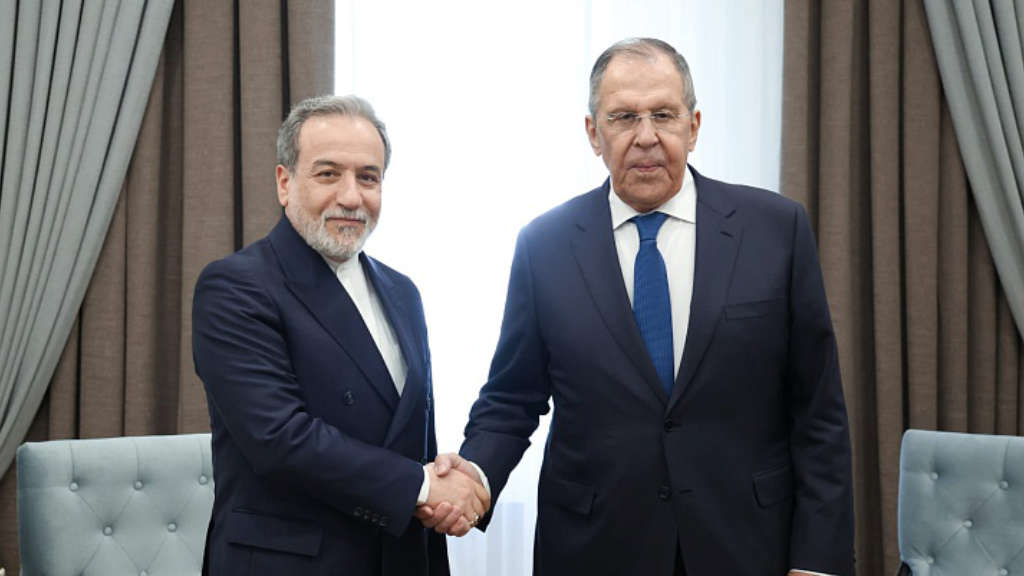

Russia’s Foreign Minister Sergey Lavrov met with Abbas Araghchi, the Iranian Foreign Minister on July 24. They were both participating at the Council of Foreign Ministers meeting of the Shanghai Cooperation Organisation member states in Cholpon-Ata (Kyrgyzstan).
Araghchi had been in the building that a joint United States-Israel military exercise bombed in Tehran, killing the Iranian Supreme Leader Ali Khamenei, several other senior officials, and seriously wounding his successor, Mojtaba Khamenei.
Lavrov and Araghchi discussed the current escalation of the conflict in the Persian Gulf and the prospects for a peaceful settlement of the conflict. The Russian side emphasised the importance of the swift conclusion of sustainable agreements on a cessation of hostilities in the interests of restoring stability, security, and unimpeded navigation in the region. The ministers also addressed several key issues on the bilateral agenda.
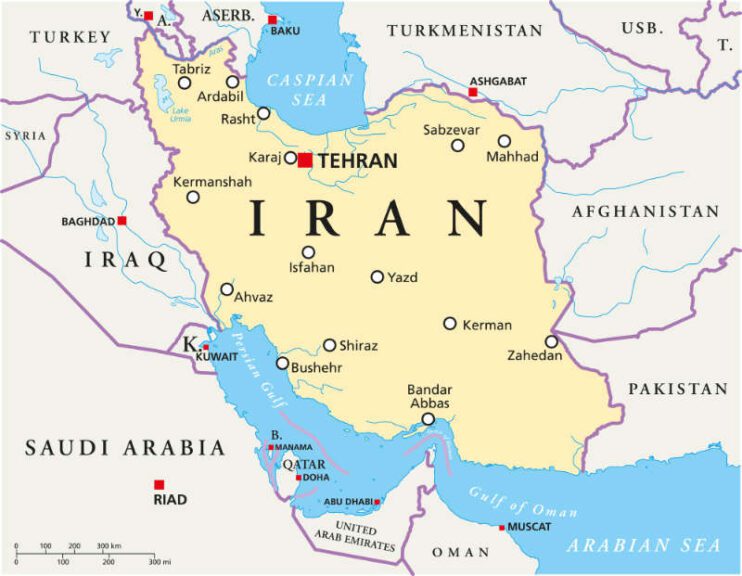
Against the backdrop of risks to shipping in the Strait of Hormuz, market participants are considering alternative routes, including increased use of the North-South International Transport Corridor. As a result, in the first four months of 2026, cargo traffic on the North-South ITC route increasing by 68% along the routes leading to the Caspian Sea ports.
Key to this is the construction of the Rasht-Astara railway line, which will further underpin rail connectivity between Russia and Iran via Azerbaijan. Completing this has now become a priority with Russia-Iran rail freight volumes expected to reach 15 million tonnes by 2028.
Russia and Iran are also involved in discussions concerning nuclear power, with a planned eight NPP being discussed. Contemporary NPPs are constructed to use nuclear material that cannot be repurposed to manufacture weapons. Providing Iran with nuclear power capabilities would also enable the country to further develop its already significant industrial base and to become a net electricity exporter. That could be beneficial to neighbouring Pakistan’s Baluchistan Province, which is undeveloped, poor, and subject to Islamic Fundamentalism. Enabling such regions to generate wealth creation instead of conflict would be a significant win for both countries – and China, which also wants to see Pakistan industrialize.
Iran signed an agreement with the Eurasian Economic Union (EAEU), including Russia, Armenia, Belarus, Kazakhstan, and Kyrgyzstan, in 2023, which eliminated 90% of tariffs on traded goods. Iran is also a full member of BRICS and the Shanghai Cooperation Organization (SCO), offering preferential trade opportunities. China remains Iran’s largest trading partner, boosting the country’s trade prospects in Asia. Iran has entered into several bilateral free trade agreements with neighbouring countries, including Iraq, Afghanistan, and Turkiye, focusing on energy, agriculture, and manufacturing products, which helps mitigate the impact of international sanctions, although the uncertainty regarding the position of the United States over Iran remains both unclear and erratic.
Iran’s bilateral trade relationship with Russia has shown steady growth over successive years, increasing by 13% to reach US$5.2 billion in 2025. The two countries have a US$10 billion bilateral trade target to reach by 2030, with the Iran-EAEU FTA and Iran’s involvement in BRICS and participation in key infrastructure projects such as the INSTC likely to help expedite this. Despite the problems in the Persian Gulf, bilateral trade with Russia and the Eurasian Economic Union has been something of a lifeline for Tehran and is expected to continue a growth trajectory during 2026.
It should be noted that the United States meanwhile, is a beneficiary of the attacks on Iran, as disruptions to oil shipments from the Middle East to Europe in particular are bending European politicians to acquiesce by both increasing and being subjected to longer – term energy imports from the United States itself. European Union imports of crude oil from the United States reached US$36.17 billion during 2025, while US LNG exports to the EU now make up 58% of the bloc’s total usage. Maintaining a strangle-hold on Middle eastern supplies to Europe is very much to the United States advantage, suggesting that until the United States is convinced it has a chokehold on EU energy supplies the conflict with Iran and the closing of the Strait of Hormuz can be expected to continue.
The key for both Russia and Iran is to continue to integrate Iran into both as a logistics centre with the INSTC, as well as secure energy supplies to the Eurasian continent. That has key implications for Afghanistan and Pakistan, both of which remain problematic but if bought under better security control have much to offer both South and Central Asia.