 Русский




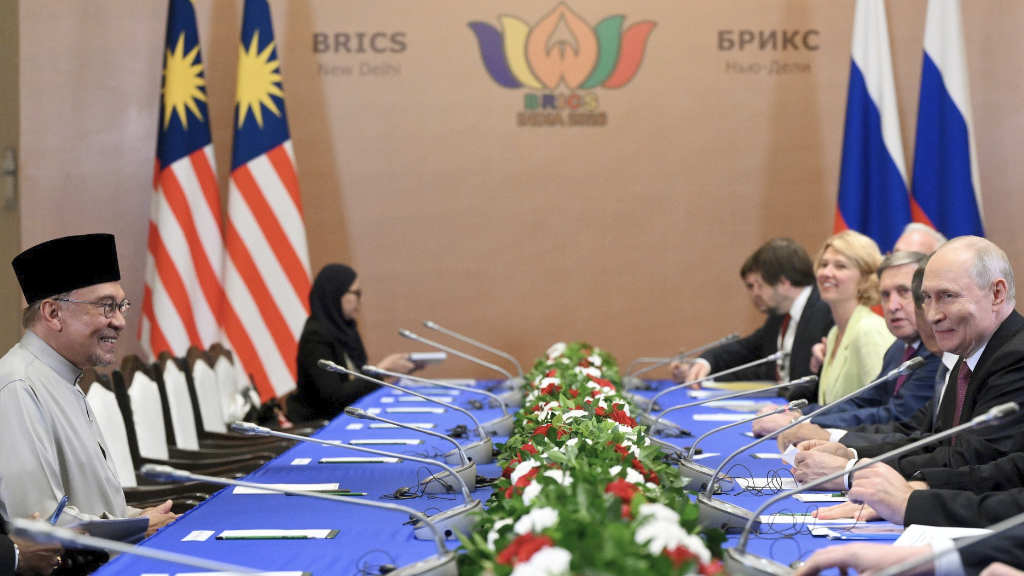

The Russian President, Vladimir Putin has met with Anwar Ibrahim, the Prime Minister of Malaysia on the sidelines of the BRICS summit in India. Both sides bought significant delegations.
The Russian delegation at the meeting included Foreign Minister Sergey Lavrov; Aide to the President Yuri Ushakov; Minister of Agriculture Oksana Lut; Minister of Economic Development Maxim Reshetnikov; Director of the Federal Service for Military Technical Cooperation Dmitry Shugayev; Chief Executive Officer of the Russian Direct Investment Fund Kirill Dmitriev; First Deputy Minister of Energy Pavel Sorokin; Deputy Governor of the Central Bank Vladimir Chistyukhin; Director General of the Roscosmos State Space Corporation Dmitry Bakanov, and Director General of State Atomic Energy Corporation Rosatom Alexei Likhachev.
This is what Putin had to say:
“Mr Prime Minister, friends, I am very glad to see you. It has been a long time since our last meeting. First of all, I would like to ask you to convey my warmest regards to the Supreme Ruler of Malaysia, Sultan Ibrahim – we had the pleasure of meeting in Moscow this May.
We highly appreciate the high level and truly friendly nature of relations between Russia and Malaysia. Today, we meet within the BRICS framework – a platform where the outlines of a new, equitable and democratic world order are being shaped. We welcome Malaysia’s joining the group as a partner country, which took place during our chairmanship in 2024.
Next year will mark 60 years of diplomatic relations between our countries, and we approach this significant milestone with a wealth of positive experience of cooperation and a solid foundation for its further expansion.
Contacts are developing dynamically across the security councils, parliaments, foreign ministries and other relevant agencies. Recently, in August, the fifth meeting of the Joint Russian-Malaysian Commission on Economic, Scientific, Technical and Cultural Cooperation was held in Vladivostok.
Last year, trade between our countries increased by 12.9 percent – a very encouraging figure.
We attach great importance to our cooperation in education, science, technology and tourism. Today, we have the opportunity to discuss priority areas of our cooperation in all these areas. Once again, I am very glad to see you and to have the opportunity to speak with you.”
This was Ibrahim’s reply:
“Thank you, Mr. President. And thank you to the delegations. The ministers here were really appreciative that we can join in this meeting. Some of our issues that we have agreed, we are proceeding very fast on. For example, air connectivity: we have cleared everything and we are waiting for you to start the flights. The same also goes for energy. You have been very supportive of our cooperation in the energy sector, with MyPOWER and Rosatom.
As you know, it is a big thing in Malaysia that the President and Russia supported our Petronas moves to expand our activities. Thankyou very much.”
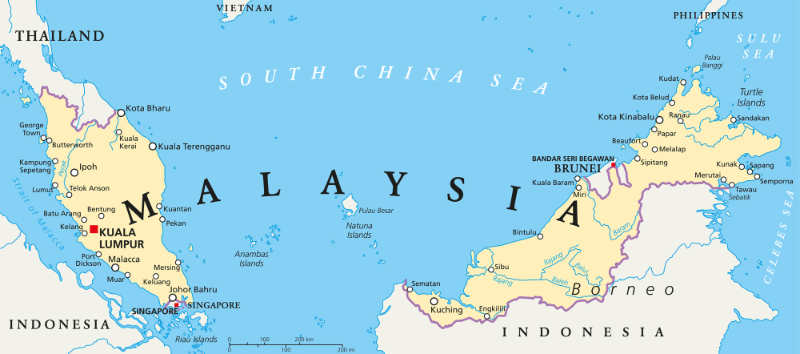
Malaysia is strategically situated on the key Straits of Malacca shipping route that links the Pacific Ocean to the east with the Indian Ocean to the west.
Malaysia’s primary output is significant since the country is one of the world’s biggest suppliers of commercial hardwoods, a significant producer of rubber and palm oil, and an exporter of significant amounts of natural gas and petroleum. However, in order to support its economic expansion, Malaysia has placed an increasing emphasis on export-oriented manufacturing. Malaysia has drawn significant international investment, particularly from Japan and Taiwan, by leveraging its comparative advantages, which include a relatively cheap yet educated labour force, well-developed infrastructure, political stability, and an undervalued currency.
Malaysia is a key member of the ASEAN trade bloc, which also provides FTA with Australia, China, India, Japan, New Zealand, and South Korea. Malaysia also has agreements with fellow Islamic nations Pakistan, and Turkiye. The Developing Eight (D-8) Preferential Tariff accords (PTA) and the Trade Preferential System-Organization of Islamic Conference (TPS-OIC) are two more completed trade accords. Malaysia currently has the following negotiation tracks: Malaysia-Iran Preferential Trade Agreement (MIPTA), Malaysia-European Free Trade Area Economic Partnership Agreement (MEEPA), and Malaysia-EU Free Trade Agreement (MEUFTA). It has also applied to join the BRICS.
Malaysia has a population of 33.2 million, with a GDP (PPP) of US$1.6 trillion, a GDP per capita (PPP) equals US$46,968, while GDP growth is estimated to be 6% for 2026.
Malaysia remains a key importer of Russian agricultural products, bringing in grains, oilseeds, meat, and dairy products. In return, Russia receives palm oil, rice, and fruits from Malaysia. Energy resources, primarily oil and gas, along with metals and chemical products, form the crux of exports from Russia to Malaysia. Malaysia reciprocates with exports of cars, electronics, rubber, and palm oil, agricultural products and food.
Russia-Malaysia bilateral trade grew by 13% in 2025 to over US$3.6 billion, with agricultural cooperation emerging as a key breakthrough area.
In accordance with the attendees at this meeting, we provide an update in the following areas:
Agriculture
A major milestone was reached when Russian turkey and chicken meat, meeting halal certification standards, began appearing on Malaysian store shelves from May this year, following Malaysia’s approval of Russia’s Halal standards and certification processes. Agencies like Russia’s Rosselkhoznadzor and Malaysian counterparts maintain talks to establish mutual recognition of standards and direct procurement mechanisms, with this contributing a large part to the rise in bilateral trade.
Malaysia continues to supply key agricultural and resource-based reciprocals, such as palm oil, palm kernel products, and latex materials.
This Russian export trend has continued. Russia’s agricultural exports to Malaysia rose significantly, growing 1.6-fold year-on-year to date this year. Trade in chemical and agricultural support products are also a primary driver, following major jumps in Russian fertilizer supplies to Malaysia.
Russian Far East Developments
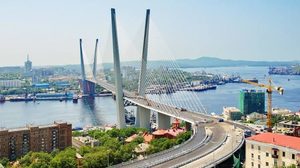
During the 5th Russian-Malaysian intergovernmental commission in Vladivostok in August 2026, both sides agreed to develop Special Economic Zones and joint projects in the Russian Far East. Russia’s FESCO Transport provides direct shipping between Malaysia and Vladivostok with both sides looking to expand their trade and the logistics between them.
Finance
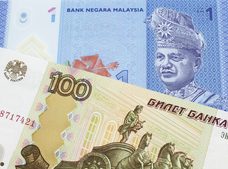
Malaysia and Russia are expanding their financial and economic cooperation in 2026 through strategic initiatives focused on Islamic finance, alternative payment systems, and bilateral trade mechanisms. The Securities Commission Malaysia (SC) is engaging with Russian counterparts to promote Malaysia’s Islamic capital market.
Plans are also underway for Malaysian delegations to visit Central Asia and Russia to assess market readiness under Malaysia’s internationalisation agenda. These efforts align with Malaysia’s Capital Market Masterplan 2026–2030 to bridge Russian investors with transparent Shariah-compliant financial ecosystems.
Both nations are exploring trade settlements using the Malaysian ringgit and Russian ruble to reduce reliance on Western financial infrastructure and are also discussing alternative payment corridors. For example, Bank Negara Malaysia and Russian financial institutions are discussing mechanisms to minimize dependency on traditional systems like SWIFT. The Malaysian Prime Minister Anwar Ibrahim and President Vladimir Putin also agreed at this meeting to establish a fast-track framework for bilateral agreements.
Military
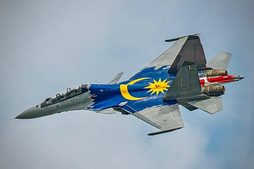
Malaysia is planning to upgrade its fleet of 18 Russian-supplied Su-30MKM fighter jets with BrahMos anti-ship cruise missiles, alongside expanding bilateral defence and military-technical cooperation with Russia.
In April 2026, Russian state intermediary Rosoboronexport mounted a major exhibition in Kuala Lumpur. They showcased the Su-57E fifth-generation fighter jet and combat-tested unmanned aerial systems. Russia introduced advanced loitering munitions and kamikaze drone technology—such as the Z-51E—to the Malaysian market during DSA 2026, aligning with Malaysia’s broader interest in cost-effective asymmetric warfare capabilities.
Defence and strategic ties received a political boost during this meeting, where both nations agreed increased collaboration in military training, intelligence sharing, and technology exchanges.
Energy
President Putin has assured a long-term supply framework for petrol, oil, gas, and diesel to stabilize Malaysia’s energy procurement, and agreed during this meeting to continue to implement the 20-Year Energy Programme both sides agreed in June.
Both leaders emphasized reinforcing direct corporate collaboration between Malaysia’s national oil company Petronas and Russia’s Rosneft.
Discussions also touched upon LNG expansion, nuclear energy, and renewable energy integration.
Summary
Russia-Malaysia trade is doing well and received an extra boost during these meetings with an agreement to fast-track bilateral trade development. Bilateral ties remain positive and can be expected to continue to grow.