
 Русский




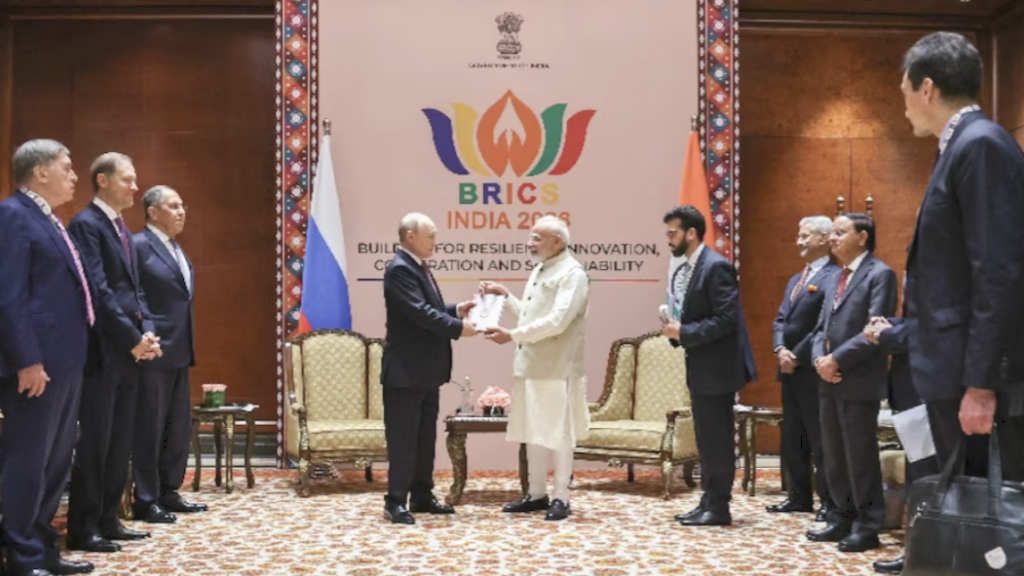

The Russian President, Vladimir Putin arrived at the Bharat Mandapam convention and exhibition centre in New Delhi, the venue for the BRICS summit, where he met with Prime Minister of the Republic of India Narendra Modi.
At the beginning of the meeting, Narendra Modi presented Vladimir Putin with a Russian-language edition of the Thirukkural, a book written 2,000 years ago in India by poet and philosopher Thiruvalluvar.
On the Russian side, the meeting was attended by, amongst others, Foreign Minister Sergey Lavrov, First Deputy Prime Minister and Co-Chairman of the Russian-Indian Intergovernmental Commission on Trade, Economic, Scientific, Technical and Cultural Cooperation Denis Manturov, The Russian Ambassador to India Denis Alipov, Minister of Economic Development Maxim Reshetnikov, Director of the Federal Service for Military-Technical Cooperation Dmitry Shugayev, Deputy Finance Minister Ivan Chebeskov, Deputy Governor of the Central Bank Vladimir Chistyukhin, Director General of the Roscosmos State Space Corporation Dmitry Bakanov, Chairman of the Management Board and CEO of Sberbank German Gref, Director General of State Atomic Energy Corporation Rosatom Alexei Likhachev, and Secretary of the Presidential Commission for Strategic Development of the Fuel and Energy Sector and Chief Executive Officer and Chairman of the Management Board of Rosneft Igor Sechin.
Although there have been numerous recent interactions between Putin and Modi – including at the Shanghai Cooperation Organisation just a few days previously, in addition to several other Ministrial level meetings, the two sides had much to discuss given the numerous bilateral and multilateral projects they are collaborating on. In this article we will discuss topics that were raised relevant to the attendees.
Finance & Economic Development

India has developed a Unified Payments Interface (UPI) which is able to offer financial settlement alternatives to the SWIFT network, from which both Russia and Iran have been suspended. UPI is in many ways superior to SWIFT as it is a real-time domestic retail payment system, whereas SWIFT is a global interbank financial messaging network used primarily for international wire transfers. UPI directly moves funds between individual and merchant bank accounts, whereas SWIFT does not move money itself; it securely transmits payment instructions between banks that settle via correspondent accounts. UPI is generally free for everyday consumer transactions. SWIFT transfers involve higher fixed and variable fees charged by participating intermediary banks.
UPI has also proven its operational trustworthiness, most bugs have been ironed out. It processed over 250 billion transactions last year, accounting for more than half of the total global transaction volumes. Its use is expanding. In Asia, it is connected with the banking systems in Bhutan, Cambodia, Maldives, Nepal, Singapore, and Sri Lanka, with Qatar and the UAE in the Middle East, with Mauritius in Africa, and with France and Greece in the EU.
In conjunction with this, Russia has been developing a BRICS Pay system to allow BRICS countries to transfer capital between banks. Russia’s experience and the UPI interface are now collaborating to ultimately roll out a BRICS alternative, international financial transfer network. Work is on-going concerning this, as regards multilateral oversight, sanctions-proofing and the use of digital currencies along with the differing levels of development that different BRICS members have.
This led to President Putin announcing afterwards that the BRICS Pay platform would be developed in coordination with India, a subject we further discussed here. The effect, when this unified system is rolled out will be to make SWIFT appear expensive, time-consuming, archaic and will do away with the need for US intermediary banks to take a commission. The timeframe for the completion of this system is tentatively set for 2030.
Nuclear Energy
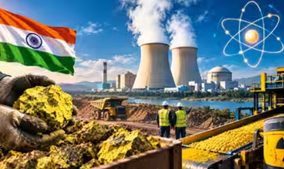
A development in the energy sphere in India is that the government passed laws in late 2025 to allow private investors establish small modular nuclear reactors, a push that will get private capital into India’s rapidly developing energy sector at far quicker timeframes. India’s demand for electricity is set to triple by 2047 and it needs to put provisions in place. To do this, the Indian government has set a goal to increase its installed capacity from the current 12 GW to 100 GW by 2047.
Alexei Likhachev, Rosatom’s CEO said after the meetings that India may become the main customer of Russian nuclear products. He added that “the largest Indian companies are not just showing interest, but are directly entering into certain agreements to enter the nuclear sector.”
This is likely to include Adani Power, Tata Power and Reliance Industries.
Russia has traditionally offered India not only nuclear technologies, but also solutions for other industries, such as composite materials, additive technologies, and digital systems. Quantum technologies are now another area of cooperation. Likhachev said that Indian specialists are involved in the Russian quantum project and the work of the BRICS quantum platform. This involves the development of next-generation technologies for computing, communications and sensors, and in the future, can be used in industrial, energy, logistics and other sectors.
Military
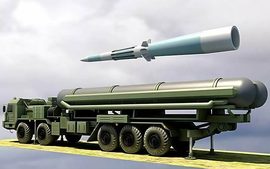
Russia and India are expanding their defense partnership through the co-production of advanced weapons and new logistics sharing. This includes offers on the table from Russia to allow India the joint production of its fifth-generation SU-57 stealth fighter jets, which will be partially localised in terms of Indian navigation and other precision equipment, as well as its S-500 Missile Systems. This is a Russian mobile surface-to-air and anti-ballistic missile system designed to intercept hypersonic weapons, ballistic missiles, and low-Earth orbit satellites. Both countries are continuing talks on supplying and co-producing these items.
Space
India and Russia maintain a deep space partnership spanning decades, highlighted by joint frameworks between the Indian Space Research Organisation (ISRO) and Roscosmos across human spaceflight, satellite data, and emerging BRICS initiatives.
Russian First Deputy Prime Minister Denis Manturov, present at the meeting, has noted that Russia and India are considering the possibility of cross-flights involving mixed crews to their future national orbital stations. He said that this cooperation could eventually extend to joint scientific experiments and research.
Space-based cooperation will not be limited to the bilateral level. In 2022, the BRICS Joint Committee on Space Cooperation was officially launched, while this year, BRICS+ engaged in advanced discussions of cooperation with calls for a BRICS Space Economy being made. What is already clear, however, is that low-orbit constellations are set to become a major disruptor in both civilian and military technology, and this is one area in which the Russia-India partnership can be expected to expand.
India and Russia have said they want to raise bilateral trade to US$100 billion by 2030 from nearly $70 billion in 2024-25. After the bilateral summit, the BRICS annual Heads of State summit began, which further enhanced Russia-Indian dynamics. We covered this is great detail here.