 Русский




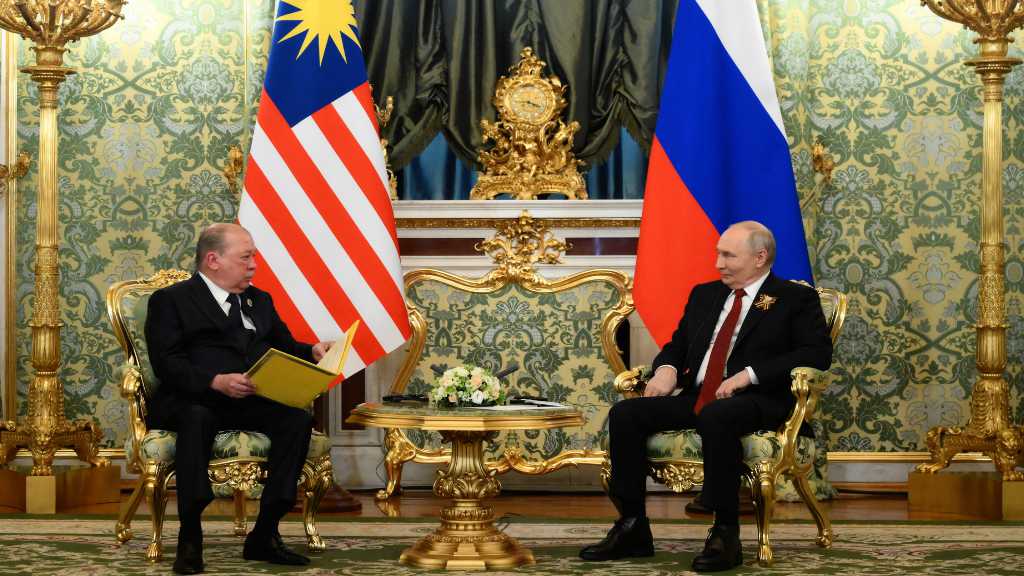

The Russian President, Vladimir Putin, has met with the Supreme Ruler of Malaysia, Sultan Ibrahim, who has been visiting Moscow.
This is what they had to say:
Putin: “Your Majesty, allow me to once again extend a heartfelt welcome to Moscow – this time to Moscow itself, as our previous meeting took place in St Petersburg. I would also like to express my gratitude for your finding the opportunity and taking the time to come to Russia to celebrate Victory Day with us, a day that carries deep significance for us.
Relations between our countries are progressing well. Next year, we will celebrate an anniversary of our diplomatic relations, and during this time both sides have accomplished a great deal.
Trade and economic ties continue developing. We note that there has been a certain adjustment and a slight decline in trade turnover, but I am confident that we will be able to reverse this trend in the near future. We have all the necessary prerequisites to do so.
We are actively cooperating on the international arena at different international organisations, including the United Nations, ASEAN, and the Organisation of Islamic Cooperation.
As for ASEAN, which was chaired by Malaysia last year, we regularly hold and participate in joint events while also marking the 35th anniversary of this organisation. In Kazan, we agreed on further joint actions in this area.
I would like to thank you once again for expressing hope, together with us, that relations between our countries will continue to develop as steadily as they have in the past. We also maintain very close contacts at the government level, and I am confident that this cooperation will continue in the future.”
Ibrahim: “My dear friend, let me begin by expressing my sincere appreciation for a gracious invitation to Moscow to attend the Victory Day parade and ceremony. Next year marks the 60th anniversary of Malaysia-Russia diplomatic relations. Since 1967, our partnership has grown steadily into a strong and productive bond. Our last meeting in St Petersburg was constructive and fruitful, where we shared similar aspirations to elevate the relationship between our two nations.
The distance we have travelled together and the significant milestone we have achieved make these celebrations meaningful and memorable. In the next regard, I would like to repay your kindness and to warmly invite you to Malaysia for a state visit next year to celebrate this diamond jubilee.
I am confident that this occasion will add new momentum to the partnership our nations have developed for the past six decades.”
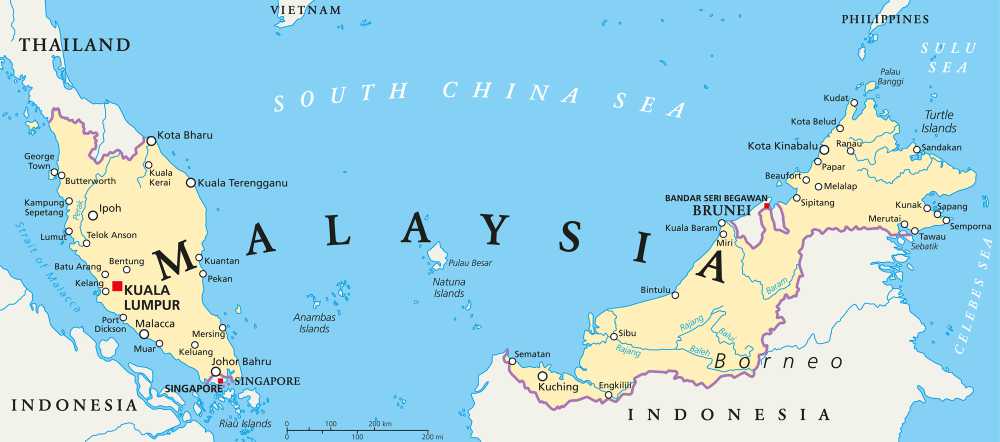
Malaysia is strategically situated on the key Straits of Malacca shipping route that links the Pacific Ocean to the east with the Indian Ocean to the west.
Malaysia’s primary output is significant since the country is one of the world’s biggest suppliers of commercial hardwoods, a significant producer of rubber and palm oil, and an exporter of significant amounts of natural gas and petroleum. However, in order to support its economic expansion, Malaysia has placed an increasing emphasis on export-orientated manufacturing. Malaysia has drawn significant international investment, particularly from Japan and Taiwan, by leveraging its comparative advantages, which include a relatively cheap yet educated labour force, well-developed infrastructure, political stability, and an undervalued currency.
Malaysia is a member of the ASEAN trade bloc, which also provides FTAs with Australia, China, India, Japan, New Zealand, and South Korea. Malaysia also has agreements with fellow Islamic nations Pakistan and Turkiye. The Developing Eight (D-8) Preferential Tariff Accords (PTA) and the Trade Preferential System-Organisation of Islamic Conference (TPS-OIC) are two more completed trade accords. Malaysia currently has the following negotiation tracks: Malaysia-Iran Preferential Trade Agreement (MIPTA), Malaysia-European Free Trade Area Economic Partnership Agreement (MEEPA), and Malaysia-EU Free Trade Agreement (MEUFTA). It became a BRICS partner state last year.
Malaysia has an area of 330,803 sq km and a population of 33.2 million. Its GDP (PPP) stands at US$1.5 trillion, and GDP per capita (PPP) equals US$46,986, while GDP growth is expected to reach 4.7% during 2026.
Malaysia remains a key importer of Russian agricultural products, bringing in grains, oilseeds, meat, and dairy products. In return, Russia receives palm oil, rice, and fruits from Malaysia. Energy resources, primarily oil and gas, along with metals and chemical products, form the crux of exports from Russia to Malaysia.
Malaysia reciprocates with exports of cars, electronics, rubber, and palm oil. Russia is also interested in exporting Malaysian high-tech equipment, which is pertinent as Malaysia is also one of Asia’s largest semiconductor exporters with an annual volume of US$8.7 billion. The electronics sector contributes almost 6% of Malaysia’s GDP.
In 2025, a faculty of Russia’s Sechenov University opened in Kuala Lumpur. The University specialises in Life Sciences, while Russian specialists will promote Russian educational programs in medicine, as well as organize academic exchanges, conduct joint scientific research, and implement international projects in the field of healthcare and biomedical technologies.
By November 2025, trade turnover between Russia and Malaysia had grown by 32%, implying an overall 2025 bilateral trade turnover for the year of US$4.24 billion. Specifically, the two sides managed to increase trade in chemical products. Russian fertiliser exports from January to August increased by 124% compared to the same period in 2024. Moscow and Kuala Lumpur managed to agree on a halal veterinary certificate for the export of chicken and turkey meat as well as open access for Russian dairy products.
The two sides also have promising economic projects. Cooperation is primarily developing in high technology, innovation, and the trade of electronic components. Several Russian companies are already selling their technology products and implementing innovative solutions in Malaysia, including cybersecurity products.
Officials from both countries have repeatedly expressed their desire to increase the share of settlements in rubles and ringgit. The Bank Negara Malaysia and Russian financial institutions are actively working on creating alternative payment corridors that will minimize dependence on traditional systems such as SWIFT. For Russian businesses, this means the opportunity to develop more stable and predictable trade relations between the two countries.