
 Русский







The Maldives and Russia are moving to deepen an economic relationship that has long been driven by one sector above all others: tourism. An agreement reached in Moscow on August 18 to expand air connectivity and facilitate additional Russian carriers more than an aviation arrangement. It is an attempt to convert already strong tourist demand into a broader, more predictable economic corridor linking Russian cities with Male and the local resort economy spread across the Maldivian atolls.
The timing is significant. During a meeting in Moscow on August 18, Russian State Secretary and Deputy Transport Minister Dmitry Zverev and Maldivian Tourism and Civil Aviation Minister Mohamed Ameen discussed the expansion of Russian airline programmes. Russia’s Transport Ministry said passenger traffic between the two countries was showing sustained growth and that, while Aeroflot currently operates the regular Moscow–Malé service, other Russian airlines are interested in entering the market.
The demand behind the negotiations is already substantial. According to the Maldives’ official tourism data, 192,453 Russian tourists had arrived by August 12 this year, representing 14.7% of all arrivals to the Maldives, and making Russia the Maldives’ second-largest source market (India is in first place). In 2025, Russia supplied 278,761 visitors.
The underlying trend is even more important than the headline number. Russia supplied 278,760 tourists in 2025, up 23.8% year on year, according to the Maldives Monetary Authority’s tourism database. By June 2026, Russian arrivals had already reached 146,208 for the first six months, suggesting an annual total in excess of 400,000 Russian visitors for this year could be achieved. If this happens, it will be a annual growth rate in excess of 48% year on year.
This makes the bilateral aviation agreement a classic case of infrastructure following demand rather than creating it from scratch. The Maldives does not have to persuade the Russian market that it wants the destination; the numbers demonstrate that demand already exists. The policy problem is how to provide enough seats, routes and frequency to capture that demand consistently through the winter peak and increasingly throughout the year.
That is why the participation of the Maldives Airports Company, the Visit Maldives Corporation, national carrier Maldivian and private tourism companies in the August 17-21 Moscow and St. Petersburg mission matters. The delegation is discussing not simply additional flights but frequencies, aircraft capacity, year-round-services, new direct routes, tour packages and destination marketing. In economic terms, this is an attempt to coordinate the entire tourism supply chain rather than treating aviation as an isolated transport issue.
Aeroflot remains the backbone. The Russian carrier operates the regular Moscow-Malé connection, while the Maldivian delegation also met the airline in Moscow to discuss expanding connectivity. The more strategically important development is diversification. Russia’s S7 Airlines is scheduled to begin Novosibirsk-Malé services from October 30 this year with two weekly flights. The route is approximately 5,739 kilometres and has a scheduled flight time of around 10. 5 hours. This is significant because it begins shifting the Russia-Maldives air bridge beyond Moscow toward Siberia. The local time change is also only two hours meaning although the flight time is long, there are no jet-lag issues.
That geographic expansion can change the economics of the market. Moscow provides volume, but a Novosibirsk connection gives travellers in Siberia a more direct route to a premium tropical destination. If the S7 operation proves commercially sustainable, other Russian regional hubs could become candidates for seasonal or charter services. St. Petersburg is also increasingly relevant as a tourism-trade centre: the Maldivian delegation is holding industry meetings there with airlines, tour operators, travel companies and media. The Russian Far East may well be interested in providing winter sun getaways from hubs such as Vladivostok. Flights from this region to China’s southern Hainan island have already proven highly popular.
The Russian travel industry already has a deep commercial ecosystem around the Maldives. Maldiviana, which operates between Moscow and Malé and has been active since 1994, is one example. In June 2026, the Visit Maldives Corporation launched a joint digital campaign with the company specifically targeting Russian travellers. Importantly, 76.4% of Russian visitors stayed in resorts, compared with 20.6% in guesthouses. That accommodation pattern matters because resort visitors generally generate revenue across a larger chain of services, including airport transfers, seaplanes, speedboats, excursions, diving and premium hospitality.
The Russian market is also commercially broad. Russian travel companies including Biblio-Globus, Coral Travel, Anex, Space Travel, PAC Group, ART-TOUR, Fun&Sun and Resort Holiday are active in the Maldives market; a 2025/26 industry ranking based on a survey of 494 Moscow and Moscow-region travel companies placed Biblio-Globus, Coral Travel, Russian Express, Maldiviana, Anex and other operators among the leading sellers of Maldives programmes. This gives the expanded air bridge an important second layer: additional seats can be converted into packaged holidays rather than relying entirely on individual bookings.
The wider economic significance becomes clearer when trade figures are examined. Merchandise trade between Russia and the Maldives remains tiny compared with tourism. The source data indicate that Maldivian exports to Russia were negligible, around US$250,000 in 2024 in UN Comtrade data while Maldivian imports from Russia were approximately US$1.09 million, including fish and seafood, meat, beverages and dairy products. The economic relationship therefore cannot currently be described as a conventional goods-trade partnership. It is a services relationship, with tourism functioning as the principal export from the Maldives to Russia.
That distinction creates an important opportunity. If Russian arrivals move beyond the 278,761 recorded in 2025 and approach or exceed 400,000 in a strong 2026/27 season, the effect will not be limited to hotel occupancy. More Russian passengers mean greater demand for airport handling at VIA, aviation fuel, ground services, domestic transfers, seaplane operations, excursions, diving, restaurants, retail and local transport. The source material also identifies hospitality training, hotel-management cooperation, knowledge exchange and investment discussions between the Maldivian side and Russia’s JSC Corporation Tourism.RF.
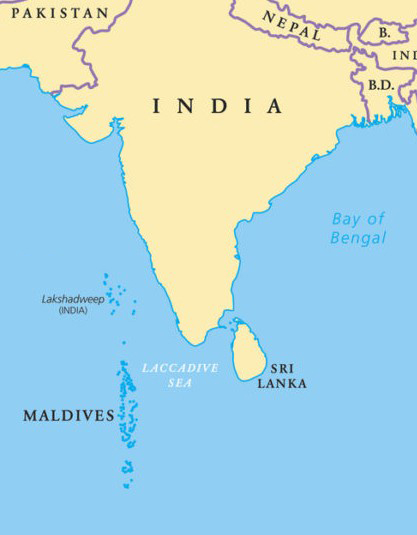
Examples are connectivity from Russia to the Maldives via Istanbul, the most popular route, and add-ons such as additional flights to Sri Lanka, just an hour away but very different to the Maldives. That dual destination alternative could be useful for Russian package tours as a ‘two-in on’ styled getaway. While the Maldives offers white sand beaches and excellent diving, Sri Lanka provides lush green tea estates, hiking and jungle safaris.
For Russia, the opportunity is different but equally tangible. Aeroflot and S7 gain additional international passenger demand; tour operators gain greater inventory and scheduling flexibility; Russian digital travel platforms gain a larger market to sell; and hospitality and tourism-service companies gain access to a destination where Russian consumers have already demonstrated strong demand. For Maldivian, the potential reciprocal move is even more ambitious: the national carrier is preparing for Russia services in 2027, subject to aircraft availability, traffic rights and commercial viability.
The strategic logic, therefore, is straightforward: Russia and the Maldives are turning an established tourism market into a more diversified aviation network. Moscow remains the principal gateway, but Novosibirsk, St. Petersburg and potentially other Russian cities can widen the customer base. Velana remains the principal Maldivian gateway, while Gan International Airport could eventually support a more geographically distributed model. The August agreement is consequently less about signing a new economic treaty than about removing the physical constraint on an already functioning market.
The broader test will be whether additional carriers can translate into year-round frequencies rather than short seasonal programmes. Aircraft availability, leasing and insurance constraints, geopolitical disruptions, route economics and winter-season concentration remain risks. But the fundamentals are unusually clear: Russia already supplies almost one in seven Maldivian visitors, 2025 arrivals reached 278,761, 2026 arrivals were already above 190,000 by mid-August, and Russian visitors show a strong preference for higher-end resorts. Interestingly, Russian tourists also tend to leave more in the local economy in terms of their spending power than Europeans do.
For that reason, the Russia-Maldives air-connectivity agreement should be viewed as an economic multiplier. Its immediate product is more seats. Its larger product is a deeper tourism supply chain, stronger regional airline links, more predictable resort demand and a platform for investment and services cooperation. In a bilateral relationship where merchandise trade remains marginal, the air bridge itself has become the principal piece of economic infrastructure.
This report was written by Ms. Begum, a reporter on Russia-South and Southeast Asia affairs for Russia’s Pivot To Asia. She may be reached at info@russiaspviottoasia.com