Русский








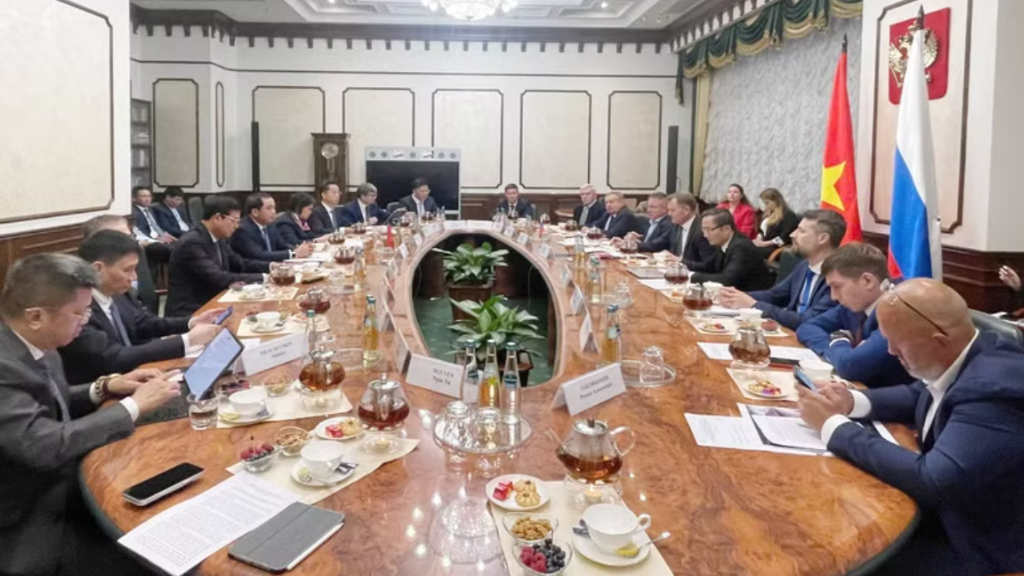

Russia-Vietnam economic relations in 2026 illustrate that this bilateral relationship is entering a more substantive phase. The important change is not simply that bilateral trade has recovered to reach almost US$5 billion, it is that Moscow and Hanoi are increasingly building the infrastructure around trade: production partnerships, food-processing links, maritime routes, rail cooperation, aviation, tourism, digitization, nuclear technology and regional cooperation in Russia’s Far East. The central argument is straightforward: the next stage of Russia-Vietnam cooperation will be determined less by how much each side can export to each other, and more by how deeply Russian and Vietnamese companies can enter each other’s production and logistics chains. The bilateral meetings that have just taken place this August provide unusually strong evidence of this shift.
Trade Is Recovering, But The Real Opportunity Lies Beyond US$5 Billion
Bilateral trade reached about US$4.77 billion in 2025, an increase of 4% from 2024. This trade is well balanced – Vietnam’s exports to Russia were worth around US$2.26 billion, while imports from Russia reached about US$2.51 billion.
However there have been some disruptions. During January-April 2026, bilateral trade was reported at US$1.72 billion, with the then year-on-year increase at 9.22%. By January-May, bilateral trade was around US$2.16 billion, up 6.6%. The different growth rates reflect different reporting periods, statistical calculations, and issues with transport corridors, but the overall direction is clear: trade continues to expand, while Vietnam is Russia’s largest trading partner in ASEAN.
The commodity structure is highly complementary. Vietnam supplies Russia with coffee, textiles, seafood, cashews, pepper, rubber, footwear, mobile phones and processed food. Russia supplies Vietnam with oil and gas, coal, fertilisers, metals, machinery, chemicals and other industrial inputs.
The 2025 export figures demonstrate considerable potential. Vietnamese textile exports to Russia reached US$504 million, or 22.3% of total Vietnamese exports to Russia, while coffee achieved US$462.3 million, approximately 20%. Iron and steel exports surged 582.8%, coffee increased 51%, footwear 43.4%, and toys and sports equipment 41.7%. Yet the two governments are aiming for US$10 billion in bilateral trade. The distance between todays US$5 billion and the target of US$10 billion is not a statistical detail. It is the central economic challenge.
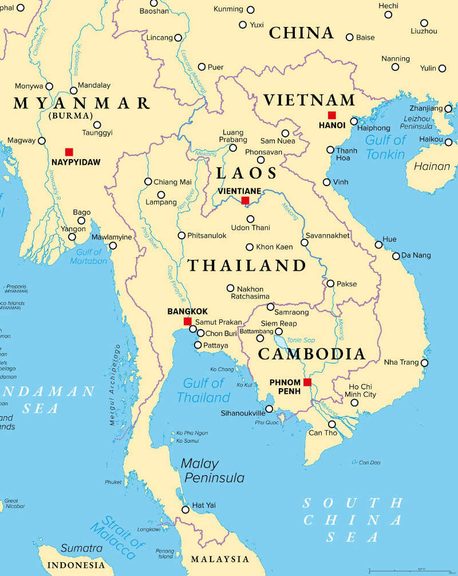
August 5 Meetings In Ho Chi Minh City: The Business Model Is Changing

This is why the Vietnam-Russia Business Networking Conference on August 5 in Ho Chi Minh City was more important than its absence of a headline mega-contract might suggest. The conference ran at the Windsor Plaza Hotel, as part of Vietnam’s 2026 National Trade Promotion Programme. It was organised by VIETRADE, under Vietnam’s Ministry of Industry and Trade, together with Russia’s Moscow Export Center (MEC) and Moscow Industrial Export Support and Development Center (MOSPROM). More than 100 Vietnamese enterprises attended the conference, while the Russian side included representatives of the Russian Embassy and Consulate General, the Russian Export Center, MEC, MOSPROM, the Russian Ministries of Agriculture and Trade and the Vietnam-Russia Joint Venture Ban as well as Russian business representatives from the agriculture and seafood, textiles, FMCG, energy and oil and gas sectors, with discussions ranging from direct investment, manufacturing, supporting industries, technology transfer and supply-chain integration.
This is the important part. The meeting was not principally about selling Russian goods into Vietnam. It was increasingly about Russian companies finding Vietnamese manufacturing, distribution and technology partners. The Ho Chi Minh City Supporting Industries Association has already connected nearly 300 buyers and suppliers from the two countries. It identified precision engineering, moulds, electrical and electronic components, engineering plastics, industrial rubber, machinery, automation, smart factories, digital transformation, food-processing equipment, packaging, cold-chain and industrial logistics as promising areas. Russian companies possess industrial equipment, sensors, software and manufacturing technologies; Vietnamese companies can provide system integration, component manufacturing, installation, localisation and after-sales services. That is precisely the type of complementarity capable of generating recurring trade rather than one-off shipments.
Moscow Is Selling Localisation, Not Just Exports

Olga Vladimirovna Starikova, Director General of MOSPROM, used the August 5 meeting to invite Vietnamese companies to establish production in Moscow and form joint ventures. Moscow’s industrial base includes almost 4,700 industrial enterprises, with particular strengths in pharmaceuticals, medical equipment, electric vehicles, energy storage, microelectronics, radio electronics and food production. MOSPROM operates a one-stop support system covering preferential loans, investment credit and export-development assistance.
The investment numbers make the opportunity clearer. In early 2026, Russia had approximately 220 projects in Vietnam, with registered capital close to US$996 million, while Vietnam had around 18 projects in Russia worth approximately US$1.64 billion. The future model therefore increasingly resembles joint production: Russian technology plus Vietnamese manufacturing and market access, rather than Russian exports simply arriving at Vietnamese ports.
The Food Sector Provides The Clearest Immediate Opportunities

The missing piece in many assessments of the relationship is food. On August 6-7, Russian exporters participated in the 30th Vietfood & Beverage exhibition in Ho Chi Minh City, one of Southeast Asia’s major food-industry exhibitions. With support from the Russian Export Center, 21 Russian companies operated the “Made in Russia” national pavilion. Russian participation at the exhibition has now continued for the fourth consecutive year.
The exhibition brought together approximately 1,000 companies from more than 20 countries. The Russian pavilion covered meat and dairy products, seafood, confectionery, tea, baby food and vegetable oils. It also showcased food-industry equipment, including food-hygiene solutions and professional smoking chambers. This participation matters because the food relationship is becoming two-dimensional. Russia can sell food products to Vietnamese consumers, but Russian companies can also sell the machinery, packaging, traceability systems, cold-chain equipment and processing technology required to expand Vietnam’s food exports.
Vietnam exported approximately 64,500 tonnes of tea worth nearly US$117 million in the first seven months of 2026 to the global markets. Although volume declined 10%, value fell only 3% because the average price rose 7% to $1,811 per tonne. July exports alone reached 13,500 tonnes and nearly US$28 million. Russian purchases of tea however have increased while demand from several traditional markets declined. The food pavilion therefore represents something larger than consumer-goods trade: it can become an entry point for Russian food technology into Vietnam and for Vietnamese agricultural products into Russia and the Eurasian Economic Union (EAEU). Vietnam has had a Free Trade Agreement operating with the EAEU since 2016,
Transport Is Becoming The Physical Trade / Supply Chain Backbone

The logistics dimension is already producing hard numbers. Goods transported between Russia and Vietnam reached approximately 688,300 tonnes in 2025, up 38% from 2024. On March 27, Russia’s Delo Group and Vietnam Maritime Corporation (VIMC) signed an MoU to develop maritime transport and logistics cooperation. The agreement was signed by Delo Management Company Deputy General Director Andrey Sokolov and VIMC Vice President Le Quang Trang, following negotiations initiated in September 2025 by Delo Chairman Sergey Shishkarev. The parties intend to develop logistics infrastructure in Vietnam, promote Delo services and exchange expertise in logistics planning.
The rail network is also becoming more institutionalised. Vietnam and Russia cooperate through the Organisation for Cooperation between Railways, maintain a permanent Vietnam Railways-Russian Railways mechanism and are developing a Vietnam-China-Russia inter-ministerial working group. The sides are preparing an MoU on transport training and human-resource development and another transport cooperation MoU for 2026. On August 13, Hanoi Party Secretary Trần Đức Thắng met Russian State Secretary and Deputy Transport Minister Dmitry Zverev and Russian Railways (RZD) leaders in Moscow, agreeing to deepen cooperation on railway and urban-rail development, technical standards, technology transfer, training, investment and metro construction. This is strategically important because the Vietnam-China-Russia link gives bilateral trade a wider Eurasian dimension.
Aviation Is Already Generating A Measurable Economic Effect
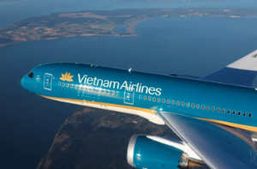
The fifth International Transport Summit in Moscow, August 2-5, brought together more than 200 delegates from 43 countries and territories. Vietnam’s Deputy Minister of Construction Nguyen Danh Huy participated in thematic discussions on urban railways, passenger transport and traffic navigation and met Russian State Secretary and Deputy Transport Minister Dmitry Zverev. The most concrete result is aviation. Eight airlines currently operate Vietnam-Russia routes, including two Vietnamese and six Russian airlines. During the first half of 2026, air traffic between the countries reached approximately 1.07 million passengers, up 32% year on year.
Moscow and Hanoi agreed to work toward a new intergovernmental aviation agreement and a new civil-aviation MoU to expand destinations and frequencies. That passenger growth is feeding tourism at extraordinary speed. Aeroflot will launch direct Moscow-Phu Quoc flights on October 15, 2026, operating twice weekly from Sheremetyevo International Airport, on Thursdays and Sundays, with return flights from Phu Quoc on Mondays and Fridays.
One Million Russian Tourists Is No Longer An Abstract Target

Vietnam received over 863,000 Russian tourists in the first seven months of 2026, 174% more than in the same period of 2025 and more than double the 2019 figure. Russia has become Vietnam’s third-largest tourism source market overall and its largest European market – beating out even the traditional French market, who supplied about 400,000 visitors during all of 2025.
The previous full-year record was 646,524 Russian visitors in 2019. In 2025 the number was 689,714. Russia’s Ministry of Economic Development official Nikita Kondratiev and ATOR chief Maya Lomidze both expect Vietnam to attract over 1 million Russian visitors in 2026. Importantly, the Vietnamese market is becoming a year-round destination. Russian operators are expanding beyond winter Phu Quoc programmes into Da Nang and Nha Trang during summer, while autumn capacity to Phu Quoc is also increasing.
Anex Vietnam announced that from September 23 it will operate Moscow-Cam Ranh flights three times weekly; from January 2027 the frequency is planned to reach five weekly. From October 10, Anex Vietnam will operate a six-flights-per-week Phu Quoc programme using Sun PhuQuoc Airways. Its programme rises from 878 flights in winter 2025-26 to 1,171 in summer 2026, while the winter 2026-27 network is planned to reach out to 23 Russian cities. Russia is simultaneously preparing consultations on group visa-free travel for Vietnamese citizens entering Russia. Kondratiev said in August that consultations were planned, while onwards travel by Russian tourists from Istanbul to Vietnam back to Russia has risen 35% in H1 2026.
Saint Petersburg At ITE HCMC 2026

Saint Petersburg will participate in ITE HCMC 2026 in Ho Chi Minh City from 27–29 August, presenting its tourism attractions, including the UNESCO-listed historic center, White Nights, Hermitage, Peterhof, Tsarskoye Selo, waterways, festivals, industrial and health tours, business-event facilities, 1,200+ hotels, and diverse cuisine.
Vietnam-Saint Petersburg relations include twinning with Ho Chi Minh City since 1977, a 2025 cooperation memorandum with Hanoi, and growing tourist exchanges supported by Russia’s e-visa; the pavilion will promote tourism partnerships and new projects under ITE HCMC’s “Vibrant Connections – Global Destinations” theme focused on international cooperation, innovation and sustainable tourism.
Vietnam Hotel Association Strengthens Cooperation With Russia, Expands Tourism Connectivity And HORECA
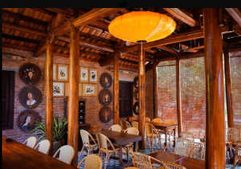
On 20 August 2026 in Da Nang, the Vietnam Hotel Association met with Russia’s National Friendship Fund between Cultures and Exim Solutions Co., Ltd., and signed a Memorandum of Understanding to expand cooperation in tourism, hospitality, trade and culture. The agreement covers Russian products in Vietnamese hotels, promotion of Vietnamese hotels in Russia, Russian HORECA products, tourism and trade links, cultural events, exhibitions and trade fairs, while seeking to strengthen connections between businesses and communities in both countries. The Vietnam Hotel Association also highlighted its previous survey teams and seminars in more than 10 key Vietnamese tourism provinces and cities under the “Russian products in hotels in Vietnam” project, while calling for a clearer business, product, market and implementation roadmap. Cuisine was identified as an area for immediate cooperation, including a proposed Russian Food Festival in Da Nang and a Russian restaurant at Furama Resort Da Nang, while HORECA cooperation could create a direct channel for Russian manufacturers and suppliers to reach Vietnam’s hotel, restaurant and food-service market.
Hanoi Wants Russian Expertise For Its Metro Expansion

The August transport agenda was followed by a particularly important political-business mission. From August 13-17, an inter-agency Vietnamese delegation headed by Trần Đức Thắng, Politburo member and Secretary of the Hanoi Party Committee, travelled to Moscow and Saint Petersburg. On August 13, Thắng met Dmitry Zverev and Russian Railways executives.
Discussions covered urban railway development, underground construction standards, technology transfer, training, AI and big-data traffic management, investment models and Russian participation in Hanoi and potentially Ho Chi Minh City metro projects through 2030 and 2050. On August 14, the delegation met Saint Petersburg Governor Alexander Beglov, building on the sister-city relationship and the cooperation agreement signed with Hanoi in May 2025. The agenda included urban rail, tourism, trade, education, healthcare and investment.
On August 17 in Moscow, Hanoi officials met Deputy Mayor Alexander Gorbenko and Sergey Cheremin of the Moscow Department for External Economic and International Relations. They discussed implementation of the 2025-2027 Hanoi-Moscow cooperation plan, the “Moscow House” project, a Russian multidisciplinary technical school in Hanoi and a potential urban railway agreement covering standards, modular designs, technology integration and network control centres. The objective is clear: Hanoi is looking at Russian railway competence not merely as consultancy, but as a possible technology and investment platform.
Digital Cooperation Is Entering A new Phase

On August 17, St. Petersburg IT company Solvo presented digital logistics and port-automation solutions at Vilog, a major Southeast Asian logistics exhibition in Vietnam, where 450 companies from 22 countries participated. The St. Petersburg Export Support Center stand attracted more than 150 international enterprises and generated about 60 business contacts. With more than 30 years of experience and over 450 projects, Solvo says its Solvo.TOS system handles about 45% of Russia’s sea-container turnover; the participation supports Russia’s “International Cooperation and Export” national project and its efforts to expand into friendly foreign markets.
Russian IT vendors have already gained access to public procurement of Vietnam through the mechanism of public-private partnership. On August 21, Russian technology coverage highlighted Vietnam’s Decree 180/2025/ND-CP, which allows foreign IT companies to establish joint ventures with Vietnamese partners and participate in public procurement under the “Make in Vietnam” programme.
Vietnam introduced a mechanism under Decree No. 180/2025 allowing foreign IT vendors, including Russian companies, to form joint ventures with local partners and participate in state digital-transformation procurement through the “Make in Vietnam” program; localization and technology transfer can provide tender preferences and access to financing, with access to a total credit package of US$19.2 billion. The condition is localisation: foreign companies seeking preferential access must undertake production or technology R&D cooperation in Vietnam.
Softline’s Southeast Asia Regional Director Ivan Gorkovenko has advised Russian companies to find Vietnamese partners and prepare technology-transfer strategies. The market is substantial. Vietnam’s industrial digitalisation market was estimated to be worth US$119.34 billion in 2025 and is projected to reach US$194.57 billion by 2031.
Russian software exports reached almost US$6 billion in 2025, with Vietnam identified by Russoft as one of the most promising Southeast Asian markets alongside Indonesia, Thailand and Malaysia. This builds on the January 2025 visit of Russian Prime Minister Mikhail Mishustin to Hanoi, when Russian and Vietnamese ministries signed cooperation memoranda on radio electronics and digital transformation and identified cybersecurity, AI and energy as areas for cooperation.
Vietnam-Russia Scientific and Technological Cooperation
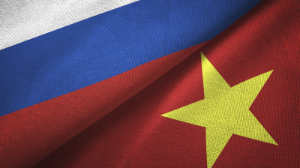
During a meeting on 12 August 2026 in Vietnam, Deputy Minister of Science and Technology Le Xuan Dinh met with Russian Deputy Ambassador Ivan Sergeevich Nesterov to discuss strengthening Vietnam-Russia scientific and technological cooperation. Dinh proposed focusing cooperation on specific partners, clear tasks, measurable results, and practical applications, ensuring research directly contributes to solving socio-economic challenges.
The two sides emphasized developing cooperation that strengthens enterprises and creates practical products, further advancing the strategic technology partnership between Vietnam and Russia. Dinh proposed that each area of cooperation should clearly define partners, content, specific tasks, and expected results, with research outcomes applied in practice to address socio-economic problems and strengthen enterprises.
They also discussed focusing cooperation on practical technology development, including stronger links between research institutes, universities, research organizations and management agencies, training highly qualified personnel, and applying Russian technologies in Vietnam. Nesterov reaffirmed Russia’s role as an important partner in science, technology, education and energy, while Vietnam plans to cooperate with Russia on a Vietnam-Russia Forum of Strategic Cooperation in Technological Research and Development in 2026, expected to be held in Russia alongside the visit of key Vietnamese leaders and as part of the Year of Scientific and Educational Cooperation between Vietnam and Russia.
Energy And Nuclear Cooperation Remain The Strategic Foundation

The industrial agenda is supported by energy cooperation. Russian companies including Novatek and Zarubezhneft continue to be associated with cooperation in LNG, oil and gas, while Moscow and Hanoi have agreed to cooperate on the Ninh Thuan 1 nuclear power project, intended to become a new symbol of bilateral strategic cooperation. On July 30, Vietnamese Minister of Science and Technology Vu Hai Quan met a delegation from Rosatom Construction Technology, led by CEO Ilya Vergizaev. The discussion covered construction of Vietnam’s Research Center for Nuclear Science and Technology, nuclear-energy training, radiation safety and possible cooperation on small modular reactor technologies. This gives the relationship a technological depth extending well beyond conventional energy trade. A 2026 Vietnam-Russia Forum on Strategic Cooperation in Technological Research and Development is also planned in Russia and is expected to coincide with a visit by senior Vietnamese leaders, as part of the Year of Scientific and Educational Cooperation.
Primorye Is Becoming A Second Economic Gateway
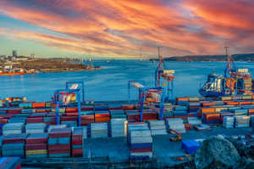
The Russian Far East as part of the Vietnam equation also deserves particular attention. Trade between Vietnam and Primorye rose approximately 46% in 2025 and has continued its positive growth in early 2026. Primorye Deputy Governor Nikolai Stetsko said trade turnover with Vietnam had risen almost 50% over the previous year and by nearly a quarter in the first six months of 2026.
Regular container lines now connect Primorye ports with Ho Chi Minh City, Hai Phong and Da Nang. In June, with assistance from the regional trade agency, Primorye concluded its first contract to supply vegetable oil to Vietnam, worth almost US$500,000.
Connectivity between Vietnam’s Ports and Vladivostok is important for bilateral trade. The route between Vladivostok and HCMC takes between 7-10 days depending on whether this is direct or includes other ports en route, compared to a minimum of 27 days from St.Petersburg to HCMC. Additionally, Vladivostok is connected by the Trans-Siberian railways to all of Russia’s major cities, including Moscow, and St.Petersburg. Illustrating this, frozen Vietnamese prawns and seafood are a regular item in Moscow supermarkets.
Regional authorities are also seeking Vietnamese investment in agriculture. On August 19, the Vietnamese Consulate General in Vladivostok, Primorye authorities and the Vietnam Friendship Association held events marking Vietnam’s August Revolution and National Day. Vietnamese Consul General Nguyen Viet Kien, Primorye representatives and Russian and Vietnamese community organisations participated. Even small gestures make a mark: Vladivostok’s central city “Sportivnaya” bus station has officially been renamed “Ho Chi Minh Park”, reflecting the depth of local ties. The economic importance of this symbolism should not be underestimated. The Far East provides Russia-Vietnam trade with a geographically logical platform for maritime logistics, food, tourism, agriculture and investment.
Military And Defence Cooperation
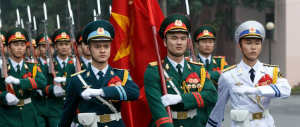
Defence cooperation remained a core pillar of Russia-Vietnam strategic relations in 2026. During May 21-22 in Moscow, Vietnamese Deputy Prime Minister and Minister of National Defence General Phan Văn Giang met Russian Defence Minister Andrey Belousov and co-chaired the second Vietnam-Russia consultation on maritime cooperation with Nikolai Patrushev, Chairman of Russia’s Maritime Board. The two sides signed a 2026-2030 Maritime Cooperation Plan, covering defence cooperation, military training and education, humanitarian mine clearance, military communications, military-history education, and joint projects between the Vietnam-Russia Tropical Centre and Russian Defence Ministry institutions.
The maritime dimension became more operational on July 26-29, when a Russian Pacific Fleet detachment led by Colonel Evgeny Limonov arrived at Cam Ranh International Port in Khanh Hoa; the group included the diesel-electric submarine Ufa and rescue ship Igor Belousov, and Russian naval personnel were received by Vietnam’s Naval Region 4, the Vietnamese Navy and Ministry of National Defence representatives.
During the visit, the two navies conducted a joint search-and-rescue exercise on July 28, practising responses to a simulated submarine accident at sea.
The military-technical relationship also gained a new dimension on July 24, when, during President Vladimir Putin’s visit to the Irkutsk Aviation Plant, the first reported foreign export contract for the new Yak-130M was announced for Vietnam, involving 18 aircraft; if delivered, the order would expand Vietnam’s Yak-130 fleet to 28 aircraft. Taken together, the May maritime plan, July Pacific Fleet deployment and joint exercise, and prospective Yak-130M acquisition show that defence ties are developing simultaneously across maritime security, military education, rescue operations, defence technology and military aviation, reinforcing defence cooperation as an institutional pillar of the broader Russia-Vietnam strategic partnership.
Summary: Can Russia & Vietnam Meet Their US$10 Billion Trade Target?
As of August 2026, Russia and Vietnam have assembled many of the pieces of a larger economic system: US$4.77 billion in 2025 trade; a figure of US$2.16 billion between January-May this year, 220 Russian projects in Vietnam worth US$996 million; 688,300 tonnes of bilateral goods transport; 1.07 million air passengers in six months; 863,593 Russian tourists in seven months; 21 Russian food companies at Vietfood & Beverage; nearly 300 buyers and suppliers linked through supporting-industry cooperation; eight airlines; maritime cooperation through Delo and VIMC; railway coordination involving Vietnam, China and Russia; and a potential US$194.57 billion Vietnamese industrial-digitalisation market by 2031.
The significance of 2026 is therefore structural. The relationship is moving from “Russia sells, Vietnam buys” toward “Russia and Vietnam build together.” The forthcoming 26th session of the Vietnam-Russia Intergovernmental Committee on Economic, Trade and Scientific-Technical Cooperation, expected to be held in Vietnam later this year will show whether this transition is becoming measurable in investment projects and contracts.
The US$10 billion trade target will not be reached by political declarations alone. It will require factories, railways, ships, food-processing lines, digital joint ventures, energy projects, flights and tourists. The events of 2026 so far illustrate that the foundations for that model are now being laid. The decisive question is whether Moscow and Hanoi can convert this expanding network of business contacts and institutional mechanisms into actual production capacity. That is where the next stage of Russia-Vietnam economic cooperation will be won.
This report was written by Ms. Begum, a reporter on Russia-South and Southeast Asia affairs for Russia’s Pivot To Asia. She may be reached at info@russiaspviottoasia.com