 Русский




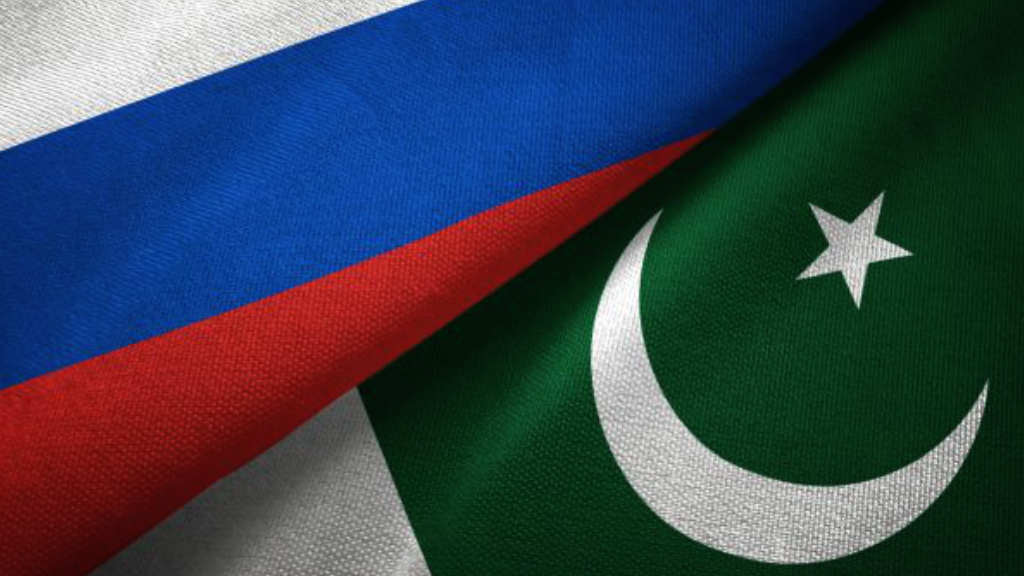

In the past, Russia’s South Asia policy was largely characterized by its close relationship with India. However, that phase has gradually evolved. While Russia’s relations with India continue to remain strong and improve steadily, Moscow is also strengthening its ties with other major South Asian countries. It has increasingly recognized that Russian businesses, companies, and traders cannot afford to overlook the opportunities and potential offered by these emerging markets in South Asia. This includes Pakistan.
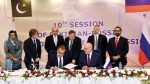
On 9 June, scholars, diplomats, policymakers, journalists and strategic experts from Moscow and Islamabad convened at the International Webinar on “Pakistan-Russia Bilateral Relations at the Cusp of a Shifting Global Order”, hosted by the University of World Civilizations, in Moscow, in collaboration with the Institute of Strategic Studies Islamabad (ISSI). The event provided a platform to examine the evolving dynamics of Pakistan-Russia relations amidst significant transformations in the global, political and economic landscape.
The Chief Guest was Sardar Awais Ahmed Khan Leghari, Pakistan’s Minister for Energy. Participants from Pakistan also included Ambassador Masood Khan, Ambassador/Special Assistant to the Prime Minister, Tariq Fatemi, Ambassador Jauhar Saleem, Dr. Natalia Zamaraeva, Senior Research fellow at the Institute of Oriental Studies of the Russian Academy of Sciences, and Dr. Roksolana Yurievna Zhigon, PhD, Director of the Scientific Center “Diplomacy of Peoples, Partnership of Civilizations”, UMC Center for Youth Public Diplomacy (organizer of the webinar) as well as many others.
The webinar highlighted the growing importance of Pakistan-Russia engagement as both countries seek to navigate an increasingly multipolar international order. Participants emphasized the expanding scope of cooperation in areas including trade, regional connectivity, counter-terrorism, education, and people-to-people exchanges. Over the past decade, Pakistan and Russia have witnessed progression in their engagement, towards a pragmatic partnership.
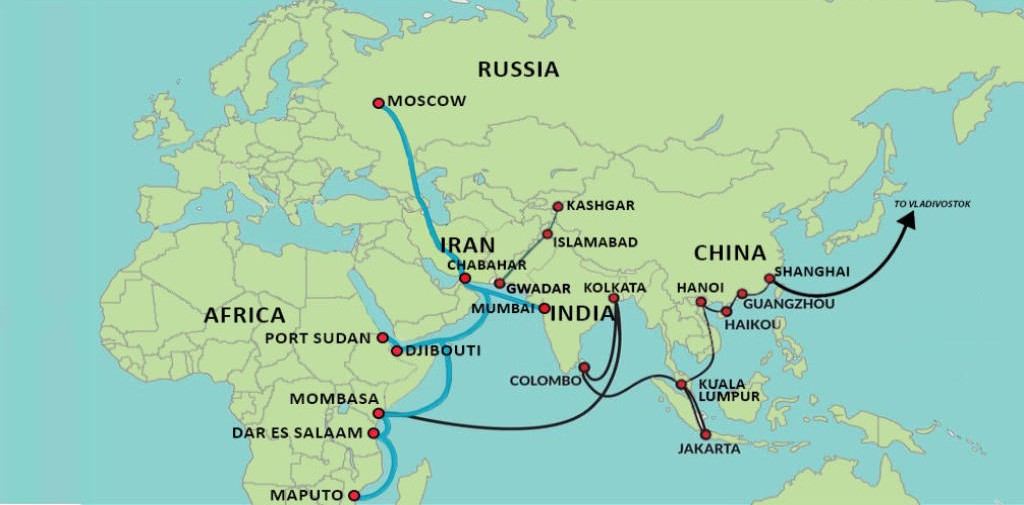
Legari stated that Islamabad intends to join the International North-South Transport Corridor (INSTC) marking a transformative moment in Eurasian geopolitics. The significance lies not merely in Pakistan’s participation in another regional connectivity initiative, but also in linking Russia’s INSTC transport architecture directly to Pakistan’s Gwadar Port, on the Arabian Sea He also mentioned Russian Deputy Prime Minister Alexey Overchuk’s proposal to connect Gwadar with the 7,200-kilometre INSTC network, a corridor that already links Russia, Iran, Azerbaijan, Central Asia and India through an integrated system of railways, highways and maritime routes. For Moscow, this proposal represents far more than a logistical adjustment. It potentially creates an additional southern outlet for Russian trade at a time when Eurasian transport corridors are becoming increasingly important in the face of sanctions, geopolitical fragmentation and the reorientation of Russian trade toward Asia.
One of the most important developments emerging from 2026 is the agreement by both governments to finalize a comprehensive Programme of Economic Cooperation extending through 2030.
On June 6, Pakistan’s Interior Minister Mohsin Naqvi and his Russian counterpart Vladimir Kolokoltsev signed agreements during the SCO Interior Ministers’ meeting in Bishkek, Kyrgyzstan, aimed at strengthening cooperation in preventing illegal immigration, facilitating repatriation, and combating narcotics and drug trafficking. The agreements reflect that Pakistan-Russia relations are increasingly moving toward a more institutionalized and structured framework, particularly in the field of internal security cooperation. This shift indicates a deepening of bilateral engagement beyond political dialogue into sustained operational and inter-agency collaboration.
Pakistan As Russia’s Southern Eurasian Hub
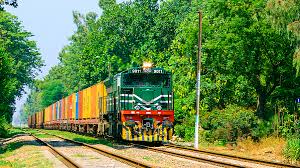
The most important development in Russia-Pakistan relations in 2026 is not only the growth of bilateral trade but also the expansion of energy cooperation, and the prospect of a future free trade agreement. The real story is geographical. As Russia continues to deepen its Pivot to Asia amid the restructuring of global trade and transport networks, Pakistan is gradually emerging as a critical node in Moscow’s vision of a connected Eurasia. Events over the past three months alone reveal the scale of this transformation.
On April 7, the Eurasian Economic Commission and Pakistan agreed to establish a joint study group examining the feasibility of a free trade agreement between Pakistan and the Eurasian Economic Union. Between June 3 and June 6, Pakistan dispatched a high-level delegation led by Petroleum Minister Ali Pervaiz Malik to the St Petersburg International Economic Forum, where officials actively explored opportunities in energy, logistics, infrastructure and industrial cooperation.
Faisal Niaz Tirmizi, Pakistan’s ambassador to Russia, said on May 12 that the Strait of Hormuz crisis underscored the need for diversified energy transportation routes. He emphasized the importance of the Pakistan Stream Gas Pipeline project and stated that, as bilateral economic cooperation deepens, the project could become a landmark agreement in Pakistan-Russia relations Viewed separately, these developments may appear incremental. Viewed together, they suggest something far more significant: Pakistan is increasingly becoming the southern anchor of Russia’s evolving Eurasian strategy.
Russia’s Pivot to Asia Is Entering a New Stage

Much mainstream media report about Russia’s Pivot to Asia continues to focus overwhelmingly on China and India. This interpretation is somewhat incomplete. While Russia-Western relations collapsed, China naturally became Moscow’s primary economic partner. Bilateral trade surpassed US$240 billion, making China Russia’s largest trading partner by a considerable margin. However, the next phase of Russia’s Asian strategy is not solely about expanding trade with China. It is about creating a resilient network of alternative transport corridors, energy routes, industrial partnerships and financial mechanisms across the broader Eurasian landmass. In this context, Russia’s growing engagement with India, Iran, the Gulf states, Central Asia and Pakistan should be viewed as interconnected components of a larger strategic design.
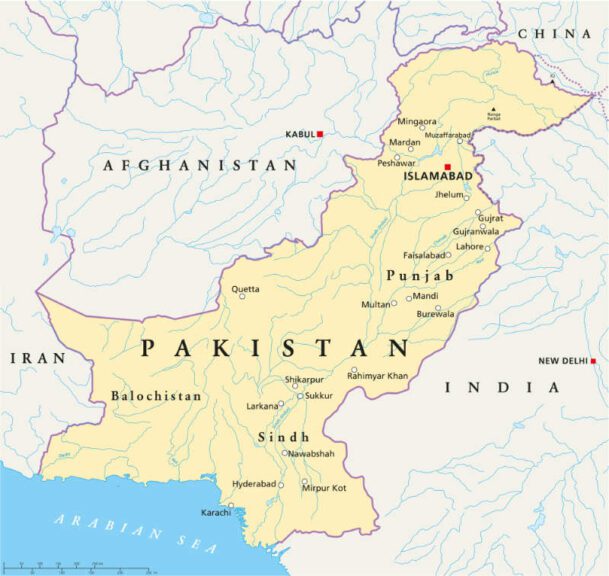
This objective is not diversification for its own sake. It is the creation of multiple corridors that reduce dependence on any single route, market or geopolitical partner. Pakistan occupies a uniquely important position within this framework because it connects virtually every major region that Russia seeks to simultaneously engage: Central Asia to the north, China to the northeast, the Gulf to the west, South Asia to the east and the Arabian Sea to the south.
From Bilateral Trade to Eurasian Integration
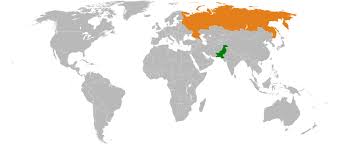
The most important aspect of Russia-Pakistan relations today is that they increasingly transcend the limits of bilateralism. Trade growth illustrates this transformation. Bilateral trade rose from approximately US$696.99 million in 2021 before reaching a record US$1 billion in 2023. In 2025, trade turnover had climbed another 30% to approximately US$1.3 billion despite sanctions pressure, payment restrictions and logistical challenges. While the numbers may appear small when compared to Russian trade with China and India, and even Bangladesh, (US$2 billion) the point is the growth rate. It outstrips global growth by a factor of ten times.
However, these figures only tell part of the story. What is emerging is not simply a larger trade relationship but a broader process of Eurasian integration. Discussions regarding direct rail connectivity through Iran and Azerbaijan, the potential inclusion of Pakistan in INSTC, exploration of alternative maritime routes, the development of new payment mechanisms and negotiations concerning EAEU market access all point toward a larger strategic objective. Increasingly, Russia and Pakistan are not merely trading with one another; they are participating in the construction of new Eurasian economic corridors capable of reshaping regional commerce.
Russia-Pakistan Relations Since 2022
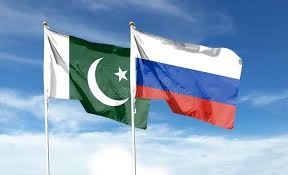
2022 marked an important turning point in Russia-Pakistan relations, not because of a single diplomatic breakthrough but because of a broader restructuring of the international system. As Russia accelerated its Pivot to Asia amid geopolitical tensions with the West, Moscow began reassessing the strategic value of its partners across Eurasia. Pakistan simultaneously found itself seeking greater economic diversification, energy security, and connectivity with emerging regional markets. These parallel developments created conditions for a relationship that increasingly moved beyond the limitations of Cold War history.
Over the past four years, bilateral engagement has expanded across energy, trade, security, transport, industry, education, science and technology. High-level contacts intensified, with Prime Minister Shehbaz Sharif and President Vladimir Putin holding four meetings in recent years, while the Pakistan-Russia Intergovernmental Commission evolved into the principal mechanism coordinating cooperation across multiple sectors.
The pending visit by Pakistan’s Prime Minister Sharif, can be expected to further strengthen energy ties between Russia and Pakistan. Pakistan’s Federal Minister for Energy, Sardar Awais Ahmed Khan Leghari, stated that the remnants of Soviet-era mistrust had largely disappeared and that relations had evolved from the concept of an “unfriendly country” to that of a reliable partner. Such statements would have been unimaginable only a decade ago. Today, both countries increasingly coordinate positions through the Shanghai Cooperation Organisation, the United Nations and other multilateral platforms while exploring common approaches to regional security, connectivity and economic development.
Why Pakistan Matters to Russia More Than Ever
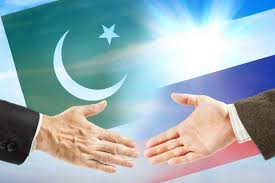
Pakistan’s growing significance for Moscow derives primarily from geography. Positioned at the intersection of South Asia, Central Asia, the Middle East and the Indian Ocean, Pakistan offers Russia access to regions that are becoming increasingly important in the twenty-first century global economy. It serves as a potential bridge connecting Russian and Central Asian markets with maritime trade routes extending toward the Gulf, East Africa and South Asia. Pakistani officials have repeatedly emphasized their country’s role as a connector rather than merely a destination market. Russian analysts increasingly share this assessment. Discussions involving road, rail, air and maritime connectivity reflect a recognition that Pakistan’s greatest value lies in its ability to link multiple regions simultaneously. As Russia’s Pivot to Asia evolves from a primarily China-focused strategy toward a broader Eurasian framework, Pakistan’s strategic relevance increases.
Why Moscow Wants Gwadar Connected to INSTC
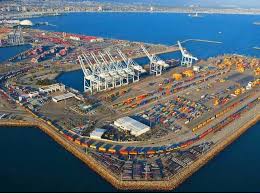
Among all recent developments in bilateral relations, perhaps none carries greater strategic significance than the proposal to connect Pakistan’s Gwadar Port with the INSTC. This already links Russia with Iran, Azerbaijan, Central Asia and India through interconnected rail, road and maritime networks. Adding Gwadar to this system fundamentally expands its geographic reach, and provides an alternative to Iran’s Chabahar Port should Strait of Hormuz problems continue. Combined with Chabahar, it increases trade capacity.
It would provide Russia and its Eurasian partners with a direct connection to the Arabian Sea while simultaneously integrating Pakistan into one of the most important emerging trade architectures across Eurasia. From Moscow’s perspective, Gwadar is no longer simply a component of the China-Pakistan Economic Corridor but is increasingly viewed as a strategic maritime node capable of linking Russia’s northern transport networks with South Asia, the Gulf, East Africa and broader Indian Ocean markets.
Connecting With CPEC To China
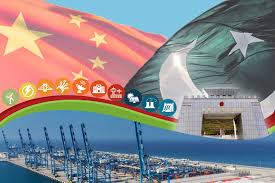
Once the Iran-related conflict is resolved, the INSTC would gain new momentum, while connectivity between the Gwadar and Chabahar would accelerate wider regional integration and freight volumes. A significant connectivity opportunity for Russia lies in linking its Far Eastern region with South Asia through existing Eurasian transport networks. Russia’s Far East is connected to China through a growing network of cross-border infrastructure, including the Trans-Siberian Railway, the Baikal-Amur Mainline (BAM), the Tongjiang-Nizhneleninskoye Railway Bridge across the Amur River, and the Blagoveshchensk-Heihe Road Bridge. These transportation links connect the Russian Far East with China’s northeastern provinces and, through China’s national rail and highway systems, with the Chinese mainland. From there, China’s western regions are linked to Pakistan through the China-Pakistan Economic Corridor (CPEC).
Key existing components of CPEC – which China has invested US$90 billion in developing – include the Karakoram Highway (KKH), the Khunjerab Pass, the Hazara Motorway, and the ML-1 railway modernization project, all of which improve connectivity between western China and Pakistan’s transport network, ultimately leading to Gwadar Port on the Arabian Sea. The main driver is China’s need to industrialize Pakistan, with the associated benefits this brings. It is also expected to spill over to Afghanistan and in time connect Central Asia, (primarily Uzbekistan) to Pakistan’s Gwadar Port via rail.
By utilizing the CPEC, Russia could potentially reduce transportation time and diversify its trade routes. It is worth noting that Bangladesh’s Port of Chittagong is now connected with Pakistan’s Port of Karachi through maritime shipping routes that often transit Sri Lanka’s Colombo port. At the same time, Bhutan utilizes Bangladesh’s riverine and port infrastructure for trade and transit purposes.
These developments demonstrate the growing potential for greater regional connectivity and economic integration across South Asia. Enhanced transportation links, multimodal corridors, and trade networks could eventually contribute to a broader South Asian connectivity initiative, fostering regional cooperation and economic interdependence. Furthermore, if the Pakistan-Afghanistan security situation stabilizes, Russia could also expand connectivity through Central Asia and Afghanistan via projects such as the Termez-Mazar-i-Sharif-Kabul-Peshawar Railway and related regional transport corridors. Such developments would provide Russia with additional strategic and commercial access to South Asian and Middle Eastern markets, strengthening its trade and economic engagement over the coming decades.
The Russia-Pakistan Economic Cooperation Programme To 2030
One of the most important bilateral developments in 2026 is the agreement by both governments to finalize a comprehensive Programme of Economic Cooperation extending through 2030. The significance of this initiative lies in its institutional character. Unlike individual projects that can be delayed or cancelled, the programme seeks to create a long-term framework covering trade, energy, transport, investment, industry and technological cooperation.
Both countries recognize that bilateral trade remains constrained by structural obstacles, including payment mechanisms, limited banking connectivity and logistical inefficiencies. The 2030 programme is specifically designed to address these challenges while creating predictable mechanisms for future cooperation. Pakistani officials have repeatedly described the agreement as a milestone capable of elevating economic relations to an entirely new level. Its importance is further enhanced by the signing of the Russia-Pakistan Readmission Agreement in Bishkek, which is expected to simplify visa procedures, facilitate business travel and strengthen people-to-people exchanges. Together, these initiatives suggest that Moscow and Islamabad are attempting to move beyond transactional cooperation toward a more institutionalized partnership capable of surviving changing political circumstances.
Energy Cooperation, Pakistan Stream and the Emergence of a Eurasian Energy Network
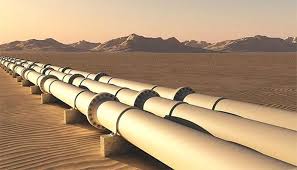
Energy cooperation has become the most significant and tangible dimension of Pakistan–Russia relations. Pakistan’s energy vulnerability has been exposed during instability in Gulf shipping routes and the Strait of Hormuz, through which nearly 70% of Pakistan’s oil is imported. Pakistan consumes around 500,000-600,000 barrels of oil per day, while reports in 2026 indicated crude reserves had fallen to only about 11 days of supply, amid disruptions in LNG imports and regional uncertainty. Fuel prices reportedly surged from around $88 per barrel to $187 per barrel, triggering economic strain, emergency measures, reduced public operating hours, and transport subsidies affecting nearly 30 million users.
In this context, Russia has emerged as an increasingly important alternative energy supplier. After its first crude shipment to Pakistan in 2023, Russia expanded supplies, with Pakistan reportedly importing over 733,000 barrels of Russian crude in recent procurement cycles, with further shipments under discussion. Russia’s pricing flexibility and alternative supply options have positioned it as a potential stabilizing energy partner during periods of regional disruption.
With this growth, Pakistan and Russia are discussing a cooperation agreement in the oil sector, including in exploration, production, and refining. The Pakistan Stream Gas Pipeline remains one of the most ambitious long-term projects connecting the two countries. Designed to stretch approximately 1,100 kilometres with a planned capacity of 12.4 billion cubic metres annually, the pipeline would connect LNG terminals in Karachi with major industrial and population centres in Punjab. The planned cost is US$2.25 billion, with negotiations over its construction continuing between Moscow and Islamabad.
Although implementation has proceeded more slowly than initially envisioned, both governments continue to emphasize its strategic importance. During interviews conducted in Moscow in May 2026, Pakistan’s Ambassador to Russia, Faisal Niaz Tirmizi, confirmed that discussions on the project remain active and linked its significance to the broader need for diversified energy transport routes. The pipeline’s importance extends beyond Pakistan’s domestic energy needs. In geopolitical terms, it represents a potential component of a larger Eurasian energy architecture linking Russian resources, Central Asian supply networks and South Asian demand centres. Such infrastructure would not merely transport gas; it would physically embed Pakistan within a broader Eurasian economic system increasingly oriented toward continental integration.
The EAEU-Pakistan Free Trade Initiative
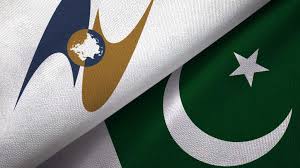
Another transformative event occurred on April 7 this year, when the Eurasian Economic Commission and Pakistan agreed to establish a joint study group examining the feasibility of a free trade agreement between Pakistan and the Eurasian Economic Union. For Moscow, the initiative aligns closely with broader efforts to expand the EAEU’s economic footprint across Asia.
For Pakistan, it offers access to a market encompassing Russia, Belarus, Kazakhstan, Armenia and Kyrgyzstan. The economic rationale is compelling. Pakistan possesses a population of approximately 255 million people and a purchasing-power-parity GDP of around US$1.46 trillion. The International Monetary Fund projects Pakistan’s economic growth at 3.6% for this year, while long-term forecasts suggest continued expansion in manufacturing, agriculture, information technology and infrastructure. Pakistan’s textile industry alone accounts for roughly 60% of national exports, while agriculture continues to employ around 42% of the workforce. For EAEU members, Pakistan represents not only a major consumer market but also a strategic gateway to South Asia and the Arabian Sea. Consequently, the proposed free trade initiative should be viewed as part of a broader effort to integrate Pakistan more deeply into Eurasian economic networks.
Summary
The coming years will determine whether the ambitious vision outlined by officials in Moscow and Islamabad can be translated into reality. The foundations are already visible. The proposed Economic Cooperation Programme 2030, discussions surrounding INSTC membership, negotiations regarding alternative payment systems, the EAEU free trade initiative, expanding energy cooperation and continuing work on Pakistan Stream collectively point toward a deeper strategic partnership.
By 2030, the success of these initiatives could transform Pakistan into one of Russia’s most important economic partners in South Asia and potentially a key component of Eurasia’s emerging connectivity architecture. The most significant transformation would not be measured solely in trade volumes or investment figures. Rather, it would be reflected in the emergence of Pakistan as Russia’s principal southern gateway to the Arabian Sea and the wider Global South. If current trends continue, Russia-Pakistan relations will evolve from a promising bilateral partnership into an essential pillar of southern Eurasian integration.
This article was written by I.K.Hasan, a Dhaka, Bangladesh-based independent columnist and freelance journalist. He can be reached at info@russiaspivottoasia.com