
 Русский





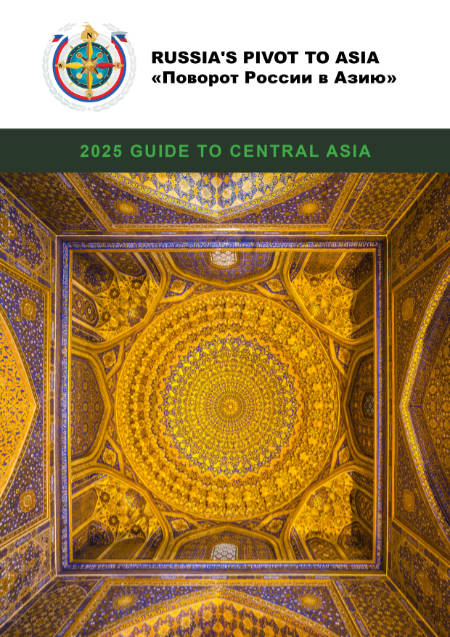
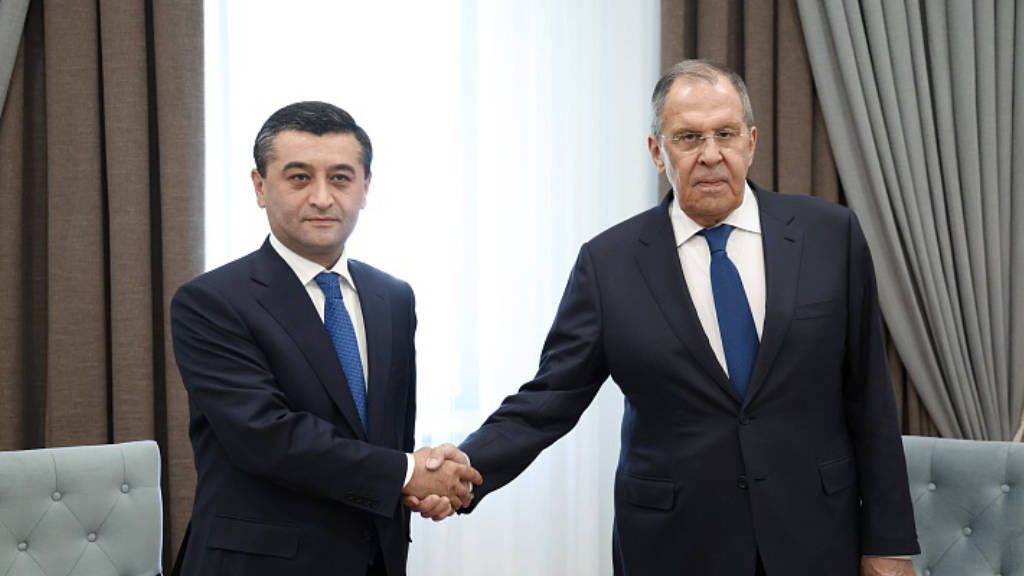

The Russian Foreign Minister, Sergey Lavrov, has met with Bakhtiyor Saidov, the Uzbekistan Minister of Foreign Affairs. The two ministers discussed a number of key issues concerning bilateral relations. They exchanged views on a range of matters pertaining to the regional and international agendas. Both sides reiterated their commitment to the further strengthening of the comprehensive strategic partnership and alliance between Russia and Uzbekistan.
Uzbekistan, like Russia is a member of the Commonwealth of Independent States, (CIS) and has been considering joining the Eurasian Economic Union. It is also a BRICS partner nation and a shareholder n the New Development Bank.
Russia-Uzbekistan Logistics Infrastructure
Logistics infrastructure and bilateral trade are both improving and this momentum can be expected to increase. Uzbekistan President Shavkat Mirziyoyev reviewed proposals on July 1 to expand logistics centers, modernize border infrastructure, digitalize warehouse and customs systems, and attract private investment into transport hubs.
The July proposals reviewed by Mirziyoyev show how much still needs to change. Uzbekistan has 27 logistics centers that meet international standards, with total capacity of 27.2 million tons, but only one is in the highest category. Class A automated warehouses meet only 10-15% of demand. Officials also cited weak capacity at many border checkpoints, refrigerated and customs warehouse shortages, low containerization, and poor digital links.
The new plan would specialize six areas as logistics zones. Khanabad would handle China-linked routes toward the Caspian, Europe, Afghanistan, Pakistan, and Iran. Angren, Yangiyul, and Akhangaran would distribute transit and foreign trade cargo. Alat would support Middle Corridor routes, and Termez would focus on Pakistan via Afghanistan.
However, Uzbekistan is landlocked, and must rely on other countries for its import-export supply chains. A main area of interest in resolving this is the possible development of the Trans-Afghan railway, which would bisect Afghanistan north to south and access Indian Ocean and Arabian Gulf seaports via Pakistan’s southern ports. Otherwise, Uzbekistan trades with Russia mainly via Kazakhstan, although routes via Turkmenistan are also becoming more prominent, partially due to the changing dynamics of the INSTC and a reconfiguring of Iranian supply chains north – to Turkmenistan and the Caspian Sea. Improving Uzbekistan’s Caspian Sea connectivity is a major challenge.
In addition, at the recent “Russia – Islamic World: KazanForum” held in Kazan in May, Russian Deputy Prime Minister Marat Khusnullin stated that Russia was interested in developing closer supply chain corridors, including significantly upgraded highways. Khusnullin recalled his travel experiences to Tashkent by Kamaz truck, noting that parts of this route lacked proper roads. To improve transport and logistics between the two countries, he stated that Russia would “strive to create direct land communication routes between our countries.” This issue was also discussed during a working meeting with Uzbekistan’s Deputy Prime Minister Jamshid Khodjaev, with a focus on transport infrastructure, trade facilitation, and the development of the International North-South Transport Corridor.
For Uzbekistan, this would improve their landlocked status and provide far better Eurasian access, while for Russia such developments are already part of a broader Eurasian push to reshape logistics networks across Eurasia at a time when global trade routes are being reconfigured by sanctions, shifting alliances, and competition over connectivity corridors. No doubt in coming months we will hear more about developments in Uzbekistan’s internal and external third country transport connectivity, with this like to focus mainly on highway construction as well as rail freight.
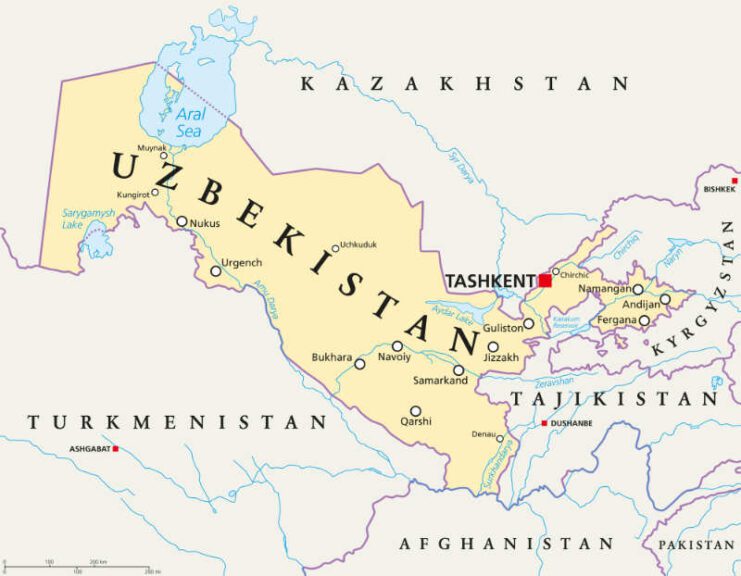
China has already taken the lead on this to the east, via the construction of the China-Kyrgyzstan-Uzbekistan (CKU) railway, which is already under construction and is set for completion in 2030. Although Uzbekistan is connected to Russia via Kazakhstan rail, this too is operating at close to capacity and needs upgrading. How far Russia is willing and able to provide funds and materials, and how far Uzbekistan can do the same are strategic development issues. Nonetheless, the four possibilities:
- Improved road access between Russia and Uzbekistan
- Improved rail access between Russia and Uzbekistan
- Improved Caspian Sea access for Uzbekistan via Kazakhstan and Turkmenistan
- The potential of the Trans-Afghan railway
All have substantial potential. China, Pakistan and India are likely to be potential investors in the Trans-Afghan rail along with Uzbekistan – as and when Afghanistan itself can be better stabilised and investors start to regard the country as less of a geopolitical and conflict risk.
Russia’s plans to develop direct land routes with Uzbekistan reflects a broader transformation in how regional influence is exercised in Eurasia. Transport infrastructure has become a strategic instrument, shaping not only economic outcomes but also geopolitical alignment and long-term dependency structures.
Russia-Uzbekistan Energy
Uzbekistan also needs to upgrade its energy supply chains as its economy grows and its infrastructure development demands increase. To do that, Uzbekistan plans to increase electrical power generation to 120 billion kilowatt hours, with 54% of this generation to come from renewable energy resources by 2030. The country’s energy capacity will also increase with the launch of Uzbekistan’s first nuclear power plant, being built by Rosatom and partially financed by Moscow. The plant is located in Uzbekistan’s central-eastern Jizzakh Region, which borders both Tajikistan and Kazakhstan. A ceremony to lay the first stone in the foundation of the NPP was recently held. It is planned to be operational from 2029.
This NPP project features a unique configuration, with power units of different capacities being placed on the same site for the first time. It will include two large power units with Generation 3+ VVER-1000 reactors (each with a capacity of 1 GW) and two small modular RITM-200N reactors (each with a capacity of 55 MW). Once operational, the plant is expected to generate approximately 17.2 billion kWh of electricity annually, covering up to 15% of Uzbekistan’s electricity needs.
Rosatom’s role is not limited to the construction of the nuclear power plant: as part of the agreement, the corporation will provide a preferential export credit, ensure long-term supplies of reactor fuel, take over the service and maintenance, arrange the disposal of spent nuclear material, and provide training to Uzbeki nuclear scientists. The construction cost is estimated at US$9.5 billion.
Russia-Uzbekistan Bilateral Trade
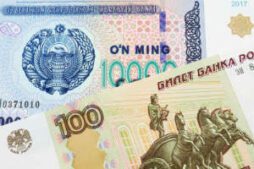
Bilateral trade meanwhile has increased and reached US$13 billion in 2025, with a further 20% increase on that noted in the first four months of 2026. If that is maintained, it implies a 2026 bilateral trade volume potential of about US$15.6 billion. The immediate goal – set by both Presidents – is to reach US$30 billion in annual trade turnover by 2030. To accomplish this, Russia-Uzbekistan bilateral trade needs to grow at slightly over 20% per annum over the next four years. At present that rate is being achieved – however improving the logistics infrastructure is key.
Meanwhile, the total joint projects bilateral investment portfolio exceeds US$50 billion. Improving the returns on that investment portfolio to annual trade volumes is a key issue – and again linked to the improving of infrastructure connectivity.
Russia’s main exports to Uzbekistan include mineral products, metals and metal products, mainly iron and steel rolled products, chemical industry products, including plastics and pharmaceuticals. All have been showing export growth, while deliveries of timber and pulp-and-paper products, particularly pine lumber, also increased. These requirements are all indicative of a growth economy.
Uzbekistan has also expanded exports of food and agricultural products to Russia, which rose by nearly one-third last year. Growth was driven by shipments of nuts, fruits, and vegetables. Exports of textile products, clothing, cotton, and copper also increased.