 Русский







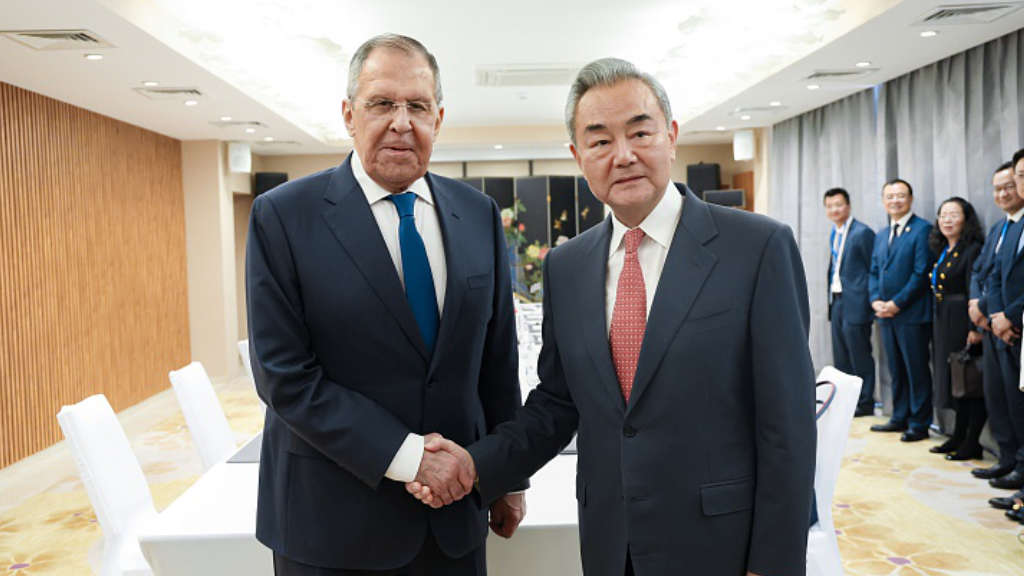

The Russian Foreign Minister, Sergey Lavrov, met with Chinese Foreign Minister Wang Yi to discuss a range of issues on the bilateral and international agendas.
The two ministers expressed satisfaction with the positive momentum of Russian-Chinese relations, which have reached an unprecedented high level as a comprehensive partnership and strategic interaction. The Treaty on Good-Neighbourliness, Friendship and Cooperation provides a solid foundation for this relationship, and its 25th anniversary is being widely commemorated this year by Moscow and Beijing, including through joint events organised by Russian and Chinese diplomatic missions in other countries and at international organisations.
Sergey and Wang exchanged views on bilateral political dialogue, practical cooperation, and humanitarian ties, with particular attention to the implementation of the agreements reached during President Vladimir Putin’s official visit to China in May.
The ministers also discussed interaction within the Shanghai Cooperation Organisation framework, including prospects for the further development of the SCO as part of its comprehensive modernisation.
The strengthening of strategic coordination between Moscow and Beijing on the international stage was underscored, including within the United Nations and the Security Council, the SCO, BRICS, the G20, APEC, and other international forums. All the above mentioned institutions have Heads of States summits scheduled for later this year.
Discussions also covered relations with the United States and the situation surrounding Ukraine. Both noted a convergence of approaches to the majority of the issues raised.
Russia-China 2026 Energy Trade
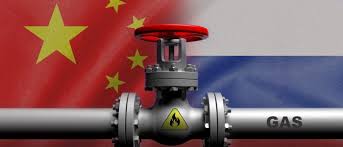
Russia’s bilateral trade with China has been rapidly diversifying, and although energy supplies remain a key part of the mix, they are not as dominant as they once were. Both countries remain committed to energy supplies, with both committing to a Joint Energy Strategy covering the 25 year period between 2025-2050. That includes significant projects such as the Power of Siberia 2 pipeline, scheduled to commence operations by 2035. In addition to this, agreements have also been signed for Russian oil that transits Kazakhstan, as well as increased LNG supplies from Yamal. China is a major client of Iran, but given the problems with United States activity in the Strait of Hormuz has come to realise that it also needs to secure more Russian energy supplies. In the first half of 2026, China boosted its imports of Russian crude oil by 16.7% year-on-year, reaching 57.28 million tons, according to China customs. The value of these imports also rose by 31.1%, reaching US$33.13 billion.
Likewise, Chinese imports of Russian LNG reached 3.593 million metric tons, an increase of 27.8% year-on-year, also according to China customs. In value terms, China’s purchases of Russian crude oil totaled US$33.128 billion in the first six months of 2026, a 31.1% increase from 2025.
While these are impressive figures, and while energy shipments account for 63% of all total exports, Russia’s crude oil and natural gas actually account for just 26% and 12% of Russia’s total GDP. That means that 62% of Russia’s total trade volumes are in the non-energy sector – and is precisely the area that has been developing and is being structured to increase still further.
Russia-China Trade Diversification
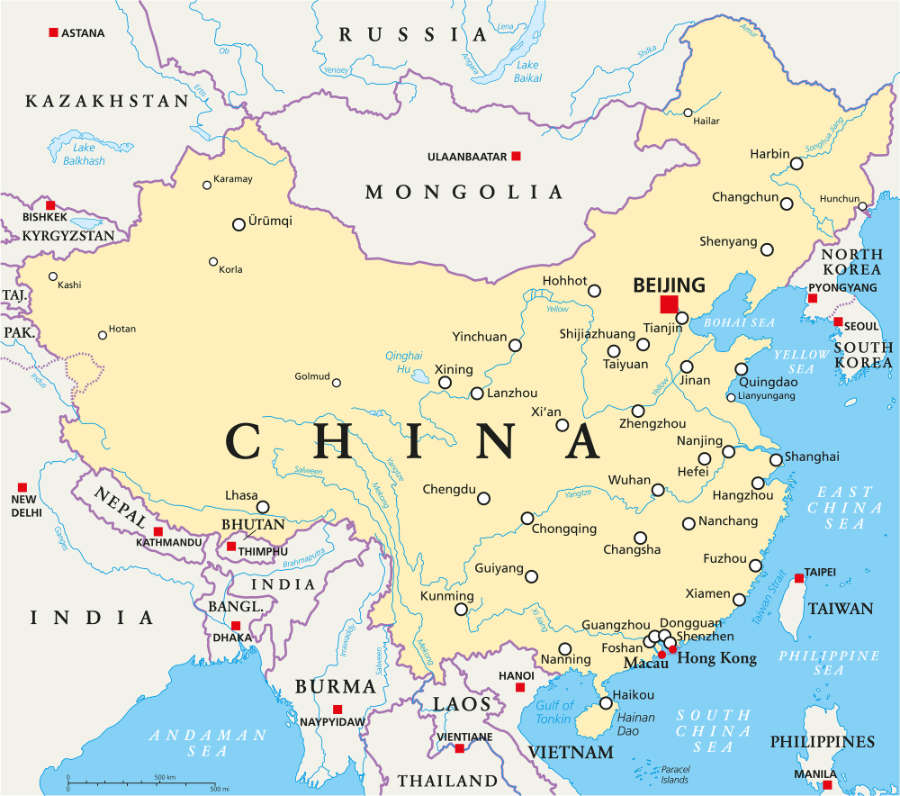
The real emerging story behind Russia-China trade is its rapid diversification. This is happening in multiple industrial sectors and via an increasingly penetrative stance into the Chinese market. As at 2025, about 85% of Russia’s exports to China went to Northern China alone. That stance is now changing with Russia’s trade and export institutions targeting other regions of China’s massive consumer market as well. This has led to agricultural exports for example to China’s southern Guangdong Province (near to Hong Kong) increasing, while Russia’s Direct Investment Fund is helping Russian exporters target markets in Hainan and Sichuan. The combined population of Guangdong, Hainan and Sichuan alone is 223 million. This trend of reaching out further to Chinese consumers, throughout the country, will continue. Russia’s export market analytics have significantly improved.
The Russia-China product mix is also changing. Russia now supplies 50% of China’s rapeseed oil, a product commonly used in Chinese cuisine. In total, Russia is now the largest provider of consumer grade oils and fats to the China market.
Russia’s agricultural exports to China are also up by 41% this year, with inroads being made into Chinese consumption of fish, pork, poultry, soybeans, and even cheese.
Industrial Joint Ventures are also increasing, with attention now on industrial cooperation and expanding bilateral joint investments. This ranges from supporting Chinese company investments in Russian agricultural production to creating direct channels between “competent departments and industry organizations” of the two countries in the automotive sector. China and Russia agreed updates to their Bilateral Investment Treaty last year to motivate these areas.
In terms of agriculture, Russia has huge amounts of arable land and is one of the world’s largest grain producers and exporters. In contrast, China has 20% of the global population but just 5% of its arable land and is a net importer. Working together not just in supply and demand but also in creating new crops will be a key development sector, especially in bioengineering. This is useful to develop strains that are, for example, saline and heat resistant to cope with rising sea levels and global warming.
China also has a huge auto industry and has been very successful in selling its products to Russia in the wake of Western marques exiting the market. There is also the trend of EV and alternative energy auto engines, structural processes that are still being developed. While the China-Russia auto sector has been restructured-Russia wants to be involved in auto production for vehicles sold in Russia rather than purely be an export market for China – both countries have engineering development capabilities to jointly produce vehicles that can be sold in both their markets as well as exported. New-tech vehicles exported, for example, to Europe as Chinese brands may well contain significant Russian components in the coming years.
Maxim Reshetnikov, Russia’s Economic Development Minister, has previously stated that Chinese businesses traditionally show the greatest interest in investing in chemical production, infrastructure construction, mineral extraction, and machine building. He stated the prospects for Russia-China investment cooperation relate to launching joint projects in high-tech manufacturing, agriculture, logistics, and Arctic development, including using the potential of the Northern Sea Route. Business analysts have also noted that the Russia-China trade and investment agenda appears increasingly broad.
Many mechanisms for joint work with China have already been launched over the past three years and are now undergoing refinement. Other areas of cooperation include territorial development – potentially leasing land to China for agricultural production – and master planning to open the Chinese market for a wider range of Russian agricultural products. Underlining this, according to Russian First Deputy Prime Minister Denis Manturov, Russia and China are considering a portfolio of investment cooperation projects worth a total of more than US$200 billion. That is 2/3 of the current anticipated annual Russia-China trade for 2026 (including energy) and will undoubtedly usher in a new era of Russia-China industrial, manufacturing and product development cooperation. This will have global supply chain implications.
The two countries have also almost fully de-dollarized their bilateral trade, which, according to Lavrov’s discussions with Wang, grew by 25.6% during H1 2026, suggesting that the 2026 total will amount to about US$300 billion, a new record high.