
 Русский





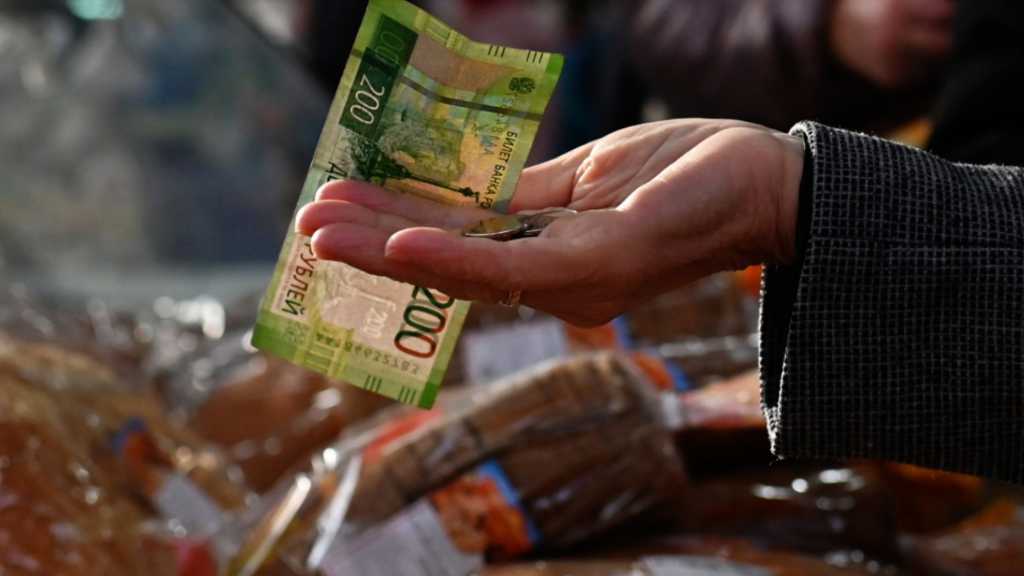

Russian President Vladimir Putin has held a working meeting with Russian Minister of Economic Development, Maxim Reshetnikov, where they discussed the state of the Russian economy and the scenario conditions for its development for the period of 2026-2029.
Reshetnikov said that “Our focus is always on stimulating structural changes in the economy so that, regardless of which part of the economic cycle we are in, our economy’s growth potential is maximized. And for this, we have now created scenario conditions for the development of the economy, which will determine the next three years. They have been reviewed and supported by the Government. In general, the forecast is quite conservative, including in terms of oil prices.”
The scenario conditions are formed in two versions – basic and conservative. The base case describes the most likely scenario development of the Russian economy. The conservative option is based on prerequisites for the deterioration of external economic conditions.
“In general, we have also discussed these scenario conditions a lot with the Bank of Russia. They will form the basis of the federal budget projections,” Reshetnikov said.
Russia’s GDP Growth 2026-2029
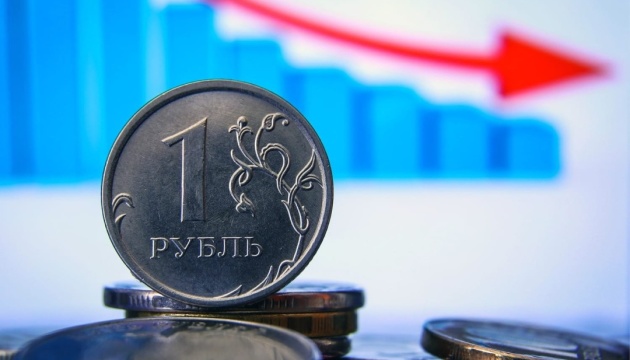
In the baseline scenario, the Russian Ministry of Economic Development has lowered its forecast for Russia’s GDP growth in 2026 to 0.4% from 1.3%. The forecast for Russia’s GDP growth in 2027 has been lowered to 1.4% from 2.8%, and in 2028, it has been lowered to 1.9% from 2.5%. In 2029, the ministry has forecasted a growth rate of 2.4% for the Russian economy.
Commenting on the forecast, a representative of the Ministry of Economic Development said: “The first and most important thing is that we maintain a positive economic growth rate over the entire forecast horizon. We do not believe that GDP will go into negative territory (recession) in 2026. It is possible that this happened in the first quarter, but this is a well-expected situation, as the Central Bank has warned about. But overall for the year, we expect growth of about 0.4% — which is in line with the estimates of other market analysts who give forecasts ranging from 0.3% to 1.0%. We are closer to the lower end, and we are currently evaluating this in a conservative manner.”
The Ministry also noted that the dynamics of Russia’s GDP in annual terms in the first quarter of 2026 (a decrease of 0.3% y/y, according to the Ministry’s estimates) can be explained by both statistical factors, such as the high base of the first quarter of 2025, and calendar factors, such as three fewer working days than in the first quarter of 2025.
They also noted there was a weather factor: in January and February last year, there was a 10% increase due to a warm winter, but this year, due to cold weather, there was a decline, and the situation is now leveling out. Therefore, the 0.3% decrease in the first quarter seems normal, taking into account all these factors. In the second quarter, there will be three more working days than in the second quarter of 2025, so the calendar factor will be eliminated for the first half of the year.
In April, the Central Bank maintained its forecast for Russia’s GDP growth in 2026 at 0.5-1.5%, and in 2027 at 1.5-2.5%. This means that the new forecast by the Ministry of Economic Development for 2026-2027 is more conservative than the Central Bank’s expectations.
External Risks
The Ministry of Economic Development’s forecast notes that there are still risks of escalating geopolitical conflicts, with the main effect being an increase in the prices of energy resources and other categories of goods. They said that “In the medium term, there are increasing risks of energy resource shortages, which will be a limiting factor for the growth of many major economies (primarily in terms of reducing the production of petrochemical products, including fertilizers, agricultural products, and light industry). The general decline in economic activity in these countries carries risks in terms of reducing demand for certain Russian export goods, primarily non-commodity non-energy goods.”
Impact of the Iran Conflict
Ministry officials noted that the Ministry of Economic Development has “A very reserved assessment of the positive impact of the crisis in the Strait of Hormuz on the Russian economy. In our opinion, there is almost no impact, although there is some positive short-term and possibly medium-term impact on prices. We can also see that the estimates of price growth and the facts of price growth are somewhat different from the dire forecasts that many international analysts made at the beginning of this crisis. In terms of volumes, the impact is not so great – we sell everything we can sell, the question is at what prices. The issue of price is the issue of the deflator.”
Internal Risks
The Ministry added that “The forecasted, internal Russian risks are associated with the continued tight monetary conditions. The key risk is the additional restrictions on investment resources amid a general cooling of the economy, a decrease in the financial performance of Russian enterprises, and a low investment attractiveness partially caused by a high interest rate, a casualty of Russia’s battle against inflation, but at the same time making it difficult to adequately finance exports.
The decrease in the predictability of external factors may further contribute to an increase in the population’s propensity to save, which, combined with the risks of a decrease in the population’s income dynamics, may hinder consumer activity and economic growth in general.”
Commenting on the Central Bank’s opinion that the positive output gap may have been closed in the first quarter, the Ministry of Economic Development stated that “About the output gap, we estimated it to be lower than the Central Bank at its peak, so we believe that if there was an output gap, it was closed at the end of 2025, when we saw a sharp decline in inflation with all the ensuing consequences.”
Russia’s GDP Growth Rate 2026-2029
The Ministry stated that “As for the potential growth rate, this is a very difficult issue. We are convinced that monetary policy affects not only fluctuations around the potential, but also the potential itself, including due to the length of the investment cycle, its shift, and so on. According to our forecast, we are unlikely to achieve a 3% growth rate per year in the coming years, but we also cannot say that it is impossible.”
Russia’s 2026 Inflation Rate
The Ministry of Economic Development has raised its forecast for inflation in Russia in 2026 to 5.2% from 4% in the September version of the forecast: “Inflation will continue to slow down and will reach 5.2% by the end of 2026. This is a continuation of the gradual decline (from the current level of 5.6%). This includes the planned change in utility tariffs in October. Even with this in mind, we expect inflation to remain within this range, as current trends indicate.”
At the meeting President Putin, Reshetnikov said that the inflation rate in Russia as of May 4 was 5.6%, which creates conditions for easing monetary policy. The eventual target is to reduce Russia’s inflation rate to 4% by the end of 2027.
Russian Investment Growth
The Ministry stated that “Investments in fixed assets will decrease by 3.5% in 2026. Growth will resume in 2027 (by 1%) and accelerate by 2029 (to 2%), and its accumulated level for 2027-2029 will be 4.6%.”
Ukraine Conflict Costs
Information about how much the SVO in Ukraine costs the Russian economy is not disclosed. European economists can draw their own conclusions. Russia’s position suggests that even if the conflict in Ukraine drags on and receives additional funding (the EU has allocated a €90 billion loan to Kiev), the use of these funds will not deal a substantial blow to the Russian economy. This is due to two main factors:
EU Funding
Of the EU’s €90 billion loan, at least €30 billion of these funds are to be allocated to maintaining Ukraine’s social infrastructure (pensions, salaries, and social infrastructure) rather than military expenses. It should be noted that even this massive social infrastructure amount is insufficient to cover Ukraine’s needs into 2027.
This leaves Ukraine with a remaining budget of €60 billion to combat Russia. But if we take into account the previous costs of maintaining this conflict, it turns out that Ukraine has already spent US$174 billion in American support, plus €132 billion allocated by the EU between 2022 and 2024. This total amount equates to over €300 billion, which means that based on the previous year’s military expenditure in fighting Russia, the €60 billion that will be spent on military supplies to Ukraine will only last for seven months. Given that the EU was forced to raise this money from European capital markets, using this method again to obtain a secondary tranche is likely to face significant political and fiscal opposition. In short, the EU will need to acquire yet more debt to continue this conflict beyond this year.
Russia’s Funding
The situation in Iran has effectively doubled the revenue that Russia receives from increased oil exports to third countries such as China, India, and others. It is estimated that in April 2026 alone, this generated an additional US$4.5 billion (€3.85 billion) for the Russian economy. This means that Russia will receive 50% of the amount of the EU loan (over a period of seven months) as income, which will balance the EU’s loan for Ukraine’s military needs. While the EU will need to borrow more money to maintain this level of spending, Russia will not need to raise this capital.
From an economic perspective, this suggests that the conflict in Ukraine is likely to end by the end of the estimated seven-month period based upon the EU’s current funding. Unless they can come up with more capital, this money will run out by September / October, which is why Moscow is claiming that the conflict in Ukraine is nearing its end.
Summary
The Ministry’s reports suggest that the Russian economy, despite its slowdown, will not go into a recession and will gradually recover over the next three years, based on current circumstances and conservative rather than optimistic forecasts. This means that Russia has taken into account the risk factors and has adapted to the current situation of uncertainty in global geopolitics, especially in terms of the behavior of the United States, while also being well aware of the situation in Europe. The risk factors included in the Russian budget are well understood, inclusive, and factored into the expenses budget. That is a different scenario to the European Union, which has actively had to borrow money from its own capital markets to sustain both Ukraine and cater for more expensive energy costs. It means that the Russian economy appears to be stable and sustainable, despite the significant pressures it is facing.
Maxim Reshetnikov finished his meeting with Putin with a statement about the overall size of the Russian economy. He said: “In terms of economic size, we are the fourth largest economy in the world by purchasing power parity, and we will maintain this position in the near future.”