 Русский




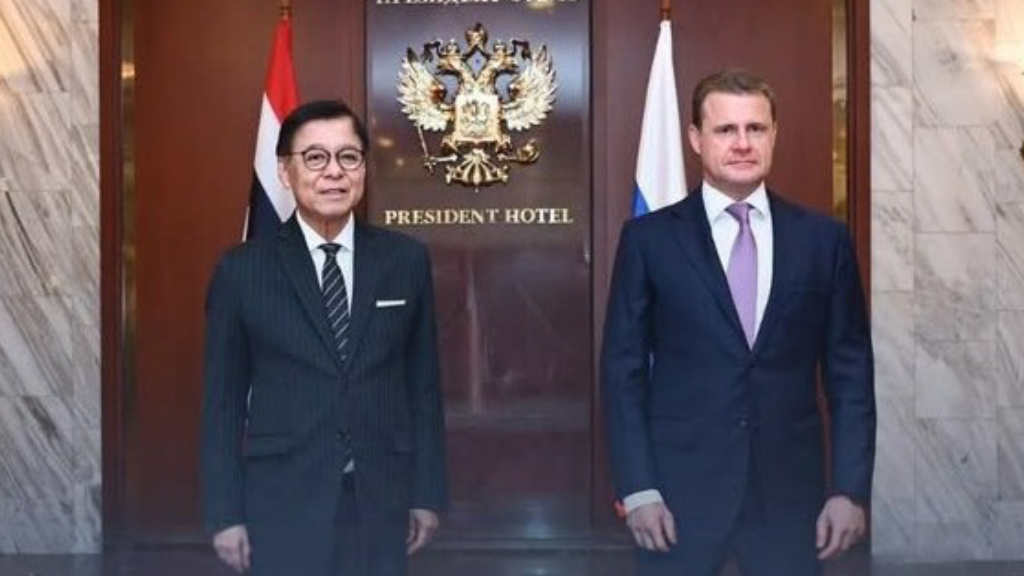

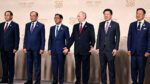
Russia-Thailand relations are entering a new economic phase. The political momentum generated by Thai Prime Minister Anutin Charnvirakul’s June visit to Russia and his meeting with President Vladimir Putin in Kazan has now been followed by a more concrete economic push in Moscow. The August 12-15 visit of Thai Deputy Prime Minister and Foreign Minister Sihasak Phuangketkeow was important precisely because it moved the relationship beyond political declarations.
The talks focused on trade and investment, the proposed Thailand-Eurasian Economic Union free trade agreement, agriculture, energy, aviation and transport connectivity, tourism, investment promotion and new mechanisms for business cooperation.
On August 14, Sihasak co-chaired the ninth session of the Thailand-Russia Joint Commission on Bilateral Cooperation with Russian Minister for the Development of the Far East and the Arctic Alexey Chekunkov. The emerging model is broader than a conventional bilateral trade relationship. Thailand increasingly sees Russia not simply as a market, while Moscow increasingly sees Thailand not simply as a tourist destination. The strategic calculation on both sides is becoming clearer: Thailand can serve as a gateway for Russian and Eurasian businesses into ASEAN, while Russia can provide Thailand with access to the EAEU, energy, fertilizers, agricultural commodities, industrial inputs and investment opportunities in its Far East.
Advances In Russia-Thailand Trade, Investment & An EAEU FTA

On August 13, Sihasak met Russian Deputy Prime Minister Alexander Novak in Moscow, where the two sides discussed expanding trade, investment, agriculture and energy cooperation, improving trade facilitation and accelerating preparations for the launch of negotiations on a Thailand-EAEU Free Trade Agreement. They also exchanged views on cooperation through multilateral economic platforms, including BRICS, where Thailand is a partner country.
On August 14, Sihasak held talks with Russian Foreign Minister Sergey Lavrov, focusing on the broader bilateral and regional agenda, including trade and investment, agriculture, tourism, culture, security, Russia-ASEAN cooperation and regional developments. “We are interested in the full development of our relations in a variety of industries, including trade, economy, investments, up to humanitarian ties.
The two ministers signed the Sixth Plan of Consultations between the Russian and Thai Foreign Ministries for 2026-2030, establishing a framework for regular foreign-ministry consultations and cooperation over the next four years. The discussions also addressed preparations for the 130th anniversary of Russia-Thailand diplomatic relations in 2027, alongside efforts to advance economic agreements and strengthen bilateral institutional mechanisms. The significance of the two meetings lies in their complementary roles: Novak’s talks concentrated on the commercial and economic architecture such as trade, investment, agriculture, energy and the EAEU FTA while Lavrov’s meeting placed these economic priorities within the wider strategic Russia-Thailand and Russia-ASEAN relationship. Together with the ninth Russia-Thailand Joint Commission held during the visit, the meetings moved the relationship from political rapprochement toward a more structured programme of economic cooperation.
From a US$1.7 Billion Trade Base to a Larger Economic Market
With its US$2.2 trillion PPP economy and strategic ASEAN position, Thailand could increasingly serve as a bridge between Russia and Southeast Asian markets. Howver, the starting point remains relatively modest. As Russian Foreign Minister Sergey Lavrov recently stated, bilateral Russia-ASEAN trade, which reached approximately US$22 billion in 2025 despite sanctions and global economic disruptions, could double to US$44 billion by 2036.
Building on the outcomes of the Kazan Summit, including the Kazan Declaration 2026, the Comprehensive Plan of Action for 2026-2030, and joint statements on energy and cultural cooperation, Thailand is well positioned to become one of the key drivers of the expanding Russia-ASEAN economic partnership. Russia-Thailand trade reached approximately US$1.7 billion in 2025, an increase of 2.3%.
Thailand is emerging as a key middle-tier partner in Russia-ASEAN economic relations, with Russian exports rising 12% last year to reach US$790 million. During the meeting, Russia and Thailand confirmed their policy of expanding bilateral trade. Russian exports to Thailand have again increased in the first five months of this year by a further 50%.
A solid foundation has been established to expand bilateral trade, including energy supplies, fertilizers, agricultural products and services. The sides also discussed prospects for cooperation in pharmaceuticals, IT, fintech and creative industries, with Russian companies already entering the Thai market with cybersecurity and smart-city solutions.
Yet the trajectory in 2026 has been considerably stronger: bilateral turnover increased by almost 23% in January-May 2026 compared with the same period of the previous year. For two economies of Russia’s and Thailand’s scale, this remains a small trade relationship. That is precisely why the growth potential is significant, as the existing trade structure is complementary.
Russia supplies Thailand with mineral fertilizers, aluminum, technical carbon, ferrous-metallurgy products and synthetic rubber. Thai exports to Russia include automobile tires, electronics, aviation products, canned fish and processed fruit. This structure creates a straightforward economic opportunity. Russia has a competitive advantage in energy, fertilizers, raw materials and selected industrial products, while Thailand has stronger positions in manufacturing, food processing, consumer goods, electronics and automotive-related industries. The challenge is therefore not the absence of demand. It is the creation of the financial, logistical, regulatory and institutional mechanisms necessary to convert that demand into larger trade flows.
The EAEU FTA Is the Central Strategic Objective

The most consequential issue raised during the August visit was Thailand’s renewed attempt to launch negotiations on a free trade agreement with the Eurasian Economic Union. Dr. Poj Aramawatananon, Chairman of the Thai Chamber of Commerce joined with Deputy PM Sihasak to push a Thai-EAEU FTA in order to boost trade by an estimated US$5 billion within 5 years.
Thailand has been interested in such an agreement for roughly a decade, but progress has remained limited. Sihasak urged the Eurasian Economic Commission to accelerate the technical preparations required to begin formal negotiations. He had raised the issue during his recent visit to Kazakhstan and received support from Astana, which holds the EAEU chairmanship during 2026.
The potential market is substantial. Thailand’s trade with the five-member EAEU countries such as Russia, Belarus, Kazakhstan, Armenia and Kyrgyzstan exceeded US$2 billion in 2025. The bloc represents a market of more than 180 million people.
For Thailand, an FTA would provide a more predictable route into Eurasia at a time when Bangkok is seeking to diversify its export markets. For Russia, the calculation is equally strategic. Thailand could become a distribution, manufacturing and investment platform for Russian companies seeking greater access to ASEAN. The proposed FTA should therefore be understood not merely as a tariff agreement, as its true significance lies in the possibility of creating a Russia-EAEU-Thailand-ASEAN commercial chain.
Thailand has plenty of regional experience to examine when it comes to an EAEU FTA. Fellow ASEAN member Vietnam has had such an agreement since 2016, while Indonesia signed an agreement last year.
However, the process will not be fast. Sihasak acknowledged that the joint study required before formal negotiations could take more than a year, followed by a separate negotiating process if the study confirms that an agreement is economically beneficial. This makes the revival of existing working mechanisms particularly important. Bangkok and the EAEU intend to use their existing economic and trade framework while technical preparations for the FTA continue.
The Real Obstacles Are Payments and Market Access

The discussions also exposed an important reality: political support alone cannot produce higher trade. Financial settlements remain a major challenge. Thai businesses have expressed interest in expanding operations in Russia but remain cautious about transactions because of sanctions-related risks and their exposure to Western financial systems. This makes payment infrastructure one of the decisive questions for future trade growth. Agricultural regulations create another bottleneck. Thailand wants broader access for its agricultural and food products, while Russia wants to increase its own agricultural exports to the Thai market. The Joint Commission therefore placed market access, trade facilitation and the reduction of trade barriers at the center of its agenda. In practical terms, the future of bilateral trade will depend less on political declarations than on whether companies can pay, insure, certify, transport and sell products efficiently. Progress within ASEAN is being made. Russia’s Sberbank have rolled out a QR payment system in Indonesia, while Russia’s MIR cards can be used in selected outlets in Indonesia, Myanmar and Vietnam. Thailand is interested in accepting Mir card payments due to the visa-free stay for Russians in the country being extended to 90 days. Establishing and improving payment settlement mechanism is where the next phase of the relationship will be decided.
VTB has launched QR-code payments in Thailand through its VTB Online mobile application, enabling Russian customers to pay for goods and services directly from their ruble accounts. The bank automatically converts rubles into Thai baht, with no payment commission and a maximum single transaction of ₽113,000 (US$1,345.63).
The service is available at Thai retail outlets that accept QR-code payments. VTB said Thailand’s popularity among Russian tourists made the service a logical expansion, allowing customers to scan a merchant’s QR code and complete payments within seconds. The launch adds Thailand to VTB’s growing international QR-payment network, which already includes Vietnam, China, Argentina, Brazil, Egypt, Kyrgyzstan, Tajikistan and other countries. VTB also provides international transfers to more than 150 countries, through cards or phone numbers, bank details, or cash-receipt options.
Agriculture Offers the Fastest Route to Higher Trade

Agriculture is one of the areas where the economic logic is particularly strong. Russia and Thailand have already recorded growth in agricultural and food trade. Russian officials reported that this trade increased by more than 15% in 2025, while fertilizer supplies were also discussed as a potential area for expansion. Thailand has significant demand for fertilizers and agricultural inputs, while Russia has a large exportable agricultural surplus.
At the same time, Thai food companies have opportunities in Russia in processed foods, fruits, seafood and other consumer-oriented products. The two countries are therefore discussing improvements in veterinary and sanitary procedures, including inspections of production facilities. If these barriers are reduced, agricultural trade could become one of the fastest-growing components of bilateral commerce because it combines Russia’s resource advantage with Thailand’s strong food-processing and export capabilities.
The more ambitious opportunity would be to move beyond simple commodity exchange and build supply chains linking Russian agricultural inputs with Thai processing, packaging and distribution networks. The April 13, 2026 Moscow talks between Russian Deputy Prime Minister Dmitry Patrushev and Thailand’s Minister of Agriculture and Cooperatives Suriya Juangroongruangkit on 1-2 million tonnes of annual Russian urea supplies highlight agriculture as a major growth area, while LNG, refined petroleum, tourism and digital cooperation offer further diversification.
Russia has the production capacity to support such an arrangement through major fertilizer producers including PhosAgro, UralChem, Uralkali, Acron Group and EuroChem, which collectively provide substantial supplies of nitrogen, phosphate and potash fertilizers. Russian producers can also meet Thailand’s technical requirements, including 2.5-5 mm granular urea, making fertilizer trade one of the most immediately scalable areas of economic cooperation.
Energy Is Becoming a Structural Component
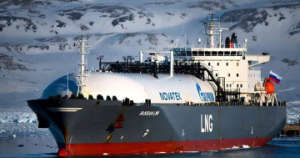
Energy is another area where the relationship is acquiring greater strategic weight. During Putin and Anutin’s June 18 meeting in Kazan, Russia expressed readiness to expand supplies of oil, LNG and fertilizers to Thailand. For Bangkok, Russian energy can contribute to diversification of supply sources. For Moscow, Thailand represents another Asian market at a time when Russian energy trade is becoming increasingly oriented toward Asia. This does not mean that Thailand will replace Russia’s largest Asian energy customers. Rather, the importance lies in diversification. The same logic applies to nuclear energy and energy technology. While concrete large-scale projects have yet to emerge from the latest talks, energy cooperation provides a potential long-term platform for technology, investment and industrial cooperation. A Myanmar delegation led by a Union Minister has expressed interest in importing liquefied natural gas (LNG) from Russia and re-exporting it to China and Thailand via existing pipeline networks. The remarks were made during a meeting on April 15 with Russia’s Minister of Energy, Sergei Tsivilev, during the delegation’s visit to the Russia. During the talks, the Union Minister highlighted Myanmar’s intention to facilitate the transport of Russian LNG to the country and use its pipeline infrastructure to distribute the energy onward to neighboring countries.
Railways Could Become the Missing Link

Transport connectivity is arguably the most important economic issue after trade and payments. On August 4, Russian Transport Minister Andrey Nikitin met Thai Deputy Prime Minister and Transport Minister Phiphat Ratchakitprakarn to discuss transport cooperation, including railways and maritime freight. The Russian side highlighted the potential for cooperation in railway technologies and for increasing maritime cargo flows, including container transportation. For Thailand, Russian railway expertise offers potential applications in both passenger and freight transportation. For Russia, Thailand provides a logistics gateway into mainland Southeast Asia. The strategic significance is therefore larger than any individual railway contract. If transport cooperation develops, Russia-Thailand trade can increasingly be incorporated into broader Asian supply chains rather than remaining dependent on relatively expensive and fragmented routes. Our deep dive is here.
Dawei Port Adds an Indian Ocean Dimension
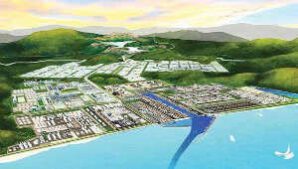
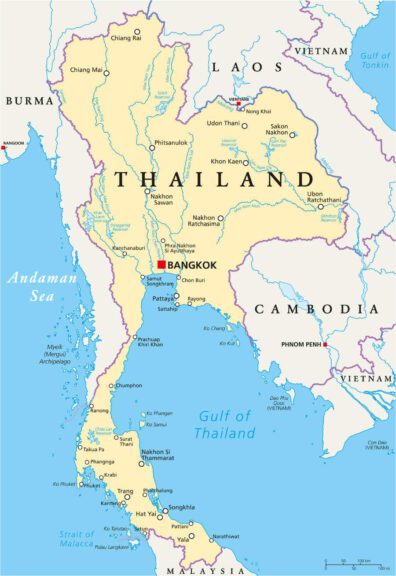
The proposed development of Myanmar’s Dawei deep-sea port by Russia adds another dimension to the relationship. During the August discussions, Thailand indicated interest in Russian investment in major regional infrastructure projects, including Dawei. For Thailand, Dawei could eventually provide another maritime outlet toward the Indian Ocean and help diversify logistics beyond existing routes through the Strait of Malacca.
For Russia, Dawei creates an opportunity to engage with infrastructure connecting mainland Southeast Asia to the Indian Ocean. This makes Dawei strategically different from a conventional bilateral investment project. Its potential importance lies in creating a third-country logistics platform connecting Russian, Thai and wider Asian commercial interests.
Myanmar and Russia signed comprehensive agreements to develop Dawei last year, with the focus on long-term liquefied natural gas (LNG), crude oil, and petroleum product supplies. This partnership opens potential channels to expand energy infrastructure, such as deep-sea port terminals at Dawei, which will provide a gateway for re-exporting Russian energy products into the broader Southeast Asian and Thai regional markets.
On August 18, President Vladimir Putin is scheduled to hold talks at the Kremlin with President of the Republic of the Union of Myanmar Min Aung Hlaing, who is on an official visit to Russia. We will provide an in-depth analysis of Russia-Myanmar economic ties tomorrow, examining how the partnership could deepen bilateral trade, investment, energy and connectivity cooperation and, more broadly, energize Russia’s economic engagement with Southeast Asian countries including Thailand. To make sure you see this, a complimentary subscription to our weekly update can be found here – use that if you want to remain abreast of this intelligence.
The Russian Far East Could Become Thailand’s Entry Point into Russia
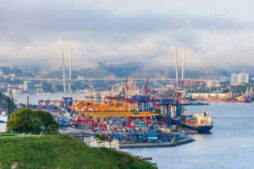
One of the most important ideas promoted by Moscow during the August visit was the Russian Far East. Chekunkov emphasized that the region is geographically closer to Thailand than European Russia and offers special investment regimes, including the Free Port of Vladivostok and territories of advanced development.
This changes the investment equation. Thai companies do not necessarily need to approach the Russian market exclusively through Moscow or St Petersburg. Vladivostok and Primorye provide a geographically Asian entry point into Russia. The Far East also offers proximity to China, Korean Peninsula, Japan and other Asia-Pacific markets.
For Thailand, this creates an opportunity to combine Russian investment incentives with existing Asian supply chains. For Moscow, attracting Thai capital into the Far East would serve a broader national objective: accelerating the region’s integration into Asia-Pacific economic networks. Investment cooperation will focus on Russia’s Far East, with its Free Port of Vladivostok, TORs and new international TOR mechanism, while a unified Far East–Arctic TOR is planned from 2027.
A Thai delegation is expected to attend the upcoming Far Eastern Economic Forum in Vladivostok, an event where neighbouring Malaysia is the guest of honour.
Vladivostok’s Russian Innovative Scientific and Technological Center could also expand Russia-Thailand cooperation in innovation, biotechnology and biopharmaceuticals by connecting scientists with Russian and foreign businesses. Thai business interest in Russia is expected to grow as new investment-support mechanisms become available, including international territories of advanced development, the Free Port of Vladivostok and existing TOR regimes in the Russian Far East. Minister Alexey Chekunkov noted that Thai investors are already entering the Russian market, while Russian investors are also attracted to Thailand’s economic stability and predictable business environment.
Vladivostok is important for Thailand as it is the fastest route to access the Russian market. Russia’s FESCO Transportation Group already operates regular shipping routes between Vladivostok and Thailand.The company runs direct maritime and intermodal services linking the Commercial Port of Vladivostok with key Thai ports, primarily Bangkok and Laem Chabang. The vessels operate on a rotation normally covering Bangkok – Laem Chabang – Ho Chi Minh City – Vladivostok and back. Ocean transit typically takes from 20 days, with weekly departures using FESCO’s own fleet. As part of the FESCO Intra Asia Service (FIAS), these sea legs connect directly to Russia’s rail network in Vladivostok. This allows for door-to-door cargo transit from Thailand to Moscow and other inland Russian cities.
Tourism Is Already the Most Mature Economic Link

Tourism remains the strongest established pillar of the relationship. Approximately 1 million Russian tourists visited Thailand during the first half of 2026, while Bangkok is targeting 2 million Russian visitors for the full year. This is not merely a tourism statistic. Large tourist flows create demand for direct flights, payment services, hotels, healthcare, food, retail and digital services. They also create personal and business networks that can subsequently support trade and investment.
Thailand and Russia are therefore discussing expanded air connectivity, tourism safety, cultural promotion, medical and wellness tourism, gastronomy and sports exchanges. The possibility of direct flights by Thai airlines to Moscow was also discussed in August. Moscow and Bangkok are discussing the launch of direct Thai airline flights to Russia, with Russian Minister for the Development of the Far East and Arctic Alexey Chekunkov aiming to secure at least one additional Thai-operated direct route by the second half of 2027; currently, direct services are operated only by Russian carriers, including Aeroflot, Rossiya and S7 Airlines, connecting Moscow, Bangkok, Phuket and Irkutsk. If direct Thai-Russian air connectivity expands, the effect could extend well beyond tourism. Business travel would become easier, transaction costs would decline and private-sector contacts could become more frequent.
From Government Dialogue To Business Dialogue
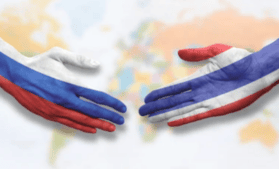
The economic diplomacy of the visit was not limited to government meetings. On August 13, Sihasak attended a working lunch hosted by Ivan Demchenko, chairman of the Russian-Thai Business Council. The meeting brought together representatives of the private sectors and was explicitly linked to preparations for the second Russia-Thailand Investment Forum.
The Russian-Thai Business Council, established in 2006, includes companies from heavy industry, energy, ICT and logistics. On the same day, Sihasak met Deputy Prime Minister Alexander Novak. Their discussion covered trade, investment, agriculture and energy, alongside trade facilitation and the acceleration of Thailand–EAEU FTA preparations. He also met Bakytzhan Sagintayev, chairman of the Board of the Eurasian Economic Commission.
Their agenda included the FTA, artificial intelligence, e-commerce, connectivity, green energy and closer cooperation between private-sector companies. This is an important expansion of the agenda. The proposed economic relationship is no longer limited to commodities, as digital trade, AI and green technologies are now being incorporated into the bilateral framework.
Creating A New Institutional Framework
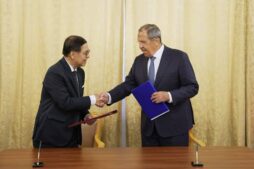
The August 14 Joint Commission meeting was particularly significant because it revived a high-level bilateral mechanism after a period of limited activity. The ninth session covered trade and investment, agriculture, energy, industry, tourism, education and climate change.
Sihasak and Lavrov also signed the Sixth Plan of Consultations between the Thai and Russian Foreign Ministries for 2026-2030. The agreement provides an institutional framework for regular consultations and cooperation over the next four years. Its timing is particularly significant because Russia and Thailand will celebrate the 130th anniversary of diplomatic relations in 2027. Both sides exchanged agreed minutes covering these areas and linked the commission’s work with preparations for the second Russia-Thailand Investment Forum in Bangkok. The Investment Forum, scheduled to take place in Bangkok on October 29-31 this year will focus on unlocking bilateral economic potential and laying the foundation for long-term investment projects in Russia and Southeast Asia under the theme “Russia-Thailand: A New Era of Economic Partnership.”
October Will Be the Real Test

The next major milestone will be the Second Russia-Thailand Investment Forum in Bangkok on October 29-31, 2026. The forum is expected to focus on sectors including metallurgy, agriculture, energy, healthcare, pharmaceuticals, the platform economy, real estate and tourism. Its importance should not be underestimated. The June summit created political momentum. The August Moscow visit established working mechanisms. But the October forum will show whether those mechanisms can generate actual investment projects, export contracts and commercial partnerships.
For Russia, the objective should be to bring more Thai capital into manufacturing, logistics, food processing and the Far East. For Thailand, the priority will be gaining greater access to Russian and EAEU markets while reducing the financial and regulatory costs associated with doing business with Russia. Russia’s Pivot to Asia successfully covered the 1st Russia-Thailand Investment Forum last year, providing valuable insights for our readers. We will also provide an in-depth and outcome-based analysis of the 2nd Thailand-Russia Investment Forum in due course.
From Bilateral Trade to a Russia-Thailand-ASEAN Economic Corridor
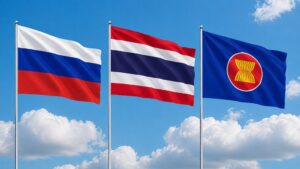
The most important development in Russia-Thailand relations is therefore not a single agreement. It is the emergence of a new economic logic. Thailand is seeking alternative markets and investment partners while preserving its broader multi-vector economic policy. Russia is looking for new commercial channels into Southeast Asia.
The EAEU offers Thailand a market of more than 180 million people, while Thailand offers Russian companies access to an ASEAN region of roughly 700 million people. This creates a potential two-way gateway. Russia can provide Thailand with energy, fertilizers, agricultural commodities, industrial materials, technology and access to Eurasian markets. Thailand can provide Russia with manufacturing capacity, consumer products, tourism, logistics and a platform for wider ASEAN engagement.
This is why the sequence of bilateral events from Kazan on June 18 to Moscow on August 14 and then Bangkok in October is important. The June Putin-Anutin meeting established the political direction. The August 12-15 visit transformed that direction into a working economic agenda. The October investment forum will determine whether the private sector can turn that agenda into capital, contracts and projects.
While the immediate numbers remain modest, at US$1.7 billion in 2025 bilateral trade, the architecture being built around them is considerably larger. The strategic objective is no longer simply to sell more Russian goods in Thailand or more Thai goods in Russia. It is to build a Russia-Thailand-EAEU-ASEAN economic corridor based on trade, energy, agriculture, transport, tourism, investment and digital cooperation. If Moscow and Bangkok can overcome payment, certification and logistics constraints, Thailand could become one of Russia’s most important economic gateways into Southeast Asia while Russia’s Far East could become Thailand’s gateway into the wider Eurasian market. This is the real significance of their developing bilateral ties.
This article was written by I.K. Hasan, a South Asia based independent researcher, columnist, and freelance journalist. He can be reached at info@russiaspivottoasia.com