 Русский




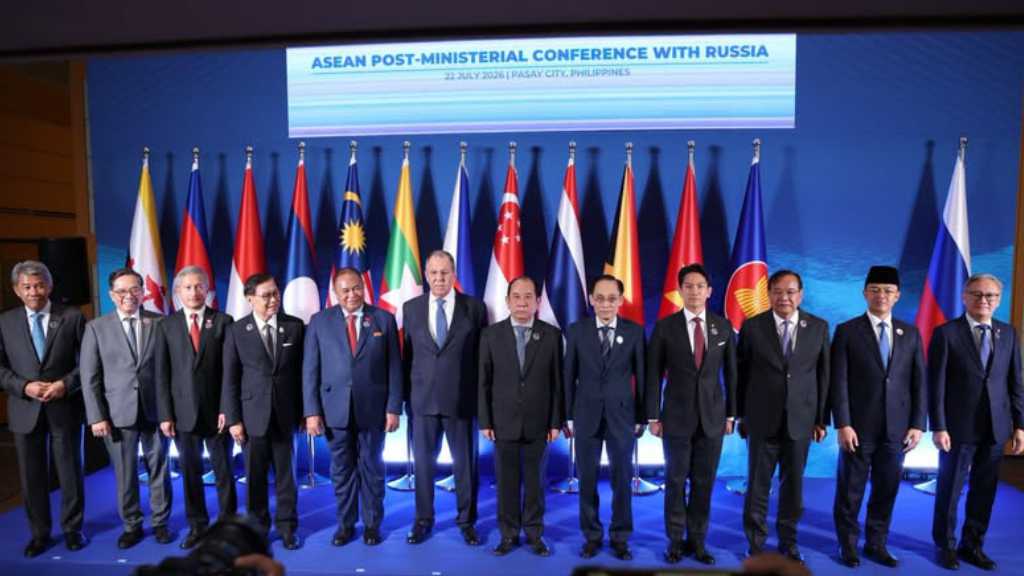

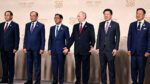
When Russian Foreign Minister Sergey Lavrov arrived in Manila on July 21 for the ASEAN Foreign Ministers’ Meetings, his schedule appeared, at first glance, to resemble the annual diplomatic routine that accompanies ASEAN-led multilateral forums. Over three days, he attended the Russia-ASEAN Ministerial Meeting, the East Asia Summit Foreign Ministers’ Meeting and the ASEAN Regional Forum (ARF), while conducting bilateral meetings with counterparts from Southeast Asia, South Asia, Africa, Latin America and the United States. Yet reducing the visit to another ASEAN diplomatic engagement would overlook its larger significance. Manila became the first major test of whether the commitments reached during the Russia-ASEAN Commemorative Summit in Kazan in June could be translated into an actionable economic agenda.
The most consequential announcement came not during discussions on regional security but during Lavrov’s assessment of Russia-ASEAN economic cooperation. He declared that bilateral trade, which reached approximately US$22 billion in 2025 despite sanctions and global economic disruptions, could be doubled by 2036 (US$44 billion by 2036). He identified the engines of that expansion: the platform economy, high technologies, innovation, outer space cooperation, customs integration and maritime connectivity.
That single statement offers perhaps the clearest indication yet that Russia’s ASEAN strategy has entered a new phase. During the past decade, Moscow focused primarily on restoring political trust, expanding strategic dialogue and maintaining ASEAN centrality amid intensifying geopolitical competition. The Manila meetings demonstrated that the emphasis is now shifting toward measurable commercial outcomes. Russia is no longer seeking only diplomatic relevance in Southeast Asia; it is seeking a significantly larger economic footprint.
From Kazan to Manila: Diplomacy Becomes Implementation

The Manila meetings cannot be understood without considering the Russia-ASEAN Summit held in Kazan one month earlier. That summit marked the 35th anniversary of Russia-ASEAN dialogue relations, producing the Kazan Declaration and the Russia-ASEAN Comprehensive Plan of Action, which established detailed priorities extending through 2030.
Those priorities include food security, energy cooperation, digital transformation, science-intensive industries, innovation, space cooperation and humanitarian exchanges. This sequencing illustrates an increasingly sophisticated Russian diplomatic model. Political leaders establish strategic vision through summit diplomacy, while foreign ministers translate those commitments into sector-specific cooperation involving companies, investment agencies and financial institutions. The Manila meeting therefore marked the beginning of the implementation phase of the Kazan agenda rather than its conclusion.
Lavrov repeatedly referred to Kazan throughout the Manila meetings, describing ASEAN as a reliable strategic partner and emphasizing that both sides were moving from declarations toward implementation. Rather than reopening negotiations, ministers concentrated on coordinating practical measures needed to execute the agreements reached by leaders in June. This continuity is important. Russia has increasingly adopted a model of economic diplomacy that mirrors successful Asian approaches: high-level political summits establish strategic direction, while ministerial meetings, sectoral working groups and business communities convert those commitments into investment projects, industrial cooperation and commercial partnerships. Manila therefore represented less a diplomatic event than the first implementation conference for the post-Kazan agenda.
Why ASEAN Matters More Than Ever

The timing of Lavrov’s visit reflects profound changes occurring across the global economy. Southeast Asia has become one of the world’s fastest-growing economic regions. ASEAN collectively represents a market of approximately 690 million people, with a combined GDP exceeding US$4 trillion, making it the world’s fifth-largest economy. Its manufacturing base has expanded rapidly as multinational companies diversify production networks beyond traditional locations. The region also occupies one of the world’s most strategic maritime crossroads, with the Strait of Malacca carrying a substantial share of global energy shipments and container trade.
For Russia, ASEAN offers diversified export markets, alternative financial partners, resilient logistics networks and rapidly expanding consumer demand. Conversely, ASEAN economies increasingly require reliable suppliers of food, fertilizers, hydrocarbons, civil nuclear technologies, metals and digital infrastructure. Recent disruptions affecting energy markets, shipping lanes and global supply chains have strengthened Southeast Asia’s interest in diversifying commercial relationships rather than relying excessively on any single external partner. The convergence of these interests explains why Russia increasingly frames ASEAN not merely as a diplomatic organization but as one of the principal economic pillars of its broader ‘Greater Eurasian Partnership’.
Why ASEAN Has Become an Economic Necessity Rather Than a Diplomatic Option
The deeper significance of Lavrov’s Manila mission lies in changing global economic realities. Repeated supply-chain disruptions following the pandemic, sanctions, Red Sea shipping instability, uncertainty surrounding the Strait of Hormuz, geopolitical competition, and continuing debates over the resilience of maritime chokepoints such as the Strait of Malacca have accelerated diversification strategies across Asia.
ASEAN countries are responding by avoiding excessive dependence on any single market, supplier or transport corridor. Russia faces a similar imperative. Rather than replacing one market with another, Moscow is constructing a more diversified commercial geography that includes China, India, ASEAN, the Middle East, Africa and Latin America. In that context, ASEAN’s importance extends well beyond trade volume. The region offers Russia access to one of the world’s fastest-growing consumer markets, sophisticated manufacturing ecosystems, expanding digital economies, globally important shipping lanes and increasing demand for energy, food, fertilizers, advanced materials and industrial technology. Equally important, ASEAN governments continue to pursue pragmatic foreign policies that prioritize economic development over geopolitical alignment. That pragmatism explains why Russia increasingly views Southeast Asia not as a peripheral diplomatic theatre but as one of the principal engines of its Asian economic strategy.
Can Russia Really Double Its ASEAN Trade by 2036?
At first glance, doubling trade from roughly US$22 billion to US$44 billion within eleven years appears remarkably ambitious. In reality, the mathematics suggest otherwise. Achieving US$44 billion by 2036 requires an average annual growth rate of roughly 6.5%. ASEAN’s own economies have historically expanded at comparable or higher rates, while Russia has steadily diversified exports beyond hydrocarbons following Western sanctions.
More importantly, current trade remains concentrated in a relatively narrow basket of commodities. This means substantial room exists for diversification rather than simply increasing existing exports. The Manila discussions identified several sectors capable of driving this expansion. Energy remains the largest opportunity. Russia already exports crude oil, LNG, petroleum products and coal throughout Asia. Indonesia has recently begun importing Russian crude following agreements reached earlier this year, illustrating Southeast Asia’s growing willingness to diversify suppliers.
Countries including Vietnam, Thailand, the Philippines and Malaysia all face rising electricity demand and increasing energy import dependence. Malaysian PM Anwar Ibrahim said President Vladimir Putin assured Malaysia of a secure supply of oil, gas, and diesel from Russia for at least the next 20 years during talks in Kazan after Anwar’s recent visit to Russia.
The Philippine News Agency reported on June 19 that President Ferdinand R. Marcos Jr. Announced that the Philippines is seeking to enhance energy security by developing a system that will formalize its oil arrangement with Russia. Philippines oil refinery secured 2.5 million barrels of Russian crude in March.
Civil nuclear energy represents another major avenue. Rosatom has become one of Russia’s strongest instruments of economic diplomacy. ASEAN countries exploring nuclear power including Vietnam, Indonesia and the Philippines will require reactors, engineering services, fuel supply arrangements, workforce training and long-term maintenance partnerships extending over several decades.
Food security forms another pillar. Russia remains among the world’s largest wheat exporters while maintaining strong positions in barley, sunflower oil and fertilizers. ASEAN’s growing population and expanding middle class will steadily increase demand for imported food products, grain, feedstock and agricultural inputs. The Kazan agenda’s emphasis on food security therefore reflects long-term structural trends rather than temporary market conditions.
The Corporates That Must Lead Russia’s ASEAN Expansion
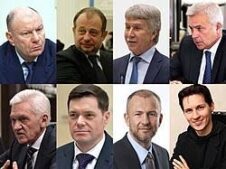
Government diplomacy alone cannot double trade. Corporate diplomacy will determine whether the 2036 target becomes reality. Russia’s energy champions including Rosneft, Gazprom, Gazprom Neft, NOVATEK, Transneft and Zarubezhneft—are likely to remain central players through LNG supply, refining cooperation, upstream investment and energy infrastructure. Rosatom will remain indispensable as Southeast Asian governments revisit nuclear energy to strengthen long-term energy security while pursuing de-carbonisation goals.
Beyond reactor construction, Rosatom increasingly exports complete nuclear ecosystems encompassing fuel fabrication, digital control systems, medical isotopes, engineering education and scientific cooperation. In petrochemicals, SIBUR possesses significant opportunities to expand exports of polymers, synthetic rubber and advanced chemical products into ASEAN manufacturing hubs, particularly Vietnam, Thailand, Indonesia and Malaysia, where demand continues to grow alongside automotive and electronics production.
Russian fertilizer producers including PhosAgro, Uralkali, Acron and Uralchem—are equally well positioned. Southeast Asia’s globally competitive palm oil, rice, rubber and fruit industries require reliable fertilizer supplies to maintain productivity. Fertilizer cooperation therefore directly supports ASEAN food security while strengthening Russia’s agricultural export portfolio. Metals and industrial materials offer another growth avenue. Companies such as RUSAL, Nornickel, Severstal, NLMK and EVRAZ can support Southeast Asia’s infrastructure, construction, renewable energy and electric vehicle supply chains through aluminium, nickel, steel and specialty metals.
Digital cooperation may ultimately become the fastest-growing area. Lavrov specifically highlighted the platform economy, high technologies and innovation as future drivers of bilateral trade. This creates opportunities for Kaspersky in cybersecurity, Yandex Cloud in digital services, VK in digital ecosystems, Rostelecom in telecommunications, Rostec in industrial technologies and Roscosmos in satellite services, remote sensing and navigation systems.
Transport companies also stand to benefit. Russian Railways (RZD), FESCO, Sovcomflot, the United Shipbuilding Corporation, and major Far Eastern port operators could all deepen cooperation with ASEAN partners as customs digitalisation, maritime connectivity and multimodal logistics become central components of the Russia-ASEAN agenda.
The least discussed but potentially most transformative area is finance. If Russia and ASEAN gradually expand settlements in national currencies, alternative payment mechanisms and cross-border banking cooperation, institutions such as Sberbank, VTB, Gazprombank and the Russian Export Center could significantly reduce transaction costs while insulating bilateral commerce from geopolitical disruptions. Sberbank has recently enabled users of its mobile application to pay for purchases in Indonesia via a QR code compatible with Indonesia’s unified QR code standard, QRIS. These QR-code payments can be accepted at over 40 million sales points across Indonesia, Sberbank has said. Lavrov himself underscored the importance of developing alternative payment platforms and implementing national-currency settlements during his Manila press conference. By 2036, therefore, the most valuable Russian export to ASEAN may not simply be oil, gas or grain. It may be an integrated package of energy, technology, logistics, digital infrastructure and industrial partnerships capable of supporting Southeast Asia’s next stage of economic development.
From Manila to Multipolarity: How Lavrov Used Bilateral Diplomacy to Expand Russia’s Economic Footprint Across the Global South
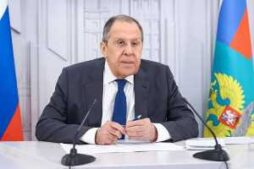
If the Russia-ASEAN Ministerial Meeting established the strategic direction of Moscow’s Southeast Asia policy, the dozens of bilateral meetings held by Russian Foreign Minister Sergey Lavrov during July 21-23 demonstrated how Russia intends to implement that strategy country by country. Over three days in Manila, Lavrov met not only with ASEAN counterparts but also with ministers from South Asia, Latin America, Africa and the United States. The unusually intensive diplomatic schedule reflected a deliberate strategy: using ASEAN’s multilateral platform to advance multiple bilateral economic agendas simultaneously.
Unlike traditional diplomatic tours focused on one country, Manila became a “diplomatic marketplace” where Russia compressed months of bilateral engagement into three days. Every meeting addressed a different segment of Moscow’s broader economic diversification strategy from nuclear cooperation with Bangladesh and Egypt to logistics with Pakistan, strategic coordination with India, BRICS cooperation with Brazil and regional engagement with the Philippines and Laos.
Philippines: Building Economic Relations Despite Strategic Differences

Amongst ASEAN members, the Philippines occupied a particularly significant place because it served both as host of the ministerial meetings and as ASEAN Chair. During Lavrov’s bilateral meeting with Philippine Foreign Secretary Maria Theresa Lazaro, discussions concentrated on expanding cooperation in trade, economic affairs and fuel and energy while reaffirming the strategic importance of the Russia-ASEAN partnership established in Kazan.
Although Russia-Philippines trade remains modest compared with Russia’s exchanges with Vietnam or Indonesia, important opportunities exist. The Philippines imports nearly all of its crude oil and LNG requirements while rapidly expanding electricity generation to support one of Southeast Asia’s fastest-growing economies. This creates opportunities for Russian LNG suppliers such as NOVATEK, Gazprom, Gazprom Neft and Rosneft. At the same time, the Philippines is reconsidering civil nuclear energy after decades of inactivity, potentially opening future opportunities for Rosatom in nuclear engineering, workforce training and technology cooperation. Agriculture also offers considerable potential. Russia’s globally competitive exports of wheat, barley and fertilizers align closely with Philippine food security priorities, while Russian agricultural machinery manufacturers could support modernization of the country’s farming sector.
India: Preserving Russia’s Most Important Asian Strategic Partnership

Foreign Minister Sergey Lavrov’s meeting with Indian External Affairs Minister Subrahmanyam Jaishankar demonstrated that Russia continues to regard India as its most important strategic and economic partner in South Asia, even as Moscow rapidly expands engagement across Southeast Asia. The two ministers reviewed preparations for upcoming high-level political exchanges, implementation of agreements reached by President Vladimir Putin and Prime Minister Narendra Modi, coordination within BRICS, the Shanghai Cooperation Organisation (SCO), the G20 and the United Nations, as well as progress on bilateral economic projects. According to both sides, maintaining regular high-level dialogue remains essential for preserving the momentum of one of Eurasia’s fastest-growing strategic partnerships.
Between 2022 and 2025, Russia-India bilateral trade expanded from around US$13 billion to more than US$70 billion, driven primarily by Russian crude oil exports, coal, fertilizers and coking coal. Both governments have repeatedly set a long-term objective of raising bilateral trade to US$100 billion by 2030, requiring a shift from commodity-driven trade toward industrial cooperation and mutual investment. The Manila discussions indicate that 2026 will mark the beginning of this second phase. Rather than relying predominantly on oil exports, Moscow and New Delhi are expected to accelerate cooperation in civil nuclear energy, LNG, petrochemicals, pharmaceuticals, shipbuilding, Arctic shipping, railway modernization, digital technologies, rare earth processing and advanced manufacturing.
Once fully operational, the International North-South Transport Corridor (INSTC) is expected to become the backbone of this next stage. Several flagship Russian companies are expected to spearhead this expansion. Rosneft will continue strengthening upstream and refining cooperation through Nayara Energy, while Gazprom and NOVATEK are likely to expand LNG cooperation. Rosatom will deepen collaboration on the Kudankulam Nuclear Power Plant and future nuclear projects. SIBUR is expected to increase petrochemical exports, while PhosAgro, Acron and Uralchem will remain major fertilizer suppliers. Russian Railways (RZD), Rostec, United Shipbuilding Corporation, United Aircraft Corporation, Roscosmos and the Russian Direct Investment Fund (RDIF) are also well positioned to participate in India’s infrastructure, aerospace, defence-industrial and high-technology sectors. The Manila meeting therefore signaled that Russia-India relations are entering a more mature stage, where investment, industrial localization, logistics integration and technology partnerships, not simply energy trade, will define bilateral economic relations throughout the remainder of the decade.
Bangladesh: Nuclear Energy Moves to the Centre of Bilateral Relations

During his meeting with Bangladeshi FM Khalilur Rahman, Lavrov reviewed the implementation of ongoing bilateral projects, cooperation within international organizations and prospects for expanding economic relations. Although official statements highlighted cooperation across several sectors, discussions centered overwhelmingly on the long-term development of the Rooppur Nuclear Power Plant, the single largest Russian investment project in Bangladesh.
The Manila meeting demonstrates that Russia-Bangladesh cooperation is evolving beyond infrastructure construction into a decades-long strategic energy partnership. Rooppur, being constructed by Rosatom, represents an investment exceeding US$12 billion and will eventually provide approximately 2,400 MW of electricity through two VVER-1200 reactors. As construction progresses toward commercial operation, bilateral cooperation is naturally shifting toward reactor operation, nuclear fuel supply, maintenance services, radioactive waste management, technical training and workforce development.
Economic relations between the two countries continue to expand. Bilateral trade has fluctuated around US$2-3 billion, dominated by Russian wheat, fertilizers, petroleum products and industrial equipment, while Bangladesh exports garments, textiles and agricultural products. Both governments are working to diversify trade and improve financial settlement mechanisms to facilitate higher commercial volumes.
Bangladesh’s rapidly expanding economy, expected to require significantly higher electricity generation and industrial capacity over the next decade, creates opportunities extending well beyond nuclear power. Russian companies including Gazprom EP International, Power Machines, Inter RAO, Rosseti, Rosatom, PhosAgro, Uralchem, Uralkali and United Grain Company could all benefit from growing demand for electricity infrastructure, engineering services, fertilizers, grain supplies and energy equipment. The ministers also discussed strengthening banking cooperation and alternative payment mechanisms, an increasingly important issue as both countries seek to reduce transaction costs and facilitate bilateral trade under changing global financial conditions. Looking ahead, Moscow increasingly views Bangladesh not merely as a purchaser of Russian technology but as one of its most important long-term economic partners in the Bay of Bengal.
Pakistan’s Relations With Russia Are Moving Toward Energy and Eurasian Connectivity
Lavrov’s meeting with Pakistan’s Deputy Prime Minister and Foreign Minister Mohammad Ishaq Dar highlighted the rapid transformation of Russia-Pakistan relations from limited political engagement into a broad-based economic partnership. The two ministers reviewed progress in bilateral cooperation, regional security, coordination within the Shanghai Cooperation Organisation, and preparations for upcoming high-level contacts. Discussions also focused on expanding trade, energy cooperation, transport connectivity and industrial investment.
Although bilateral trade currently remains relatively modest, around US$1 billion, both governments believe the relationship possesses considerable untapped potential. Unlike many of Russia’s Asian partners, Pakistan offers Moscow something strategically unique: direct access to the Arabian Sea through Karachi and Gwadar ports, positioning the country as a potential logistics hub connecting Russia, Central Asia, the Middle East and Southeast Asia.
As global supply chains continue diversifying, Pakistan’s strategic geography is becoming increasingly valuable within Russia’s broader Eurasian connectivity strategy. Future cooperation is expected to prioritize LNG supplies, oil refining, offshore energy, wheat exports, fertilizer trade, railway modernization, port logistics, industrial machinery and pipeline infrastructure. Companies expected to play leading roles include Gazprom, NOVATEK, Rosneft, Russian Railways (RZD), FESCO, United Grain Company, PhosAgro, Uralchem, Power Machines and Rostec. The ministers also emphasized improving banking cooperation and exploring mechanisms to facilitate bilateral trade in national currencies. The Manila meeting therefore demonstrated that Russia increasingly views Pakistan not only as an export destination but as an indispensable logistics partner linking the Eurasian Economic Union with the Arabian Sea and, ultimately, ASEAN markets.
Sri Lanka: Lavrov and Vijitha Herath Reinforce Russia’s Indian Ocean Strategy

Lavrov’s meeting with Sri Lankan Foreign Minister Vijitha Herath focused on strengthening bilateral cooperation and exchanging views on regional and international developments. Although less comprehensive than some of Lavrov’s other bilateral meetings, the discussion highlighted Sri Lanka’s growing strategic importance within Russia’s Indian Ocean policy. Sri Lanka occupies one of the world’s most strategically important maritime locations, sitting directly along the principal sea lanes connecting the Middle East, Africa and Europe with East Asia. Nearly two-thirds of global oil shipments and a substantial share of global container traffic pass through nearby Indian Ocean shipping routes.
For Russia, Sri Lanka represents more than a trading partner. It is an increasingly valuable logistics, maritime and commercial hub within the wider Indo-Pacific. Bilateral trade currently stands at approximately US$400-500 million, supported by Russian exports of crude oil, petroleum products, wheat, fertilizers and industrial goods, while Sri Lanka exports tea, rubber, spices, apparel and agricultural products. One of the fastest-growing pillars of the relationship is tourism. Before the pandemic and subsequent economic disruptions, Russia ranked among Sri Lanka’s leading sources of international visitors. Both governments are now working to restore direct air connectivity and expand tourism cooperation.
Looking ahead, Russia sees considerable opportunities in port logistics, maritime services, bunkering, ship repair, fisheries, renewable energy, digital infrastructure and fertilizer supplies. Companies such as Rosneft, Gazprom, United Shipbuilding Corporation, FESCO, Sovcomflot, Russian Railways, Power Machines and Rosatom could all participate in future infrastructure and energy projects should bilateral economic cooperation continue expanding. The Manila meeting demonstrated that Moscow increasingly views Sri Lanka as a strategic maritime partner capable of supporting Russia’s broader commercial presence across the Indian Ocean. Combined with Russia’s expanding engagement with India, Bangladesh and Pakistan, Sri Lanka forms another important component of Moscow’s evolving Indo-Eurasian economic architecture, linking the Bay of Bengal, the Arabian Sea and Southeast Asia through interconnected trade and logistics networks.
Laos: A Gateway for Russia’s Continental ASEAN Strategy

Foreign Minister Sergey Lavrov’s meeting with Lao Deputy Prime Minister and Foreign Minister Thongsavanh Phomvihane may have attracted less international attention than his meetings with India or the United States, but strategically it represented one of Moscow’s most forward-looking engagements in Southeast Asia. The two ministers reviewed implementation of agreements reached during previous high-level exchanges, discussed preparations for future political contacts, and emphasized expanding cooperation in trade, investment, energy, education, culture and humanitarian exchanges while reaffirming similar positions on major international issues.
For Russia, Laos is becoming increasingly important not because of the size of its economy but because of its geography. The completion of the China-Laos Railway has fundamentally changed the country’s economic significance, transforming Laos from a landlocked economy into a land-linked logistics hub connecting southern China with Thailand, Malaysia and eventually Singapore. Moscow increasingly sees Laos as an important component of mainland Southeast Asia’s emerging transport network. Although bilateral trade remains relatively modest, estimated at US$50 million in 2025, both governments have repeatedly emphasized that existing trade volumes fall far below their potential. Rather than pursuing rapid expansion in commodity trade, Russia and Laos are focusing on sectors where Russian technology and expertise provide long-term value.
Hydropower remains one of the most promising sectors. Laos aims to become Southeast Asia’s “Battery of Asia” through large-scale hydroelectric generation and cross-border electricity exports. Russian engineering firms, turbine manufacturers and energy equipment suppliers could participate in future hydropower projects and electricity transmission infrastructure. Mining is another promising area. Laos possesses commercially significant reserves of potash, copper, gold and rare earth minerals, creating opportunities for Russian mining companies, geological survey organizations and equipment manufacturers. Civil nuclear cooperation also featured in discussions. While Laos has no immediate plans to build nuclear power plants, cooperation is expected to focus on nuclear medicine, isotope technologies, research reactors, scientific cooperation and workforce training, areas where Rosatom has increasingly expanded its international presence.
Digital government, cybersecurity and education represent additional areas of cooperation. Companies such as Kaspersky, Rostelecom, Rosatom Technical Academy and leading Russian universities could expand partnerships supporting Laos’ digital transformation and human capital development. For Moscow, the significance of Laos extends beyond bilateral trade. As Russia seeks deeper integration with ASEAN supply chains, Laos could evolve into an important logistical bridge connecting Russia’s Far East with continental Southeast Asia through Chinese railway networks. The Manila meeting therefore demonstrated that Russia’s ASEAN strategy increasingly values geography and long-term connectivity alongside immediate commercial returns.
Egypt: Lavrov and Abdelatty Expand One of Russia’s Largest Economic Partnerships in Africa

Lavrov’s meeting with Egyptian Foreign Minister Badr Abdelatty illustrated how ASEAN ministerial meetings have evolved into platforms for advancing Russia’s wider Global South diplomacy. While discussions covered developments in the Middle East and North Africa, the ministers devoted considerable attention to strengthening one of Russia’s most comprehensive economic partnerships outside Eurasia. Egypt has become Russia’s largest trading partner in Africa. Bilateral trade reached approximately US$9-10 billion in recent years, supported primarily by Russian wheat, petroleum products, industrial goods, fertilizers and metals, while Egypt exports agricultural products, chemicals and manufactured goods to Russia. Both governments have expressed confidence that bilateral trade can continue expanding through industrial localization, logistics integration and investment.
The centrepiece of bilateral cooperation remains the El Dabaa Nuclear Power Plant, one of Rosatom’s largest overseas projects. Valued at approximately US$28-30 billion, the project involves four VVER-1200 reactors with a combined generating capacity of 4.8 GW. Beyond reactor construction, the project includes long-term nuclear fuel supply, maintenance, engineering services, technology transfer and training of Egyptian nuclear specialists over several decades.
The ministers also reviewed progress on establishing the Russian Industrial Zone (RIZ) within the Suez Canal Economic Zone, a project expected to become Russia’s principal industrial manufacturing platform in Africa and the Middle East. Once fully operational, the zone is expected to attract Russian manufacturers producing machinery, automotive components, chemicals, construction materials and engineering equipment for export throughout Africa and the Arab world.
Another priority discussed was strengthening logistics cooperation. Russia continues to supply Egypt with millions of tonnes of wheat annually, making Egypt one of the world’s largest importers of Russian grain. The two countries are also exploring improved logistics corridors for grain exports, petroleum products and containerized cargo moving through the Suez Canal. Energy cooperation is expected to expand further through Rosneft, Gazprom, Lukoil, Transneft and other Russian companies active in oil and gas exploration, LNG, refining and petroleum trading. Russian fertilizer producers including PhosAgro, Acron and Uralchem also see Egypt as an increasingly important regional market supporting agricultural production across North Africa.
Tourism formed another important area of discussion. Both ministers explored expanding seasonal direct flights and increasing tourist exchanges, recognizing that tourism has historically represented one of the strongest people-to-people links between the two countries. The Manila meeting confirmed that Russia-Egypt relations have evolved beyond traditional trade into an integrated economic partnership encompassing energy, manufacturing, logistics, food security, nuclear technology and industrial investment, making Egypt one of Moscow’s most important gateways into Africa.
Brazil: Lavrov and Mauro Vieira Strengthen the Economic Pillar of the BRICS Partnership

Lavrov’s bilateral meeting with Brazilian Foreign Minister Mauro Vieira reflected the growing convergence between Russia’s ASEAN diplomacy and its broader Global South strategy. While geographically distant from Southeast Asia, Brazil’s participation underscored that Manila had become far more than an ASEAN ministerial gathering; it had evolved into a diplomatic platform connecting Asia, Latin America and Africa.
The ministers reviewed preparations for upcoming BRICS activities, coordination within the United Nations, G20 and BRICS, and implementation of agreements reached by Presidents Vladimir Putin and Luiz Inácio Lula da Silva. Discussions also focused on expanding trade, investment and industrial cooperation. Brazil remains Russia’s largest trading partner in Latin America. Bilateral trade has consistently exceeded US$10 billion annually, driven primarily by Russian fertilizer exports and Brazilian agricultural commodities. Russia supplies nearly one-quarter of Brazil’s imported fertilizers, making companies such as PhosAgro, Uralkali, Acron and Uralchem indispensable partners for Brazil’s globally competitive soybean, corn, sugar and coffee industries.
However, both governments increasingly recognize that future growth cannot depend solely on fertilizers. The next phase of bilateral cooperation is expected to focus on civil aviation, pharmaceuticals, biotechnology, renewable energy, digital technologies, financial cooperation, artificial intelligence and industrial investment.
Russian companies including Rosatom, Rostec, Roscosmos, Kaspersky, Russian Export Center, SIBUR and United Aircraft Corporation all possess opportunities to deepen cooperation with Brazilian partners. Financial cooperation also featured prominently. As leading BRICS members, Russia and Brazil continue promoting greater use of national currencies in bilateral trade while supporting the expansion of BRICS financial institutions, including the New Development Bank (NDB). The Manila meeting therefore reinforced Russia’s broader objective of linking ASEAN diplomacy with BRICS cooperation, creating an interconnected economic network stretching from Southeast Asia to Latin America through trade, finance and industrial partnerships.
Lavrov-Rubio: Keeping the Door Open Without Changing the Strategic Course

Among all of Sergey Lavrov’s bilateral meetings in Manila, none attracted greater international attention than his discussion with U.S. Secretary of State Marco Rubio. The meeting, which lasted just over half an hour, came at a time when relations between Moscow and Washington remain deeply strained over Ukraine, sanctions and broader geopolitical competition. Yet the very fact that the two diplomats met on the sidelines of an ASEAN gathering was itself strategically significant. It demonstrated that ASEAN has evolved into one of the few remaining neutral diplomatic platforms where major powers can maintain direct communication despite profound disagreements.
According to the Russian Foreign Ministry, the two sides held an extensive exchange on bilateral relations and international issues. Lavrov reiterated Russia’s readiness for a political and diplomatic settlement of the Ukraine conflict while reaffirming Moscow’s position that continued military assistance to Kyiv would not facilitate peace. Discussions also covered the Persian Gulf, the normalization of diplomatic missions, the resumption of contacts between Roscosmos and NASA, the possibility of restoring inter-parliamentary exchanges, and continued dialogue between the two foreign ministries.
What makes this meeting noteworthy is not that it produced a diplomatic breakthrough, it did not. Rather, it reflected Russia’s willingness to compartmentalize diplomacy. Moscow is simultaneously expanding economic partnerships across Asia and the Global South while preserving selective communication channels with Washington on issues where dialogue remains necessary. This balancing approach has become an increasingly visible feature of Russian diplomacy. Moscow no longer sees engagement with the United States and deeper cooperation with Asia as mutually exclusive tracks. Instead, ASEAN forums provide a politically neutral environment where strategic competition and diplomatic communication coexist.
There were no major breakthroughs in the Rubio-Lavrov meeting. On the other hand, many American companies are interested in resuming business operations in Russia. Robert Agee, Chief Executive Officer of the American Chamber of Commerce in Russia (AmCham), said in an interview with RIA Novosti that numerous U.S. businesses are keen to return to the Russian market.
However, Washington appears to be pursuing a dual-track approach toward Russia. On the one hand, it seeks to strengthen the sanctions regime against Russia, while on the other, American businesses are looking to regain access to the Russian market after suffering significant commercial losses and damage to their business interests.
Even if the Ukraine crisis eventually comes to an end and U.S.-Russia business relations are fully normalized, Russia is unlikely to shift its strategic focus back to the West. Instead, Russia’s growing engagement with Asia and the Global South suggests a long-term reorientation of its foreign and economic policy. The momentum in Russia-ASEAN relations, highlighted by developments surrounding the Kazan summit and followed by Sergey Lavrov’s regional engagements, reinforces this trend. Therefore, it should not be surprising if President Vladimir Putin makes visits to Indonesia, Malaysia, or the Philippines in the coming years.
The East Asia Summit and ASEAN Regional Forum: Defending ASEAN-Centred Regional Architecture
Beyond bilateral diplomacy, Lavrov used both the East Asia Summit (EAS) Foreign Ministers’ Meeting and the ASEAN Regional Forum (ARF) to articulate Russia’s long-term vision for regional security. During these meetings, Russia warned against what it described as the growing militarisation of the Asia-Pacific, the expansion of bloc-based alliances and the increasing involvement of NATO-related security structures in the region. Moscow reaffirmed its support for strengthening existing ASEAN-led institutions while promoting broader Eurasian cooperation through ASEAN, the Shanghai Cooperation Organisation (SCO) and the Eurasian Economic Union (EAEU). At the ARF, ministers adopted the Manila Plan of Action 2026-2036, covering cooperation against terrorism, transnational crime, maritime security, information security, non-proliferation and peacekeeping. Russia emphasized that these mechanisms should remain consensus-driven, inclusive and practical rather than becoming platforms for geopolitical confrontation. From Moscow’s perspective, ASEAN’s institutional architecture remains valuable precisely because it includes every major regional actor such as China, Russia, India, Japan, the United States, Australia, South Korea and ASEAN members themselves without requiring exclusive military alignments. This vision complements Russia’s broader concept of the Greater Eurasian Partnership, where ASEAN, the EAEU and the SCO gradually become economically interconnected through trade, transport, investment and financial cooperation rather than military blocs. Lavrov reiterated that these organizations already maintain formal institutional contacts and should increasingly coordinate regional integration initiatives.
A Diplomatic Tour That Mapped Russia’s Emerging Economic Geography
Viewed collectively, Lavrov’s meetings reveal a coherent diplomatic design. With the Philippines, Russia explored opportunities in trade and energy while reinforcing ASEAN dialogue. With India, Moscow consolidated its largest Asian strategic partnership. With Bangladesh, nuclear cooperation moved into a more comprehensive long-term energy relationship. With Pakistan, connectivity, energy and logistics emerged as new priorities. With Laos, Russia reinforced engagement with mainland Southeast Asia. With Egypt, discussions focused on industrial zones, nuclear power and logistics corridors. With Brazil, BRICS coordination continued to deepen. With Sri Lanka, maritime and Indian Ocean engagement remained on the agenda. With the United States, communication channels remained open despite strategic disagreements.
Taken individually, these meetings may appear unrelated. Taken together, however, they reveal Russia’s emerging external economic geography, a network connecting the Russian Far East, South Asia, Southeast Asia, the Middle East, Africa and Latin America through trade, energy, infrastructure, investment and multilateral institutions. The Manila meetings therefore served as a practical demonstration of Russia’s broader foreign economic doctrine: diversify partnerships, reduce vulnerability to geopolitical shocks, strengthen Eurasian connectivity and expand commercial engagement with the Global South. The lasting significance of Lavrov’s three-day Asian mission will not be measured by communiques or photographs. Its real importance lies in demonstrating that Russian diplomacy has entered a more commercially driven phase.
This article was written by M. Jahan, an expert on Russia-Asian affairs. She may be contacted at info@russiaspivottoasia.com