Русский








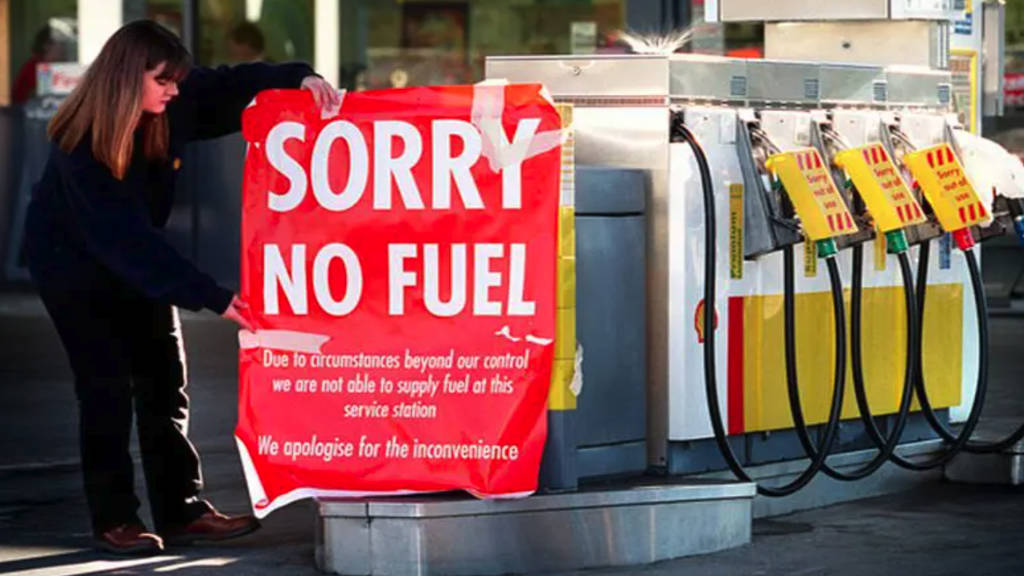

While it is mainly oil and gas that has taken the headlines when it comes to shortages created by the United States and Israeli attacks on Iran, there are a whole host of other related products that are now also starting to impact global trade. Shortages are becoming apparent.
A little-mentioned feature of this is the commercial position of the United States, which is the main initiator of the problem. Profit-taking, even to the U.S. Commodity Futures Trading Commission examining a series of billion-dollar trades in oil futures placed shortly before major shifts in President Donald Trump’s Iran war policy, appears to be rife.
According to analysis by the Centre for Research on Energy and Clean Air, the United States is a beneficiary of the oil price surge as the world’s largest producer. ExxonMobil will take in US$11 billion in additional profits in 2026 if the US$100 price per barrel endures. Shell will get a US$6.8 billion boost. The value of both companies, like others, has risen significantly due to increases in share prices in the month after the Iran war began: ExxonMobil is worth US$118 billion more, Shell US$34 billion more. Chevron is on track to make profits from the Iran war of US$9.2 billion, according to the analysis. The company’s chief executive, Mike Wirth, has also benefited, selling US$104 million worth of his Chevron shares between January and March. Meanwhile, the media points fingers at Russia as a beneficiary – which it is – but Russia didn’t begin this conflict. The entire issue over Iran stinks of massive, corporate level corruption and coordination between the US government and business over targeted wars as a mechanism for profit.
It apparently doesn’t help much if a country is a US ally or not. Oil prices are what they are, and any alleviation of higher prices manifests itself in request s for discounts only in return for longer-term supply contracts.
In this article we look at other global commodities that are produced in the Middle East and at how this conflict benefits the United States – areas where Russia also stands to gain – in addition to where shortages are likely to arise with the cost of resulting higher prices, and what this means for Europe in particular.
Jet Fuel
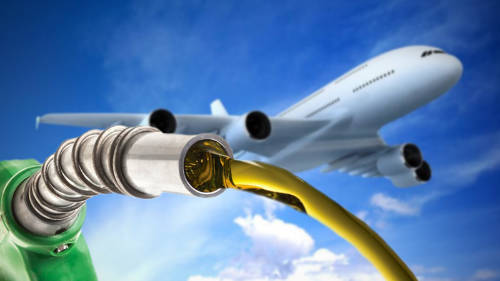
Some Western airlines, and especially in Europe have already begun mentioning that jet fuel shortages and prices will shortly mean that flight schedules will need to be curtailed. Jet Fuel is a highly refined product, with 41% of all European supplies and 36% of all African supplies, and a total of 20% of all global supplies sourced from the Middle East. About 50% of the missing European jet fuel supplies are now being sourced from the United States, meaning that flights will almost certainly become less frequent and more expensive. The world’s largest producers of jet fuel are the United States, which produces nearly 60% more than the three next largest producers combined: South Korea, China and Russia.
Diesel

The Middle East provides about 10% of global diesel supplies, while Europe, one of the biggest drivers of diesel pricing as a top importer, has been particularly tied to imports from the Middle East due to efforts to wean itself off Russian supplies. European prices have risen by 55% since late February. Diesel underpins freight, agriculture, mining and industrial activity, making it the most macro-sensitive barrel in the system, with shortages and price increases affecting transport and knocking onto food and consumer prices. The world’s largest producers of diesel are the United States, China, India and Russia.
Urea
The Middle East is a major global exporter of urea, used in fertilizers, and supplies about 36% of global demand. Prices have doubled since late 2026. The United States is not a major exporter but is regarded as self-sufficient, while the European Union is a net importer – and continues to import quietly from Russia. The world’s main urea producers are India, Russia, Indonesia and Pakistan. China will be able to source from Asian producers. The urea shortages and pricing will start to impose themselves on global importing markets from now, as the northern hemisphere begins its food growing season and urea is needed to assist crop production. Basic crop and other food prices can be expected to steadily increase in countries that import fertilizers.
Helium

We covered helium as a commodity in our report yesterday, with the gas being used extensively in hi-tech industrial production and products such as semi-conductors, fiber optics (including drones), artificial intelligence systems, and advanced scientific research. The Middle East is a major producer, with the global supply of helium decreasing by almost a third while spot prices have doubled since the Middle East crisis began. The United States is the world’s largest producer, followed by the Middle East and Russia. The European Union imports 100% of its helium needs, while China is essentially self-sufficient.
Sulfur
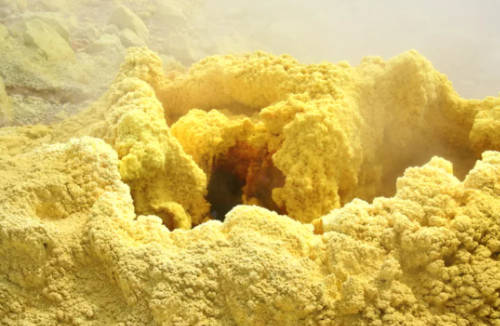
The Middle East is a major producer of sulfur, accounting for 36% of global supplies. This is used in fertilizers as well as in industrial uses as sulfuric acid and metal processing, in addition to the production of non-ferrous metals, pigments, fibers, hydrofluoric acid, carbon disulphide, pharmaceuticals, agricultural pesticides, personal care products, cosmetics, synthetic rubber vulcanization, water treatment, and steel pickling. Prices have risen 50% since March. Other major producers include China, the United States and Russia. The European Union is a net importer.
Celestite and Petroleum Coke
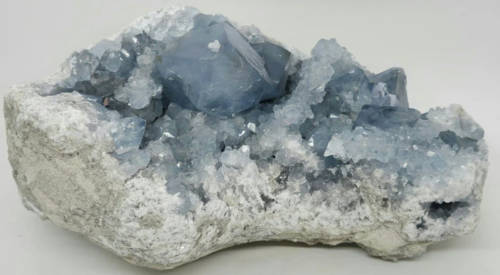
These products are critical components used for the production of strontium carbonate and other strontium compounds, and vital in the production of EV batteries, computer monitors and ceramic magnets. The Middle East accounts for about 30% of global supplies, with prices doubling since March. The world’s largest producers are China, Iran, Spain and Mexico. While the Middle East situation is unlikely to significantly damage supplies, price increases will impact the global transition to green energy, harm IT developments and generally disrupt manufacturing and lead to still higher production costs in regions such as Europe.
Summary
In examining the major secondary commodities – aside from the Crude oil and LNG supplies that have been curtailed due to the blocking of the Strait of Hormuz, it becomes very apparent (or convenient) that the conflict is very much in the favour of the United States. It is highly disadvantageous towards Europe, although paradoxically, the Europeans continue to blame Russia for their woes and continue to be intellectually deflected from the issues due to an over-concentration on problems in Ukraine.
How long the Iran conflict will continue remains to be seen, but if it were designed as a tool to weaken Europe, and make the EU subservient to the United States, then it can be seen to be fulfilling its goal. The EU has already had to release reserve stocks of 92 million barrels of oil supplies – against its total reserve stock of just 100 million. Those supply reserves will soon be diminished leaving the EU with no choice other than to import more from the United States. It will become US-energy dependent. The same is also likely to be true for the downstream commodities discussed above. That will ultimately lead to a collapse of European Union industry and bankruptcies in many sectors. The fire-sale buyers of these assets? The United States corporates.
How does this affect Russia and countries within its orbit? Both the US and Russia have extensive natural reserves of all these items meaning the world production will fall into two camps: those dependent upon the United States and subject to their highly capitalistic profit-making motivations. It should be noted that the US economy operates almost exclusively on profit and that companies, and to a large extent its economy, are geared towards showing consistent profits on an intensive, quarterly basis. If profit margins grow every three months, the stock invariably rises.
But Russia doesn’t operate like that, and neither does China. These economies are hybrids, partially state controlled and partially free to move as supply and demand dictates. Neither the Russian nor Chinese economy is so intensely geared towards quarterly stock market results. That means that for these dynamics, lesser profit margins – such as dealing with emerging markets in Asia and Africa – are an acceptable trade-off for supply chain sustainability and longer-term rewards modelled in years, not quarters.
We are not yet witnessing the division of the world into two hemispheres. But what is happening is that Europe is being absorbed by the United States in all but name, while Russia and China are left to pick up what’s left in the Global South. It should satisfy the United States consumerism for several decades to fully digest Europe, meaning any major conflict between the US and Russia/China is unlikely while it does so. But it does mean that the onus is now on Russia and China to develop new emerging markets – which is exactly what has been happening.
The Iran conflict is not about nuclear energy programmes or weapons (which the US proclaimed it had destroyed last year). It is about the United States absorbing Europe. And it is happening right before our eyes. Who do the Europeans blame? Russia, encouraged by Zelensky, who also received billions from the United States to do so. Oh, the irony.