Русский




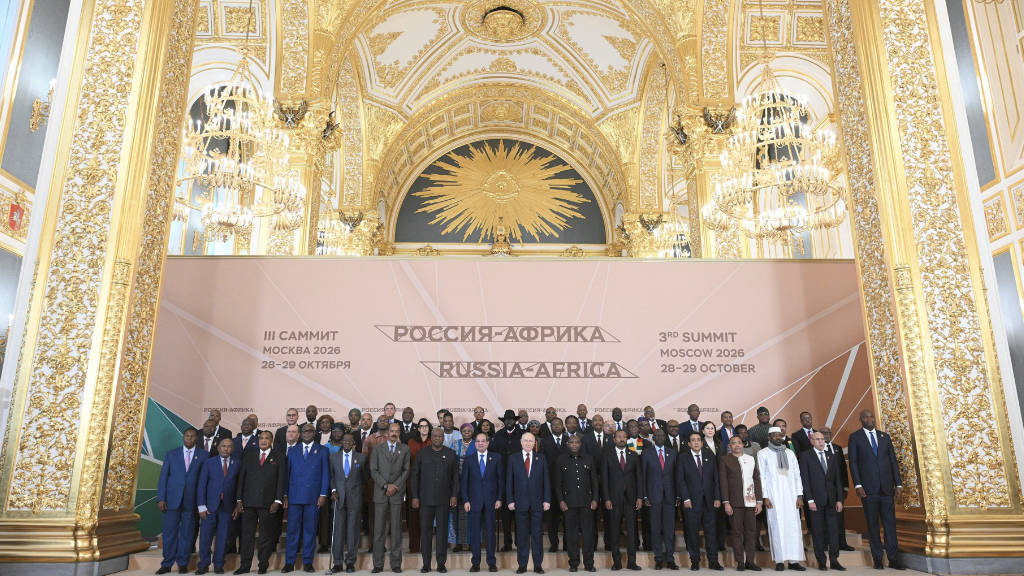

The 2026, and third, Russia-Africa Summit has concluded in Moscow, with delegations from 48 African countries attending, including 22 African Heads of State. We provided details of Russian President Putin’s plenary speech remarks here, and this article showcases the major discussions, negotiations, and agreements that were made during the event. These included significant developments in agriculture, LNG, nuclear power, mining, finance, communications, public health, and foreign policy.
We will follow this article up with additional detailed analysis next week. To make sure you receive this, a complimentary subscription to Russia’s Pivot To Asia may be obtained here. You will then receive our weekly report directly via email.
Agriculture
African countries currently import around US$100 billion worth of food a year, but to ensure food security, they are aiming to increase their own production, in which they count on Russia’s active participation, Mahmoud Ali Youssouf, the Chairman of the African Union Commission (AUC, the African Union’s secretariat), stated at the Russia-Africa forum.
He said that “We import about US$100 billion worth of food a year, mainly rice, corn, wheat, and animal fats. We believe that Africa will be able to produce more by building its own value chain. The African continent currently has 600 million hectares of land suitable for agriculture, but only 6% of this land is used and provided with irrigation. To increase this figure, Africa’s continental agricultural sector needs structural rebuilding. We are working on this now. And the Russian agricultural sector can play an important role in increasing production in Africa itself and unlocking existing opportunities. We have the resources, but we need know-how, competencies, and experience in order to establish cooperation with the Russian agricultural sector so that we can take the level of partnership between Russia and Africa to a new level.”
Russia supplied 18 million tonnes of grain to Africa in 2025, while exports reached 13 million tonnes in 9M 2026, an increase of 8% year-on-year. Russian wheat is supplied to more than 40 African countries.
Russian President Vladimir Putin added that “Russia is a stable supplier of agricultural produce to countries in Africa and is willing to share its own expertise and technologies in the agricultural business field with African countries. We’re prepared to share our expertise in the agricultural sector with our African partners and to assist them in adopting the most advanced, cutting-edge technologies for livestock farming, crop production, and the processing and storage of agricultural products. We are convinced that using modern agricultural technologies and organizing agricultural production in the right way, Africa will be able not only to feed itself in the future but also to become a major exporter of various food types.”
Putin added that “Russia exported around 1.5 million tonnes of mineral fertilizers last year, and this has already exceeded 2.2 million tonnes this year. This is a specific, tangible contribution to ensuring food security across the whole of Africa.”
Putin also said that Russia invested the necessary funds into the budget for the UN Food Program each year, which are used for projects supporting the agricultural industries of countries in the continent, and regularly provides humanitarian aid to African countries in need.
Main Agricultural Trade Partners
In terms of individual country specifics, according to the Russia Federal Service for Veterinary and Phytosanitary Surveillance (Rosselkhoznadzor), 5.9 million tonnes were shipped to the Egyptian market. Around 1.5 million tonnes were exported to Sudan (up almost 1.5-fold) and around 1.2 million tonnes to Kenya (up 2.5-fold).
Exports of Russian livestock cargo amounted to 741,800 tonnes in 9M, up 17% YoY. Significant amounts are accounted for by feed and feed additives, the shipments of which grew 18% to 678,900 tonnes. The main buyers are Morocco and Egypt.
Exports of meat products to African countries grew 1.5-fold to more than 38,100 tonnes, while exports of dairy products rose 3.5-fold to 8,300 tonnes. Purchases of dairy products by Algeria, Tunisia, and Egypt increased.
According to Rosselkhoznadzor, almost 1.2 million tonnes of quarantine-controlled products were inspected upon import into Russia from African countries in the first 9 months of this year. The main supplier countries were Egypt at 742,400 tonnes, South Africa at 313,100 tonnes, and Morocco at 47,200 tonnes.
Egypt increased exports of oranges to Russia 14.7% to 265,500 tonnes, exports of mandarins more than 1.5-fold to 97,300 tonnes, and exports of lemons 39.3% to 11,300 tonnes. South Africa increased exports of lemons almost 1.5-fold to 58,400 tonnes, and in terms of imports from Russia, it grew supplies of apples 34.1% to 33,900 tonnes and of plums 38.6% to 5,200 tonnes. Exports of lemons from Morocco to Russia grew sixfold to 4,600 tonnes, while imports of Russian blueberries rose 11.7% to 1,500 tonnes.
Agricultural Humanitarian Aid
Putin said that “Russia will continue to act as a responsible supplier of grain crops to Africa. We’ll continue to do so, as before, both on a contractual basis and free of charge. The exchange of views that took place during the summit confirmed that the leaders of numerous African countries view agriculture as a key area for cooperation with Russia, expect our country to continue doing what it can to enhance food security across the African continent, and supply their consumer markets with essential food products. Naturally, we’re open to this and prepared for this.”
LNG
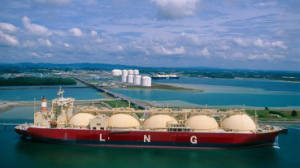
Novatek is ready to offer African partners its own liquefied natural gas technology and LNG itself for power generation, according to Sergei Solovyov, Novatek’s deputy CEO. He said that “we are interested in a long-term partnership and are ready to look jointly at specific projects and locations.”
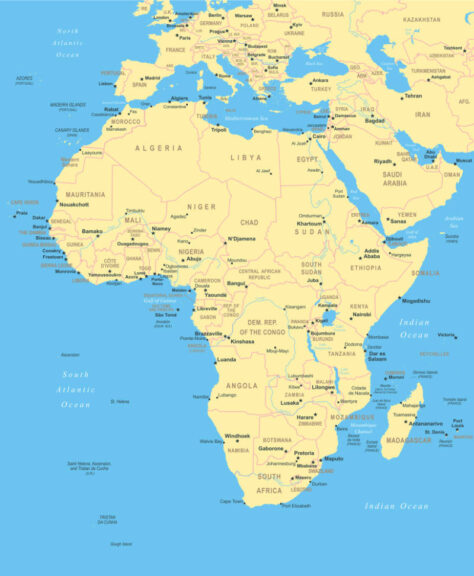
He said the African market would amount to about 20-30 million tonnes in the near future, taking into account pent-up demand, or about 7% of the global LNG market. He said that “hardly any of this demand is covered by contracts or terminals. The weakest link here is countries without access to the sea. Almost a third of the African continent has no access to ports and depends on its neighbors. These countries have the lowest levels of access to electricity on the planet—South Sudan, Chad, Malawi, and Ethiopia. The reason is not the lack of demand as such, but routes. Energy resources go through someone else’s port and someone else’s infrastructure. And each link costs money, time, and risk. All routes are tied to the coast. In the north, the deep-water ports of Morocco and Egypt play a key role. In the West, the ports of Senegal, Guinea, Cote d’Ivoire, Ghana, and Togo are vital arteries. In the east, the Kenyan coast is strategically important, and in the southeast, the port systems of South Africa and Mozambique. Any solution for landlocked countries must begin on a neighbor’s coast and be fundamentally regional. Uganda, Rwanda, Burundi, and South Sudan lie behind Kenya, Zimbabwe, Malawi, and Zambia; and South Africa and Burkina Faso and Niger lie behind Togo. Such an approach could be scaled up not only for the landlocked market but also to meet the needs of neighboring coastal states.”
Gazprom Deputy CEO Vitaly Markelov said that Gazprom Group companies also possessed the expertise to develop technologies to process gas, gas condensate, and oil, and to manufacture reagents, sorbents, and key equipment. He added that “We are ready to consider joint projects with African partners in prospecting, exploration and production of hydrocarbons, transportation, gas storage, gasification, development of gas consumption, power generation, oil and gas processing, and development of gas vehicle fuel infrastructure.” Gazprom is open to dialogue and ready for mutually beneficial cooperation.”
Russia’s United Engine Corporation (UEC), a division of state corporation Rostec, is prepared to supply African countries with equipment for the construction of new energy centers and gas transport infrastructure, as well as for the modernization of existing facilities, the company CEO, Andrei Vorobyev, stated.
He said that “Joint projects could use prefabricated energy centers with a small capacity of up to 2.5 MW, mobile gas turbine power plants with a capacity of 25 MW and 32 MW based on the NK-37 engine, and plants with a capacity of 8 MW to supply power to offshore oil and gas platforms and other equipment. Local UEC energy centers would make it possible to provide energy for remote, energy-deficient areas, industrial sites, and port infrastructure in African countries.”
UEC said it is offering power plants that maintain efficiency even in extreme temperatures, which is important for supplying power to industrial and mining facilities. The UEC Engineering line of equipment includes gas pumping units and gas transport solutions with a capacity of 4-32 MW. This equipment has proven itself in Russia’s gas transport sector and is suitable for the construction of new and refurbishment of existing compressor stations.
Vorobyev said that UEC Engineering is offering African partners gas turbine solutions that are adapted for specific tasks and take into account climatic conditions, accessible fuel, and required capacity. UEC sees potential for long-term cooperation with Africa, including joint elaboration of projects involving local businesses and creating servicing infrastructure.
Nuclear Power
Egypt is discussing the expansion of the El Dabaa nuclear power plant to six power units, Rosatom head Alexei Likhachev has said, saying that “Seeing how the project is developing, our Egyptian partners are seriously thinking of expanding the El Dabaa NPP to six power units. We back this initiative.” Likhachev added that Rosatom is discussing new areas for cooperation with Egypt including a desalination complex at the NPP, a nuclear medicine center and small-scale nuclear power.
Likhachev said Rosatom’s next partners on the continent have also been identified. “We are readying a project with Ethiopia for the first national large-capacity nuclear power plant: a roadmap for 2026-2027 was signed in March, and selection of a site is underway. A roadmap for a small nuclear power plant was signed with Rwanda in the summer, and we are simultaneously establishing a Nuclear Science and Technology Center.” He added that Rosatom is looking at the possibility of building floating power units with Tanzania and Togo, saying that “Tanzania has settled on this format as the priority for implementation on the island of Zanzibar.”
Others countries include Congo, starting with a small hydroelectric power plant project, and Namibia, which has expressed interest in a small NPP. Likhachev said that “for many countries in Africa, small nuclear power plants are turning into an ideal first step into nuclear energy. A plant’s capacity is precisely matched to the needs of the power grid, and if demand grows, the number of power units can be increased relatively quickly.”
He said that “Rwanda is becoming the first partner in such a project in Africa. It plans to include nuclear power in its energy mix by the early 2030s.”
Mining
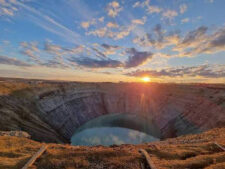
Russian aluminum giant Rusal and Ghana Integrated Aluminium Development Corporation (GIADEC) have agreed to develop bauxite mining operations in Ghana with an annual output of up to 5 million tonnes and to build an alumina refinery with an annual capacity of 1.2 million tonnes, Rusal has announced. The agreement was signed during the Russia-Africa Forum.
The mining project involves the construction and operation of a bauxite mine at the Nyinahin deposit in the Ashanti Region of southwestern Ghana. Estimated mineral resources in the area of the deposit earmarked for development exceed 100 million tonnes of bauxite. The second phase of the project envisages the construction and operation of an alumina refinery with an annual capacity of 1.2 million tonnes, using bauxite from the Nyinahin deposit. The refinery will use natural gas.
The projects will be implemented through two joint ventures, Nyinahini Bauxite and Ghana Alumina Company. Rusal will hold a majority stake in each company. In accordance with Ghanaian law, the Ghanaian side will hold a minority stake, including a 10% non-dilutable stake. The joint ventures will be granted rights to explore for, mine, and process bauxite in Ghana as part of the development of Ghana’s Integrated Aluminium Industry.
Evgeny Nikitin, General Director of Rusal, said that “Our agreement with GIADEC marks an important step in implementing Rusal’s strategy to strengthen its own raw material base. Ghana has some of the largest undeveloped bauxite reserves in West Africa, and we see an opportunity to establish an integrated production chain here—from mining 5 million tonnes of ore per year to producing 1.2 million tonnes of alumina. Rusal has been operating in Africa for more than 20 years, and this experience will enable us to implement the Ghanaian projects efficiently, from design through to reaching full production capacity.”
Guinea is currently the company’s key alumina supplier: Rusal mines bauxite at the Dian-Dian deposit, capacity approximately 3 million tonnes, and operates the Friguia alumina refinery producing around 2.1 million tonnes of bauxite and 600,000 tonnes of alumina per year. According to Rusal, the company was 89% self-sufficient in alumina at end-H1 2026.
After losing access to the Nikolayev alumina refinery and alumina supplies from Australia in 2022 due to sanctions and attempts to squeeze Russia’s aluminum production (Australia accounted for 40% of Russia’s bauxite consumption), Rusal experienced a problem with the availability of raw materials, purchasing more than a third of the required alumina on world markets at spot prices. At least 10% of Rusal’s total alumina needs come from Ireland’s Aughinish plant, which a number of EU member states have called for inclusion in the sanctions list.
To solve this raw material problem, Rusal acquired 30% of the Chinese alumina producer Hebei Wenfeng New Materials (HWNM) in 2024, receiving a proportional share in the production of this plant, which allows the Russian company to claim 1.4 million tonnes of alumina per year. In 2025, Rusal agreed to purchase up to 50% of India’s alumina refinery, Pioneer Aluminium Industries, located in the state of Andhra Pradesh, with a design capacity of 1.5 million tonnes.
Rusal is also in negotiations to build a bauxite-alumina complex in Indonesia.
Sierra Leone wants to combine Russian mining expertise with Indian technology to develop its mineral wealth and expand domestic processing, according to Julius Daniel Mattai, the Minister of Mines and Mineral Resources. He stated that “geology is not wealth,” adding that mineral resources must be combined with knowledge and effective governance to generate economic benefits. The country is looking to India and Russia for technology and expertise to process its mineral resources rather than remain a mere supplier to the world’s industrialized countries.
Mattai said that Sierra Leone is preparing to sign a memorandum of understanding with the Russian State University for Geological Prospecting covering scholarships, staff exchanges, laboratory access, and technology transfer, where Russia’s expertise in geological data interpretation, mineral processing, smelting, and refining could support Sierra Leone’s mining industry. He stressed that reliable energy would be essential to expanding domestic processing and manufacturing. Sierra Leone also expressed interest in cooperation with Russia on rare earth minerals, with Mattai saying in June that deposits containing such minerals had been identified in the country.
This shift to adding value in Africa was taken up by increasing numbers of African Heads of State emphasizing local processing as they push to move their economies up the industrial value chain. African Union chair Evariste Ndayishimiye called for partnerships that would help African countries manufacture finished products. He said, “We cannot accept a future where Africa supplies the minerals, while value addition and manufacturing take place elsewhere.”
Finance

Sberbank has launched QR-code-based payments in Egypt via the Sberbank Online app, with payment amounts automatically converted into rubles, the bank announced. Users simply scan a QR code at a checkout counter or an establishment that accepts such payments in order to render payment, with the amount displayed on the screen in both Egyptian pounds and Russian rubles before confirming the transaction. The number of locations in Egypt that accept QR code payments reached approximately 1 million at the end of March 2026, according to data from the Bank of Russia.
Launching the service comes during a boom of increasing tourist volumes to Egypt from Russia. In 2025, Egypt welcomed over 2 million Russian tourists. From January through September 25, 2026, that number grew by approximately 23% compared to the same period last year. Egypt is now the 14th country where Sberbank clients can pay via QR code.
T-Bank has also launched QR code payments for purchases in Africa and has opened facilities in Egypt, Tanzania, and Kenya; clients will be able to pay via the service in the mobile app without commission in these African countries, the bank has said. The T-Bank Pay QR service does not require a foreign currency account. Conversion of rubles into the local currency takes place at the bank’s internal rate at the time of the transaction. This can be obtained at the time of the transaction by tapping the question mark next to the ruble amount.
To pay, the customer scans the QR code on the payment terminal or the seller’s smartphone in the Scan section of the T-Bank app. The screen will display the store name, the purchase amount in the local currency, and the total in rubles. After this, the client can select the account to debit the funds from and confirm the transaction. Users can also pay in installments using a credit card.
Nikita Buklish, T-Bank’s Product Director, said that “We see the strengthening of Russia’s ties with African countries—Russians are increasingly traveling to Africa for vacations and business. In addition to Egypt, Tanzania and Kenya are becoming popular tourist destinations, and the development of industry and construction in these regions is attracting domestic investors. We are therefore expanding the list of countries where our clients can pay for purchases safely and conveniently, using familiar financial services just like at home.”
T-Bank clients can currently send money by card number from Russia to 34 African countries. According to T-Bank data, the number of such transfers grew almost 35-fold in monetary terms from October 2024 to October 2026. Kenya, Mauritius, Tanzania, Zambia, and Ethiopia lead in terms of transfers.
Satellite Communications
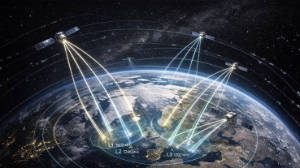
Roscosmos plans to expand the network of ground stations of the navigation satellite system GLONASS in Africa to increase the precision of the group, according to Dmitry Bakanov, Roscosmos’s General Director. He said that “it is planned. We are selecting additional points. Our task is to increase precision; it is being done, among other things, with ground stations. ” The current Russian GLONASS ground station on the African continent is located in South Africa.
Public Health
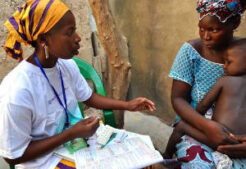
The Head of Russia’s Federal Service for the Oversight of Consumer Protection and Welfare (Rospotrebnadzor) Anna Popova and Madagascar’s Minister of Public Health Monira Managna held talks and signed an MoU at the Russia-Africa Summit.
Russia and Madagascar are actively developing cooperation in preventing and fighting infectious diseases. In 2025, Rospotrebnadzor provided Madagascar with two mobile anti-epidemic laboratories, one of which is equipped inside a GAZ vehicle and the other is a portable laboratory using an inflatable frame module. Madagascar received another mobile inflatable tent laboratory a week ago, the Rospotrebnadzor press service said in a statement.
This equipment allows specialists to conduct up to 500 laboratory tests in infection outbreak areas per day, with the tests taking only 30 minutes. Rospotrebnadzor has also trained more than 90 Madagascar specialists to fight zoonotic infections, ensure biological security, and operate mobile laboratories.
Foreign Policy
Russia and African countries agree that international organizations need thorough reform, Russian President Vladimir Putin said at the event. Following discussions with multiple African leaders, he said, “I agree with my counterparts that the world has changed significantly and that international organizations require reform. Certainly, this must be thoroughly worked out, carefully weighed, and agreed upon. All key items of the global agenda should be addressed on the basis of a broad consensus. The very fact that our African friends have raised this issue is perfectly well-timed and correct. Together, we are doing everything possible to strengthen the role of African states in global affairs. We favor more equitable representation for Africans in the global decision-making system, including the UN Security Council.”
Putin added that Russia is prepared to closely coordinate its steps with the African Union on the foreign policy agenda and help African countries counter terrorism, transnational crime, and drug trafficking. He said that “Russia is committed to continuing close coordination with the African Union on a broad range of foreign policy issues and is open to dialogue on peace and security and on resolving and preventing crises. We stand ready to continue helping our African partners in combating universal modern-day challenges and threats such as terrorism, transnational crime, and drug trafficking.”
Additional Comment
We will follow this article up with additional detailed analysis next week, including both multilateral African and individual country reports as concerns their trade and investment with Russia and developments that occurred during the summit. To make sure you can access these, a complimentary subscription to Russia’s Pivot To Asia may be obtained here. You will then receive our weekly report directly via email.