
 Русский




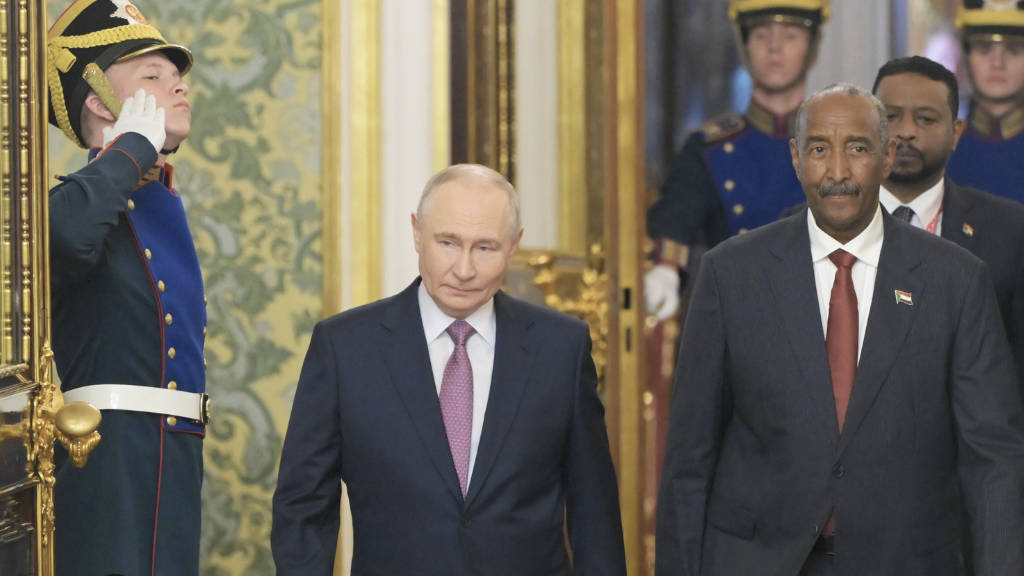

Russian President Vladimir Putin met with Abdel Fattah al-Burhan, the Chairman of Sudan’s Sovereignty Council during the 2026 Russia–Africa Summit.
Attending the meeting on the Russian side were Deputy Prime Minister Alexander Novak, Deputy Chief of Staff of the Presidential Executive Office Maxim Oreshkin, Deputy Chief of Staff of the Presidential Executive Office – Presidential Press Secretary Dmitry Peskov, Presidential Aide Yury Ushakov, and Ambassador Extraordinary and Plenipotentiary of the Russian Federation to the Republic of the Sudan. Andrei Chernovol, Minister of Natural Resources and Environment; Russian Co-Chair of the Russia-Sudan Intergovernmental Commission on Economic, Trade, and Scientific and Technical Cooperation; Alexander Kozlov, Minister of Agriculture; Oksana Lut, Minister of Economic Development; Maxim Reshetnikov, Presidential Adviser; Igor Levitin, Deputy Foreign Minister; Georgy Borisenko, Deputy Defence Minister; and Vasily Osmakov.
This is what they had to say:
Vladimir Putin: “Mr Chairman, friends, I am delighted to welcome you in the Kremlin. First of all, thank you once again for making the visit and taking part in the Russia–Africa Summit. Today, we can turn to our bilateral relations.
I would like to emphasise straight away that Sudan is an important partner of Russia in the Arab world and on the African continent. This year we marked the 70th anniversary of the establishment of diplomatic relations. Bilateral cooperation is friendly and constructive, and, despite the difficulties Sudan has faced, relations continue to strengthen, including in the trade and economic sphere.
The volume of Russian–Sudanese trade more than doubled last year. In January–August 2026, it grew by a further 25%, which is a very positive trend. Sudan is one of Russia’s top ten trading partners in Africa.
There is a bilateral intergovernmental commission in place, which met in Moscow in September. Sudanese national personnel are being trained at Russian universities. This year, 100 state-funded places were allocated for Sudanese citizens. Next year, the quota will be increased to 140.
We are, of course, closely monitoring the situation in Sudan, where an armed conflict has been ongoing for over three years. We understand that the Sudanese people find themselves in a highly difficult situation. According to our data, the number of refugees and internally displaced persons has now exceeded 13 million. The country’s economy and infrastructure have suffered significant damage.
Russia has been actively involved in providing humanitarian assistance, including through the UN World Food Programme. Russia has consistently advocated a ceasefire and a political settlement. As agreed, we can also discuss these sensitive issues one-on-one and exchange views on what else Russia can do to help normalise the situation in Sudan, as well as on other pressing matters.
Turning to possible prospects for cooperation in the trade and economic sphere, as well as in industry and high technology, you have seen – and your colleagues have likely also reviewed – what Russia is offering in advanced areas of cooperation, primarily in the digital domain, healthcare, education and logistics.
We have prepared a roadmap for these areas, which we consider promising. I would like to present it to you and ask you to instruct your aides and members of the Sudanese government to examine it carefully and select the projects you find most promising and appropriate for joint initiatives.”
Fattah al-Burhan: “Thank you very much. First of all, I would like to express my gratitude for the invitation to visit your great country and take part in the third Russia–Africa Summit. Moscow has received us with great warmth and hospitality, and we congratulate you on the successful hosting of the event and on the further development of Russian-African relations.
Over these years, we have overcome numerous changes and challenges, and our relations have continued to steadily develop and grow thanks to the political will of our countries’ leadership. I thank you for Russia’s unwavering support for Sudan, especially in international fora, in the face of all the challenges and plots that threaten our sovereignty.
Mr President, given the changes taking place at international and regional levels, it is more important than ever for our countries to expand cooperation on a mutually acceptable basis and continue working together in all areas. We believe that today’s meeting will give a new impetus to the development of our relations across the board.
I would like to emphasise that our relationship is developing every day. Over the past several years, since 2019, we have been working to develop relations between our countries. Today, I can confirm that our leadership has the necessary political will, and we are united in our determination to cooperate with the Russian side. There are many opportunities for expanding our cooperation, particularly as regards the objectives of this summit.
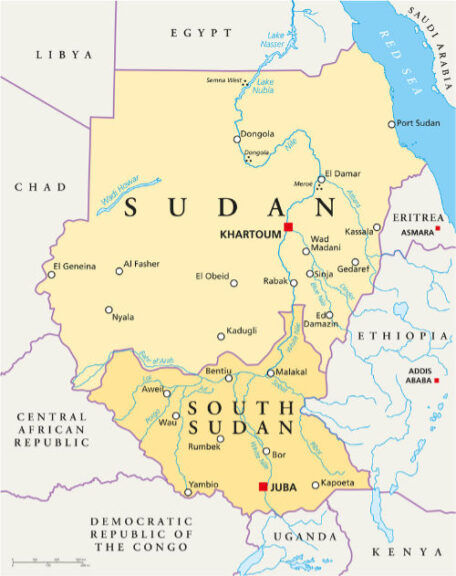
In conclusion, I would like to reaffirm that the proposals put forward can be implemented in Sudan, which serves as a gateway to Africa. We could establish a free economic zone in the Red Sea, where Russia could set up storage facilities for fuel and wheat.
There is considerable demand for wheat and fuel in Sudan and across the African continent as a whole. Sudan also has a railway line, and there are plans to extend it from Port Sudan towards Chad. This route could form the basis of a logistics network, and Russia could participate in its development. We have the territory and the necessary opportunities. What we need is investment in infrastructure, and we are ready to cooperate with Russia in this area.
There are also significant opportunities and potential for cooperation in the mineral resources sector. Some deposits are already ready for development. We are not subject to the dictates of any other country in this regard. We have full control over these resources and are open to cooperation with Russia. We have specific deposits that we are prepared to offer for Russian investment, including deposits of copper, gold and other metals. I would like to assure you of our sincere willingness to work together to implement these projects.”
The Port Sudan, Red Sea Naval Base
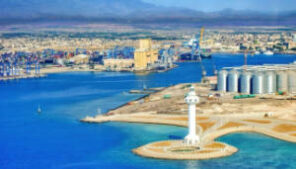
Sudan has offered Russia the use of its Port Sudan Naval Base on the Red Sea, under a potential 25-year cooperation agreement. To sweeten the deal for Russia to become involved, al-Burhan also offered Moscow exclusive access to develop Sudanese gold and copper mines. All of these projects would require investment from Russian firms. Russian businesses across these sectors will be examining these options – the opportunities and the risk assessments during 2027-28.
If finalised, this could be beneficial in several ways for Russia and Sudan, as it Port Sudan provides Russia with a foothold on the Red Sea, obtaining access to the Indian Ocean; and enhance logistical support for various Russian military units in the region, helping mitigate threats to Russian tankers and vessels in the Red Sea and the Suez Canal zones. It would also enhance Russia’s capabilities on the African continent while elevating Sudan’s standing among neighbouring countries and solidifying cooperation with Russia. The port would be used as a naval logistical support centre, rather than a full military base on the Red Sea, which is politically less of a problem for Saudi Arabia.
Al-Burhan also pointed to a Port Sudan railway with plans to extend it west towards Chad, which could anchor supply routes with Russian firms.
Russia is looking for opportunities in reviving Chad’s oil industry, with its proven reserves of 1.5 billion barrels. Chad also has a significant cotton industry, although again this will need infrastructural development. Cattle farming and gum arabic production are also significant industries. Mobile phone and internet usage are also well below normal African penetration rates, and there are likely to be opportunities in communications infrastructure. However – getting much-needed development into the country is highly dependent on maintaining domestic security. Russia’s current foreign trade with Chad is small at about US$3 million. Sudan will need to get some investment on the table for this railway to persuade Russia it is economically feasible to become invested in Port Sudan.
That said, as the port is also used to facilitate energy agreements between Sudanese oil companies and Russia, it has been subjected to drone attacks this year by pro-Ukrainian forces, a warning of wider involvement with Western actors wishing to expand the conflict. There are also continuing problems with attacks by Houthi forces in Yemen on Saudi Arabia and the ongoing problems in the Strait of Hormuz, all of which are impacting the immediate viability and usefulness of a Port Sudan base. Until these issues are resolved and the viability of Sudanese gold and copper mines is examined, the concept of a Russian base and investment in Port Sudan remains conceptual rather than actual.
Russia-Sudan Bilateral Trade & Investment
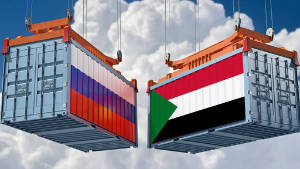
Sudan has a population of 50 million people with 1,886,068 km², making it Africa’s third-largest country. It has a GDP (PPP) of US$178 billion. Various aspects of strengthening Russian-Sudanese relations were discussed, with particular emphasis on enhancing trade and economic cooperation. Both sides reaffirmed their mutual interest in maintaining active foreign policy coordination within the UN and other international platforms.
In September this year, during a meeting of the intergovernmental commission on trade and economic cooperation, Russia and Sudan signed a memorandum on joint work in the transport sector, which involves the development of measures to modernise and reequip railway systems, seaports, and airports and ensure the safety of civil aviation and ship navigation. That is of direct relevance to the suggested Port Sudan railway to Central Africa.
The central banks of both countries have also agreed to cooperate in the training of banking specialists, most notably in digital transactions.
These agreements come at a critical time for Sudan, currently grappling with the impact of protracted conflict between rival military factions. The fighting has devastated infrastructure, displaced millions of people, and pushed the economy into crisis. However, Sudanese officials are confident that Russian support could help rebuild essential sectors and restore trade routes disrupted by fighting. The government has also pointed to the deal as a step towards reviving civil aviation and re-establishing Sudan as a regional transport hub.
There is better news in the energy sector as concerns Russian and Sudanese cooperation in the energy sector. In December last year, it was reported that Sudan was planning to sign several oil exploration and development agreements with Russian companies. In April 2026, the Russian companies Al Rassi International Services and Zarubezhneft signed a memorandum of understanding and cooperation with the Sudanese company Bashayer Oil Pipelines Company (BAPCO) in oilfield services, according to the Sudan Ministry of Energy and Petroleum.
The new infrastructure agreements reflect Moscow’s wider ambitions on the African continent as it continues to increase its presence in Africa through energy projects, mining concessions, arms cooperation, and financial partnerships, often positioning itself as an alternative to Western powers.
With these new agreements, Russia is expanding its footprint in Sudan and is looking for both economic opportunities and strategic access in the Horn of Africa, a region of growing geopolitical importance. Against that backdrop, Moscow’s engagement with Khartoum underscores how global powers are competing for influence in Africa through bilateral deals and infrastructure commitments.
In terms of current trade, the World Bank has not released specific bilateral trade data for Sudan in either 2025 nor 2026; however, a World Bank report from late 2024 indicates a widening trade deficit and high import requirements in 2024-2026, driven by ongoing conflict, with a potential gradual recovery in exports and domestic demand from 2025 onwards if the conflict subsides and reconstruction efforts begin. The most recent fiscal reports for Sudan suggest a 2025 GDP decline of minus 12%.
Data for Russia-Sudan trade is also difficult to ascertain. However, based on assumptions made from the last published figures – bilateral trade of about US$1 million in 2022, given both Sudan’s economic performance, known agreements signed with Russia, and political statements made by both leaders – our estimate is that 2026 Russia-Sudan bilateral trade is worth about US$3-5 million. The positive news is that this is increasing and that Russian companies are now exploring opportunities in gold and copper mining in addition to infrastructure investments in Port Sudan. Balanced against this are ongoing regional conflicts.
The question for Moscow now is whether and when the investment risk and reward dynamics will become positive. If not, the situation will remain somewhat static. If positive, there could be some significant developments. Either way, Moscow remains poised.
