
 Русский







Russia and Uzbekistan are entering a new phase of economic relations in 2026. The central story is no longer simply the rapid expansion of bilateral trade. It is the emergence of a much deeper regional economic network linking Russian regions with Uzbek provinces through manufacturing, logistics, energy, digital commerce, robotics, agriculture and investment.
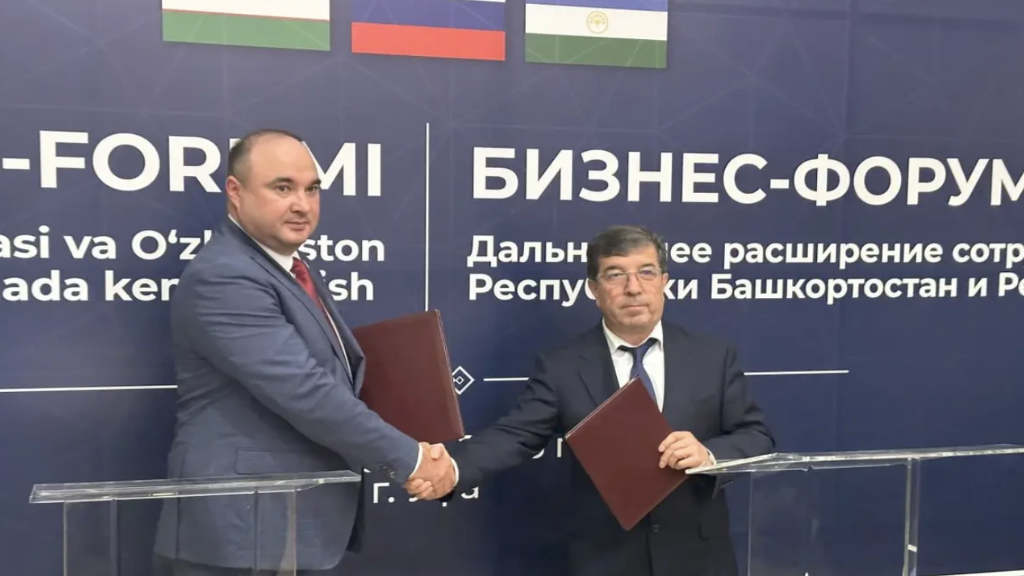
The Uzbekistan-Bashkortostan Business Forum, held on August 5 in Ufa provided a clear illustration of this transformation. More than 100 Uzbek ccompanies participated in the forum, representing light industry, food processing, chemicals, automotive manufacturing, furniture, construction, healthcare and information and communications technology.
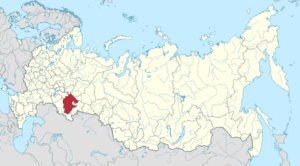
On the Russian side, the event brought together senior officials from Bashkortostan, including Deputy Prime Minister and Minister of Industry, Energy and Innovation Alexander Sheldyaev, representatives of seven other ministries, the Alga Special Economic Zone and several business organizations. It is worth noting that the Republic of Bashkortostan, a federal region of Russia located in the southern Urals, is an important administrative, industrial, agricultural, and transport hub, with Ufa as its capital and a strategic location connecting European Russia with the Urals and Central Asia.
The forum produced a memorandum between the Chambers of Commerce and Industry of Uzbekistan and Bashkortostan, along with several commercial contracts and cooperation agreements reached through B2B negotiations. Agreements worth nearly US$100 million were signed. Agreements included plans to establish an Uzbekistan Trade House at the Eurasia wholesale distribution center, involve Uzbek companies in the International Multifunctional Business Complex and promote Uzbek non-food products through the Tolpar Technopark.
The significance of the forum therefore lies not simply in the value of individual contracts. It demonstrates a potentially scalable model for the entire Russia-Uzbekistan relationship: Russian regions supplying technology, machinery, energy and industrial capabilities while Uzbek regions provide manufacturing capacity, agricultural products, consumer goods, labor-intensive production and access to Central Asian markets.
This model is markedly different from the Centralised Planning technique and gives much more decision-making and investment capabilities to Russian and Central Asian entrepreneurs and investors on the ground as opposed to directives issued from Moscow. As we noted here and here, it is also being rolled out in markets such as Kazakhstan and Kyrgyzstan and is a fundamentally different approach to the an increasingly centralised plans from Brussels issuing directives to all the European Union countries. In effect, the EU is morphing into the Soviet Union while Russia and Central Asia are liberalizing into free trade areas.
Russia & Uzbekistan’s 2030 US$30 Billion Trade Target
The starting point for this transformation is strong trade growth. According to Uzbekistan’s trade statistics, bilateral trade with Russia reached approximately US$7.014 billion in January-June 2026, compared with around US$6.06 billion during the same period of 2025. That represents an increase of approximately 15.7%. Uzbekistan exported about US$2.369 billion worth of goods to Russia during the first six months of 2026, while imports from Russia reached approximately US$4.645 billion. Russia therefore remained one of Uzbekistan’s two dominant trading partners, accounting for about 17.1% of Uzbekistan’s total foreign trade, compared with China’s 23.1%. The figures are important because they demonstrate that the bilateral relationship is growing even prior to the impact of several major projects now under development are fully reflected in trade statistics.
At the April 13, 2026 meeting of the Joint Commission at the level of heads of government, Russian Prime Minister Mikhail Mishustin said bilateral trade had doubled over five years and exceeded US$13 billion in 2025. He also noted that trade increased by approximately 30% during January-February 2026. Moscow and Tashkent have set a strategic objective of increasing bilateral trade to US$30 billion by 2030. That target is ambitious. Moving from slightly above US$13 billion in 2025 to US$30 billion by 2030 requires more than doubling the trade relationship in five years. It cannot be achieved simply by increasing conventional exports of gas, petroleum products, food or textiles. The composition of trade must change. The next stage will have to be driven by more inter-regional trade cooperation and business exchanges, industrial cooperation, localization, digital marketplaces, logistics hubs, joint ventures and regional production chains. The Ufa forum provides one example of how that process is beginning.
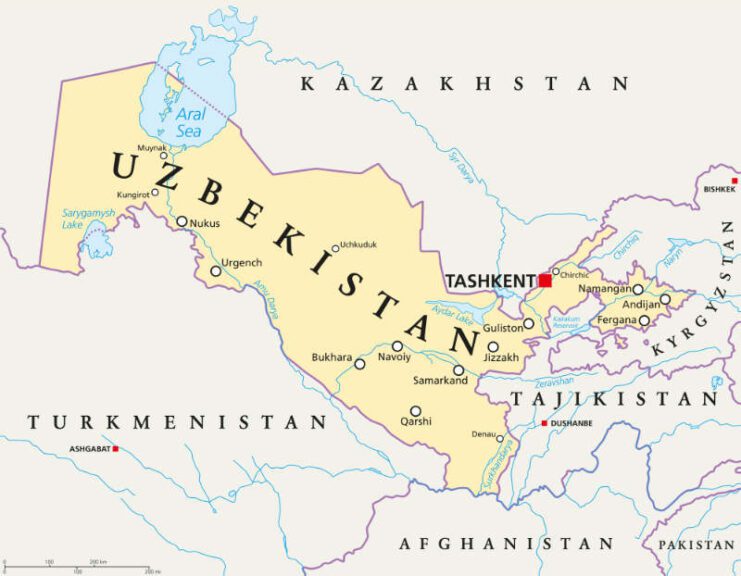
The forum was built on a roadmap for bilateral cooperation that has been operating since 2024 and on a network of direct agreements between Bashkortostan and five Uzbek regions: Tashkent, Bukhara, Namangan and Fergana regions and the Republic of Karakalpakstan. This regional architecture is becoming increasingly important because it allows companies to bypass the limitations of purely national-level trade diplomacy and establish direct production, investment and distribution relationships.
Bashkortostan Deputy Prime Minister and Minister of Industry, Energy and Innovation Alexander Sheldyaev said the republic had already accumulated several years of practical cooperation with Uzbekistan. Mutual trade between Bashkortostan and Uzbekistan has increased for five consecutive years, while the commodity structure has become more diversified. Uzbek textiles, fruit and vegetables and machinery are finding demand in Bashkortostan, while Bashkortostan exports chemical raw materials, timber, fertilizers and other industrial products to Uzbekistan.
The immediate commercial background is equally significant. During the 2026 INNOPROM Central Asia exhibition in Tashkent, Bashkortostan enterprises concluded about 13 agreements totaling roughly ₽2.4 billion (US$29 million). More than 30 heads of major, medium-sized and small Bashkir enterprises travelled to Tashkent for the April 20 business negotiations, covering petrochemicals, agriculture, food processing, construction materials, furniture and IT.
At the first signing ceremony, attended by Head of the Republic Radiy Khabirov and the Khokim of Tashkent Region, another seven agreements worth ₽2.3 billion r(US$28 million) were signed. The largest included investment commitments, such as Premier Electrotech’s ₽500 million investment in a household-appliance manufacturing project in Bashkortostan and BashGlobalGroup’s ₽1.8 billion investment in a multifunctional business complex in the Ufa district. Other agreements covered cooperation involving companies such as Burintekh, the Ural Spring Plant, and OrtoStan.ru. Additional business activity included numerous B2B meetings, with 149 held on one day alone and more conducted later, resulting in specific commercial arrangements, including confectionery supply deals.
Why Bashkortostan Is Becoming a Strategic Industrial Partner

The regional investment pipeline is even more important than the trade contracts. Bashkortostan is particularly well positioned for this model. The republic is one of Russia’s major industrial centers, with strong positions in oil refining, petrochemicals, chemicals, machinery and industrial engineering. Uzbek business representatives have specifically highlighted Bashkortostan’s industrial competencies, including its oil-refining base, deep oil-processing capabilities, diesel production and machinery sector. These capabilities correspond closely with Uzbekistan’s industrialization agenda. Uzbekistan needs modern equipment, chemical technologies, industrial inputs and engineering solutions as it expands domestic manufacturing. Bashkortostan needs new markets and production partnerships. The economic logic is therefore straightforward: Russian companies can move closer to Uzbek customers by producing inside Uzbekistan, while Uzbek companies can gain access to Russian industrial technologies and the broader Eurasian market. The Tashkent Region-Bashkortostan relationship is already moving in this direction.
Seven investment projects worth approximately ₽19.4 billion (US$235.7 million) are currently being implemented in the Tashkent Region with Russian capital participation. Bashkortostan and Uzbek business partners currently have total 10 investment and infrastructure projects at the implementation stage. These include the joint Bekabad Technopark, construction of a cement plant in Bashkortostan, participation by Uzbek company R-A-M ORGANIZATION in a cluster producing agricultural machinery, a livestock complex, wholesale distribution centers, and a center for traditional medicine and apitherapy. Their purpose is to create new production capacities, strengthen regional industrial potential and generate thousands of jobs. The development of the Bekabad Technopark has become a central component of the partnership. This is much more significant than a conventional investment announcement. It means Russian regional capital is becoming embedded in Uzbekistan’s production infrastructure.
The Bekabad Technopark is the flagship project. A master plan has already been prepared, a management company has been registered and applications have been received from five potential investors. The total volume of investment from the Bashkir side is expected to reach approximately US$100 million, with around US$30 million planned for investment during 2026 alone. This distinction is critical. The US$100 million is not a headline amount of contracts signed at the Ufa forum; it represents the planned Bashkir investment commitment associated with the Bekabad industrial project. The forum’s broader commercial results should instead be measured through the ₽2.4 billion of contracts already concluded at INNOPROM, the 10-project investment pipeline and the expansion of direct regional agreements.
Two More Logistics Projects Could Add ₽2.5 Billion To The Investment Profile
The industrial relationship is being complemented by logistics infrastructure. Two large wholesale and logistics projects involving Uzbek investors are being developed in the Ufa agglomeration with combined investment of more than ₽2.5 billion (US$30.4 million). This is strategically important because trade cannot grow sustainably without storage, sorting, wholesale distribution and last-mile infrastructure.
The logic is especially strong for Uzbekistan’s agricultural and textile exports. Uzbekistan produces large volumes of fruit, vegetables, textiles and consumer goods, while Bashkortostan provides access not only to its own market but also to the wider Volga-Ural economic zone. A logistics center in Ufa can therefore serve as a regional distribution node rather than simply a warehouse for Bashkortostan. This is a primary reason the regional trade relationship is increasingly becoming an infrastructure story.
The Namangan Trade House Adds a Retail Dimension

The relationship is also moving into consumer distribution. A Namangan Region textile trade house opened in one of Ufa’s major shopping complexes in autumn 2025. Namangan have also established centres in Japan, China and Germany, with its importance being the creation of a permanent physical market presence for Uzbek manufacturers rather than relying entirely on temporary exhibitions or individual importers. This model can be expanded. If similar trade houses are created for Fergana, Bukhara, Tashkent and other Uzbek regions, Russian consumers will gain direct access to a broader range of Uzbek textile and consumer products, while Uzbek producers would receive a stable channel into the Russian market. For Bashkortostan, this also strengthens the republic’s position as a commercial gateway between Russia and Central Asia.
Bekabad As A Model for Regional Industrial Integration
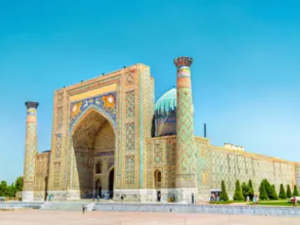
Bekabad is emerging as the physical center of the Bashkir-Uzbek economic partnership and potentially one of the most important regional industrial platforms in the broader Russia-Uzbekistan relationship. Located in Uzbekistan’s Tashkent Region, 140 km south of Tashkent City, the project gives Bashkortostan companies a production base close to one of the country’s largest industrial and consumer markets, allowing them to move beyond the traditional model of exporting finished goods from Ufa and toward localized manufacturing, assembly, storage and distribution. The economic logic is straightforward: production inside Uzbekistan can reduce logistics costs, provide direct access to the Uzbek market and create a platform for exports to neighboring Central Asian countries and South Asia.
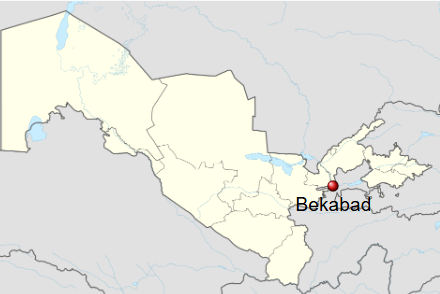
The scale of the opportunity is reflected in the numbers. Bashkortostan plans to invest approximately US$100 million in the Bekabad Technopark, including US$30 million in 2026, meaning that nearly one-third of the planned investment wis being deployed during the first year of its implementation. The project is part of a much broader US$235 million portfolio of investment projects being developed between Bashkortostan and the Tashkent Region. On July 1, Uzbekistan adopted measures to deepen trade and economic relations between the two regions, including the creation of a special industrial zone around the Bekabad Technopark and new institutional mechanisms for coordinating cooperation with Bashkortostan. A master plan for the technopark has been prepared, a management company established and applications received from potential investors.
The significance of Bekabad, however, extends beyond the headline investment figure. Its real value lies in the production ecosystem that can develop around it. Russian companies can supply machinery, engineering services, chemical inputs and industrial technologies, while Uzbek partners can provide local production capacity, labor and access to domestic and regional markets. The resulting supply chains will generate additional demand for construction, logistics, equipment, raw materials and services, creating a multiplier effect far greater than the initial US$100 million capital commitment.
Bekabad is also becoming part of a much wider Bashkortostan-Uzbekistan regional network. Bashkortostan has established direct cooperation agreements with the Tashkent, Bukhara, Namangan and Fergana regions, as well as Karakalpakstan, while a bilateral roadmap for cooperation has been in place since 2024. This network is increasingly producing measurable commercial results.
This makes Bekabad more than a single industrial park. It is becoming a prototype for a new model of Russia-Uzbekistan regional integration in which individual Russian regions establish specialized economic corridors with individual Uzbek regions. If this model is replicated beyond Bashkortostan, bilateral trade could increasingly be generated by dozens or even hundreds of smaller industrial, agricultural and logistics connections rather than depending primarily on several large federal projects.
In that sense, the Bekabad investment is important not because of its absolute size, but because it demonstrates how regional industrial localization can become one of the mechanisms for moving Russia-Uzbekistan trade toward the strategic bilateral annual US$30 billion target by 2030.
Could Omsk Become the Next Major Russia-Uzbekistan Regional Platform?

The next stage of regional cooperation could move toward Siberia. Omsk has already demonstrated its ability to host major interregional economic diplomacy. In July 2026, the city hosted the 22nd Forum of Interregional Cooperation between Russia and Kazakhstan, bringing together federal and regional officials and business representatives. But Omsk’s relationship with Uzbekistan is becoming increasingly interesting in its own right. By the end of 2025, Uzbekistan had entered the top five trading partners of the Omsk Region. Regional trade with Uzbekistan increased by almost 50%, while Omsk exports to Uzbekistan more than doubled. An important development has also occurred in logistics. With participation from businesses in Uzbekistan’s Fergana Region, the Fruit City wholesale distribution center was established in Omsk. It has developed into a logistics platform for Central Asian fruits and vegetables entering the Siberian market – with its 40 million consumer population.
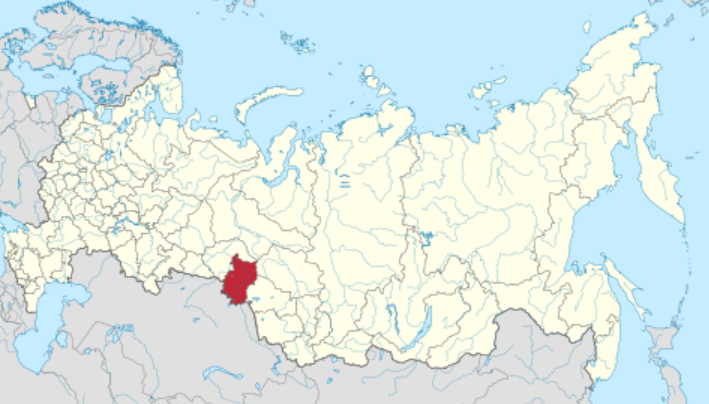
This gives Omsk a distinctive economic role. Bashkortostan connects Uzbekistan with Russia’s industrial and petrochemical heartland. Omsk can connect Uzbekistan with Siberia. The potential organization of a Russia-Uzbekistan interregional cooperation meeting in Omsk would therefore have a clear economic rationale. Rather than simply replicating the political format of existing forums, such a meeting could focus on food logistics, agricultural processing, machinery, industrial equipment, pharmaceuticals, transport and access to the Siberian consumer market.
The Ufa Trade House Could Lower the Cost of Entering the Russian Market
The proposed Uzbekistan Trade House at the Eurasia wholesale distribution center in Ufa may appear modest compared with the US$9.5 billion nuclear project, but its economic importance could be substantial. Small and medium-sized Uzbek companies often face much higher market-entry costs than major corporations. Establishing a permanent distribution and commercial presence in Ufa can reduce those costs by providing warehousing, wholesale distribution, market access and business contacts. The arrangement could be particularly useful for Uzbek textiles, food products, furniture and consumer goods.
At the same time, Bashkortostan companies will gain a more direct channel into Uzbekistan. The forum also opened the possibility for Bashkir companies to use Uzbekistan-oriented free economic zones and logistics infrastructure for access to the Afghan market. This creates an additional strategic dimension. A Russian company could manufacture in Bashkortostan, use Uzbekistan as a regional production or distribution platform and then access Afghanistan and potentially South Asian markets. The chain would therefore become: Russia to Uzbekistan to Central Asia to Afghanistan to South Asia. This is precisely the type of regional connectivity that can turn a bilateral trade relationship into a wider Eurasian economic corridor.
Uzbekistan’s connectivity with Afghanistan is important as it shares a 144 km border with the country, which has a population of about 46 million. The main aim of the regional powers and Afghanistan’s neighbours is to create a dynamic where peace and trade overcome conflict. At present, this concept appears to be taking root – according to the World Bank, Afghanistan’s economy is projected to grow by about 4% in 2026, driven by resilient domestic demand, private investment, and labor integration of returnees. Gaining access to a developing Afghan economy would be a major regional boom with the potential for substantial rewards.
Wildberries Is Creating a Digital Trade Corridor

One of the most important but least discussed components of Russia-Uzbekistan economic integration is the rapid development of digital commerce. Wildberries has become an increasingly important platform for Uzbek exporters seeking access to Russian consumers. In 2025, sales of Uzbek goods through Wildberries exceeded US$1.4 billion, with textiles and dried fruits among the major product categories. That represented more than a threefold increase compared with approximately US$418 million in 2023.
The company’s development strategy is now moving beyond simple marketplace sales. Wildberries has announced plans to invest more than US$300 million in Uzbekistan. A logistics hub is being developed in the Tashkent Region, including a sorting center and warehouse complex covering approximately 170,000 square meters. The facility is expected to connect Uzbekistan not only with Russia but also with markets in the Middle East, China and Africa.
President Vladimir Putin has also discussed the possibility of increasing the turnover of Uzbek goods on Wildberries to approximately US$2 billion in 2026. This is important because digital platforms solve one of the traditional weaknesses of regional trade: fragmented market access. An Uzbek textile producer in Fergana does not need to establish a nationwide Russian distribution network before testing Russian demand. A digital marketplace, combined with the new logistics infrastructure, can perform much of that function. This could make thousands of small Uzbek businesses exporters to Russia. Meanwhile, after recent Ukrainian drone strikes, Wildberries redirected stocks of long-term storage goods to Uzbekistan, as well as to Belarus and Kazakhstan.
Energy Is Becoming a Multi-Layered Economic Partnership
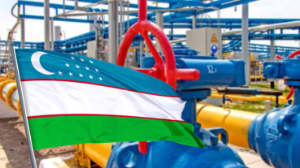
Energy remains the backbone of the relationship, but its structure is changing. During high-level meetings at the St. Petersburg International Economic Forum in June 2026, Russian and Uzbek officials discussed oil and petroleum product supplies, including motor fuel, aviation fuel and feedstock for Uzbek refineries. Uzbek officials also held talks with Gazprom, Rosneft and Gazprom Neft on natural gas supplies, industrial cooperation and potential joint energy projects.
Gas remains particularly important. Russia continues to supply Uzbekistan with natural gas, including during periods of peak winter demand. The strategic importance of the relationship, however, is gradually moving beyond commodity supply toward integrated energy security. Gas, oil products, refining, petrochemicals and nuclear generation are increasingly becoming interconnected components of the bilateral economic relationship. That makes energy cooperation less vulnerable to fluctuations in any individual commodity. According to the National Committee on Statistics, during H1 2026, Uzbekistan imported significantly more natural gas than it exported, During the first six months of the year, natural gas imports from Russia and Turkmenistan increased by 41.4% to US$971.7 million. Of this amount, US$86.3 million was spent on liquefied gas (propane), purchases of which increased 3.6-fold.
Rosatom’s Uzbek Nuclear Power Plant Project
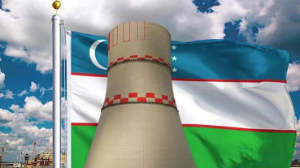
The most strategically significant economic project is undoubtedly nuclear energy. On June 4, 2026, Vladimir Putin and Uzbek President Shavkat Mirziyoyev formally launched the construction of Uzbekistan’s integrated nuclear power plant in the Jizzakh Region. The first units are expected to enter operation between 2029 and 2035.
The project is strategically important not only because of its size but because it creates a decades-long technological relationship. Nuclear power plants require fuel, maintenance, specialist training, equipment, engineering services and long-term technological support.
Consequently, the US$9.5 billion construction project represents only the initial stage of a much longer economic relationship. One issue has attracted particular attention: Rosatom’s reduction of its overall investment program. Rosatom’s 2026 investment program is expected to exceed ₽900 billion (US$11 billion) , compared with approximately ₽1.66 trillion (US$20.2 billion) in 2025. That represents a reduction of roughly 46%. However, the reduction does not mean that Russia’s international nuclear projects are being cancelled. The Uzbek nuclear project has separate interstate commitments, export financing mechanisms and an established construction schedule. The first concrete has already been poured, and the project has formally entered the construction phase.
The reduction in Rosatom’s broader investment program should not be interpreted as a direct threat to the Uzbek project. The important distinction is between adjustments to Russia’s domestic investment pipeline and commitments under international nuclear cooperation. For Uzbekistan, this distinction is critical. The nuclear project is intended to strengthen energy security, support industrial development and create a high-technology economic sector. For Russia, it is one of the most important examples of how nuclear technology can anchor long-term economic relations in Central Asia.
Defense Cooperation Is Entering a New Contractual Phase
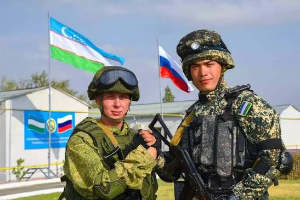
Economic relations are developing alongside military-technical cooperation. On July 27, 2026, President Putin authorized the Russian government to begin negotiations with Uzbekistan and Kazakhstan on amendments to existing military-technical cooperation agreements. Russia and Uzbekistan signed their current military-technical cooperation agreement on November 29, 2016. The existing framework covers reciprocal supplies of military products, equipment and technologies, repair and modernization of military hardware, research and development, potential joint production and the training of military specialists.
The decision to update the agreement is significant even though Moscow has not publicly disclosed the proposed amendments. It suggests that Russia wants to modernize the legal framework supporting its defense-industrial relationship with Uzbekistan. For Tashkent, which is not a member of the Collective Security Treaty Organization, the bilateral format is particularly important. It provides a separate channel for defense-industrial cooperation without requiring Uzbekistan to participate in the broader collective-security structure. This creates another layer of strategic interdependence alongside energy and industrial cooperation.
Agriculture: US$2.3 Billion Trade and the Need for Predictability

Agricultural trade is another major pillar. Russia-Uzbekistan agricultural and food trade reached approximately US$2.3 billion in 2025 and exceeded US$500 million during Q1 2026. The growth potential is significant because Russia has a huge consumer market while Uzbekistan has strong agricultural production capabilities. But the sector also illustrates one of the biggest risks to future trade growth: regulatory friction.
On May 29, Russia’s Federal Service for Veterinary and Phytosanitary Surveillance (Rosselkhoznadzor) stated that no restrictive measures have been introduced on the import of fruits and vegetables from Uzbekistan, and that technical consultations with the Uzbek side have been initiated to ensure safe and uninterrupted supplies to the Russian market.. Discussions focused on quarantine controls, monitoring mechanisms and compliance with updated export requirements. Such issues matter because agricultural trade is highly time-sensitive. A delay of several days can destroy the economic value of perishable products. If Moscow and Tashkent want agricultural trade to become a larger component of the US$30 billion target, digital certification, predictable quarantine procedures and faster customs clearance will be as important as new commercial agreements.
The Human Infrastructure Behind the Trade Figures
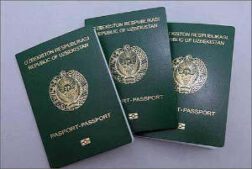
Trade statistics also have a human dimension. During January-June 2026, Uzbekistan ranked first among foreign countries in terms of citizens entering Russia, with approximately 1.6 million entries, compared with 1.8 million during the same period of 2025. Of the 2.4 million foreign entries into Russia recorded for work purposes during the first half of 2026, approximately 1.1 million involved Uzbek citizens.
Uzbekistan nationals also accounted for approximately 26,000 study-related entries and around 263,000 private-purpose entries. This movement creates a human and professional infrastructure supporting bilateral commerce. Workers, engineers, students, entrepreneurs and managers form networks that reduce the practical barriers to doing business between the two countries. Economic integration is therefore not occurring only through government agreements. It is also developing through people.
The Russia – Uzbekistan US$30 Billion Trade Target
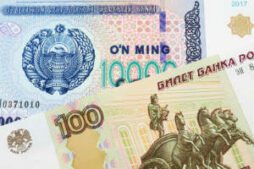
The central question is whether Russia and Uzbekistan can transform today’s rapid trade growth into a sustainable US$30 billion relationship by 2030. The answer will depend less on one giant project than on the cumulative effect of many regional projects. The US$9.5 billion nuclear plant provides the strategic energy anchor. Gazprom, Rosneft and Gazprom Neft provide the hydrocarbon and refining dimension. Wildberries provides the digital-commerce and logistics infrastructure. Bekabad provides industrial localization. Bashkortostan provides petrochemical, machinery and engineering capabilities. Omsk provides a potential Siberian logistics gateway. Uzbek agricultural producers provide food and horticultural exports. The defense-industrial relationship preserves another channel of technological cooperation. Together, these projects form something much more important than a conventional trade agreement: an emerging production network.
Summary
The composition of the Uzbek delegation at the Ufa event is itself an important indicator of where the next phase of trade is likely to emerge. It included Uzbek companies from light industry, food, chemicals, automotive production, furniture, construction, medicine, IT and digital services, and is a significantly broader economic base than the traditional Russia-Uzbekistan trade model built around energy, food and textiles.
The presence of automotive and chemical companies is particularly significant for industrial cooperation. Uzbek manufacturing has developed rapidly in recent years, while Bashkortostan possesses substantial chemical, petrochemical and machinery capabilities.
This combination creates opportunities for supplier localization. A future automotive project, for example, does not need to involve only vehicle assembly. It can involve Russian machinery, Uzbek components, Russian chemicals, Uzbek textiles, Russian engineering services and jointly managed logistics. The value of the resulting trade would therefore be spread across multiple production stages. That is exactly the type of trade necessary if Russia and Uzbekistan are to reach their US$30 billion strategic bilateral target.
The Bashkir-Uzbek relationship is also geographically broader than the Ufa-Tashkent axis. Bashkortostan has direct agreements with the Tashkent, Bukhara, Namangan and Fergana regions and Karakalpakstan. These agreements create the basis for a multi-region cooperation network covering industrial production, agriculture, logistics and trade. This is economically significant because each Uzbek region brings different capabilities. Tashkent provides the largest industrial and consumer market. Fergana and Namangan offer strong textile and manufacturing capabilities. Bukhara provides agricultural, tourism and industrial opportunities. Karakalpakstan provides a different geographic position and potential access to western transport corridors.
Bashkortostan can therefore build several specialized regional partnerships rather than relying on one bilateral relationship with the Uzbek central government. The Ufa forum’s most important outcome should therefore not be measured by a single contract value. Its real significance lies in the combination of 100-plus Uzbek enterprises, five direct regional agreements, a 2024 bilateral roadmap, 10 investment and infrastructure projects, the ₽2.4 billion in contracts concluded at INNOPROM Central Asia, the ₽2.5 billion in planned logistics investments and the US$100 million of planned Bashkir investment in the Bekabad Technopark. Taken together, these numbers show the emergence of an economic corridor rather than a conventional business relationship.
This corridor has several nodes: Ufa as an industrial and commercial center; Bekabad as the main Uzbek production platform; Tashkent as the principal market; Namangan and Fergana as textile and manufacturing partners; and logistics centers connecting Uzbek products with the Russian consumer market. This is the model that could eventually make the US$30 billion trade target achievable.
The next challenge is implementation. The master plan for Bekabad must translate into actual factories. The five investor applications must become operating projects. The US$30 million 2026 investment target must be reached. The two Ufa logistics centers must move from project development to construction and operation. The ₽2.8 billion worth of INNOPROM contracts must generate actual shipments and production. If those steps are achieved, the Ufa forum will prove to have been more than another business gathering. It will have served as a launchpad for a regional production system linking Bashkortostan’s industrial capabilities with Uzbekistan’s manufacturing, consumer and logistics potential.
With US$13 billion in 2025 trade, US$7 billion in H1 2026, and a US$30 billion 2030 trade target to meet, reaching this goal will depend on hundreds of Russian and Uzbekistan regional and industrial connections rather than one major project.
This report was written by Ms. Begum, a reporter on Russia-Central Asia affairs for Russia’s Pivot To Asia. She may be reached at info@russiaspviottoasia.com