 Русский







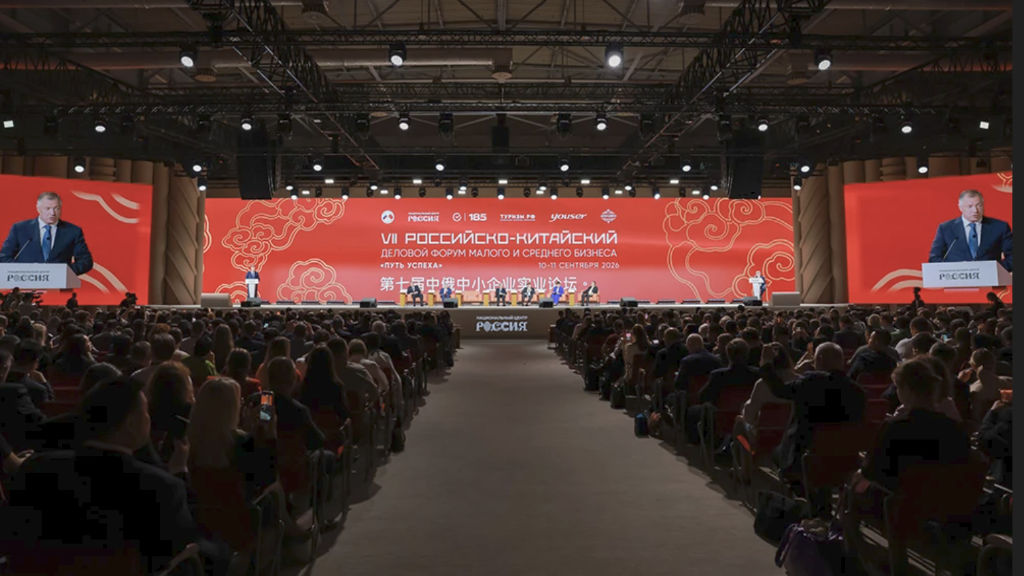

The seventh Russia-China Small and Medium Enterprises Business Forum, held at the National Centre in Moscow on 10-11 September 2026, brought the bilateral business relationship down from the level of presidential declarations and major state corporation investments to the level where supply chains, distributors, technology companies, manufacturers, and service businesses actually meet.
More than 800 Russian and Chinese companies took part in the forum. Around 1,600 registration applications were submitted—a record number in the event’s history—although the venue could accommodate approximately 1,000 participants. More than 300 Chinese government and business representatives were brought by the China Council for the Promotion of International Trade (CCPIT).
The political level was unusually high for an SME event. Russian Deputy Prime Ministers Marat Khusnullin and Dmitry Chernyshenko opened the forum; Boris Titov, chairman of the Russian side of the Committee and Special Representative of the Russian President for relations with international organizations on sustainable development, moderated the Russian side; and Li Hongzhong, member of the Political Bureau of the CPC Central Committee, Vice Chairman of the Standing Committee of China’s National People’s Congress, and chairman of the Chinese side of the Committee, led the Chinese delegation. First Deputy Chairman of the State Duma Ivan Melnikov also addressed the meeting.
Li’s wider visit ran from 9 to 12 September. In Moscow he met Federation Council Speaker Valentina Matviyenko, Ivan Melnikov, and Boris Titov and also visited the Irkutsk Region. The forum operated simultaneously as a business platform and as part of a broader political and interregional mechanism connecting parliamentary, regional, and private-sector cooperation.
The Most Important Result: A Change In The Economic Agenda
Unlike larger Russia-China economic forums that publish large contract packages, the Moscow SME meeting was primarily structured around policy solutions by policymakers, business matchmaking, B2B meetings, sector discussions, investment presentations, workshops, and business networking. The summit’s measurable outcome was the creation of a much larger pipeline of potential transactions and partnerships across agriculture, AI, digital platforms, e-commerce, tourism, logistics, creative industries, business education, and regional investment. CCPIT’s pre-forum program explicitly included opening and thematic sessions, B2B negotiations, and sectoral discussions, while the event also included master classes on foreign economic activity and logistics and presentations of Russian and Chinese regions.
The logic is significant. Large state corporations can establish strategic projects, but SMEs are generally faster at entering distribution channels, creating local subsidiaries, testing products, establishing service companies, and building supplier relationships. Russian Deputy Prime Minister Khusnullin stressed that Russia-China cooperation must develop simultaneously at state, regional, major-company, and business levels, arguing that SMEs can introduce new solutions and establish new initiatives faster. The forum consequently marks a transition from the first phase of Russia-China economic expansion, trade, especially commodities and manufactured imports, to a second phase based on localization, joint production, technology transfer, digital services, and regional supply chains.
Bilateral Relationships Have Outgrown The Traditional Russia-China Trade Model
The economic background explains why an SME forum attracted such extraordinary interest. Chinese customs data show bilateral merchandise trade reached US$185.047 billion in January-August 2026, up 28.4% year on year. Russian exports to China increased 26.5% to US$100.372 billion, while Chinese exports to Russia rose 30.7% to US$84.675 billion. The eight-month figure is already far above Russia’s previous annual trade peak with Germany of approximately US$101 billion.
Titov used this comparison at the forum to illustrate the scale of Russia’s economic reorientation toward China. The composition of trade is also beginning to change. In the first half of 2026, bilateral trade increased 25.6% according to Chinese customs data, while Russia’s non-oil, non-energy exports to China increased 14%. The food trade, for example, has increased by 44%.
This is precisely the area where SMEs can have a larger role because food processing, packaging, agricultural technology, logistics, specialized machinery, and niche consumer products are more fragmented than oil and gas. The objective is not simply to increase US$185 billion into a larger headline number. It is to make more of that turnover generate Russian and Chinese value added through joint production, services, technology, and local supplier networks.
Russia’s SME Sector Has Reached a Record Scale

Russia has entered this new stage with an unusually large domestic SME base. The Unified Register of Small and Medium Enterprises contained over 6.8 million SMEs at the beginning of January 2026, 247,000 more than at the start of 2025 and 8% above the 2024 level. SME employment reached 19.92 million people by the end of the third quarter of 2025, the highest level recorded since 2019.
The regional importance is substantial. SMEs account for 65.5% of employment in Kalmykia, 63.9% in Moscow, 63.6% in St. Petersburg, 53.8% in the Novosibirsk Region, and 50.2% in the Tyumen Region. The Central Federal District contains about 2.1 million registered SMEs, followed by the Volga Federal District with 1.2 million and the Southern Federal District with about 800,000. It is a boom time for Russian entrepreneurs who have bought into the Pivot to Asia.
The sectoral structure is equally important for China. Compared with 2019, Russian SME activity expanded 36% in information technology, 28% in public catering and hotels, 19% in science, and 11% in manufacturing. Medium-sized companies recorded particularly strong increases: 71% in IT and 129% in catering and hotels. Small enterprises, excluding micro-businesses, generated ₽41.6 trillion (US$495 billion) of turnover in 2025. This provides an unusually broad field for Chinese participation. IT and digital firms can cooperate in software and AI; manufacturers can build supply chains; agricultural SMEs can use Chinese machinery and technologies; hospitality businesses can service the rapidly growing Chinese tourist market; and e-commerce companies can connect Russian marketplaces with Chinese suppliers.
Russia’s Financial Support Architecture For SMEs

The Russian state has expanded the financial infrastructure around this sector. In 2025, businesses received nearly ₽978 billion (US$11.6 billion) in financial support. This included more than ₽50 billion (US$595 million) in preferential loans, ₽54 billion (US$643 million) in microloans, ₽295 billion (US$3.52 billion) from regional guarantee organizations, and ₽246 billion (US$2.9 billion) in umbrella guarantees. For 2026, preferential lending under the joint program of the Bank of Russia, Ministry of Economic Development and SME Corporation was doubled to ₽200 billion (US$2.38 billion), comprising ₽150 billion for investment and ₽50 billion for operating expenditure. Loans range from ₽25 million (US$300,000) to ₽2 billion (US$24 million), with repayment terms of up to 10 years and a preferential rate for the first five years. At prevailing mid-2026 parameters, the investment rate was 10.75% (the key rate minus 3.5 percentage points); the rate on working-capital loans was “key rate plus 3%” (~17.25%), and for SMEs in border regions—at the key rate level.
By mid-July 2026, almost ₽11.9 billion (US$142 million) had been drawn down under the investment program, of which ₽9.4 billion went to manufacturing.
Overall financing accessible through state instruments in 2026 is projected at about ₽900 billion (US$10.7 billion). Industrial mortgages are nominally available at 3–5%, but this rate applies only when the Central Bank’s key rate is no higher than 10%; under current parameters a floating mechanism applies, and the actual rate is 7.25–9.25%. Special programs provide ₽3.5 billion (US$41.6 million) for single-industry towns and special economic zones (a combined limit for 2025–2026, of which approximately ₽1 billion is allocated for 2026) and more than ₽10 billion (US$120 million) for the reunited regions (DPR, LPR, Zaporozhye, and Kherson regions) during 2023–2028.
Russia’s SME Corporation, the MSP Bank, and regional guarantee organizations cover up to 50-70% of loans. Russia is also strengthening the broader legal business environment. The National Model for Target Conditions for Doing Business to 2030 contains 11 roadmaps, 280 measures, and 40 target indicators covering business registration and taxation, property, energy, labor, finance, innovation and patents, competition, international trade, dispute resolution, and bankruptcy. For Chinese SMEs this creates an important opportunity: once they establish Russian legal entities, many of the same financing and support mechanisms available to Russian firms become potentially accessible.
Chinese Companies Have Already Moved Beyond Simple Exports Into Russian Localization
The clearest evidence is the number of Chinese-linked companies in Russia. More than 15,500 companies with Chinese founders or co-founders were operating in Russia by mid-2026, compared with roughly 1,434 at the end of 2021, an increase of about 900%. More than 4,300 Chinese-linked entities were registered during 2025 alone, with e-commerce and online retail accounting for nearly 3,000. Wholesale trade, construction, restaurants, and food delivery followed. Chinese participation represents approximately 22-23.6% of foreign-founded enterprises operating in Russia.
Reported cumulative Chinese direct investment was around US$55 billion by 2025, while Far Eastern projects attracted about ₽1 trillion (US$11.7 billion) over the past three years. This indicates that Chinese participation is no longer concentrated solely on import distribution. It increasingly includes production, logistics, warehouses, services, and regional localization.
Haier is a good example of this localization model. Its industrial park in Naberezhnye Chelny includes manufacturing facilities for refrigerators, washing machines, televisions, and other appliances, while the company has also developed logistics and R&D capabilities. A Haier water-heater plant in Naberezhnye Chelny involved a ₽7 billion (US$83 million) investment and created 322 jobs.
Another example is Chery. In 2025, Chery Group sold 2.8 million vehicles worldwide, up 7.8% year-on-year; exports totalled 1.34 million vehicles, and the company retained its status as China’s largest passenger car exporter. Chery’s Russian business illustrates how a Chinese manufacturer can leverage localization, distribution, and service networks to turn a foreign market into a major business platform. In 2024, Chery Group’s sales in Russia (including the sub-brands Omoda, Exeed, Jaecoo, Jetour, Kaiyi, and others) reached approximately 325,000 vehicles, and in 2025—approximately 262,000. According to Chery Automobile’s prospectus, the share of revenue attributable to Russia was 25.5% in 2023, 17.7% in 2024, and 10.7% in the first quarter of 2025. The decline is linked to Chery’s preparation for an IPO on the Hong Kong Stock Exchange: the company began scaling back its direct presence in Russia, transferring distribution and service operations to third-party entities. Nevertheless, Russia remains one of the group’s key foreign markets.
In the high-technology domain, Huawei plays a notable role. The company’s ecosystem in Russia spans key areas—from 5G and cloud computing to big data, artificial intelligence, and industrial solutions. In 2020, Huawei announced a five-year development program in the country. Its goals included training more than 130,000 Russian specialists in digital technologies, as well as investing over $1 billion in local procurement, R&D, and the development of its own ecosystem. By 2021, the investment portion of the plan had been exceeded ($1.1 billion), but progress on workforce training reached only about 12% of the target. Following the suspension of consumer device and telecom equipment sales in 2022, Huawei’s presence in Russia shifted predominantly towards research and development: the staff of the Huawei Russian Research Institute (RRI) grew to 2,500 people, and its annual R&D budget is approximately $1 billion.
E-commerce Is The Laboratory For Russia-China SME Integration
The strongest bilateral SME-level example is e-commerce. Chinese entrepreneurs are entering Russia not simply by exporting containers but by establishing local marketplace operations, warehouses, bank accounts, distribution systems, and Russian-language sales channels.
Ozon reported a 2025 GMV of ₽4.16 trillion (US$49.5 billion) up 45%, with 65.1 million active buyers and 2.48 billion orders. Chinese sellers have become a significant part of the ecosystem: by the end of 2023, their share exceeded 20% of the total number of sellers (about 100 thousand out of approximately 500 thousand), and their number has continued to grow since then. However, an accurate estimate for 2026 depends on the methodology—Ozon counts only direct cross‑border sellers, while many Chinese sellers operate via Russian legal entities.
The broader Russian marketplace is now enormous: combined 2025 sales of Wildberries, Ozon, and Yandex Market reached ₽8.59 trillion (US$102 billion), up 32.2%. This is exactly the kind of environment in which SMEs scale rapidly. Chinese sellers bring manufacturing capacity, product variety, and supply-chain efficiency; Russian platforms provide domestic consumer access, payment infrastructure, and last-mile logistics. The next step is localization of packaging, warehousing, repair, product certification, advertising, software, and eventually manufacturing.
China’s SME Ecosystem Is Vastly Larger And More Technologically Specialized

China offers Russia a partner pool of a completely different scale. More than 63 million Chinese SMEs were operating nationwide by the end of 2025, accounting for more than 95% of all business entities. China’s 2026–2030 SME plan explicitly prioritizes digitalization, intelligent and green transformation, innovation, legal protection, and stronger SME services.
China has also built a specialized high-technology SME tier. More than 17,600 national-level “Little Giant” enterprises had been cultivated by 2025, up from just over 5,000 during the previous five-year period. In 2024 these companies invested on average more than ¥30 million (US$4.5 million) each in R&D.
These firms are especially relevant to Russia because they specialize in precisely the areas identified at the Moscow forum: semiconductors, industrial equipment, AI, robotics, biotechnology, specialized manufacturing, and digital platforms. National-level Little Giants represented only 3.5% of China’s industrial SMEs above the designated size but generated 9.6% of operating revenue and 13.7% of profits in that segment.
China’s high-growth startup ecosystem is equally substantial. The 2026 Hurun Global Unicorn Index counted 381 Chinese unicorns, up 38, while the global total reached 1,603. China’s unicorns include technology businesses in AI, semiconductors, new energy, fintech, e-commerce, and advanced manufacturing. The 2026 ranking identified DeepSeek at a US$50 billion valuation and ByteDance at US$480 billion. China also had 278 Hurun gazelles in the 2025 index, up 8%, representing 34% of the global total. Since 2019, the number of Chinese gazelles has more than quadrupled from 70 to 278. The opportunity for Russia is therefore not merely to attract Chinese consumer brands. It is to attract the next layer of Chinese specialized industrial firms before they become global giants.
Connectivity Is Becoming an SME Economic Asset
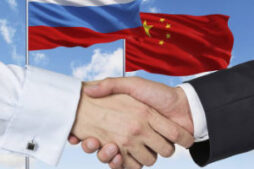
Regional connectivity featured prominently in the forum’s economic logic. Khusnullin highlighted the Europe-Western China, West-East, and North-South corridors and river transport under the Volga-Yangtze cooperation format. An intergovernmental memorandum on urban planning signed during President Vladimir Putin’s May 2026 visit to China provides a framework for cooperation on master planning, integrated urban development, housing and utilities, energy, transport, communications, AI, and IT.
The Europe-Western China corridor is expected to reach Tyumen on Russian territory in 2026. The regional China-Russia interface is expanding particularly quickly in the northeast.
Heilongjiang again ranked first among Chinese provinces in the Russia-China interaction index, with 10/10. China-Europe train traffic from Heilongjiang increased 2.5 times in 2026. Passenger hovercraft traffic across the Amur between Blagoveshchensk and Heihe rose 51.5% to 144,000, with the Russian component increasing 128%. In July 2026, direct air service between Harbin and Khabarovsk expanded: after Chengdu Airlines launched a new route using the C909 aircraft, the number of flights increased from four to six per week.
Guangdong and Shandong ranked second, while Inner Mongolia and Beijing tied for third place. For SMEs, these figures matter more than they might for large energy companies because transportation costs can determine whether a small shipment, food product, machinery component, or e-commerce parcel is commercially viable.
Tourism Has Become Another SME Growth Channel

The abolition of visa requirements has accelerated the development of bilateral tourism. In the first half of 2026 alone, the flow of travellers increased by 1.5 times. Before the pandemic, in 2019, 1.4–1.9 million Chinese tourists visited Russia annually. According to current forecasts, up to 4.2 million tourists from China will visit Russia by the end of the year. The long‑term goal is to exceed 5.5 million Chinese visitors by 2030. Meanwhile, the temporary mutual visa‑free regime in effect in 2026 has been extended until the end of 2027, creating a stable foundation for further growth in tourist traffic.
More than 80 Russian hotels, attractions, and airports have already obtained ‘China Friendly’ certification. Chinese arrivals in Russia increased 20% in the first half of 2026, while Russian arrivals in China increased 54%. A Russia-China tourism forum is scheduled for April 2027 in Xi’an alongside the Silk Road International Tourism Exhibition.
Russia is also preparing new Discovery Russia products for presentation in Beijing, with additional air routes and mutual automobile tourism under consideration. This opens a large SME ecosystem around hotels, restaurants, guides, transport, medical tourism, education, entertainment, and retail. Nizhny Novgorod, for example, presented medical tourism and educational programs for young entrepreneurs, while regional representatives, including Dmitry Starostin, Pavel Solodkiy, Alexey Dushkin, and Svetlana Luzanova, promoted tourism and education opportunities.
The Main Obstacle Is No Longer Political Willingness But Transaction Cost
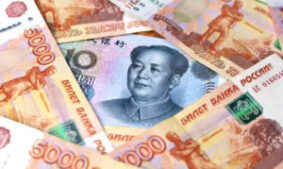
Although the Russia-China relationship has political backing, rapidly growing trade, and a large business base. The constraint is increasingly practical. Railway congestion on the Eastern Polygon, Trans-Siberian and Baikal-Amur Mainline, limited Far Eastern port capacity, and seasonal Northern Sea route constraints can increase logistics costs by 40-60% and add 7-14 days or more to delivery times.
Customs procedures, veterinary and phytosanitary controls, and dual-use licensing and certification differences remain particularly difficult for machinery, electronics, and agricultural products. Payments have improved dramatically; yuan and ruble settlements in some periods are now greater than 99%, but smaller companies still face bank compliance checks, secondary-sanctions exposure, longer verification, and higher intermediary costs. High Russian domestic interest rates, shortages of skilled technicians, different tax and legal interpretations, language barriers, and uneven regional infrastructure add further costs. This explains why US$185 billion of trade does not automatically translate into US$185 billion of SME production cooperation.
The Next Policy Step: A Dedicated Russia-China SME Operating System
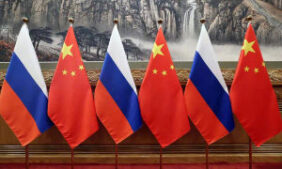
The practical policy agenda is becoming clear. Russia can expand preferential financing and guarantee products specifically for Chinese-linked SMEs and Russia-China joint ventures, simplify entry into industrial parks, accelerate customs and certification digitization, increase support for technical personnel, and create one-stop portals covering taxation, labor law, licensing, and investment incentives.
China can encourage its Little Giants, gazelles, and specialized manufacturers to establish Russian subsidiaries and joint ventures rather than relying solely on cross-border exports. Chinese export-credit and insurance institutions could develop dedicated instruments for Russia-focused SME projects, while banks could create lower-cost settlement channels for smaller companies.
Both countries are establishing dedicated Russia-China SME industrial parks around the Heihe-Blagoveshchensk model, are mutually recognizing selected technical standards, integrating their logistics and settlement infrastructures, and creating permanent B2B digital matchmaking mechanisms.
The Volga-Yangtze framework is becoming a platform for inland SME corridors, while Far Eastern infrastructure connects Chinese manufacturing clusters with Russian consumer and industrial markets.
For Russian SMEs, increasing their share of the Chinese market will require a shift from a generalized export approach toward sector-specific market strategies. Companies need to identify demand in China before entering the market, adapt products, packaging, certification, and digital marketing to Chinese requirements, and work with local distributors, e-commerce platforms, and Chinese SME partners rather than relying mainly on direct exports. Greater use of Chinese marketplaces, local warehousing, after-sales services, and joint ventures could help Russian firms move from occasional sales to sustained market presence.
Chinese legislation and SME support mechanisms—including the development of specialized and innovative enterprises under the “Little Giants” category—have already created a robust ecosystem of financing, technology, industrial clusters, and market linkages, to which Russian SMEs can potentially gain access through local partnerships or their own presence in China. PRC legislation provides for the application of state support measures to foreign-invested enterprises on equal terms with Chinese companies. However, access to specific incentives depends on program conditions, industry, region, and project requirements.
As the 7th SME forum illustrated, Russian and Chinese authorities are creating dedicated SME programs covering certification, customs, market information, financing, logistics, and partner matching, while encouraging Chinese regions and industrial parks to host Russian companies. The objective is to build repeatable business channels in specific sectors—agriculture and food, machinery, IT and digital services, chemicals, pharmaceuticals, creative industries, and consumer goods—instead of treating the Chinese market as a single, undifferentiated destination.
Summary
The seventh China-Russia SME forum’s strategic importance lies less in a headline contract value than in the architecture it is building around the bilateral economy. The event connected approximately 800 companies, more than 300 Chinese government and business representatives, federal ministries, regional authorities, business associations, investors, and technology specialists around a much wider agenda than commodity trade.
Several concrete follow-up mechanisms were also announced. Titov proposed an annual Russia-China business confidence index, a database of “100 new Russian goods for China,” a Russian house in Xi’an with a gastronomic theater for brand promotion and discussions around a Chinese house in Moscow.
The forum points toward a measurable next phase: Russia’s 6.8 million SMEs meeting China’s 63 million-plus SME ecosystem; Russian IT, agriculture, manufacturing, and tourism companies accessing China’s enormous consumer and industrial market; Chinese Little Giants and gazelles using Russia as a manufacturing, logistics, and Eurasian distribution base; and marketplaces, railways, border crossings, payment systems, and regional investment platforms connecting the two.
The central economic question for the next three years is consequently no longer whether Russia-China trade can exceed US$200 billion. The US$185 billion recorded during the first eight months of 2026 makes that trajectory increasingly plausible. The more consequential question is how much of that turnover can be converted into joint factories, Russian-Chinese technology companies, SME suppliers, local jobs, higher-value exports, and integrated production chains. The seventh Moscow SME forum was designed around precisely that transition from buying and selling between two countries to producing, financing, developing, transporting, and marketing together.
This report was written by Ms. Begum, a reporter on Russia-Northeast Asia affairs for Russia’s Pivot To Asia. She may be reached at info@russiaspviottoasia.com