
 Русский




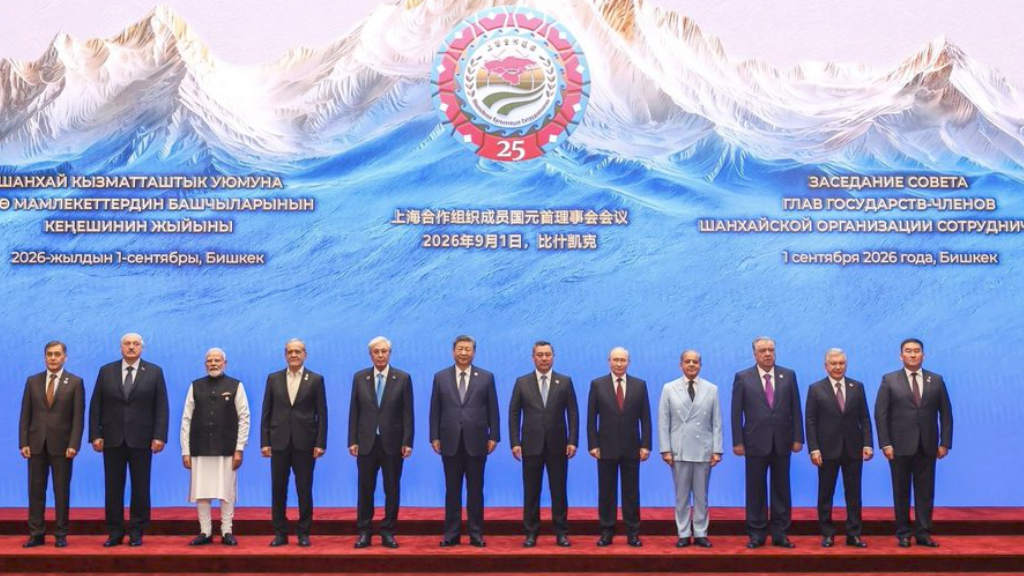

The 26th meeting of the Shanghai Cooperation Organisation Council of Heads of State in Bishkek on September 1, 2026 was significant for Russia not because another political declaration was added to the SCO archive, but because the organisation moved another step towards building the practical infrastructure of a large Eurasian economic space.
Held at the Yrys Ordo Congress Hall under the chairmanship of Kyrgyz President Sadyr Japarov, the summit brought together the leaders of all 10 SCO member states: Belarusian President Alexander Lukashenko, Chinese President Xi Jinping, Indian Prime Minister Narendra Modi, Iranian President Masoud Pezeshkian, Kazakh President Kassym-Jomart Tokayev, Pakistani Prime Minister Shehbaz Sharif, Russian President Vladimir Putin, Tajik President Emomali Rahmon and Uzbek President Shavkat Mirziyoyev, alongside the SCO leadership represented by Secretary-General Nurlan Yermekbayev and Regional Anti-Terrorist Structure Executive Committee Director Ularbek Sharsheev.
The scale matters. Putin described the SCO as encompassing nearly half of humanity and more than one-third of global GDP, while the Kyrgyz side put the figures at more than 40% of the world’s population and around one-quarter of global GDP. The following Table 1 also places intra-SCO exports at about US$725 billion, equal to only 15.3% of members’ total exports, with Chinese direct investment in SCO countries at more than US$40 billion. To compare, as of the end of the first half of 2025 (around 1 July 2025), Russia’s outward FDI stock in the Eurasian region stood at approximately US38 billion. This made Russia one of the largest investors in the region, accounting for 78.6% of mutual FDI exports. The Eurasian Development Bank reports primarily includes key SCO members: Kazakhstan, Uzbekistan, Kyrgyzstan, Tajikistan, and Belarus, along with some other post-Soviet states. That combination tells Moscow where the real opportunity lies: the SCO is already enormous, but intra-organisational commerce remains underdeveloped relative to the bloc’s economic weight. For Russia, therefore, the Bishkek summit was less about creating a conventional free-trade bloc and more about removing the physical, financial, logistical, technological and institutional barriers that prevent existing trade from becoming deeper and more diversified.
Table 1: Overall Intra-SCO Trade & Investment Overview
| Metric | Value / Statistic |
| Intra-SCO Exports Volume | US$725 Billion |
| Share of Intra-SCO Trade | 15.3% of total member exports |
| China Direct Investment in SCO States | More than US$40 Billion |
| SCO Combined GDP Share | 35%-40% of Global GDP |
| Settlements in Local Currencies (Russia-SCO) | Exceeds 97% |
Table 2: General Bilateral Trade Profile Among SCO Member States
| SCO Member Country | Total Trade with SCO Partners (Est. Annual US$) | Primary Exports to SCO | Main SCO Import Partners |
| China | US$512 Billion | Machinery, Electricals, Vehicles, Textiles | Russia, India, Kazakhstan |
| Russia | US$409 Billion | Energy (Oil & Gas), Fertilizers, Metals | China, India, Belarus, Kazakhstan |
| India | Over US$100 Billion | Refined Oil, Pharmaceuticals, Agriculture | China, Russia |
| Belarus | US$55 Billion | Heavy Transport, Machinery, Fertilizer | Russia, China |
| Kazakhstan | US$45 Billion | Crude Oil, Uranium, Metals, Wheat | Russia, China, Uzbekistan |
| Uzbekistan | US$25 Billion | Gold, Textiles, Gas, Fruit/Vegetables | China, Russia, Kazakhstan |
| Iran | US$40 Billion | Petrochemicals, Minerals, Agricultural Goods | China, Russia, India |
| Kyrgyzstan | US$12 Billion | Precious Metals, Garments, Agricultural Produce | China, Russia, Kazakhstan |
| Tajikistan | US$5 Billion | Aluminum, Cotton, Electricity, Ores | Russia, China, Kazakhstan |
| Pakistan | US$20 Billion | Textiles, Agricultural Products, Rice | China, Russia |
Putin’s Nine Bilateral Meetings at the SCO Summit

Putin held nine bilateral meetings with foreign leaders on the sidelines of the SCO summit, on 31 August-1 September 2026. His meetings included Chinese President Xi Jinping, Indian Prime Minister Narendra Modi, Kazakh President Kassym-Jomart Tokayev, Iranian President Masoud Pezeshkian, Tajik President Emomali Rahmon, Turkish President Recep Tayyip Erdoğan, Mongolian President Ukhnaagiin Khürelsükh, Armenian Prime Minister Nikol Pashinyan, and Kyrgyz President Sadyr Japarov.
We have published detailed breakdowns of these meetings with China here, India here, Iran here, Turkiye here, Kazakhstan here, Tajikistan here, Uzbekistan here, Armenia here and Mongolia here.
The Bishkek Declaration: From Tianjin Strategy To Implementation
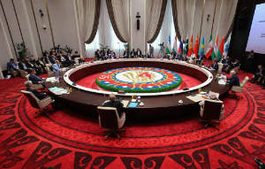
The central political document was the Bishkek Declaration marking the SCO’s 25th anniversary. Its economic importance comes from its linkage with the ten-year development strategy adopted at the 2025 Tianjin summit for 2026-2035. The declaration effectively turns that strategic roadmap into a mandate for high-quality development, deeper economic integration and stronger institutional cooperation. The summit’s document package was unusually broad.
Leaders signed the Bishkek Declaration and 27 additional outcome documents (28 total documents) and 2 annual reports at the summit. The package covers security and counter-terrorism, anti-drug cooperation, cyber and information security, AI and digital infrastructure, logistics and connectivity, energy, climate change, biodiversity, international partnerships, tourism and culture, and SCO institutional reform. The summit also saw Lahore designated as the SCO Tourism and Cultural Center for 2026-2027 and Pakistan take over the organization’s rotating chairmanship.
The SCO Bishkek Summit 2026: All Signed Agreements

The 29 signed agreement covered eight different sectors. We identify these as follows:
Security & Counter-Terrorism
- Universal Security Center: Established the Universal Center for Countering Security Challenges and Threats of SCO member states, creating a new mechanism for coordinated responses to security threats.
- Anti-Drug Cooperation: Approved regulations for the Executive Committee of the SCO Anti-Drug Center.
- Drug Addiction: Endorsed the SCO Program of Cooperation on Combating Drug Addiction until 2030.
- Synthetic Drugs: Adopted a coordination program through 2030 to combat the spread of synthetic drugs and their precursors.
- Crime-Fighting Cooperation: Amended the 2010 Agreement on Cooperation among SCO governments in Combating Crime, updating the framework for law-enforcement cooperation.
- Nuclear Security: Adopted a declaration on strengthening multilateral cooperation on nuclear and physical nuclear security.
- Emergency Assistance: Adopted a statement on providing assistance to SCO member states affected by emergency situations and disasters.
Cyber, Information & Artificial Intelligence
- Information Security: Approved a 2026-2028 cooperation plan on international information security.
- Artificial Intelligence: Signed an intergovernmental Memorandum of Cooperation in Artificial Intelligence, establishing a framework for cooperation in the AI sector.
- Regional Computing & AI Infrastructure: Approved a concept for creating regional data-processing centers and computing capacity and developing the AI industry within the SCO.
- Information Cooperation: Signed a memorandum on cooperation in the information sphere between the authorized bodies of SCO member states.
- Translation & Multilingual Cooperation: Adopted a decision concerning the provision of translation services for SCO activities.
Trade, Logistics & Connectivity
- Ports & Logistics: Adopted a 2026-2030 Action Plan (Roadmap) for developing ports and logistics centers across SCO member states.
- SCO Strategic Framework: Adopted the Bishkek Declaration, marking the 25th anniversary of the Shanghai Cooperation Organization and setting out broad priorities for future cooperation.
Energy & Green Development
- Green Technology Corridor: Approved a 2026-2030 program for scientific and technical cooperation on creating an SCO “Green Technology Corridor.”
- Energy Conservation: Adopted a statement supporting greater cooperation in energy conservation and energy efficiency.
- Energy Systems: Adopted a statement on developing cooperation in the field of energy systems.
- Climate Change: Signed an intergovernmental Memorandum on Cooperation in Combating Climate Change.
Climate, Environment & Biodiversity
- Biodiversity Initiative: Adopted an SCO initiative on the conservation and sustainable management of biodiversity.
- Biodiversity Action Plan: Approved a 2026-2031 Joint Action Plan for biodiversity conservation and sustainable management.
Diplomatic & International Partnerships
- African Union Partnership: Signed a Memorandum of Understanding between the SCO Secretariat and the African Union Commission, expanding institutional cooperation between the two organizations.
- International Role: The summit’s broader declarations and decisions reaffirmed the SCO’s emphasis on multilateral cooperation and partnership.
Tourism & Cultural Cooperation
- Lahore Tourism and Cultural Center: Declared Lahore, Pakistan, the SCO Tourism and Cultural Center for 2026-2027.
- Family Institution: Adopted a statement supporting and strengthening the institution of the family.
- Voluntary Ambassador Program: Amended the regulations governing the honorary title of “Voluntary Ambassador of the Shanghai Cooperation Organization.”
Institutional & Organizational Matters
- SCO Charter: Adopted a protocol introducing amendments and additions to the SCO Charter of June 7, 2002.
- Termination of Previous Decisions: Adopted a decision on the termination of specified decisions of the Council of Heads of State.
- Secretary-General’s Report: Received the SCO Secretary-General’s report on the organization’s work in 2025.
- Regional Anti-Terrorist Structure Report: Received the report of the SCO Regional Anti-Terrorist Structure (RATS) on its work in 2025.
The Protocol on Amendments and Additions to the SCO Charter of June 7, 2002 is particularly important because institutional capacity determines whether economic decisions can actually be implemented. It enables the practical launch of the Universal Centre for Countering Challenges and Threats to SCO Member States, established in Tashkent, and the SCO Anti-Drug Centre in Dushanbe. The regulations for these institutions were also approved. For Russian business, this matters indirectly but materially. A more predictable security environment, better information exchange and stronger mechanisms against organised crime lower risks along trade corridors stretching from Russia through Kazakhstan, Uzbekistan, Kyrgyzstan and Tajikistan towards China, India, Iran and Pakistan.
Table 3: Russia’s Trade Turnover with SCO Member States
Russia’s trade with SCO nations surpassed US$409 Billion in 2024, driven primarily by trade with China, India, and Central Asian partners.
| Member Country | Russia Bilateral Trade Turnover (USD) | Key Traded Goods / Focus Areas |
| China | US$240 Billion | Energy (Oil/Gas), Electronics, Automobiles, Machinery |
| India | US$65 Billion | Crude Oil, Fertilizers, Pharmaceuticals, Agro-products |
| Belarus | US$50 Billion | Heavy Machinery, Vehicles, Agricultural Products, Chemicals |
| Kazakhstan | US$28 Billion | Industrial Equipment, Metals, Petroleum Products |
| Uzbekistan | US$10 Billion | Textiles, Food Products, Energy Equipment, Construction |
| Iran | US$4.5 Billion | Agricultural Products, Transport & Logistics Corridor (INSTC) |
| Kyrgyzstan | US$3.5 Billion | Consumer Goods, Energy Resources, Metals |
| Tajikistan | US$1.8 Billion | Foodstuffs, Fuel, Mining Equipment |
| Pakistan | US$1.0 Billion | Agro-commodities, Energy, Textiles |
The Biggest Economic Decision: Port Development & Logistics Roadmap
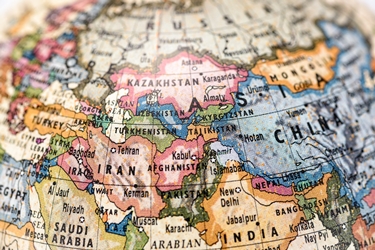
The most directly commercial instrument is the SCO Action Plan, or Roadmap, for the Development of Ports and Logistics Centres for 2026-2030. The document identifies logistics as a strategic area of SCO cooperation, not simply a transport issue. This is precisely where Russia has structural interests. Russian exports to the SCO include energy, fertilisers, metals, grain and other bulk commodities whose competitiveness increasingly depends on transport costs and reliable transit. The dossier explicitly identifies the opportunity to reduce transit times and costs for Russian energy, fertiliser, metal and agricultural cargoes moving towards China, India, Central Asia and Iran.
The roadmap should therefore be read alongside the wider development of Eurasian corridors. A port or logistics-centre agreement becomes economically meaningful only when it is connected to railways, roads, warehouses, customs procedures, border crossings and payment systems. Russia’s advantage is that its economy already possesses the industrial base to supply much of this infrastructure: transport equipment, energy systems, engineering, metals, construction materials and logistics services. This is also where the Russian-Kazakh, Sino-Russian and Russian-Central Asian economic relationship becomes strategically important.
Table 3 places Russia’s recent bilateral trade turnover at around US$28 billion with Kazakhstan, US$10 billion with Uzbekistan, US$3.5 billion with Kyrgyzstan and US$1.8 billion with Tajikistan. Those figures are modest compared with Russia’s US$240 billion trade with China and US$68 billion with India, meaning Central Asia remains one of the largest areas of unrealised Russian commercial potential within the SCO.
Building Russia’s Physical SCO Trade Infrastructure
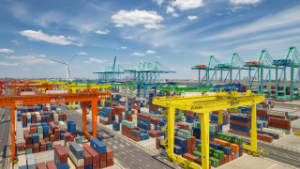
The SCO’s 2026-2030 Action Plan for the Development of Ports and Logistics Centres is significant because it is beginning to connect infrastructure that already exists with the next generation of Eurasian transport capacity. The roadmap is being developed from the SCO’s 2024 Concept on port and logistics-centre cooperation, with a consolidated list of major ports and logistics hubs already compiled; expert negotiations were held under Kazakhstan’s chairmanship on February 25 and March 10, 2026. The objective is explicitly to create accessible, efficient and secure transport-logistics services and to coordinate ports, terminals and multimodal routes rather than develop them as isolated national projects.
For Russia, the most important existing southern network runs through the Caspian Sea and the International North-South Transport Corridor (INSTC). Russian ports Astrakhan, Olya and Makhachkala provide the northern gateway, while Kazakhstan’s Aktau and Kuryk connect the Caspian network with Central Asian cargo and onward routes to Iran.
This infrastructure has already become commercially relevant: Russia’s Astrakhan and Olya ports handled more than 3.5 million tonnes in the first half of 2026, while Kazakhstan identifies Aktau and Kuryk as its principal Caspian logistics nodes for Russian-Kazakh and transit trade. Kuryk is being developed toward more than 150,000 TEU of annual throughput, alongside 1.65 million tonnes of bulk and general cargo capacity and a 5.5-million-tonne bulk terminal; the wider Kuryk development is planned to reach design capacity by 2030.
Kazakhstan is also developing the Silk Road logistics project around Orsk and Orenburg, designed for more than 15,000 TEU, 2.5 million tonnes of annual cargo turnover, 3,000 containers of one-time storage and more than 100,000 square metres of warehouse space. On the Russian side, the network is now being expanded rather than merely maintained. Astrakhan’s Olya port is due to receive a new multipurpose terminal for containers, general cargo, oil products and grain by 2030, adding approximately 1.2 million tonnes of annual capacity and strengthening the INSTC’s connection with Iran, the Middle East, India and Africa.
At the same time, Russia and Iran are working to close the most important missing railway section of the western INSTC: the approximately 160-kilometre Rasht-Astara railway. Russian and Iranian transport officials were still preparing the executive contract in January 2026, while in February an authorised Russian company, Caspian Services, received access to land plots for the project. Once completed, the line would remove a major rail discontinuity between Iran’s existing network and Azerbaijan, allowing a more continuous north-south railway route.
The same logic is visible in the Russian-Kazakh border infrastructure. Russia plans to modernise ten priority road checkpoints such as Sagarchin, Mashtakovo, Ozinki, Ilek, Karauzek, Bugristoye, Orsk, Pavlovka, Petukhovo and Olkhovka by 2030. Their combined throughput is expected to rise from about 2.2 million trucks annually to 3.5 million, more than doubling capacity at the selected crossings. This is important for Russia not simply because it increases border traffic, but because it links industrial regions such as Orenburg, Chelyabinsk and the Urals directly with Kazakhstan and the wider Central Asian market.
Russia’s Far Eastern ports provide the other major pillar of the SCO logistics strategy. Vladivostok, Vostochny and Nakhodka, together with the Primorye-1 and Primorye-2 corridors, connect Russian exporters with China’s northeastern provinces and the wider Asia-Pacific market. The importance of this eastern network is increasing because Russia needs more than one route to its largest Asian customers. In the first half of 2026, disruptions affecting traditional southern export routes demonstrated the economic value of having alternative corridors; diversification toward the Caspian, Baltic and Far Eastern systems is consequently becoming a matter of commercial resilience as well as transport policy.
The Central Asian network is also being transformed. The China-Kyrgyzstan-Uzbekistan CKU railway, running along the Kashgar-Torugart-Makmal-Jalal-Abad-Andijan axis, is planned at approximately 532.5 km, with 20 stations, 42 bridges and 25 tunnels, and projected freight capacity of up to 15 million tonnes annually. Uzbekistan says the railway will reduce the China-to-Europe route by several thousand kilometres and almost a week and will create new logistics infrastructure, warehouses and terminals along the route.
Although the CKU is not a Russia-India railway, its strategic importance for Moscow lies in creating another east-west/southbound transport layer through Central Asia that can eventually connect with wider Eurasian corridors. Importantly, Russian companies are beginning to participate directly in this logistics architecture. On August 6, 2026, FESCO, part of the Rosatom management perimeter, signed a cooperation agreement with the Russian-Kyrgyz Development Fund at the Kyrgyz-Russian Economic Forum. The partners agreed to jointly examine logistics-infrastructure projects across the SCO space, exchange expertise on international routes and work through the SCO Business Council’s transport and logistics group, with a roadmap of possible joint activities for 2027. This is exactly the type of business-level implementation that the SCO’s new logistics roadmap requires.
The next stage is therefore not simply to build more ports. It is to link Russian ports, Kazakh Caspian terminals, Central Asian dry ports, Iranian gateways and Chinese border crossings into a coordinated multimodal system. The commercial payoff for Russia could be substantial: energy, fertilisers, grain, metals, machinery and manufactured goods could move through multiple routes rather than depend on one corridor. For Russian logistics companies such as FESCO, Russian Railways and its logistics subsidiaries, as well as banks, terminal operators, engineering firms and equipment manufacturers, the emerging SCO network creates a market not only for transporting cargo but for building the infrastructure through which that cargo will move.
The strategic significance of the 2026-2030 roadmap is therefore that it attempts to turn a collection of national ports, railways, border crossings and dry ports into a connected Eurasian logistics system, reducing transit costs and bottlenecks while giving Russia additional commercial access to China, Central Asia, Iran and ultimately India. The SCO’s own preparatory process confirms that this is precisely the intended direction: its port-and-logistics initiative is designed around major existing facilities and their coordinated development rather than around a single new “SCO corridor.”
From Russian Railways To The Indian Ocean: The SCO Bridge
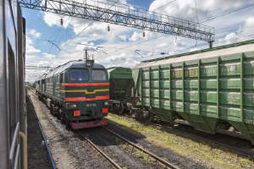
The proposed Russia-India overland rail connection should be viewed less as an immediately executable railway project than as a long-term Eurasian connectivity concept whose political obstacles may require an SCO-level solution. A route through Central Asia and Iran, or alternatively through Turkmenistan-Afghanistan-Pakistan, would encounter precisely the disputes that bilateral diplomacy has struggled to overcome: India-Pakistan tensions, security risks in Taliban-controlled Afghanistan, sanctions pressure on Russian trade and possible overlap with Chinese-backed infrastructure in Pakistan.
Yet the SCO provides an unusual institutional umbrella because Russia, India, Pakistan, Iran and the Central Asian states are full members, while Afghanistan has been an SCO observer since 2012. This becomes more relevant as the organisation itself moves from political declarations towards practical transport coordination: the SCO Action Plan (Roadmap) for the Development of Ports and Logistics Centres for 2026-2030 seeks to coordinate ports, logistics hubs, railways, multimodal routes and related infrastructure across the member states. In this framework, Moscow would not necessarily need to negotiate an India-Pakistan settlement as a precondition for every stage of the corridor; instead, the route could initially be developed through interconnected national sections, using Russia-Iran railway connectivity and the International North-South Transport Corridor, Central Asian rail links, the developing China-Kyrgyzstan-Uzbekistan railway and Russia-Pakistan freight connectivity as building blocks.
Recent Russia-Pakistan discussions on launching bilateral freight rail services, Russian-Iranian work on the Rasht-Astara railway and the Trans-Afghan railway feasibility process provide different pieces of this potential network, although none yet constitutes a continuous Russia-India railway. Russia meanwhile remains the only country to have formally recognised the Taliban government in Afghanistan, giving Moscow a unique diplomatic position from which to engage Kabul on regional connectivity and economic projects.
The political logic is therefore important: the SCO cannot resolve the India-Pakistan dispute or guarantee Afghanistan’s security, but it can provide a multilateral framework in which transport cooperation is separated, as far as possible, from bilateral political disputes. For Moscow, this could turn an otherwise politically improbable Russia-India-Pakistan-Afghanistan land bridge into a phased network of commercially viable corridors, with each section generating value before the entire route becomes operational. The concept would be particularly significant for Russian grain, fertilisers, metals, energy-related products and machinery seeking Indian and South Asian markets, while giving India, Pakistan, Iran and Central Asia alternative access to Russian and Eurasian markets. In other words, the SCO’s emerging logistics architecture could provide the institutional “umbrella” under which politically difficult bilateral connections are gradually assembled into a broader Eurasian transport system, rather than attempting to solve every geopolitical dispute before construction begins.
Finance: 98% Use Of National Currencies Changes The Trade Equation
Putin’s most consequential economic statement in Bishkek was perhaps the simplest: Russia’s trade with SCO members exceeded US$400 billion in the previous year, while more than 98% of Russian transactions with SCO partners were already conducted in national currencies.
Russia’s trade with SCO members has already moved overwhelmingly away from dollar- and euro-based settlement. Table 3 puts Russia’s 2024 SCO trade at approximately US$409 billion, following growth of 37% in 2023 and 35% in 2024. Agricultural trade with SCO partners increased 17% in 2025.
The next step is not currency substitution. It is financial infrastructure. The SCO Interbank Association meeting in Cholpon-Ata on July 2 adopted a 2027-2031 Development Strategy, created an ESG and sustainable-finance working group and discussed joint financing instruments. The interlink between the proposed SCO Development Bank, national-currency settlement and alternative payment infrastructure is noteworthy.
For Moscow, this is a direct response to a structural problem: trade can grow faster than financial infrastructure only for a limited period. If Russian exporters can sell oil, fertilisers, machinery and agricultural products but cannot reliably insure, finance, settle and repatriate the proceeds, the commercial relationship eventually hits a ceiling.
The future SCO Development Bank therefore has potentially greater significance than its institutional title suggests. Putin argued that it should have maximum independence from financial systems that use economic instruments for unilateral political purposes. Combined with the SCO Business Council and Interbank Consortium, such a bank could eventually provide financing for logistics terminals, energy projects, industrial facilities and digital infrastructure without relying entirely on external financial channels. Russian banks already possess practical experience relevant to this direction. The dossier cites Sberbank and VTB’s deployment of QR-based payment systems outside traditional Western financial channels, demonstrating that Russian financial technology can be exported as part of a broader alternative payments ecosystem.
SCO E-Commerce Cooperation and Russia’s Digital Trade Potential

On September 2, members of the SCO Consortium of Economic Analytical Centers held a working meeting via videoconference under Tajikistan’s chairmanship. The meeting presented country reports on “Development of E-Commerce in the SCO Member States as a Factor in Strengthening Regional Economic Cooperation amid Global Challenges,” highlighting barriers and opportunities for expanding digital trade. Russia’s growing e-commerce and digital trade sector has significant potential to strengthen cross-border e-commerce trade with other SCO member states, while the joint report is scheduled for consideration by the SCO Council of Heads of Government in October 2026.
The Russian Central Bank approved the use of crytocurrency settlement in international trade for corporate businesses from September 1, with Russia’s Sberbank already rolling out its payments mechanism to provide these services immediately.
Energy Remains Russia’s Largest Structural Advantage
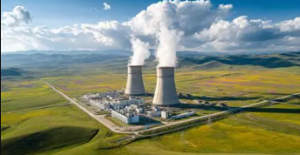
The summit also adopted a Statement on developing cooperation in energy conservation and energy efficiency and a separate Statement on cooperation in energy systems. The documents complement the SCO Strategy for Energy Cooperation through 2030. For Russia, the significance is that the energy agenda is becoming wider than oil and gas. The new framework covers modernisation, resilience, efficiency and integration of energy systems. That creates room for Russian nuclear, hydroelectric, power-engineering and energy-efficiency technologies alongside conventional hydrocarbon exports. We can specifically identify Russian nuclear, hydro and energy-efficiency technologies as potential beneficiaries of the Green Technology Corridor and the energy-system programme. It is telling that the Russian Minister of Energy, Sergei Tsivilev, and Director General of State Atomic Energy Corporation Rosatom Alexei Likhachev were both present at most of Putin’s nine bilateral meetings.
This gives Russian investors a route into projects where Central Asian economies require electricity generation, grid modernisation, transformers, transmission equipment and energy-saving technologies. The opportunity is particularly relevant to Kazakhstan, Uzbekistan, Kyrgyzstan and Tajikistan, where rising industrialisation, urbanisation and digitalisation are substantially increasing electricity demand.
Green Technology and AI Open a Second Russian Export Frontier

The SCO Green Technology Corridor programme for 2026-2030 and the memorandum on climate-change cooperation move the organisation into a new technological phase. The programme is intended to strengthen scientific and technological cooperation, while the biodiversity initiative and joint action plan run through 2031. The chronology is important. On August 18, 2026, in Beijing, the SCO Secretariat delegation led by Deputy Secretary-General T.R. Midhun participated in the plenary session of the China-SCO Green Industry Cooperation Platform, organised by China’s National Development and Reform Commission. Discussions focused on green-product supply chains, common standards, best practices and attracting investment into joint pilot projects.
For Russia, the August 18 Beijing meeting demonstrates that the Green Technology Corridor was already being operationalised before the Bishkek summit. Russian companies could potentially participate in equipment supply, environmental monitoring, energy efficiency, clean industrial technologies and resource-management projects.
The AI package is equally important. Bishkek approved a Concept for creating regional data-processing centres, computing capacities and developing the AI industry, alongside an intergovernmental memorandum on AI cooperation and a memorandum on information cooperation. This is an emerging market for Russian engineering schools, software developers, cybersecurity specialists, data-centre operators and medium-sized technology firms. Putin specifically noted that Russian engineering professionals at the small and medium-business level have an average age of around 35. The SCO’s AI agenda can therefore become an export market for Russian technical expertise rather than merely a diplomatic technology programme.
Central Asia Is Where Implementation Will Be Tested
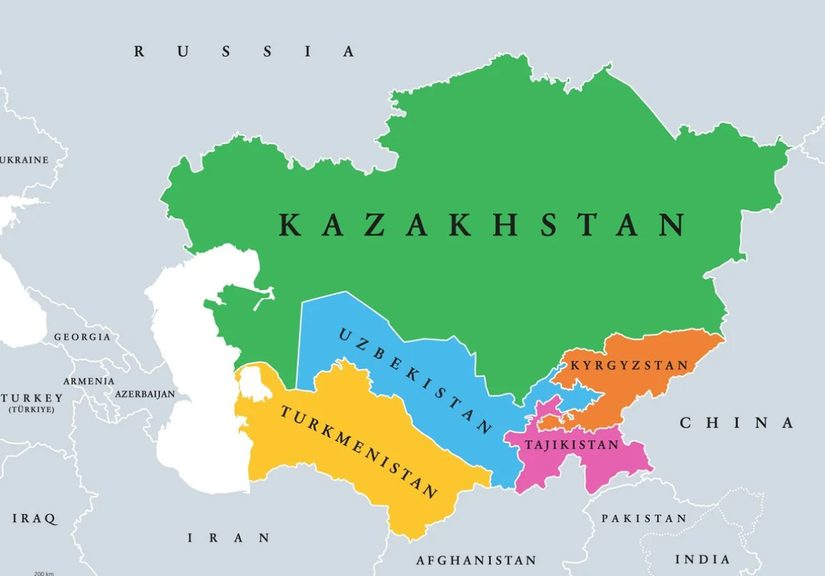
For Kazakhstan, the SCO framework intersects with an already substantial Russia trade relationship of roughly US$28 billion. Kazakhstan’s broader SCO trade is estimated at around US$45 billion, with crude oil, uranium, metals and wheat forming major export categories. Russia’s opportunity is not simply to increase commodity purchases but to deepen industrial equipment, petroleum-product, transport and logistics cooperation.
Putin’s September 1 discussion with President Kassym-Jomart Tokayev also touched on gasoline supplies. Asked whether the issue had been discussed and whether schedules or volumes had been agreed, Putin said all topics of mutual interest were discussed and described the contacts as positive.
Uzbekistan presents an even more diversified opportunity. Table 3 puts Russia-Uzbekistan trade near US$10 billion, while Uzbekistan’s total trade with SCO partners is estimated at US$25 billion, involving gold, textiles, gas, fruit and vegetables. Russian opportunities therefore extend from energy and machinery to construction, food processing and logistics.
Kyrgyzstan is smaller but strategically important because of its location. Table 3 puts Russia-Kyrgyzstan trade at around US$3.5 billion and the country’s wider SCO trade at roughly US$12 billion. Precious metals, garments and agricultural products dominate its broader trade profile. The 2026-2030 logistics roadmap could make Kyrgyzstan more useful as a regional distribution and transit platform linking China, Kazakhstan and Russia.
Tajikistan has the smallest Russian bilateral figure, around US$1.8 billion, against approximately US$5 billion in trade with SCO partners. Aluminium, cotton, electricity and ores are important commodities. But Tajikistan’s role in the SCO institutional architecture is growing: the Anti-Drug Centre is located in Dushanbe, while the Tajik side chaired the August 25 meeting preparing the SCO foreign-economic and foreign-trade ministers’ meeting scheduled for September 17 in Dushanbe. On September 2, the Tajik side also chaired an online meeting of the Consortium of Economic Analytical Centres of SCO member states. Its joint study examined e-commerce as a factor strengthening regional economic cooperation, including market trends, national characteristics, barriers and opportunities for expansion. The final report is scheduled for consideration by SCO prime ministers in October 2026.
Tourism, Culture & Human Capital Are Becoming Economic Infrastructure

In Pakistan, Lahore’s designation as the SCO Tourism and Cultural Capital for 2026-2027 may appear secondary beside logistics and finance, but it creates another channel for intra-SCO services trade. Tourism generates demand for airlines, hotels, payments, transport, retail, cultural industries and education. Russia also has an opportunity through the World Nomad Games being held in Kyrgyzstan, while Putin said Russia is ready to host the next Games in Kazan in 2028. He also pointed to the International United Cultures Forum in St Petersburg at the end of September. The SCO University network, meanwhile, connects more than 100 higher-education institutions. This creates a long-term human-capital channel for Russian universities, engineering schools and research institutions to develop relationships across Central Asia and the wider SCO.
SCO Plus: Expanding The Commercial Perimeter
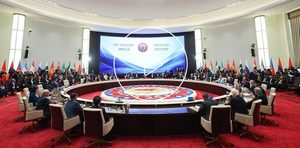
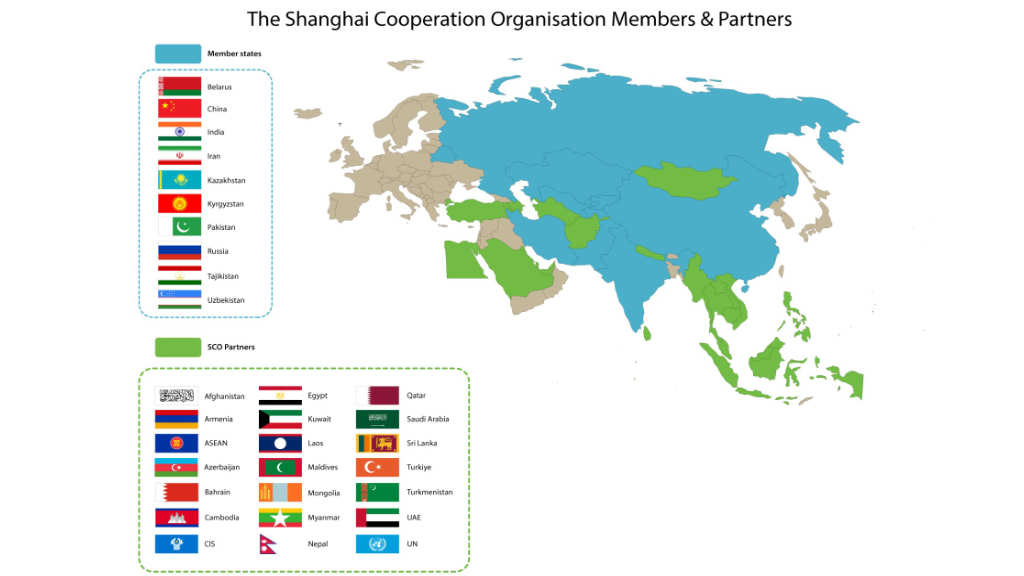
On September 1, the SCO Plus meeting was held at the same Yrys Ordo Congress Hall under the theme “The UN as a Key Element of a Just World Order: The Contribution of the SCO Plus States to the Formation of a Multipolar World.” Participants included Mongolia as an observer, dialogue partners Azerbaijan, Armenia, Egypt, Laos and Türkiye, and guests of the Kyrgyz presidency Vietnam and Togo, together with representatives of the EAEU, CSTO, UN, CICA and CIS.
For Russia, this wider format matters because the economic geography of the SCO is larger than its 10 formal members. The 15 dialogue partners include Armenia, Azerbaijan, Bahrain, Cambodia, Egypt, Kuwait, Laos, Maldives, Myanmar, Nepal, Qatar, Saudi Arabia, Sri Lanka, Turkiye and the United Arab Emirates. That means Russian companies can potentially use SCO-linked platforms to reach markets beyond the formal organisation without requiring all those countries to become members.
Putin’s Speech: integration, Not Uncontrolled Expansion
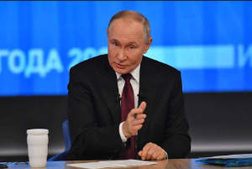
Putin’s economic argument in Bishkek was clear. The SCO should remain inclusive, but expansion must be gradual and based on common principles. Its strength, he argued, is consensus and the absence of imposed decisions. He stressed that economic cooperation produces “obvious dividends” through stronger commercial ties, sustained socio-economic growth and improved living standards.
His position is important for Russia’s commercial strategy. Moscow does not need the SCO to become a rigid customs union. What Russia needs is something more flexible: compatible payment systems, transport corridors, investment mechanisms, energy networks, technological cooperation and reliable rules for companies. The SCO Plus meeting reinforced the geopolitical foundation for that approach. Putin called for a stronger role for the UN and greater representation of the Global South and East, arguing that structures such as the SCO are becoming part of the architecture of a multipolar world.
The Late-Night Press Conference: Putin On Security & Ukrainian Drones
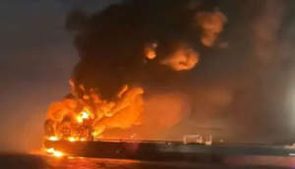
On September 1, Putin held his press conference in Bishkek. Although much of the discussion concerned security, Ukraine, Armenia, Japan and international politics, several answers have direct economic relevance. On Kazakhstan, Putin confirmed that gasoline supplies were discussed with Tokayev and described the talks positively. On Ukraine’s grain exports, he said the earlier grain arrangement had failed to deliver the promised measures concerning Rosselkhozbank, Russian port access and insurance. He estimated that around 100 vessels had been damaged over the 40-day period he described and said Russia’s preliminary estimate of the resulting damage was around 1% of GDP. His discussion of Russian oil refineries also underlined the importance of critical infrastructure protection. Putin said only 10% of refinery repair work remained to be completed and stressed the need for companies, regional authorities, law enforcement and the Defence Ministry to cooperate in protecting strategic facilities. The broader economic message is that Russia’s Eurasian strategy is increasingly built around resilience: secure energy infrastructure, secure logistics, independent financial channels and diversified export markets.
August Prepared The Ground For Bishkek
The chronology confirms that the summit was not an isolated event. On August 18 in Beijing, the China-SCO Green Industry Cooperation Platform focused on green supply chains, common standards and investment in pilot projects. On August 25, the Tajik side chaired preparations for the September 17 meeting of SCO foreign-economic and foreign-trade ministers in Dushanbe. On September 2, Tajikistan chaired the SCO economic analytical-centres meeting on e-commerce, with a final report scheduled for prime-ministerial consideration in October. This sequence reveals the real significance of Bishkek. The summit sits at the centre of an expanding chain of sectoral mechanisms rather than at its beginning.
Russia’s SCO Opportunities
The Russian opportunity is not to wait for a single mega-deal. It is to convert the SCO’s new architecture into hundreds of smaller commercial projects. We discuss these as follows:
Logistics: Russian Railways and Russian engineering and construction companies should seek participation in port, terminal, warehouse, rail-interface and customs-modernisation projects covered by the 2026-2030 roadmap.
Energy: Russian nuclear, hydroelectric, power-engineering and energy-efficiency capabilities can be integrated into Central Asian electricity and industrial modernisation projects.
Finance: Russian banks, including Sberbank, VTB and Rosselkhozbank, have relevant experience in payments, trade finance and settlement infrastructure. The objective should be to move from national-currency settlement to a full Eurasian commercial ecosystem covering payments, insurance, credit, guarantees and investment.
Technology: The AI and data-centre agenda provides Russian software, engineering, cybersecurity and computing companies with a new regional market.
Agriculture and Industrial Supply: Russia can expand exports of grain, fertilisers, food products, machinery and industrial equipment while Central Asian partners supply metals, agricultural goods, textiles, minerals and other products.
The Services Sector: This includes tourism, education, culture, digital commerce and professional services. These areas can create the dense business-to-business networks that infrastructure alone cannot produce. he SCO Initiative on the Conservation and Sustainable Management of Biodiversity and the 2026-2031 Joint Action Plan on Biodiversity can create opportunities for Russian companies in green technology, sustainable agriculture, forestry and environmental services.
The Memorandum of Understanding between the SCO Secretariat and the African Union Commission could help Russian businesses expand trade, investment and commercial partnerships across African markets. Together, these agreements can support new opportunities for Russian technology, infrastructure, energy and resource-management companies. They may also strengthen connections between Russian businesses, SCO economies and African markets, facilitating trade and investment flows. Overall, the agreements can contribute to diversifying Russian export markets, expanding business partnerships and creating new investment opportunities.
Summary
The most important conclusion from Bishkek is that the SCO is beginning to acquire the architecture of an economic system. Its ten members account for roughly half of humanity and more than one-third of global GDP. Intra-SCO exports are already estimated at US$725 billion, while Russia’s own SCO trade has exceeded US$400 billion and more than 98% of its settlements with SCO partners are in national currencies.
The 2026-2030 logistics roadmap addresses physical connectivity. The national-currency trend and proposed Development Bank address finance. The AI and data-centre concept addresses digital infrastructure. The Green Technology Corridor addresses technology and industrial modernisation. The energy statements address the region’s power system. The tourism and cultural programmes address services and people-to-people connectivity.
For Russia, these combinations are more important than any single bilateral contract. Moscow already has the commodities, industrial capacity, engineering expertise, universities, financial institutions and geographical position required to participate in virtually every layer of this emerging system.
The test now is delivery. If Bishkek’s documents translate into functioning logistics centres, cheaper settlements, bankable infrastructure projects, interoperable digital systems and growing intra-SCO trade, the organisation will have moved from a political forum towards a genuine Eurasian economic operating system. For Russian business, that is where the largest opportunity lies.
This report was written by KP Majumdar, a geostrategic and geo-economics analyst based in South Asia whose work has been widely published by international news media and publications. He may be reached at info@russiaspivottoasia.com