Русский




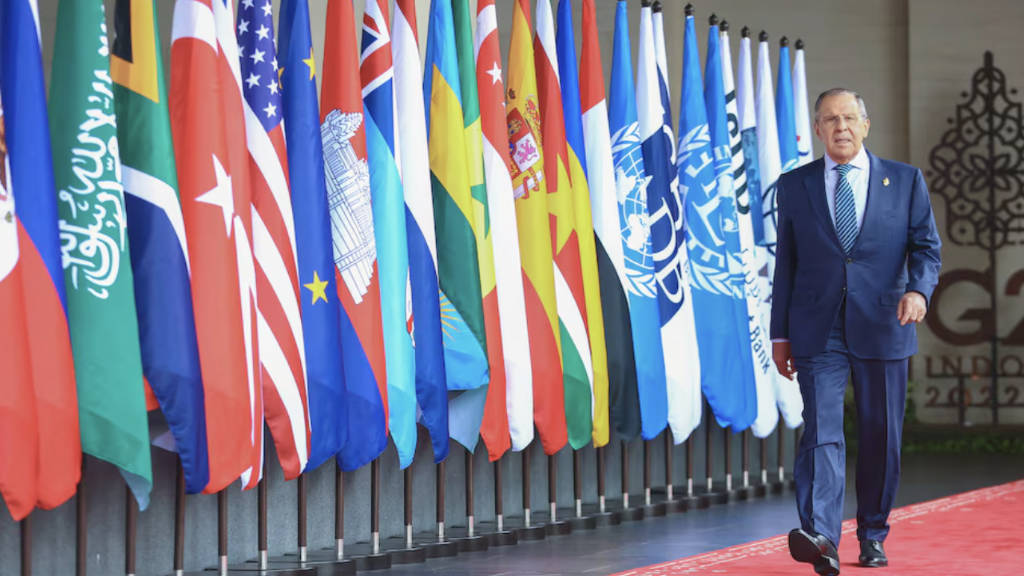

Russia’s Foreign Minister, Sergey Lavrov, attended the G20 foreign ministers meeting on October 30th. The session was chaired by US Secretary of State Marco Rubio and held in Atlanta, Georgia.
The G20 includes Argentina, Australia, Brazil, Canada, China, France, Germany, India, Indonesia, Italy, Japan, Mexico, Russia, Saudi Arabia, South Africa, South Korea, Türkiye, the United Kingdom, the United States, the European Union and the African Union. Guest invitees include, among others, The Netherlands, Spain, the United Nations, the World Bank and ASEAN.
During the meeting the attendees had a substantive discussion on a wide range of current international issues in the context of the interrelation between economic challenges and geopolitical instability.
Lavrov explained Russia’s views on various factors of current global tensions, focusing on the world economy’s key areas of energy and food security and the stable operation of supply chains and shipping lines on an open and non-discriminative basis. He stressed the importance of enhancing a multipolar world order, reforming the economic management system, and countering unfair competition and neo-colonial practices. The Russian delegation provided comprehensive appraisals of destructive actions undermining international trade, including merchant fleet interceptions, sanctions, asset seizure and other methods.
Lavrov also confirmed Russia’s intention to remain a reliable trade partner and a leading supplier of energy resources, food and fertilisers for a wide range of countries, noting Russia’s significant transport and logistic potential, including an increase in the North Sea Route capacities. The parties have underscored the unifying nature of the initiative proposed by President of Russia Vladimir Putin to establish a Greater Eurasian Partnership and the efforts to develop a common security architecture in Eurasia.
G20 Frictions
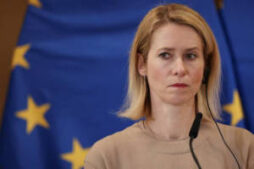
Russia’s position was not well-received by European countries, who could not agree to make a joint communique, leaving Rubio as chairman to make closing remarks. Those can be read here. Some European countries also refused to participate in a group photo with Lavrov.
The Atlanta event came on the back of the previous G20 event in South Africa, which the United States refused to attend. South Africa, a G20 member, was also not invited to the Atlanta event, with these combined failures illustrating deep divisions with the G20 format itself.
Russian Diplomacy
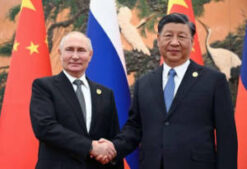
This is in sharp contrast to recent events elsewhere that have involved Russia as a participant. Russia has successfully hosted the 2026 Russia-Africa Forum, with 22 African Heads of State attending the past week, in addition to delegations from 48 of Africa’s 52 countries. A joint Russia-Africa Action Plan was agreed upon by all participants.
In addition to this, the 2026 BRICS summit was held in New Delhi, India in September, with Russia playing a significant role as a founding member. That resulted in a joint statement being signed by all participants, being a comprehensive, 140-point document.
A third recent example is the joint Eurasian Economic Union & Shanghai Cooperation Organisation’s 2027-2030 Action Plan, with Russia again playing a prominent role, being signed off by all members of the EAEU and SCO.
It should be noted that the collective GDP of the SCO is poised to overtake the G7 in GDP terms by 2030.
The differences between an increasingly fractious West and an increasingly aligning East have become – increasingly obvious.