
 Русский







The 18th BRICS Summit in New Delhi on September 12-13, 2026 produced a substantial institutional and economic package under India’s theme, “Building for Resilience, Innovation, Cooperation and Sustainability.” The 11-member grouping unanimously adopted the New Delhi Declaration, a 45-page, 140-point document, after more than 400 meetings and engagements involving ministers, parliamentarians, agencies, officials, experts, businesses and civil society across 30 Indian cities during India’s chairmanship.
The practical result was more than 50 concrete outcomes, initiatives, networks, action plans and mechanisms. Their significance lies less in a single headline treaty than in the creation of interconnected infrastructure for trade, payments, supply chains, technology, finance and investment.
The economic starting point is already substantial. Intra-BRICS merchandise trade has risen from about US$84 billion in 2003 to nearly US$1.2 trillion in 2024. The expanded grouping represents roughly half of global population, about 40% of global GDP at purchasing-power parity and more than 25% of global trade. President Vladimir Putin separately told the Outreach/Plus meeting that BRICS accounted for 49% global GDP growth and about 25% of global exports.
The central economic question emerging from New Delhi is therefore no longer whether BRICS possesses scale, but whether that scale can be converted into lower transaction costs, faster payments, stronger supply chains, more investment and diversified trade and economic partnerships.
INNOPROM
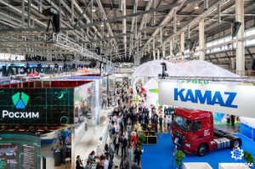
The INNOPROM India 2026 industrial exhibition, held in New Delhi from September 9-11, and the BRICS Business Forum 2026, held in New Delhi on September 11, 2026, created a particularly important window for Russian-Indian and wider BRICS/Global South business engagement, as the two events overlapped on the final day of INNOPROM.
Given that a large number of Russian companies, institutions and business organizations participated in both platforms, it is reasonable to view INNOPROM 2026 as an important feeder and networking platform for the BRICS Business Forum. The Russian delegation to INNOPROM was led by First Deputy Prime Minister Denis Manturov and Industry and Trade Minister Anton Alikhanov, with participation from major Russian companies and institutions including Rostec, Rosatom, RUSAL, Transmashholding (TMH), Russian Export Center (REC), PhosAgro, Arnest UniRus, Sber, Alfa-Bank, United Aircraft Corporation (UAC), Russian Direct Investment Fund (RDIF), RUSSOFT, and companies associated with Moscow’s Technopolis special economic zone, alongside regional delegations from Tatarstan, Krasnodar Krai and Chelyabinsk Region.
During INNOPROM, Russian participants held extensive B2B and institutional discussions with Indian counterparts on advanced engineering, machinery, transport, automotive, metals, energy, aerospace, pharmaceuticals, chemicals, artificial intelligence, robotics, localization, technology transfer and supply-chain development. Moscow-based companies, for example, engaged with SRB International, the Indian Council for International Business (ICIB), Engineering Export Promotion Council of India, Confederation of Indian Industry (CII) and Bharat Biotech, while discussions involving NICDC focused on manufacturing, localization, technology cooperation, supply chains and industrial corridors. Several technology-oriented initiatives were also announced or discussed, including cooperation involving Innopraktika Technology Hub, the Government of Nizhny Novgorod, RUSSOFT, RDIF, Panorama Electronics and SberMedAI, covering AI, cybersecurity, high-tech investment and healthcare technologies; UAC also discussed potential aviation cooperation with Indian entities, including interest surrounding the SJ-100 and Il-114-300 aircraft.
In addition to UAC, Rosatom subsidiaries also signed a number of deals with several Indian companies, including manufacturing plants in India to support the planned Indian production of Russian designed aircraft and ships.
The BRICS Business Forum Puts Numbers Behind Integration
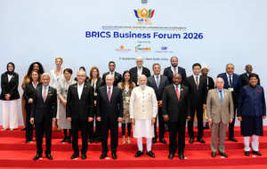
The BRICS Business Forum in New Delhi on September 11 was the commercial opening of the summit. Roughly 2,000 delegates participated, including around 1,100 from India and 900 from other countries, while more than 600 B2B meetings were conducted through a dedicated matchmaking system over several hours. These addressed partnerships, trade, investment, supply chains and barriers to business, and was the largest BRICS Business Forum to date.
Prime Minister Narendra Modi converted the business discussion into a measurable 10-100-1,000 agenda: identify and work to remove the top 10 trade barriers among BRICS economies; help 100 BRICS start-ups expand into member markets every year; and generate 1,000 new business partnerships annually, with progress reviewed every year.
India itself presented more than 200,000 start-ups and more than 120 unicorns as part of this commercial proposition, while India’s Unified Payments Interface (UPI)-linked technology was described as accounting for about half of global real-time payments and operating in 11 countries. This is likely to play a significant role in the development of the proposed ’BRICS Pay’ platform.
Modi’s broader message was “Make in India, Innovate with India, Scale for the World.” This target is important because it changes the measurement of BRICS cooperation from declarations to business-level indicators.
Indian Minister of Commerce and Industry, Piyush Goyal pressed for opening markets for raw materials and critical minerals, linking payment systems, local-currency trade, faster customs clearance and simpler procedures. Goyal urged BRICS members and partner countries to link their payment systems, use local currencies for trade, and adopt digital infrastructure, citing UPI as a model; he said UPI now processes over 250 billion transactions annually, accounting for more than half of global transaction volumes.
He also called for easier cross-border movement of professionals and mutual recognition of professional qualifications to expand services trade “in a real sense.” Goyal also highlighted non-tariff measures as a major impediment to trade, saying they can impose export costs that are significantly higher than tariffs themselves. He called for easier market access and fewer regulatory hurdles across the grouping. The principal trade barriers likely to be prioritized include high tariffs and tariff differentials; non-tariff barriers and import restrictions; complex customs procedures and documentation; divergent technical standards and certification requirements; sanitary and phytosanitary (SPS) restrictions; difficulties with cross-border payments and local-currency settlement; foreign-exchange and currency-conversion constraints; logistics, shipping and transport bottlenecks; regulatory and licensing differences; and limited mutual recognition of professional qualifications, product certifications and digital trade documentation.
For India-Russia and wider Russia-BRICS trade, these barriers are particularly relevant because businesses still face challenges related to payments and banking channels, sanctions-related compliance and financial restrictions, customs procedures, transportation connectivity, insurance and shipping, product certification, localization requirements, technology-transfer regulations and differences in national standards.
The same Russian business ecosystem that attended INNOPROM was highly visible at the Business Forum, where Russian participation included President Vladimir Putin, Economic Development Minister Maxim Reshetnikov, and senior representatives of major companies and institutions, including Oleg Belozerov of Russian Railways, Alexander Vedyakhin of Sberbank, Rostec, RDIF and representatives associated with VEB.RF and major fertilizer and agricultural businesses.
Russia’s participation was also supported by the newly established National Committee for Business Cooperation Within BRICS, created by presidential order in February 2026, chaired by Maxim Oreshkin and comprising more than 40 representatives of leading Russian companies, working in connection with the Russian chapter of the BRICS Business Council.
Discussions at the BRICS Business Forum focused on trade and investment, technology, logistics and connectivity, including the International North-South Transport Corridor and Arctic routes, local-currency settlements, supply-chain resilience, industrial cooperation and investment opportunities involving India and other BRICS/Global South economies, including Brazil, South Africa, Egypt, Ethiopia, Indonesia, Iran and the UAE.
While a complete public record of all company-to-company meetings and signed agreements from the approximately 600 B2B meetings at the BRICS Business Summit is not yet available, the substantial overlap between Russian participants at INNOPROM and the BRICS Business Forum strongly suggests that many of the relationships, business leads and negotiations initiated or advanced during INNOPROM continued into the BRICS Business Forum. In the absence of comprehensive publicly available documentation of all agreements at this stage, these engagements should be viewed as potential business opportunities and emerging deal pipelines rather than confirmed transactions. Going forward, developments should be closely monitored for the publication of additional MoUs, commercial contracts, investment commitments, joint ventures, localization projects and company-to-company agreements arising from these meetings; subsequent announcements are likely to provide a clearer picture of the actual business outcomes of the two interconnected forums.
Putin’s BRICS Economic Agenda: From Trade Geography To Financial Infrastructure
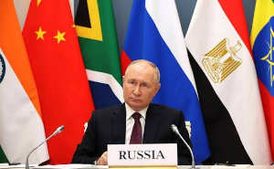
President Vladimir Putin’s speeches at the September 11 BRICS Business Forum and the September 12 Leaders’ Summit presented a single economic agenda: moving BRICS from a powerful trading grouping towards a more developed ecosystem of financial, digital, logistical and investment infrastructure.
At the Business Forum in New Delhi, Putin quantified the bloc’s economic weight, noting that BRICS accounted for more than 40% of global GDP compared with about 29% for the G7 over the preceding five-year period, while generating nearly half of global economic growth against 18% for the G7. Indeed, he went so far to drily question what was so ‘Great’ about the G7?
He linked the BRICS performance to the size of domestic markets, rapid urbanisation, industrial capacity and the emergence of globally competitive companies, citing India’s Tech Mahindra, China’s Huawei, Brazil’s Embraer, the UAE’s DP World and Russia’s Rosatom as examples of capabilities already operating across technology, aerospace, logistics and energy.
Against this backdrop, Putin placed Russia’s own economic adjustment within the broader BRICS transformation. He said Russia had faced more than 30,000 sanctions, nearly twice the number imposed on all other countries combined, yet Russian GDP increased by 10.3% between 2023 and 2025 and unemployment fell to a historic 2.3%.
His argument was that Russia had responded by changing the geography of its foreign trade and accelerating domestic capabilities in artificial intelligence, autonomous systems, digital platforms and financial technologies, increasingly through cooperation with BRICS partners.
The September 12 Leaders’ Summit then widened this economic argument into an institutional one: Putin said BRICS, should translate this economic, intellectual and technological weight into greater representation for Asia, Africa and Latin America in the UN Security Council and stronger coordination in the IMF, WTO and World Bank, while also playing a larger role in shaping the rules of platform economies, fintech and digital trade.
The most concrete part of the agenda was financial and commercial infrastructure. Putin proposed developing BRICS payment, depository and clearing systems, a reinsurance mechanism and a BRICS grain exchange, alongside a new investment platform linked to the New Development Bank capable of mobilising private capital, including potentially through digital assets.
He also called for strengthening the NDB’s capacity and updating its business model; the figures in the summit material cite 123 financed projects worth nearly US$40 billion, while other reporting points in the same material give 139 projects worth US$42.9 billion, or more than 140 projects worth approximately US$44 billion. These financial proposals were paired with physical connectivity through Russia’s Trans-Arctic Transport Corridor and the North-South International Transport Corridor, while Russia had established a National Committee for Business Cooperation within BRICS bringing together more than 40 leading company representatives.
Taken together, Putin’s two interventions therefore connected four layers of Russia’s BRICS strategy expanding trade geography, building alternative financial and payment infrastructure, developing digital and technological cooperation, and strengthening transport and investment connectivity while placing Russian companies and institutions inside a wider BRICS economic architecture rather than presenting Russia’s agenda simply as a response to external pressure.
The New Delhi Declaration Creates The Economic Architecture
The New Delhi Declaration adopted on September 12 should be read less as a conventional political communiqué and more as an umbrella economic framework connecting the 140 agreed points with the practical mechanisms developed during India’s 2026 BRICS chairmanship. Its significance for Russia extends across trade, investment, finance, payments, energy, transport, digitalisation, technology, tourism, business cooperation, legal certainty, security and people-to-people relations. The 45-page document was adopted unanimously by the BRICS despite differences among members over West Asia, demonstrating that economic cooperation could continue even where political positions were not identical.
For Russia, the most important feature is that the Declaration creates multiple layers of economic connectivity rather than a single alternative institution: trade rules and supply chains at one level; payments, investment, insurance and development finance at another; digital infrastructure, AI and technology cooperation at a third; and physical corridors, energy, food and critical-mineral networks at the sectoral level. Its political provisions on reforming the UN, IMF, WTO and other institutions therefore have a direct economic dimension because they seek greater representation for the countries that increasingly account for a major share of global production, population and trade.
Trade Barriers
The trade provisions are particularly important for Russian exporters and importers because the Declaration addresses many of the practical barriers that determine whether BRICS trade can expand beyond its existing base.
Intra-BRICS merchandise trade was around US$1.2 trillion by 2024, while the expanded grouping represents roughly half of the world’s population. The Declaration’s opposition to unilateral tariffs, non-tariff barriers, protectionism and coercive economic measures is therefore directly relevant to Russia’s external trade environment. Its support for restoring an effective WTO dispute-settlement mechanism is complemented by the BRICS-specific Logistics Supply Chain Cooperation Framework, the Global Value Chains Action Plan 2026-2030, customs cooperation, standards cooperation and work on Authorised Economic Operator recognition.
For Russian companies, these measures matter because expanding trade with India, China, the UAE, Brazil, South Africa and other BRICS markets depends not only on demand, but also on customs procedures, technical standards, logistics reliability, certification and predictable market access. The GVC agenda is particularly relevant to Russian metallurgy, fertilisers, agriculture, chemicals, machinery, energy equipment, mining and industrial goods because it seeks greater diversification and resilience of production and supply chains.
Finance Mechanisms
The financial and payments provisions create the most direct economic relevance for Russia. The Declaration does not establish a common BRICS currency. Instead, it supports greater use of national and local currencies and continued work through the BRICS Payment Task Force on interoperability among payment and messaging systems.
This incremental approach is important for Russia because it seeks to make cross-border transactions more resilient without requiring BRICS members to create a single monetary system. The architecture extends beyond payments: the Declaration supports stronger NDB financing, new investment mechanisms, insurance and risk-management cooperation, while the broader 2026 agenda includes the proposed New Investment Platform and BRICS multilateral guarantees.
For Russian companies, the potential significance is a complete transaction chain from invoicing and payment to settlement, insurance, project financing and investment rather than simply replacing the currency used in individual trade transactions. This also connects directly with Putin’s proposals for BRICS payment, depository and clearing infrastructure, a reinsurance mechanism and an NDB-linked investment platform.
The New Development Bank provides the institutional financing pillar of this architecture. Putin’s September 11 meeting with NDB President Dilma Rousseff reinforced Russia’s push to broaden the Bank’s programmes, involve more participants and expand into investment-oriented and digital platforms. The Declaration’s support for strengthening the NDB therefore has direct implications for Russian infrastructure, industrial and technology projects seeking access to BRICS-linked financing. With 123 projects worth nearly US$40 billion, the NDB is being positioned for a larger role in BRICS development finance. For Russia, this could connect domestic companies with infrastructure, energy, transport, digital and industrial projects across the expanded BRICS market.
Energy
The energy provisions are strategically relevant to Russia’s position as a major energy producer and technology supplier. The Declaration’s broader sustainability agenda covers energy transition, energy storage, smart grids, renewable technologies and sustainable infrastructure, while the 2026 chairmanship developed specific cooperation around smart grids and energy storage.
For Russia, this creates two simultaneous opportunities: maintaining cooperation in conventional energy while expanding into nuclear power, electricity systems, energy technology, engineering and low-carbon technologies. Rosatom’s presence in the BRICS Business Forum’s corporate discussions illustrates the potential for Russian technological capabilities to connect with the infrastructure requirements of emerging markets. Energy cooperation is therefore increasingly broader than oil and gas: it includes nuclear power, grids, storage, engineering and technology.
Logistics
The physical-connectivity dimension is equally important. The Declaration’s supply-chain and logistics agenda complements Russia’s promotion of the North-South International Transport Corridor and the Trans-Arctic Transport Corridor. These routes can connect Russian producers with Asian, Middle Eastern and other Global South markets while reducing dependence on a limited number of established trade routes. Logistics cooperation, customs coordination and resilient supply-chain measures become especially significant when combined with Russia’s geographical position between Europe, Asia, the Arctic and the Caspian region. The result is a potential BRICS connectivity network in which financial infrastructure and physical transport infrastructure develop together.
Digitization
The digital and technology provisions create another direct Russian opportunity. The Declaration and India’s chairmanship outcomes cover digital public infrastructure, AI governance, digital trade, cross-border digital services, technology cooperation and research infrastructure. The BRICS Digital Public Infrastructure repository, work on cross-border DPI projects, digital services principles, AI governance cooperation and research networks can provide platforms for Russian software, AI, cybersecurity, automation, fintech and industrial-technology companies to cooperate with counterparts across BRICS. Putin’s summit intervention explicitly argued that BRICS should play a larger role in platform economies, fintech and digital trade. The significance for Russia is therefore not limited to selling technology; it is participation in the standards, platforms and systems through which future BRICS commerce will operate.
Agriculture
The critical-minerals, agriculture and food-security agenda also has a strong Russian dimension. Cooperation on resilient critical-mineral supply chains can support Russian mining and metals companies while linking them to downstream industrial demand in Asia and other BRICS markets. The proposed BRICS Grain Exchange is particularly relevant to Russia’s position as a major agricultural and grain exporter. Combined with the broader work on agricultural cooperation, agro-ecology, digital agriculture, genetic resources and supply chains, the Declaration creates potential for Russia to expand agricultural trade while participating in technology-driven food production and logistics networks.
Tourism
The Declaration also reaches beyond conventional economics into tourism, services and people-to-people connectivity. Point 129 explicitly recognises tourism as a driver of growth, employment, foreign-exchange earnings, diversification and people-to-people exchanges, while encouraging AI and digital tools, digital payments, investment, skills development and smoother tourism flows. It also promotes historical, cultural, nature-based, gastronomy and health tourism. For Russia, this is relevant to expanding tourism links with China, India, the UAE and other BRICS markets, including the development of Far Eastern, Arctic, cultural, health and nature-based tourism. Digital payment systems and smoother travel procedures could become as important as direct flights in determining future tourism growth.
Legal Unity
The business and legal provisions provide the institutional support for these economic flows. The Declaration welcomes the BRICS Business Forum 2026, Solutions Awards and Women’s Start-up Awards, while the Business Council’s recommendations focus on trade, investment and resilient supply chains. It also supports the Women’s Business Alliance in expanding access to finance, markets, technology, skills and digital opportunities. Crucially for Russian investors, Point 132 supports cooperation on cross-border commercial disputes and Alternative Dispute Resolution, including mediation and arbitration, explicitly linking efficient dispute resolution with legal certainty, investor confidence and international trade and investment. This is a practical investment issue: deeper BRICS trade requires mechanisms for resolving disputes when contracts, payments, deliveries or investments go wrong.
Political Alignment
Finally, the political, security and people-to-people provisions reinforce the economic architecture rather than standing apart from it. Parliamentary, academic, civil-society and youth exchanges can strengthen institutional familiarity among member states, while cooperation on terrorism, transnational crime and security contributes to a more stable environment for trade and investment.
The Declaration also recognises youth cooperation in education, skills, entrepreneurship, science, technology and innovation. The BRICS Business Council, Academic Forum, Think Tank Council and Civil Forum provide additional channels for sustained interaction, while the planned XII BRICS Parliamentary Forum in October 2026 adds a political-institutional layer. The final institutional provisions are equally significant: the Declaration calls for continuity, outcome-oriented coordination and long-term institutional development, while supporting the BRICS Online Archival Database and the transition to China’s 2027 chairmanship.
For Russia, this continuity is essential because the value of the 140 points will ultimately depend on implementation across successive presidencies. Taken together, the New Delhi Declaration gives Russia something broader than a collection of political commitments: it establishes a framework in which Russian trade, energy, agriculture, minerals, transport, finance, technology, investment, tourism, business and institutional cooperation can increasingly operate through a connected BRICS ecosystem.
Geopolitics Inside The Economic Framework
The summit also demonstrated the limits of BRICS consensus. The expanded bloc includes countries with divergent positions on the Middle East, particularly Iran and the UAE. Yet the leaders adopted the Declaration by consensus after an earlier failure of ministerial consensus over West Asia. The Declaration called for restraint, civilian protection, protection of infrastructure and nuclear facilities under IAEA safeguards, humanitarian access in Gaza, support for UNRWA, full UN membership for Palestine and a two-state solution.
References to the Russia-Ukraine conflict were comparatively muted, with general support for dialogue and diplomacy; Modi and Xi offered facilitation for peace talks, which Putin welcomed. The strongest terrorism language concerned the April 22, 2025 Pahalgam attack in Jammu and Kashmir, which the declaration condemned in the strongest terms; the New Delhi declaration also called for action against cross-border terrorism, terrorist financing and safe havens. This gave India a significant diplomatic outcome while the broader economic agenda remained focused on development, trade, technology and institutional reform.
The 50-Plus Outcomes: What BRICS Delivered And Why This Matters For Russia
India’s 2026 BRICS chairmanship produced more than 50 concrete outcomes through more than 350 meetings across roughly 25-30 cities, organised around four pillars – Resilience, Innovation, Cooperation and Sustainability plus an extensive people-to-people programme.
For Russia, the importance of this package lies less in any single initiative than in the way these mechanisms collectively address the practical requirements of expanding business with BRICS markets: finding suppliers and buyers, moving goods, obtaining finance, settling payments, insuring projects, transferring technology, integrating digital systems, developing industrial partnerships and building political and institutional links.
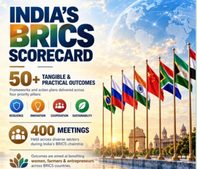
These outcomes therefore create a wider operating environment for Russian companies across energy, agriculture, manufacturing, mining, transport, logistics, technology, pharmaceuticals, finance and services. Most are frameworks, networks, workplans or voluntary mechanisms rather than binding commercial contracts, but together they provide institutional channels through which Russian firms can pursue longer-term trade and investment in the expanded BRICS market.
Resilience
Under the Resilience pillar, India advanced the Centres of Excellence on Agro-Ecology and Regenerative Agriculture, initially coordinated by the ICAR-Indian Institute of Farming Systems Research in Modipuram; the BRICS Network on Digital Agriculture, initially coordinated by IIT Delhi; BRICS AGRIN for agro-inputs, genetic resources and information; the BRICS Mission for Healthy Lifestyle and its 2026-2029 Roadmap; the Expert Working Group and Network of Centres of Excellence on Mental Wellness coordinated by NIMHANS; and the Expert Group on an Integrated Early Warning System for Mass Infectious Diseases. It also developed the Expert Group on Traditional, Complementary and Integrative Medicine, the Logistics Supply-Chain Cooperation Framework, guidelines for early-warning data integration in disaster management, voluntary principles for climate-resilient urban infrastructure, cooperation against synthetic drugs and transnational organised crime, a repository for tracing fugitive offenders, an expert network on asset recovery and enhanced counter-terrorism cooperation.
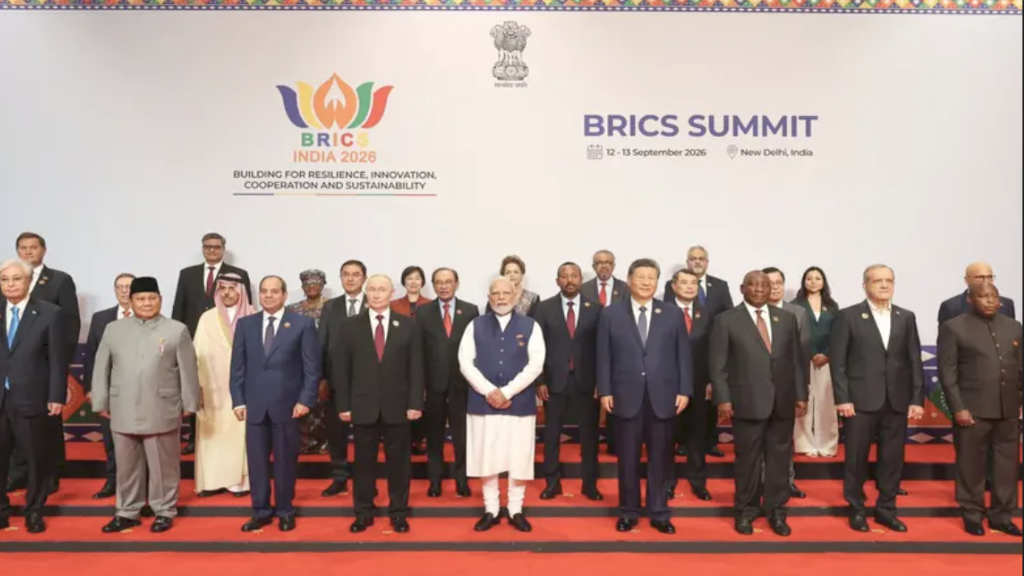
It is also worth studying the BRICS group photo. Far from excluding the likes of Russia and Iran, the two countries Presidents are in the front row, additionally signaling a resistance to Western views. At the summit, Modi summed up the West’s position by also declaring its imposed sanctions as ‘illegal’ noting that the format for resolving differences – the World Trade Organisation – had been entirely by passed. This implies the constant imposition, or threat of sanctions is becoming tiresome for these countries to deal with. While the West may suggest that this is the point, the problems begin when tiresome changes to pushback. Europe especially may have to tread carefully here. Its economy is declining, while prices are rising. Voters are becoming disillusioned with their own governments. A pushback by the BRICS group wearying of what they see as attempts to bully their development into submission may create more problems for Europe and the West than they might care to admit is possible.
For Russia, the Resilience pillar has a direct trade and business dimension. Agriculture and food security create potential channels for Russian grain, fertilisers, agricultural inputs, machinery and technology, while digital agriculture opens cooperation around satellite data, AI, sensors, automation and farm-management systems. Russia’s large agricultural export base makes BRICS food and agro-input cooperation commercially relevant, particularly when the bloc is simultaneously building logistics and supply-chain mechanisms. The Logistics Supply-Chain Cooperation Framework is particularly important for Russian exporters because the country’s expanding trade with Asia, the Middle East and Africa depends on predictable multimodal routes, ports, railways, shipping and customs procedures. Cooperation on disaster-resilient infrastructure can also create opportunities for Russian engineering and construction companies, while health, medicine and infectious-disease networks widen potential cooperation for Russian pharmaceutical, medical-technology and scientific institutions. In this sense, resilience becomes an economic-security platform: it reduces vulnerabilities in the systems through which Russian goods, services and technologies reach other BRICS economies.
Innovation
The Innovation pillar creates an even more direct channel for Russian technology and industrial cooperation. Its outcomes include the BRICS Digital Public Infrastructure repository; feasibility work on high-speed submarine-cable networks; the BRICS Startup Innovation Fund; BRICS Incubator Network; BRICS Science and Research Repository; Youth Startup Platform; and the 2026–2030 Action Plan for research infrastructures and megascience projects through the BRICS Global Research Advanced Infrastructure Network. India also established the Centre for BRICS Industrial Competencies to help manufacturing firms and SMEs adopt Industry 4.0 and advanced digital technologies. AI-related outcomes implement the BRICS Leaders’ Statement on Global Governance of Artificial Intelligence and reference India’s February 2026 AI Impact Summit, while AI-enabled tools were proposed for tracing missing or stolen cultural objects. Voluntary cross-border digital public infrastructure projects add another layer to the programme.
For Russia, these initiatives potentially connect Russian engineering, software, AI, automation, research institutions and industrial companies with BRICS markets where digitalisation and industrial upgrading are accelerating. The Centre for BRICS Industrial Competencies can become a mechanism for exchanging Industry 4.0 practices between Russian and other BRICS manufacturers, while the Startup Innovation Fund and Incubator Network create channels for smaller technology companies to find partners and markets. The submarine-cable feasibility work has particular significance for Russia’s wider connectivity agenda because digital trade increasingly depends on physical communications infrastructure. The DPI repository can also give Russian government-technology institutions access to digital public-service models developed elsewhere in BRICS. At the strategic level, this complements Russia’s own development of AI, autonomous systems and digital platforms and provides a multilateral environment in which Russian technological capabilities can be integrated with those of China, India and other members rather than remaining confined to bilateral cooperation.
Cooperation
The Cooperation pillar is the most consequential for Russian trade, investment, payments and business expansion because it addresses many of the transaction-level barriers faced by companies operating across borders. It includes the Global Value Chains Action Plan 2026–2030, with its Technical Council, BRICS Connect and joint study on market opening, economic diversification and resilient value chains; the workplan on internationalisation of MSMEs; the Jaipur Consensus study on a BRICS Invoice Discounting Mechanism; guiding principles for credit assessment of export-oriented MSMEs; the BRICS MSME/SME Cooperation Portal; principles for digitally delivered cross-border services; continuation of the BRICS Payment Task Force; the BRICS-NDB Knowledge Portal; the Task Force on Growth and Development; the proposed Continuity and Implementation Mechanism; the proposed Seafarers Emergency Support Network; the BRICS Reform Roadmap; the memorandum on standardisation; in-principle approval for the BRICS Agreement on Cooperation and Mutual Administrative Assistance in Customs Matters; the 2026 AEO Action Plan; the Working Group on International Taxation and Transfer Pricing; BRICS CONNECT; the digital repository on women’s economic empowerment; the Women’s Business Alliance report; and the proposed BRICS Risk Lab/voluntary Insurance Resilience Centre at GIFT City.
For Russian companies, this pillar is essentially about reducing the cost and complexity of doing business inside BRICS. Standards cooperation can reduce technical obstacles when Russian industrial products enter another BRICS market. Customs cooperation and the AEO Action Plan can help trusted exporters and importers move goods through borders more efficiently. The GVC Action Plan can connect Russian producers of energy, metals, fertilisers, machinery, chemicals and other industrial inputs with manufacturing chains elsewhere in BRICS. The MSME portal and invoice-discounting mechanism are relevant to Russian smaller exporters that lack the balance sheets of major state-linked corporations. Cooperation on digitally delivered services creates another channel for Russian IT, engineering, consulting and other service companies. For investors, the proposed Risk Lab and insurance-resilience mechanism could eventually reduce project-risk costs, while taxation and transfer-pricing cooperation could make cross-border investment structures more predictable.
The payments component is particularly relevant to Russia because the country has had to restructure its external trade and financial relationships following the imposition of more than 30,000 sanctions. Putin’s broader BRICS proposal for payment, depository and clearing infrastructure therefore intersects directly with India’s Payment Task Force agenda. The BRICS approach is not based on introducing a common currency but on making existing national systems more interoperable and increasing the use of local currencies. For Russian exporters and importers, that could mean a broader institutional environment for rouble-based and partner-currency settlement, reducing dependence on intermediary currencies and potentially lowering transaction costs. The same architecture can benefit Indian, Chinese, Gulf, African and Southeast Asian companies trading with Russia by making settlement arrangements more predictable.
The NDB component strengthens this economic architecture. The New Delhi Declaration recognised the New Development Bank as a strategic institution for development and infrastructure in emerging economies and encouraged it to expand resource mobilisation, local-currency financing, funding diversification and support for economic integration. The summit also welcomed the BRICS-NDB Knowledge Portal launched under India’s chair.
For Russia, this is significant because Moscow hosted the 11th NDB Annual Meeting on May 14-15, 2026, while serving as chair of the NDB Board of Governors. The bank therefore represents a direct institutional bridge between Russia’s 2026 role in the NDB and the economic architecture developed under India’s BRICS presidency. Putin’s proposal for a new NDB-linked investment platform capable of mobilising private capital, including through digital assets, would potentially extend this role from development-bank lending toward a wider investment mobilisation mechanism.
Sustainability
The Sustainability pillar similarly has a substantial Russian industrial and investment dimension. Its outcomes include the Guiding Principles on Energy Storage and Smart Grids; the BRICS Digital Centre of Excellence for Smart Grids and Energy Storage; the BRICS Urban Mobility Hub; the Photovoltaics Working Group and proposed Solar PV Cooperation Roadmap; the BRICS Forum on Sustainable Aviation Fuels; cooperation on desertification and land restoration; forest-fire preparedness; and critical-mineral supply-chain resilience. These are not simply environmental initiatives. They touch electricity networks, energy storage, batteries, electric vehicles, solar manufacturing, aviation fuels, mining, minerals processing, urban transport and infrastructure.
For Russia, the critical-minerals and energy-transition agenda can become an important investment channel. Russia possesses substantial mineral, energy and industrial capabilities, while other BRICS economies possess large manufacturing markets and rapidly growing demand for batteries, electricity infrastructure, transport equipment and renewable-energy technologies. Cooperation on smart grids and energy storage can connect Russian energy engineering and technology companies with BRICS infrastructure projects. The Urban Mobility Hub creates a forum for exchanging technologies and investment models related to electric transport and multimodal systems, while the Photovoltaics Working Group and Sustainable Aviation Fuels Forum provide additional areas for industrial and research partnerships. Russia’s interest is therefore not limited to exporting raw materials: the value of these mechanisms will depend on whether they facilitate investment, technology transfer and processing partnerships along BRICS value chains.
People-To-People
The people-to-people component is also economically relevant and should not be treated simply as a cultural appendix. India’s programme included the Academic Forum in Lucknow, Civil Forum, Young Diplomats’ Forum, Think Tank Network for Finance in Delhi, Youth Summit and Youth Council in Gandhinagar, Young Scientists Forum in Bengaluru, Culture Festival in Bhopal, Film Festival in Goa, Theatre Festival and the 12th Parliamentary Forum in Delhi, traditional and indigenous sports activities in Ahmedabad, Bharat Innovates Expo 2026, BRICS Bazaar 2026, BRICS Run & Ride, BRICS Symphony and Friendship Mural/Public Art initiatives. These programmes create repeated contacts among universities, researchers, entrepreneurs, young professionals, policymakers, parliamentarians, cultural institutions and civil-society organisations across the BRICS economies.
For Russia, these networks matter because business relationships are rarely created only through government-to-government agreements. Academic and scientific exchanges can produce joint research and technology partnerships; youth and startup programmes can identify new entrepreneurs and technology companies; think-tank and finance networks can strengthen policy coordination; parliamentary exchanges can maintain institutional links; and cultural and media initiatives can broaden public familiarity with Russian and other BRICS markets. For Russian universities and research institutions, the Young Scientists Forum, Academic Forum and research networks provide channels for collaboration; for businesses, the startup and innovation platforms can widen access to new partners; and for governments, regular parliamentary, diplomatic and expert contacts help sustain political relationships between summits.
The people-to-people agenda also supports Russian tourism, education and services connectivity over the longer term. Greater academic, cultural and youth interaction creates more frequent movement of students, researchers, entrepreneurs, artists and professionals across BRICS countries. That generates demand for aviation, hospitality, education, financial services and digital platforms. For Russia, which is expanding direct connectivity with Asian, Gulf and other Global South markets, these human networks can complement physical transport corridors by creating the users and commercial communities that make connectivity economically sustainable.
Taken together, the four pillars and people-to-people component create a five-layer BRICS economic ecosystem for Russia. Resilience strengthens food, health, logistics and supply-chain security; Innovation opens channels for AI, digital infrastructure, startups, research and Industry 4.0; Cooperation addresses trade barriers, customs, standards, payments, taxation, MSMEs, insurance and value chains; Sustainability opens energy, minerals, mobility and green-technology opportunities; and people-to-people networks provide the human capital, scientific, entrepreneurial and institutional relationships needed to use those mechanisms. This is why the 50-plus outcomes matter even though most are not large financial agreements in themselves. Their combined effect is to build the institutional connections through which Russian companies can trade, invest, finance projects, transfer technology and establish partnerships across a much larger BRICS market.
The scale of the potential market is what gives these mechanisms their economic weight. The numbers show the intended direction of travel: the 50-plus outcomes are not separate projects but components of a system designed to convert BRICS’ demographic and economic scale into more transactions, investment and connectivity.
For Russia specifically, the economic value therefore comes from interconnection:
- A Russian exporter needs logistics to reach the buyer, standards and customs arrangements to enter the market, payment channels to settle the transaction, insurance to manage risk and financing to expand production.
- A Russian technology company needs digital infrastructure, research partnerships, startup networks and access to industrial customers.
- A Russian investor needs financing, risk-sharing, taxation and predictable regulatory channels.
- A Russian energy or mining company needs transport corridors, downstream processing partners and long-term buyers.
The BRICS outcomes address different parts of these chains simultaneously. That makes them potentially more consequential for Russian business than a single headline declaration, provided China and subsequent BRICS chairs convert these frameworks into operational projects.
The key limitation is implementation. The source material makes clear that many of the more than 50 outcomes are voluntary, non-binding platforms, knowledge-sharing mechanisms or workplans, and their economic impact will depend on national coordination, funding, pilots and continuity between chairmanships.
The proposed mechanisms should therefore not be described as already delivering a measurable increase in Russian exports or investment. Their immediate result is institutional: they create channels through which such increases can potentially occur. The test for Russia and the wider BRICS economy from 2027 onward will be whether the frameworks reduce actual transaction costs, increase local-currency settlement, improve customs and logistics performance, mobilise NDB and private capital, create cross-border technology partnerships and generate new trade and investment flows.
Xi Jinping’s Five Priorities Point Directly Toward 2027
China takes over the BRICS chair in 2027 and will host the 19th Summit. President Xi Jinping’s intervention on September 13 supplied the next stage of the economic agenda. His five initiatives cover open-source and inclusive artificial intelligence; trade and investment facilitation; digital-industry cooperation; smart manufacturing; and science-and-technology talent development.
China proposed a BRICS open-source AI Zone, cooperation on large-language models, AI seminars and training, and a wider open AI ecosystem. It also proposed a BRICS special-economic-zone partnership, a BRICS digital ecosystem cloud platform, digital-skills training, technology exchange and industrial alignment.
The industrial component is equally significant. China offered support for BRICS countries to build smart factories and develop manufacturing standards and norms. It proposed a BRICS engineer cultivation alliance for joint training and mutual recognition of competency standards, alongside a youth scientific and technological innovation exchange programme. The initiatives therefore form a chain: talent supplies skills, AI and digital infrastructure supply technology, smart factories provide industrial capacity, trade and investment facilitation provide market access, and open-source cooperation reduces barriers to technology diffusion.
This is directly relevant to Russia. China’s 15th Five-Year Plan is not simply as a domestic development programme but as a potential cooperation list for international partners. For Russia, this creates possible interfaces with AI, industrial automation, smart manufacturing, digital platforms, engineering education and value-chain cooperation. China’s 2027 BRICS presidency therefore inherits India’s trade and financial infrastructure agenda while adding a stronger technology-and-industry layer.
China’s five priorities can convert these frameworks into a more technology-intensive programme: open AI, trade and investment facilitation, digital industry, smart manufacturing and talent development.
Russia’s Wider BRICS And Partner-Country Position
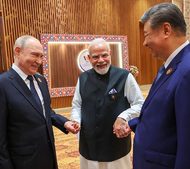
Putin’s September 13 appearance at Bharat Mandapam extended the Russian message beyond the 11 members to partner countries and other interested states and organisations. Putin stressed that the grouping should remain open to partners. The Russian president’s engagement included contacts with leaders and representatives from India, South Africa, Ethiopia, the UAE, Malaysia and the NDB-related financial community. He had meetings with Indian PM Modi, South African President Cyril Ramaphosa, Ethiopian Prime Minister Abiy Ahmed, Malaysian Prime Minister Anwar Ibrahimand, UAE Crown Prince Khaled bin Mohamed bin Zayed Al Nahyan and NDB President Dilma Rousseff. The value for Moscow was not limited to bilateral sidelines engagements: these meetings broadened Russia’s business and diplomatic network across Africa, Asia, the Gulf and BRICS financial institutions.
What Russia Gained From BRICS 2026
Russia’s gains can be measured in four layers. The first is market access. The US$100 billion Russia-India trade objective, together with BRICS supply-chain, critical-mineral and logistics initiatives, provides a pathway for expanding Russian exports and industrial cooperation with major emerging markets.
The second is financial resilience: local-currency payments, payment interoperability, NDB financing, reinsurance and a proposed investment platform directly address the financial friction faced by Russian companies operating under sanctions.
The third gain is infrastructure. The North-South and Trans-Arctic corridors give Russia a framework for linking production, ports and Asian markets, while the Logistics Supply Chain Cooperation Framework creates a wider BRICS institutional environment for those connections.
The fourth is technology. Russia’s AI, autonomous-system, engineering and nuclear capabilities can be connected to Chinese digital ecosystems, Indian technology and services, UAE logistics and other BRICS industrial strengths.
Summary
The New Delhi Summit did not create a BRICS common currency, a binding free-trade agreement or a giant new lending institution. The Business Forum did not publish an aggregate value for its 600-plus B2B meetings. Many of the 50-plus outcomes remain voluntary networks, frameworks, studies or workplans requiring financing, national implementation and private-sector participation.
As analysts, we warn against treating these mechanisms as headline baiting or as mega-deals. That limitation is also the clearest way to measure the summit’s economic significance. The next benchmark is implementation: whether a BRICS payment connection reduces settlement time and cost; whether the guarantee and insurance mechanisms finance actual infrastructure; whether the grain exchange handles real commodity transactions; whether customs and standards cooperation reduces clearance delays; whether the MSME and startup mechanisms create cross-border firms; and whether the 1,000 annual business-partnership target produces measurable investment and trade.
The economic significance of New Delhi is therefore cumulative. BRICS already has nearly US$1.2 trillion in intra-group trade, more than 600 B2B meetings were conducted at the 2026 Business Forum, more than 50 practical outcomes were advanced, and the grouping accounts for roughly 40% of global GDP and around half of the global population.
Russia enters the next phase with proposals for payment, settlement, insurance, grain and investment mechanisms, while China enters with a technology-and-industrial roadmap. If the two agendas are implemented together, BRICS moves from being primarily a forum for coordination toward a denser economic network connecting trade, finance, technology, production and logistics. The decisive measure, however, will not be the number of declarations issued in New Delhi. It will be whether companies can actually move goods faster, receive payments more effectively, raise capital more easily and enter new BRICS markets with fewer barriers.
This analytical report was written by KP Majumdar, a geostrategic and geo-economics analyst based in South Asia whose work has been widely published by international news media and publications. He may be reached at info@russiaspivottoasia.com