 Русский






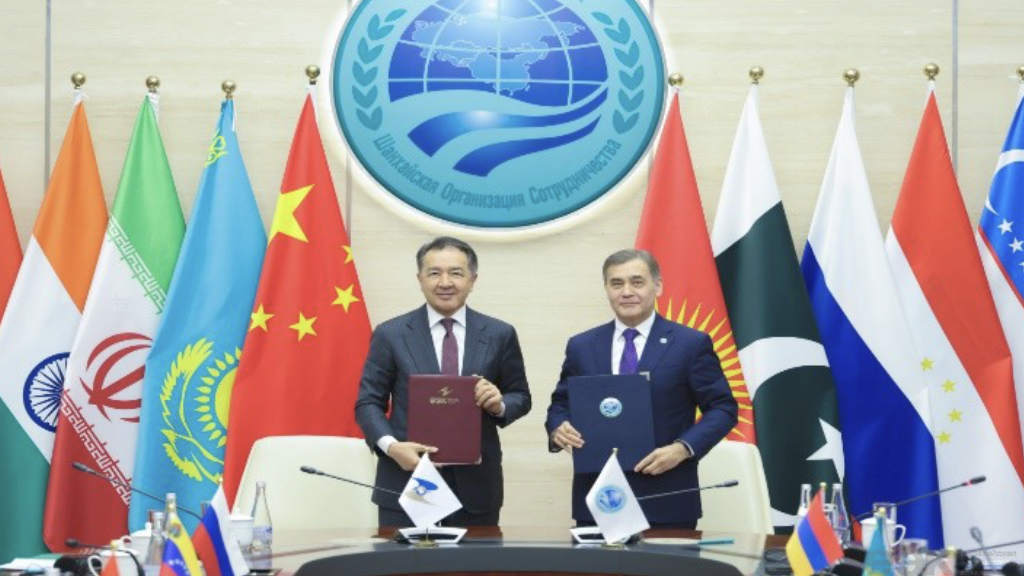

An important Eurasian development plan has just been agreed upon that affects all members of the Eurasian Economic Union and the Shanghai Cooperation Organisation. On 17 September Bakytzhan Sagintayev, Chairman of the Board of the Eurasian Economic Commission, and Nurlan Yermekbayev, the Secretary General of the Shanghai Cooperation Organisation, signed, at the SCO headquarters in Beijing, a Plan of Joint Activities for 2027-2030.
This document carries forward the original 2021 Memorandum of Understanding between the EEC and the SCO Secretariat. However, the signing of the Joint Action Plan for 2027-2030 also marks a new operational stage in economic interaction between the two Eurasian structures. The timing was significant and links the original institutional framework with a new four-year schedule of sectoral activity. The 2021 memorandum established the foundation for cooperation; the 2027-2030 plan gives that framework a more defined programme and updates it, covering digitalisation, information and communication technologies, customs regulation, agro-industry, food security, sanitary and phytosanitary measures, consumer protection, green-economy issues and information exchange.
The economic scale behind this institutional upgrade is substantial. EAEU trade with SCO countries reached US$371 billion in 2025, almost four times the level of a decade earlier. In January-June 2026, trade reached US$197 billion, up more than 17% year on year, while SCO countries accounted for almost 48% of the EAEU’s total foreign trade. The figures transform EAEU-SCO cooperation from a primarily institutional discussion into a relationship already underpinned by hundreds of billions of dollars in annual merchandise flows.
The Eurasian Economic Union (EAEU) comprises Armenia, Belarus, Kazakhstan, Kyrgyzstan, and Russia. The Union has free trade agreements with Iran, Serbia, and Vietnam; a temporary trade agreement with Mongolia; and a trade and economic cooperation agreement with China (signed in 2018, entered into force in 2019), which is not preferential. A free trade agreement with Indonesia is currently being ratified, while negotiations with India are reportedly nearing completion. The EAEU’s internal trade turnover approaches US$100 billion.
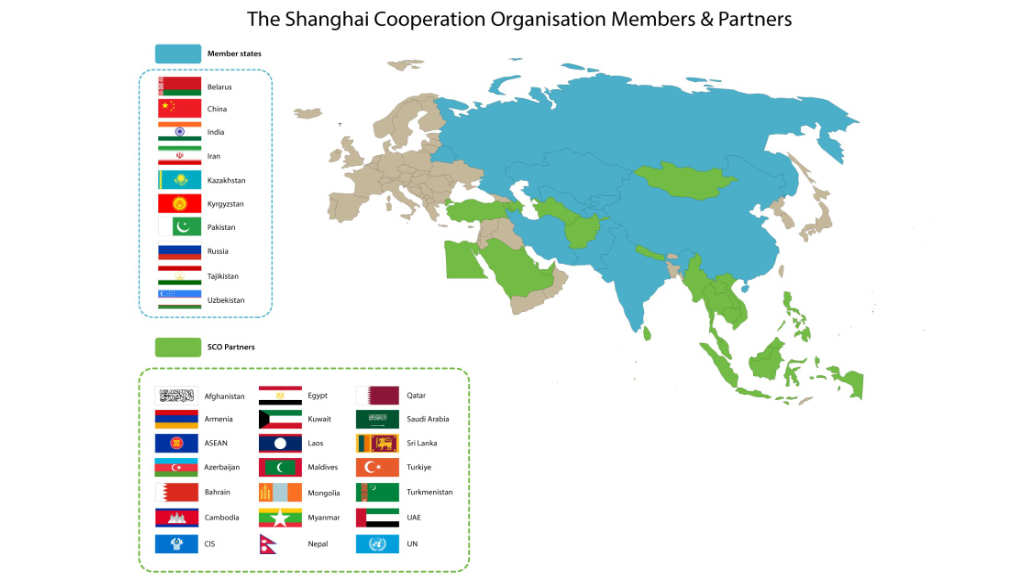
The Shanghai Cooperation Organisation (SCO) brings together 10 member states: Belarus, India, Iran, Kazakhstan, China, Kyrgyzstan, Pakistan, Russia, Tajikistan, and Uzbekistan. A further 17 countries are partners: Afghanistan Armenia, Azerbaijan, Bahrain, Cambodia, Egypt, Qatar, Kuwait, Laos, Maldives, Mongolia, Myanmar, Nepal, Saudi Arabia, Türkiye, and Sri Lanka.
The difference between them is that the EAEU is a definitive free trade bloc, whereas the SCO is not and focuses on security as well as development issues. However, it also has a trade development dimension, hence the link with the EAEU.
The 2027-2030 Plan: What the New Framework Actually Covers
The Joint Action Plan is not a financing agreement for a single corridor, railway, industrial park or multibillion-dollar investment programme. Its economic significance lies in that it establishes a coordinated working mechanism through which EAEU and SCO institutions can identify projects, exchange information, prepare analytical material, coordinate events and involve business organisations. It provides for joint participation of EEC and SCO Secretariat representatives in relevant events, systematic exchange of information and experience, preparation of analytical materials and economic reports, and practical interaction involving the business councils of the two structures. This creates an institutional channel linking governmental and expert-level work with business activity.
Its sectoral architecture is broad. Digitalization and ICT are placed alongside customs regulation; agro-industrial cooperation is paired with food security; and technical market-access issues such as sanitary, veterinary-sanitary and phytosanitary measures are linked with consumer-rights protection. The combination is important because these are precisely the regulatory and logistical areas that determine whether higher-level trade agreements translate into actual movement of goods.
It also provides for joint activities involving the EAEU and SCO business councils, particularly in agro-industry, food security and customs regulation. Information exchange is envisaged in relation to the green economy, digitalization and information and communication technologies. The practical meaning is that the next stage is not simply about increasing the headline trade figure. It is about reducing friction inside existing trade flows: customs procedures, electronic documentation, standards, border information, agricultural certification, digital platforms and business-to-business contacts.
Beijing’s EAEU Days: 30 States And A Multi-Level Diplomatic-Business Format
The Eurasian Economic Union ‘Days at the SCO Secretariat’ were held in Beijing on 17 September 2026. Representatives of 30 states participated, including embassies of EAEU and SCO members and representatives of the wider diplomatic corps. The programme consisted of an opening ceremony, an economic roundtable, a photo exhibition and the formal signing ceremony for the 2027–2030 Action Plan. The opening ceremony was conducted by Nurlan Yermekbayev and Bakytzhan Sagintayev.
Yermekbayev highlighted the geographical proximity and partially overlapping membership of the two organisations, together with common interests in trade expansion, transport connectivity, industrial cooperation, investment and sustainable development. The five-year anniversary of the 2021 memorandum gave the programme additional institutional significance.
The economic roundtable, titled “EAEU-SCO: Activating Economic Cooperation” or, in another formulation, “EAEU-SCO: Strengthening Economic Cooperation”, brought together senior political, diplomatic, economic and expert representatives. Participants included the SCO Secretary-General, the EEC Board Chairman, the ambassadors of Armenia, Kazakhstan, Russia and Venezuela to China, senior officials from the Eurasia Department of China’s Ministry of Commerce, permanent representatives of Belarus, Iran, Kyrgyzstan, Tajikistan and Uzbekistan to the SCO Secretariat, senior diplomats from the embassies of India and Pakistan, representatives of the China Institute of International Studies under China’s Foreign Ministry, and representatives of Far Eastern Federal University in Russia.
International organisations, government bodies, business representatives, experts and diplomats were also present. The programme also included a photo exhibition, “EAEU Countries: Landmarks and Natural Landscapes”, presenting Armenia, Belarus, Kazakhstan, Kyrgyzstan and Russia. While cultural in format, the exhibition formed part of a broader EAEU international-promotion programme alongside economic and diplomatic engagement.
US$371 Billion In Trade: The Economic Weight Behind The New Framework

The strongest argument for the new plan is the scale of the underlying market. The US$371 billion figure provides the principal benchmark for the 2026 discussions. SCO economies have become one of the largest external economic groupings for the EAEU. The relationship has also developed considerably faster than a purely institutional timetable might suggest. Ten years of integration produced nearly a fourfold increase in EAEU-SCO trade. This is why the 2027-2030 Action Plan focuses heavily on the mechanisms behind trade rather than simply announcing a new trade target.
Four Economic Axis: Transport, Industry, Agriculture and Artificial Intelligence

Sagintayev identified four areas where the greatest long-term economic synergy could be achieved: transport and logistics infrastructure; industrial and technological cooperation; agriculture and food security; and artificial intelligence and digital transformation. Transport is the first structural layer. The EAEU occupies a central position in north-south and east-west Eurasian transport geography, while SCO membership includes many of the principal transit economies across Central, South and East Asia.
Yermekbayev said that the task is no longer simply to develop separate transport corridors but to create an interconnected system linking east, west, north and south. This reflects the changing structure of global supply chains and the increasing importance of continental routes. The EAEU already has mechanisms for coordinated transport policy. The SCO, meanwhile, includes states located along major Eurasian transit routes. Linking these systems could affect rail, road, multimodal freight and border-crossing processes.
Russia’s Ambassador to China, Igor Morgulov, identified four practical priorities: integration of information infrastructure, common standards for electronic trade documentation, exchange of freight-transport data and creation of shared digital platforms. These measures are designed to reduce administrative delays and simplify cargo movement. The digital layer is therefore not separate from transport policy. It is becoming part of transport infrastructure itself.
Customs And Digital Trade: From Physical Corridors To Digital Corridors

The customs component of the Action Plan is particularly relevant for businesses because trade growth can be constrained not only by physical infrastructure but also by documentation, certification and border procedures. The 2027-2030 programme envisages cooperation in customs regulation, information exchange and joint events. Digitalisation and ICT are included alongside customs, creating a framework in which physical cargo routes and digital trade procedures can develop together. The proposed common approach to electronic trade documentation could potentially reduce repetitive paperwork across multiple jurisdictions. Freight-data exchange could provide greater visibility over cargo movement, while shared digital platforms could facilitate communication between customs administrations, logistics companies, exporters and importers. The economic significance is measurable in principle: faster border clearance, lower administrative costs, fewer documentary errors and greater predictability of delivery schedules. For an EAEU-SCO trade relationship already approaching US$400 billion annually, even relatively small reductions in transaction costs could have a large aggregate effect.
Agriculture and Food Security: A US$22 Billion Trade Corridor

Agriculture is one of the key economic pillars. Over the years of the EAEU’s existence, agricultural production has grown by 30.8 %, and agrifood exports have nearly doubled. The EAEU’s level of food self‑sufficiency has reached 93.5 %. For comparison, the EU’s average self‑sufficiency for dairy products, grain, and meat exceeds 100%, but for protein‑oilseed crops it stands at only 63%. For example, the EU has a surplus of olive oil but a deficit of protein crops; self‑sufficiency in corn has dropped to 77 %, while imports have increased.
Meanwhile, the SCO countries account for more than 30% of EAEU foreign trade in agricultural goods. Mutual agricultural and food trade between the two groupings exceeded US$22 billion in 2025. This creates a substantial base for the Action Plan’s focus on agro-industry, food security, customs procedures and sanitary and phytosanitary measures. The next layer is not simply agricultural exports. It includes food logistics, agricultural digitalisation and investment projects. These are closely connected.
Agricultural products are highly sensitive to storage, transport time, certification and border clearance. Improvements in these areas can expand the effective market without requiring equivalent growth in production. The EAEU’s food self-sufficiency level also provides an important foundation for deeper external trade. Higher domestic output combined with expanded logistics and market-access mechanisms creates room for greater exports to SCO markets.
EAEU-SCO Industry Cooperation Moves from Dialogue towards Production Integration

The industrial-cooperation agenda is emerging as one of the most commercially significant elements of the EAEU-SCO economic track, although the Beijing roundtable did not announce a single consolidated value for new EAEU-SCO industrial projects. Daniyar Imanaliyev, the Minister of Integration and Macroeconomics of the Eurasian Economic Commission, called for stronger sectoral dialogue; the exchange of regulatory practices and direct business contacts therefore has to be read against an already substantial industrial and trade base.
The EAEU’s five member economies have been expanding industrial cooperation through joint production, localisation and cooperative projects, while the SCO brings together major manufacturing, energy, mining, engineering and technology markets, including China, India, Iran, Kazakhstan, Kyrgyzstan, Pakistan, Russia, Tajikistan and Uzbekistan.
The scale of the commercial interface is reflected in their combined US$371 billion in trade. The industrial dimension is particularly visible in machinery, metallurgy, chemicals, energy equipment, transport equipment, agricultural machinery, electronics, pharmaceuticals, construction materials and food processing.
Within the EAEU, Russia and Belarus are already deepening production integration in automotive manufacturing, agricultural machinery, microelectronics, machine tools, optics, aircraft and shipbuilding; by the end of 2025, 26 integration projects will have been implemented among the countries, and mutual trade turnover has reached ₽4.3 trillion (US$52 billion dollars). This creates a production base that can be connected to the wider SCO market rather than treating the EAEU-SCO relationship only as a trade corridor.
Kazakhstan provides another industrial bridge: its 2025 trade with SCO members reached US$72.6 billion, including US$34.2 billion with China, US$27.4 billion with Russia, US$4.8 billion with Uzbekistan and US$2.2 billion with Kyrgyzstan. For Kazakhstan, therefore, EAEU-SCO integration is not an abstract institutional concept. It intersects directly with existing trade, logistics, production and transit flows. The country occupies a geographical position between the major economic centres of China, Russia, Central Asia and wider Eurasia. Consequently, the four priority areas, such as transport, industrial cooperation, agriculture and digitalisation, correspond closely with Kazakhstan’s existing trade geography.
The same dual-membership structure applies to Belarus, Kyrgyzstan and Russia. Four states therefore provide institutional bridges between the two organisations, while Armenia completes the five-member EAEU. Russia-Uzbekistan cooperation illustrates how this industrial model can move into concrete production integration: bilateral trade reached US$13 billion in 2025, up 8.4%, while more than 3,200 enterprises with Russian capital were operating in Uzbekistan amongst a project portfolio valued at almost US$44 billion, covering mining and metallurgy, energy, chemicals, agriculture, textiles, electrical engineering, digitalization and artificial intelligence.
Russia-China cooperation adds another industrial scale: Russian-Chinese trade reached US$227 billion during 2025, while a package of projects worth more than US$240 billion includes 63 major investments, with 46 already under implementation, covering transport and logistics, metallurgy, chemicals, mechanical engineering, timber, agriculture and trade, alongside new vehicle-manufacturing projects in three Russian regions and alumina production in China’s Northern Provinces.
The significance of the proposed EAEU-SCO industrial track is therefore not simply that more goods should cross borders; it is that production chains can increasingly cross the institutional boundary between the Union and the SCO, with common standards, customs procedures, certification, logistics data and business-to-business platforms reducing the transaction costs of joint manufacturing. The 2027-2030 Action Plan provides the institutional mechanism for precisely this transition through joint participation in economic events, information and experience exchange, analytical work and business-council contacts, while the sectors identified around the Beijing discussions, industrial and technological cooperation, transport and logistics, agriculture and food security, green economy, ICT and digitalization, provide the potential industrial chain from raw materials and components to manufacturing, processing and final markets.
China, Iran, India & Pakistan: Four Different EAEU-SCO Economic Models

The relationship between the EAEU and individual SCO members is already organised through several different legal and economic formats. With China, the EAEU has a trade and economic cooperation agreement. With Iran, it has a free trade agreement. Iran and Uzbekistan have observer status in the EAEU. Negotiations continue with India, while economic dialogue is developing with Pakistan. These different formats create a multi-layered economic architecture. China represents the largest-scale trade and industrial relationship. Iran provides an FTA framework with direct implications for Eurasian north-south trade. India is a major potential market where negotiations remain important. Pakistan adds another South Asian market and a strategically located transit economy. The EAEU-SCO framework does not replace these bilateral and group-to-country arrangements. Instead, the Action Plan creates an additional inter-organisational layer for coordinating issues such as customs, digitalisation, food standards and business contacts.
Russia as the EAEU-SCO Economic Connector: Trade, Investment, Payments, Logistics, Customs & Digitalization
Russia occupies a distinctive position in the EAEU-SCO architecture because it is simultaneously an EAEU member, an SCO member, one of the largest economies in both structures, a major energy and industrial supplier, a principal Eurasian transit country and the central participant in the emerging national-currency settlement system. Russia’s trade with SCO economies exceeded US$400 billion in 2025, with approximately 98% of that turnover settled in national currencies, making the Russian experience one of the clearest practical examples of how payment mechanisms can support cross-border trade when conventional financial channels are under pressure.
Within the EAEU, national currencies already account for approximately 93% of intra-Union settlements, while transactions between Russian businesses and companies from other EAEU member states exceed 98% in national currencies. The figures show that currency diversification is already deeply embedded in Russia’s Eurasian trade system. The next question is whether comparable mechanisms can be extended across a wider SCO economic space. For businesses, this issue is directly connected to payment continuity, transaction costs and financial infrastructure.
The 2027-2030 plan itself is not a currency agreement, but its wider digital and trade-facilitation agenda operates against this evolving financial environment. Russia’s bilateral EAEU relationships provide the underlying commercial infrastructure for this wider system, while more than 90% of these transactions are conducted in national currencies.
Investment is following, especially in the Central Asian EAEU markets between Russia and China. Russian investment in Kazakhstan amounted to US$2.1 billion during the first nine months of 2025 and has exceeded US$27 billion cumulatively between 2005 and 2025. Russian investment in Kyrgyzstan has also been increasing – US$800 million in deals were signed at the recent bilateral forum, with Russia now its largest investor. 79 Russian regions are developing trade and economic relations with Kyrgyzstan, while the Russian-Kyrgyz Development Fund has implemented more than 3,000 projects worth over US$900 million. This is where Russian investment meets China’s Belt & Road Initiative.
Russia’s SCO connectivity extends beyond the EAEU membership circle. India-Russia trade reached US$68.7 billion in the fiscal year 2024-25, consisting of US$4.9 billion of Indian exports and US$63.8 billion of Indian imports from Russia, with petroleum products, fertilizers, coking coal, vegetable oils, precious stones and metals among the principal flows; the two countries have targeted US$100 billion in bilateral trade by 2030 and US$50 billion in bilateral investment.
Russia-Uzbekistan trade reached US$13 billion in 2025, with the countries targeting US$30 billion by 2030, while more than 3,200 Russian-capital enterprises and an almost US$44 billion project portfolio give Russia an important industrial-production footprint in a major SCO economy.
Trade with Pakistan remains at a relatively low level: the peak of US$1.12 billion was reached in 2023, although by 2025 this had decreased to US$443.8 million. To get this back on track, planned development areas including energy, industry, agriculture, infrastructure, logistics and transport, illustrating the still-underdeveloped segment of the Russia-SCO commercial map.
China remains the largest industrial partner: trade turnover amounted to more than US$228 billion in 2025, and the project portfolio exceeds US$240 billion.
Russia’s coordinating role is also increasingly visible in logistics and digitalization, particularly now between Northern China and the Russian Far East.
At the EAEU-SCO discussions, Russian Ambassador Igor Morgulov called for integrated information infrastructure, common standards for electronic trade documentation, freight-data exchange and shared digital platforms; domestically, Russia approved the GosLog national digital transport and logistics platform in February 2026, designed as a single window connecting transport participants and government bodies, electronic transport documentation, cargo-location information and customs information systems.
This directly complements the EAEU’s own customs digitalization programme, which includes a single-window mechanism, unified customs transit, navigation seals for tracking goods, modern customs infrastructure and smart border-crossing technologies. In practical terms, Russia can therefore function as a bridge between two overlapping systems: its national payment infrastructure and rouble-based settlements can support trade finance; its industrial enterprises can supply machinery, energy equipment, chemicals, metals, transport equipment and technology; its EAEU position provides access to a common market of five economies; and its geography links China and Central Asia with the Eurasian transport network.
The economic logic of the 2027-2030 EAEU-SCO Action Plan is consequently less about creating another standalone integration institution and more about connecting these existing trade, production, payment, customs, transport and digital systems so that the US$371 billion EAEU-SCO trade base of 2025 and US$197 billion H1 2026 turnover can increasingly generate joint production, investment and logistics projects rather than remain predominantly a merchandise-trade statistic.
Business Councils: The Planned Shift From Government Dialogue To Commercial Projects
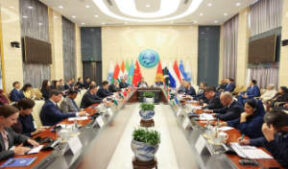
The Action Plan explicitly brings business organisations into the framework. The participation of the EAEU and SCO Business Councils is intended to support joint projects and sectoral activities. Daniyar Imanaliev, EEC Minister for Integration and Macroeconomics, stressed the importance of direct contacts between the business communities of the EAEU and the SCO and called on business associations to take a more active part in the existing dialogue formats.
SCO Secretary‑General Nurlan Yermekbayev proposed specific formats for expanding business cooperation: joint forums, industry exhibitions and presentations of investment projects, as well as building closer ties between the SCO Investors Association, the SCO Business Council and the EAEU Business Council.
This is potentially one of the most commercially important elements of the new framework. Government-level agreements establish conditions, but businesses determine whether those conditions generate contracts, supply chains, investments and production partnerships.
The 2027 Bishkek Agenda: The Next Business Platform
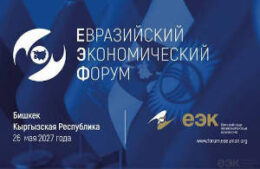
Imanaliev invited delegations from approximately 30 countries to participate in the next Eurasian Economic Forum, scheduled for May 2027 in Bishkek. The Bishkek forum will therefore become one of the first major platforms through which the 2027-2030 framework can move from signing ceremony to implementation. The 30-state geographic composition of the Beijing programme already demonstrates the potential reach of this agenda. This gives the economic framework a much wider geographical footprint than the five-country EAEU itself.
Reaching Out To ASEAN & Africa

The 2026 Beijing programme builds on a long history of interaction between regional organisations. The SCO Secretariat and ASEAN signed a memorandum of understanding in 2005 in Jakarta. In 2018, the Eurasian Economic Commission and ASEAN concluded a memorandum of cooperation (14 November, Singapore), followed by a joint programme of action — adopted in September 2019 and extended through 2025.
At the Eastern Economic Forum in September 2021, SCO Secretary‑General Vladimir Norov proposed launching consultations among the EAEU, the SCO and ASEAN to avoid competition between integration projects and identify common areas of cooperation. At the same forum, EEC Minister Goar Barsegyan announced the imminent signing of a memorandum between the EEC and the SCO Secretariat. On 17 September 2021 in Dushanbe, on the sidelines of the SCO anniversary summit, the memorandum was signed by Chairman of the EEC Board Mikhail Myasnikovich and Vladimir Norov. The document records key areas of cooperation: economy and finance, transport, foreign trade, investment, digitalisation, and customs policy.
At the recent SCO Council of Heads of State summit in Bishkek, the leaders of the organisation’s 10 member states decided to sign a memorandum of understanding between the SCO Secretariat and the African Union Commission.
The four-track interaction among ASEAN, the EAEU, the SCO, and the AU can be presented as one component of the broader Greater Eurasian-African Partnership concept if policymakers can work continuously to move it forward. The 2026 Action Plan therefore sits within a much larger network of Eurasian-African institutional relationships rather than operating as an isolated agreement.
The Institutional Base: EAEU Strategy Through 2030 and 2045

Cooperation with the SCO has also been incorporated into the EAEU’s broader strategic agenda through the “Eurasian Economic Path” Declaration for the periods through 2030 and 2045 and the Main Directions of EAEU International Activities. This gives the SCO relationship a permanent position within the EAEU’s external economic architecture. At the country level, the instruments range from free trade to trade-and-economic agreements observer status, negotiations and broader dialogue. At the institutional level, the 2027-2030 plan adds regular interaction between the EEC and SCO Secretariat. The resulting architecture therefore has three layers: country-to-country trade agreements; organisation-to-country arrangements; and EAEU-to-SCO institutional coordination.
What Changes Between 2026 and 2030

The key economic changes consist in a transition from broad dialogue to practical implementation mechanisms. The quantitative base is already substantial: EAEU–SCO trade turnover in 2025 reached US$371 billion; about 48% of the EAEU’s external trade is linked to SCO economies; US$72.6 billion is Kazakhstan’s trade with SCO countries; and over US$400 billion is Russia’s trade with SCO countries, with 98% of settlements carried out in national currencies. The agricultural sector is particularly noteworthy: mutual agricultural trade within the EAEU itself exceeded US$22 billion, and SCO countries account for more than 30% of the EAEU’s external agrarian exports.
The four-year programme now places administrative infrastructure around these flows. For transport, the benchmark is greater interoperability between corridors. For customs, it is more efficient and digitally compatible border procedures. For agriculture, it is expanded food trade supported by compatible sanitary and phytosanitary systems. For industry, it is deeper technological and production cooperation. For digitalization, it is interoperability, information exchange and shared platforms. For business, it is the movement from diplomatic contacts to forums, investment presentations, business-council interaction and joint investment projects.
Summary
The 17 September 2026 agreement does not by itself commit the EAEU and SCO to a new multibillion-dollar infrastructure expenditure. Its importance lies in establishing the organisational channels through which projects can be developed and coordinated.
That distinction matters. The real test of the 2027–2030 framework will therefore be measurable economic outcomes: whether customs procedures become faster; whether electronic documents become interoperable; whether freight data can move more efficiently between jurisdictions; whether food certification barriers decline; whether agricultural trade exceeds its present level; whether industrial partnerships expand; whether business councils generate investment projects; and whether Eurasian transport routes become more interconnected. The starting conditions are already substantial.
EAEU-SCO trade has nearly quadrupled over roughly a decade. Almost half of EAEU external trade is connected with SCO economies. Four countries – Belarus, Kazakhstan, Kyrgyzstan and Russia belong simultaneously to both organisations. China and Iran already have structured economic relations with the EAEU; India and Pakistan are engaged through negotiations and dialogue. Agriculture supplies a US$22 billion trade base, while Russia’s national-currency settlement ratio demonstrates that alternative payment mechanisms are already functioning at a significant scale.
The Joint Action Plan for 2027-2030, therefore, represents a move toward a more structured Eurasian economic operating system. Its principal contribution is not a single flagship project but the coordination of multiple systems like transport, customs, digital trade, food security, standards, industrial cooperation and business networks.
The operational benchmark set by Sagintayev is straightforward: EAEU-SCO interaction must move into specific economic projects and tangible results. The Beijing plan provides the four-year framework. The size of the existing trade relationship provides the economic incentive. The next stage will be measured by how effectively the institutions convert that combination into lower transaction costs, greater connectivity, more efficient cross-border trade and a larger volume of concrete commercial activity by 2030. The 2027-2030 Action Plan is an implementation architecture rather than a standalone investment treaty: its economic importance comes from applying common mechanisms to an already very large trade base while connecting customs, logistics, digital trade, agriculture, standards and business institutions.
This article was written by M. Jahan, an expert and reporter on EAEU-SCO-Russian affairs for Russia’s Pivot To Asia. She may be contacted at info@russiaspivottoasia.com