
 Русский





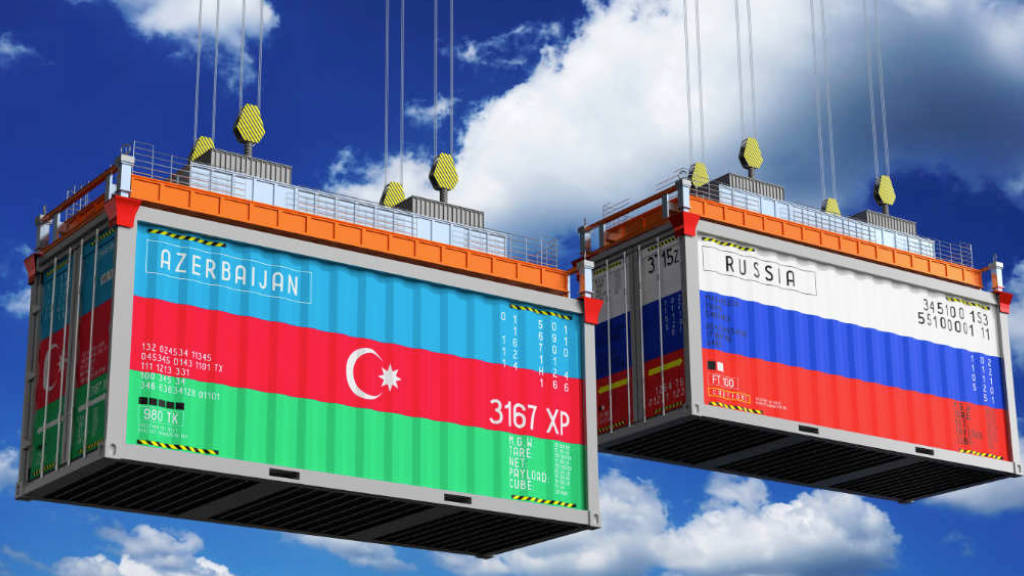

Trade between Azerbaijan and Russia amounted to US$2.411 billion in January-August 2026, nearly 1.4 times less than in the same period last year, according to data from Azerbaijan’s State Customs Committee. The 2026 Russia-Azerbaijan trade decline in 8M follows previous increases. Russia-Azerbaijan trade totaled US$4.92 billion in 2025, an increase of 2.5% from 2024, while Russia ranked as Azerbaijan’s third-largest foreign-trade partner after Italy and Turkiye, accounting for 9.96% of Azerbaijan’s total foreign trade. Azerbaijan exported US$1.184 billion in goods to Russia and imported US$3.736 billion from the Russian market.
The decline is down to political disputes, accelerated by an unfortunate aviation incident, in addition to Azerbaijan’s wariness to trade with Russia and incur secondary sanctions. On the other hand, it also shows that the door is open if Russian exporters want to take up the challenge. Both countries are members of the Commonwealth of Independent States, meaning the supporting trade mechanism exists.
Political and diplomatic ties between Moscow and Baku reached multi-year lows following geopolitical shifts, including the December 2024 accidental downing of an Azerbaijani plane by Russian air defense, disputes over Karabakh and Russian peacekeepers, and the detention of Azerbaijani diaspora members in Yekaterinburg in 2025.
These political tensions spilled over into economic and administrative friction, with mutual crackdowns, stricter customs or agricultural constraints, and the suspension or stalling of major joint economic projects and bilateral negotiations.
Baku has increasingly distanced itself from dependence on Moscow, deepening strategic, energy, and defense ties with Western nations such as the United States and United Kingdom, Turkiye, and Israel, while independently managing its regional logistics and transit corridors such as the INSTC Middle Corridor. These are the obstacles that need to be overcome to get the mutual trade flows back on track.
The 2024 figures show the scale of Russia’s role as a supplier and the opportunity to strengthen Azerbaijani exports in return. Agriculture remained one of the strongest areas of two-way trade. Russia purchased more than US$1.174 billion in Azerbaijani non-oil products in 2025, including agricultural exports worth more than US$837 million. Fruit and vegetable shipments alone reached US$696 million, nearly 31% above the previous year. Azerbaijan exported 700,600 tons of fruit and vegetables to Russia in 2025, compared with 594,800 tons in 2024, an increase of 17.8%.
The momentum continued in several product categories during early 2026. Russia’s onion imports from Azerbaijan increased 1,130%, strawberry imports rose 330%, potato imports grew 41.9% and pear imports increased 37.4%. By May 8, Russia had received 3,900 tons of Azerbaijani fish and seafood, 43% more than a year earlier. Russian agricultural supplies to Azerbaijan exceeded US$832 million, creating a two-way agricultural relationship rather than a one-directional export channel. These established supply chains offer a practical area for stabilizing trade while larger industrial and infrastructure projects progress.
Russian Investment Rises Despite Weaker Merchandise Turnover
Moscow it appears has been listening to Azerbaijan’s perspective and has been making overtures to Baku. Investment figures provide a second measure of the relationship’s resilience. Russian direct investment in Azerbaijan reached US$237.119 million in the first half of 2026, up US$107.392 million, or 82.8%, from the same period of 2025. Russia accounted for 6.5% of all foreign direct investment entering Azerbaijan during the period. Azerbaijani investment in Russia moved in the opposite direction, reaching US$22.488 million in the first half, down US$5.85 million, or 20.6%, year on year. This difference illustrates an asymmetry in current capital flows: Russian investment into Azerbaijan is expanding while Azerbaijani investment into Russia has weakened. The longer-term corporate presence is considerable. Accumulated Russian investment in Azerbaijan has been reported at approximately US$10.7 billion, including US$2.9 billion in the non-oil economy. More than 1,400 Russian-capitalised companies were registered as active in Azerbaijan on April 1 this year. These businesses provide an existing platform for cooperation in manufacturing, distribution, services, energy and other commercial activities.
There has been a recent flurry of bilateral activity to get relations back on track. These include the September 26 meeting between Russian Deputy Prime Minister Alexander Novak and Azerbaijani Deputy Prime Minister Shahin Mustafayev in Baku, the October 5 intergovernmental talks in Moscow, and the October 9 trilateral Presidential meeting in Turkmenistan, a series of engagements has placed freight capacity, investment, energy cooperation and Caspian logistics at the centre of regional economic diplomacy.
The timing is significant. Azerbaijan’s State Customs Committee puts bilateral trade at about US$2.4 billion in January-August 2026, compared with US$3.3 billion in the same period of 2025, a decline of about 27.3%. Yet Russian direct investment into Azerbaijan reached US$237.119 million in the first half of 2026, up 82.8% from US$129.727 million a year earlier. The combination suggests that the current adjustment is not simply a retreat from bilateral economic engagement. Rather, the composition of the relationship is changing, with investment and connectivity becoming more important relative to short-term merchandise turnover. The International North-South Transport Corridor (INSTC) is increasingly important to the relationship, linking Russian markets with Azerbaijan, Iran, India and wider South Asian destinations.
The September and October 2026 meetings therefore took place within an established business relationship rather than one dependent solely on government-level initiatives. The next task is to translate investment into additional production, trade and logistics capacity. Higher investment does not automatically compensate for declining exports, but it can create the industrial and commercial infrastructure required to rebuild trade over a longer period.
Transport & Investment Moves To The Centre Stage
Russia, Azerbaijan and Iran have intensified their economic and diplomatic engagement over the past two months, bringing bilateral trade, industrial cooperation, border infrastructure and regional transport connectivity into a common policy agenda. The meetings involved senior government officials in Baku and Moscow, business representatives, and the presidents of Russia, Azerbaijan and Iran, at CIS meetings held in Turkmenistan. Although the participants did not announce a new trilateral treaty or a quantified package of signed commercial contracts in the reported encounters, their discussions identified practical priorities for improving trade and developing regional transport infrastructure. The economic context is significant.
These figures point to an important distinction: short-term merchandise trade and longer-term economic integration are moving in different directions. The immediate challenge is to restore commercial turnover, particularly Russian exports to Azerbaijan, while preserving the investment, agricultural, energy and logistics links that support future growth. The INSTC provides a regional framework for addressing that challenge because its value extends beyond bilateral trade to freight movement between Russia and southern markets.
Alexander Novak & Shahin Mustafayev Review Economic Cooperation
On September 26, 2026, Russian Deputy Prime Minister Alexander Novak met Azerbaijani Deputy Prime Minister Shahin Mustafayev in Baku to review cooperation in industry, energy, transport and logistics. Novak invited Azerbaijani counterparts to attend the Russian Energy Week in Moscow on October 14-16, creating a follow-up opportunity for discussions on energy projects, infrastructure and industrial cooperation.
The September meeting took place against the background of a substantial contraction in bilateral trade. The change was not evenly distributed between the two trading partners. Azerbaijan imported more than US$1.57 billion in goods from Russia, while Azerbaijani exports to Russia exceeded US$840 million.
Earlier figures reveal the direction of the adjustment. In January-June, bilateral turnover stood at US$1.728 billion, down 31.4% year on year. Azerbaijani exports to Russia increased 3% to US$608.557 million, whereas Russian exports to Azerbaijan declined 42% to US$1.120 billion. By January-July, turnover had reached US$2.110 billion, down 31.3%. Azerbaijani exports to Russia rose 3.9% to US$749.5 million, while imports from Russia fell 42.1% to US$1.36 billion.
Russia remained Azerbaijan’s third-largest source of imports after China and Türkiye in the first half of 2026, supplying 13.42% of the country’s imports. Russia also accounted for 12.33% of Azerbaijan’s non-oil exports in the January-July period, illustrating the Russian market’s importance to Azerbaijani producers even as overall trade weakened.
The figures suggest that the principal immediate problem is not a uniform collapse in demand. The sharper contraction in Russian exports points instead to a need to examine product-level competitiveness, supply arrangements, logistics, purchasing patterns and market access. For Azerbaijan, continued growth in exports to Russia helps sustain non-oil production. For Russia, recovering its position in the Azerbaijani market would help reverse the decline in bilateral turnover.
The Intergovernmental Commission Focuses On Freight & The INSTC
On October 5, 2026, Azerbaijani Deputy Prime Minister Shahin Mustafayev met Russian Deputy Prime Minister Alexei Overchuk in Moscow as co-chairs of the Azerbaijan–Russia Intergovernmental Commission on Economic Cooperation. Representatives of relevant ministries and government agencies from both countries attended. The meeting reviewed bilateral economic relations, prospects for further cooperation and implementation of agreements reached at the highest political level.
The officials also examined decisions adopted at the commission’s 24th meeting, held in Azerbaijan’s Zangilan district on April 16, 2026. The agenda covered trade and investment, industry, energy, agriculture, transport and logistics. Particular attention went to expanding bilateral trade, creating favourable conditions for businesses, improving freight transportation, increasing border-crossing capacity and streamlining procedures for cargo and vehicles. The officials also discussed potential joint projects and the importance of regular contacts between government agencies to resolve operational issues.
Transport cooperation was a central focus because the effectiveness of a corridor depends on more than the existence of roads and railways. Border processing, customs clearance, vehicle throughput, cargo handling and coordination among agencies all influence delivery times and transport costs. Delays at one checkpoint can reduce the commercial value of improvements elsewhere along the route.
During the Moscow visit, Mustafayev also met Novak to discuss economic relations, particularly industry, energy, transport and logistics. He held separate discussions with Emin Agalarov, chairman of the Azerbaijan-Russia Business Council, and Alexey Repik, chairman of the Russia-Azerbaijan Business Council. Their agenda included expanding trade, investment and business cooperation.
Russian Foreign Ministry spokesperson Maria Zakharova subsequently described the intergovernmental discussions as constructive and confirmed that trade, investment, industrial, energy, agricultural and transport matters had been examined. Cultural and educational cooperation also received attention, with the Russian side stressing the need to strengthen cultural and humanitarian interaction. The immediate result was a renewed intergovernmental work programme focused on implementing existing decisions, addressing freight bottlenecks and developing practical cooperation across several sectors.
Cross Border Freight Capacity: Infrastructure Improvements Meet Rising Freight Volumes
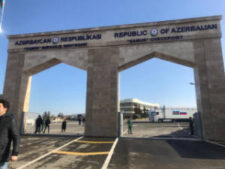
Border traffic figures demonstrate why transport administration has become a priority. In September 2026, average daily freight throughput on the Russian-Azerbaijani border rose 10% from August to 840 cargo vehicles. More than 25,000 freight vehicles crossed during the month.
The reconstructed Yarag-Kazmalyar crossing increased the reported capacity of border crossings from approximately 400 to 1,900 freight vehicles per day. That represents an increase of 1,500 vehicles daily, an increase of 375%. Throughput depends on traffic distribution, operating conditions and processing efficiency, however the infrastructure upgrade has created room for larger flows.
The Russian-Georgian border also recorded increased traffic. More than 34,000 heavy trucks passed through the Upper Lars checkpoint in September, about 17% higher than the 29,000 recorded in September 2025. The September 2026 total was around 5,500 vehicles higher than July and about 2,000 higher than August. Average daily throughput increased from 1,039 vehicles in August to 1,142 in September.
These figures offer a wider picture of pressure on Russia’s southern transport connections. More freight is moving through the region, making the reliability of border operations increasingly important for importers, exporters and logistics companies. The figures do not establish that every vehicle used the INSTC, but they underline the commercial significance of capacity, clearance procedures and coordinated border management.
For the corridor to attract regular cargo, businesses need predictable transit times and costs. Border upgrades therefore have an economic function beyond physical construction: they can improve delivery reliability and reduce the risk that delays erode the competitiveness of goods moving between Russia, Azerbaijan and Iran.
INSTC: Azerbaijan’s Strategic Position Between Russia & Iran
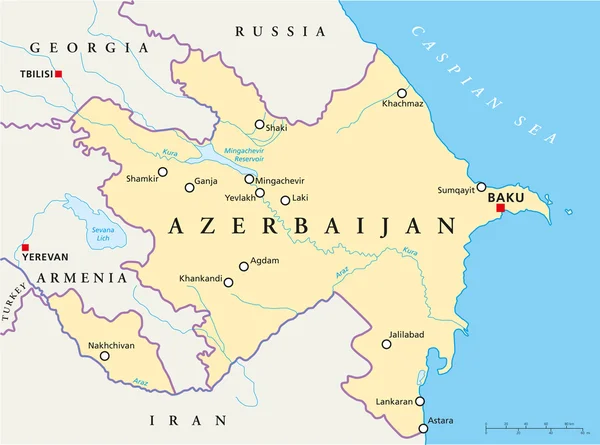
The International North-South Transport Corridor is the central infrastructure link connecting the bilateral agenda to the wider regional economy. Established through an agreement signed by India, Iran and Russia in St. Petersburg in September 2000, the INSTC is a multimodal network of sea, rail and road routes intended to connect Russia and European markets with Iran, the Persian Gulf, India and other southern destinations.
Azerbaijan occupies a key position on the corridor’s western route, providing an overland connection between Russia and Iran. Alternative alignments use Caspian Sea shipping and routes through Central Asia. The western route’s commercial value depends on coordinated railway operations, efficient border crossings, reliable cargo handling and the completion of missing infrastructure links.
Earlier studies have suggested that the corridor could reduce transport distances by around 40% and transport costs by approximately 30% compared with certain traditional shipping routes between India and Russia. These are potential savings, not guaranteed results: actual performance depends on the origin and destination of cargo, transshipment requirements, customs procedures, railway capacity and operating costs.
Russian President Vladimir Putin has expressed readiness to provide the credit resources needed to complete the land section of the North–South project and has emphasised his close contact with Azerbaijani President Ilham Aliyev. Azerbaijan has also identified North–South connectivity as a priority. In July 2026, Azerbaijani Foreign Minister Jeyhun Bayramov said the country was prepared, if necessary, to increase corridor capacity on Azerbaijani territory.
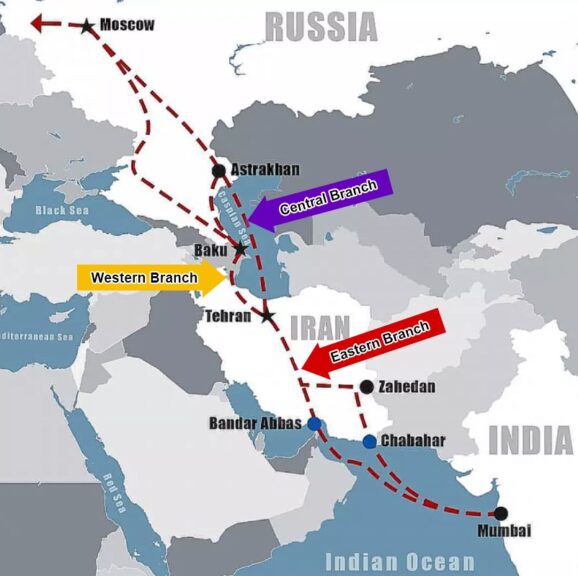
The principal infrastructure challenge lies further south in Iran, particularly the approximately 160-kilometre Rasht–Astara railway section. Russia previously allocated a US$1.8 billion loan to Iran for the project. Land acquisition, the establishment of construction zones, associated administrative procedures and the Iranian conflict with the United States have delayed implementation; although construction has now restarted with a targeted completion date of 2030.
Completion of the railway would strengthen continuity along the western route and improve the corridor’s prospects for carrying larger volumes of freight. Until the missing section is completed and operational arrangements are coordinated, the corridor’s full commercial potential will remain constrained.
For Russia, Azerbaijan is consequently more than a neighbouring consumer market. It is a transit partner connecting Russian producers with Iran, India and South Asian markets. For Azerbaijan, the corridor offers opportunities to generate revenue through transit services, warehousing, freight handling, logistics facilities and supporting businesses. The relationship is increasingly shaped by the economic value of this geographical position.
Putin, Aliyev & Pezeshkian Discuss Trilateral Cooperation
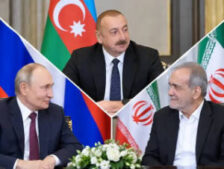
On October 9, 2026, Russian President Vladimir Putin, Azerbaijani President Ilham Aliyev and Iranian President Masoud Pezeshkian held a trilateral meeting in Turkmenistan on the sidelines of the Commonwealth of Independent States summit and a Caspian Sea environmental summit. The three leaders discussed strengthening bilateral and trilateral relations, expanding economic and commercial ties, making greater use of existing capacities and improving regional coordination. Cooperation among Caspian littoral states and wider regional issues were also on the agenda.
The meeting brought together three countries whose economic interests overlap in transport, trade, energy and regional connectivity. Russia needs dependable southern routes; Azerbaijan can provide transit infrastructure and access to regional markets; and Iran forms an essential link between the Caspian region, the Persian Gulf and the Indian Ocean-facing commercial network. The trilateral discussion was therefore relevant to the INSTC even though the reported outcomes did not include a new corridor treaty, a quantified cargo target or a newly signed infrastructure-financing agreement. Its significance lay in political coordination among the three countries involved in the corridor’s western alignment.
Pezeshkian also held separate bilateral meetings with Putin and Aliyev during the summit programme. His wider engagements included talks with Turkmen President Serdar Berdimuhamedov, Armenian Prime Minister Nikol Pashinyan and Shanghai Cooperation Organisation Secretary-General Nurlan Yermekbayev. The Iranian president attended and addressed the CIS and Caspian environmental summits during his two-day visit before departing Turkmenbashi for Tehran. The next challenge is to translate this diplomatic engagement into project-level decisions, including financing, construction schedules, customs coordination and operational arrangements. Without progress on those issues, political support alone cannot deliver the corridor’s anticipated savings or freight capacity.
The Caspian Sea’s Decline Adds An Environmental Risk To Transport Investment
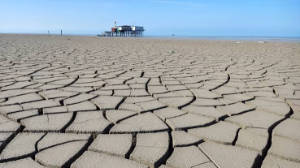
The Caspian Sea’s declining water levels present another economic concern for the region’s transport network. Speaking at the Caspian environmental summit on October 9, Putin said the Russian shoreline had receded by an estimated 20,000 square kilometres over 20 years and that the sea’s water level was falling by an average of nine centimetres annually. He warned that the decline threatened biodiversity, fisheries, coastal soil stability and the socioeconomic conditions of communities around the sea. Lower water levels could also reduce the investment attractiveness of trans-Caspian logistics routes, undermine navigation and contribute to employment losses.
Putin supported developing an action plan on Caspian water-level fluctuations through 2036, establishing a special commission to investigate the causes and consequences, and preparing a comprehensive Russian research programme on water-level changes through 2030. Moscow also proposed creating a digital twin of the Caspian Sea using artificial intelligence to model water-level changes and improve navigation safety.
The summit was attended by Aliyev, Pezeshkian, Kazakh President Kassym-Jomart Tokayev and Turkmen President Serdar Berdimuhamedov, alongside Putin. The environmental issue has direct implications for regional economic planning. If declining water levels affect ports, vessel operations or cargo-handling facilities, investment in maritime transport could face higher costs and reduced reliability. The INSTC’s resilience will therefore depend not only on railway construction and border capacity but also on the condition of the Caspian’s maritime links. Cooperation on environmental monitoring, navigation and infrastructure adaptation would give the participating states a practical area for joint work that complements their trade and transport agenda.
Ilham Aliyev Meets Chechen Leader Ramzan Kadyrov
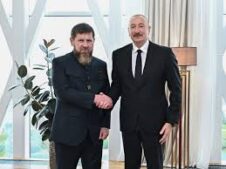
On October 10, Azerbaijani President Ilham Aliyev received Ramzan Kadyrov, head of the Chechen Republic of the Russian Federation, in Baku. Their discussions covered relations between Azerbaijan and Chechnya and prospects for cooperation in various areas. Aliyev welcomed Kadyrov and referred to the historical ties between the two peoples. Kadyrov recalled the relationship between former Azerbaijani President Heydar Aliyev and Akhmad Kadyrov, the first president of the Chechen Republic. He also expressed condolences over the December 2024 Baku-Grozny aircraft crash and congratulated Azerbaijan on the resolution of the Garabagh issue. The conversation included sporting and humanitarian connections. Kadyrov referred to the World Judo Championships taking place in Baku and the Vladimir Putin Judo Training Center in Chechnya, suggesting that joint sporting events could support closer relations. Aliyev and Kadyrov subsequently had lunch together and visited Baku White City. Ruslan Sadikhov, executive director of the Baku White City project, briefed Kadyrov on the district’s infrastructure, facilities and amenities.
The redevelopment project began officially on December 24, 2011, with Aliyev and First Lady Mehriban Aliyeva participating in its launch. It is transforming a former oil-polluted industrial area known as Black City into a modern residential district designed around environmental sustainability and contemporary urban planning. Although the October 10 engagement did not produce a publicly quantified trade or investment package, the visit opened another channel for subnational cooperation. Construction, urban redevelopment, business contacts, tourism and sporting exchanges are potential areas for developing links between Chechnya and Azerbaijan. Specific projects and financial commitments, however, would need to be established through subsequent commercial or governmental arrangements.
The Middle Corridor And TRIPP Create A Regional Transport Landscape
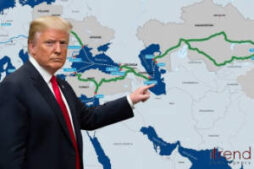
The INSTC is not the only transport initiative shaping the South Caucasus. The proposed Trump Route for International Peace and Prosperity, or TRIPP, is intended to provide Azerbaijan with a direct connection to its Nakhchivan exclave through Armenian territory and to form part of the broader Middle Corridor between Central Asia and Europe. More than a year after the August 2025 Washington agreement between Armenia and Azerbaijan, the approximately 40-kilometre TRIPP segment had not been implemented, and construction on Armenian territory had not begun. Aliyev indicated that construction could start in early 2027. The proposed route has wider strategic implications because it could diversify Central Asian export routes and facilitate transport towards Turkey and European markets. At the same time, it has generated concerns in Iran about a US-backed transport route close to its northern border.
Russia also has an infrastructure-related stake through Russian Railways’ long-term concession over Armenia’s railway network. Russian Railways has cited approximately US$400 million in investment in Armenian railway infrastructure, raising questions about compensation or potential participation should control arrangements change.
These issues complicate the implementation of TRIPP and demonstrate that regional corridors are shaped by infrastructure ownership, security concerns and financing arrangements as well as geography. The INSTC’s western route through Azerbaijan and Iran has its own outstanding challenges, particularly the Rasht-Astara railway connection, but the autumn meetings have kept attention on practical bilateral and trilateral coordination. For businesses, the key distinction is between proposed connectivity and operational connectivity. A corridor’s commercial value ultimately depends on functioning infrastructure, transparent procedures, predictable costs and the ability to move goods across borders without repeated delays.
Summary: Turning Diplomatic Engagement Into Commercial Results
The sequence of engagements from September 26 to October 10 established a clear economic agenda. Novak and Mustafayev reviewed industry, energy and transport cooperation in Baku; Mustafayev and Overchuk led the October 5 intergovernmental discussions in Moscow; Putin, Aliyev and Pezeshkian addressed regional economic cooperation in Turkmenistan on October 9; and Aliyev received Kadyrov in Baku the following day. The numerical picture is mixed. Bilateral trade declined approximately 27.3% in January-August 2026, but Russian direct investment in Azerbaijan increased 82.8% in the first half. More than 1,400 Russian-capital companies remained active in Azerbaijan, agricultural exports continued to expand in several categories, and freight traffic increased at key border crossings. Meanwhile, the INSTC agenda retained a central place in bilateral and trilateral discussions.
The Russian Energy Week n Moscow this past few days was the next scheduled opportunity for further engagement on energy and infrastructure. The invitation extended by Novak to Azerbaijani counterparts provides a platform for continuing discussions, although attendance and new agreements should not be assumed in advance. (Russia’s Pivot to Asia we will discuss this event and what occurred later this week).
The main bilateral economic task is now measurable: reverse the fall in Russian exports to Azerbaijan, sustain Azerbaijani non-oil exports, convert rising investment into productive activity and resolve the infrastructure constraints affecting North–South freight movement. The results will depend on the implementation of existing decisions and the development of commercially viable projects rather than on the frequency of diplomatic meetings alone.
The emerging relationship is increasingly defined by three connected assets: established commercial exchanges, a substantial Russian corporate and investment presence in Azerbaijan, and Azerbaijan’s geographical position between Russia and Iran. The INSTC brings these assets together within a wider Eurasian transport network. If railway gaps, border procedures and Caspian navigation challenges are addressed, the corridor could strengthen the commercial links between Russia, Azerbaijan, Iran and India. Until then, the autumn diplomatic engagements represent an important framework for cooperation, but the scale of their economic impact will be determined by infrastructure delivery, freight performance and renewed growth in bilateral trade.
This article was written by M. Jahan, an expert and reporter on Russian-Caucasian affairs for Russia’s Pivot To Asia. She may be contacted at info@russiaspivottoasia.com
