 Русский








Russia and China have been engaged in numerous energy discussions this past week. We outline these and provide project updates and analysis as follows:
23rd Russia-China Energy Cooperation Committee Meeting
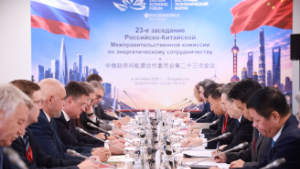
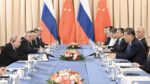
On September 4, Chinese Vice-President Ding Xuexiang and Russian Deputy Prime Minister Alexander Novak co-chaired the 23rd Russia-China Energy Cooperation Committee in Vladivostok. They reviewed oil, natural gas, coal, electricity, renewable energy and nuclear power, reaching broad consensus, signing off the meeting minutes. This was not covered in the media because this was an intergovernmental coordination mechanism rather than a deal fair. The economic foundation, however, is enormous.
Russian energy-resource supplies to China increased by more than 20% during the first seven months of 2026 and has exceeded US$50 billion, representing roughly one-third of total bilateral trade during that period. Russia remained China’s leading supplier of oil and pipeline gas and a major supplier of coal and LNG.
2026 LNG & Oil Exports
Novak added a longer-term figure that changes the strategic calculation: China could account for more than 60% of Russia’s total gas exports by 2030 as Power of Siberia capacity expands, the Far Eastern gas route develops and other routes are considered. Power of Siberia transported 38.8 bcm in 2025, about 25% more than the previous year and above contractual obligations. Russia’s LNG exports to China have increased more than 50-fold over the past decade, making Russia one of China’s three largest LNG suppliers.
Russian oil deliveries to China increased 25% in the first seven months of 2026. This means the energy relationship is no longer simply about increasing volumes. It is about building an increasingly diversified Russia-China energy corridor covering pipelines, LNG, oil, coal, nuclear power, renewables, hydrogen, carbon capture, energy storage and digital energy management.
Power of Siberia Becomes Power Of Baikal: A Political Signal With A 50 bcm Economic Payload
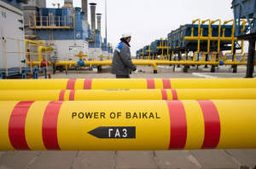
The most politically visible energy development was the renaming of the planned Power of Siberia 2 pipeline as Power of Baikal. Energy Minister Sergei Tsivilev announced on September 2 that Russian President Putin had renamed the project. Russian Deputy Prime Minister Alexander Novak said on September 4 that Russia and China have agreed to accelerate negotiations on the Power of Baikal (formerly Power of Siberia 2) gas pipeline to help their companies finalize a supply contract faster, The pipeline, planned through Mongolia, could transport up to 50 billion cubic meters of Russian gas annually to China.
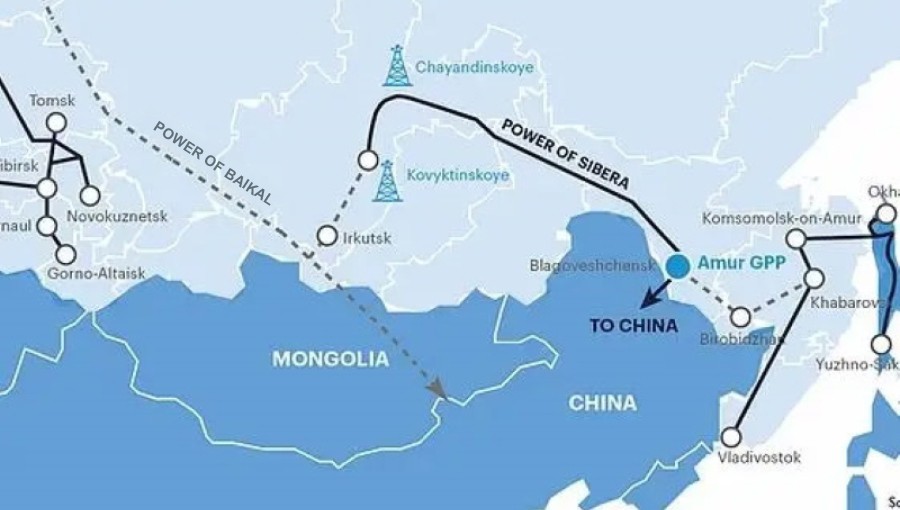
Following Russian President Vladimir Putin’s 2025 China visit, Moscow and Beijing signed a legally binding memorandum on the pipeline and the Soyuz Vostok transit project. Russian Energy Minister Sergey Tsivilyov said preparations for construction are now in their final stages.
The technical parameters reported in connection with the project remained approximately 2,600 kilometres and 50 bcm of annual capacity, transporting gas from Yamal and Arctic fields through Mongolia to China. That would complement Power of Siberia 1, which has already reached full capacity. A legally binding Gazprom-CNPC memorandum was signed in 2025, although pricing and commercial terms have historically been among the issues delaying implementation. The renaming therefore matters less as branding than as political signalling. It raises the project’s national profile and associates a major eastward gas corridor with one of Russia’s strongest geographic symbols. More importantly, it reinforces the idea that Russia’s future gas geography is shifting eastward. The combined potential is considerable. Power of Siberia 1 is already moving almost 39 bcm annually; Power of Baikal is designed for another 50 bcm; and the Far Eastern gas route is also being developed. If these systems are realised, China will become structurally embedded in Russia’s long-term gas export geography.
The 8th Russia-China Energy Business Forum
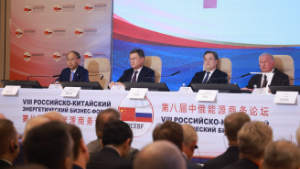
The 8th Russia-China Energy Business Forum took place in Vladivostok on September 4. It brought together approximately 450 participants, including representatives of more than 100 major Russian and Chinese companies from energy and related industries, financial institutions, scientists and experts. The opening speakers included Chinese Vice President Ding Xuexiang, Russian Deputy Prime Minister Alexander Novak, Rosneft CEO Igor Sechin, Russian Energy Minister Sergei Tsivilev and CNPC Chairman Dai Houliang. The companies and sectors represented the entire value chain: Rosneft, Gazprom, CNPC, Novatek, Rosatom and Chinese energy, power-engineering and financial counterparts. The agenda extended from upstream production to transportation, processing, nuclear power, technology, financing and localisation. It also covered hydrogen, CCUS, renewables, energy storage, digitalisation and AI.
Igor Sechin offered the strongest strategic formulation. He argued that Russia and China together account for about one-third of global energy production, equivalent to around 4.8 billion tonnes of oil equivalent annually. He also pointed to China’s 30% share of global industrial output, 54% of steel production, 85-90% of rare-earth processing, 70% of renewable-energy equipment production capacity and more than 80% of new shipbuilding orders. The implication is straightforward. Russia brings energy and natural resources; China brings industrial scale, equipment, manufacturing capability and increasingly sophisticated downstream technologies. The economic opportunity is therefore much larger than an oil-for-machinery exchange.
Finance: The Relationship Is Becoming Less Dependent On Western Payment Infrastructure
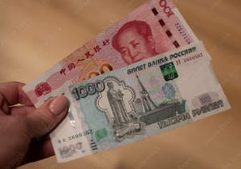
Finance was not presented as a standalone headline deal at the Vladivostok energy forum, but it is becoming an important structural layer of the relationship. Sechin said Russia-China mutual settlements are now conducted almost entirely in national currencies and called for continued Central bank support. The broader energy discussions also included settlements in rubles and yuan and the development of payment infrastructure. This is economically significant because the value of bilateral trade has grown beyond the point where payment mechanisms can be treated as a secondary technical issue. When trade exceeds US$200 billion annually and energy alone accounts for more than US$50 billion in seven months, banking, clearing, currency liquidity and settlement reliability become strategic infrastructure. During the Business Dialogue Russia-China session at the Eastern Economic Forum, participants also identified differences in tax regimes and banking practices, uncertainty around alternative settlement instruments including digital currencies, and the need for clearer regulatory rules. The discussion therefore moved from the political slogan of de-dollarisation toward the more difficult question of how to make cross-border payments more predictable.
Russia’s new law concerning the use of cryptocurrencies in international trade settlements could be a future solution, however at present China has not passed similar legislation.